
Latest News
Senate Speaker says Pakistan deceive, play tricks on peace talks

![PEACE_10_03_2015_DARI_SOT.avi_snapshot_00.48_[2015.03.10_16.06.22]](https://ariananews.af/wp-content/uploads/2015/03/PEACE_10_03_2015_DARI_SOT.avi_snapshot_00.48_2015.03.10_16.06.221.jpg)
As Islamabad declares to cooperate between the government of Afghanistan and Taliban on peace talks, the Afghan Senate Speaker is concerned about Pakistan goodwill to fulfill the commitments they have made.
Fazel Hadi Muslimyar, the Senate House Speaker said,” I recommend that Afghan government must force Pakistani government to assure Kabul that they are not changing Taliban white-flag to Islamic State (IS) black-flag, bloodsheds must be stopped in Afghanistan anymore, because currently Pakistan is mediating the negotiations”.
Muslimyar doubts on Pakistan good intention to cooperate, though he supports the National Unity Government (NUG) efforts to restart peace process in Afghanistan he is more concerned over Pakistan loyalty to help have a peaceful neighboring country.
“Currently Pakistan is trying to deceive and play tricks; therefore, Afghan government must be very careful on peace talks. We want to have a clear negotiation result, because the sources that support Taliban are obvious, they only change the name of the terrorist groups. The government has promised us that Pakistan is cooperating on peace talks, but we are not confident and scoring Pakistan with the disputed Durant-line is definitely unacceptable,” The House Speaker added.

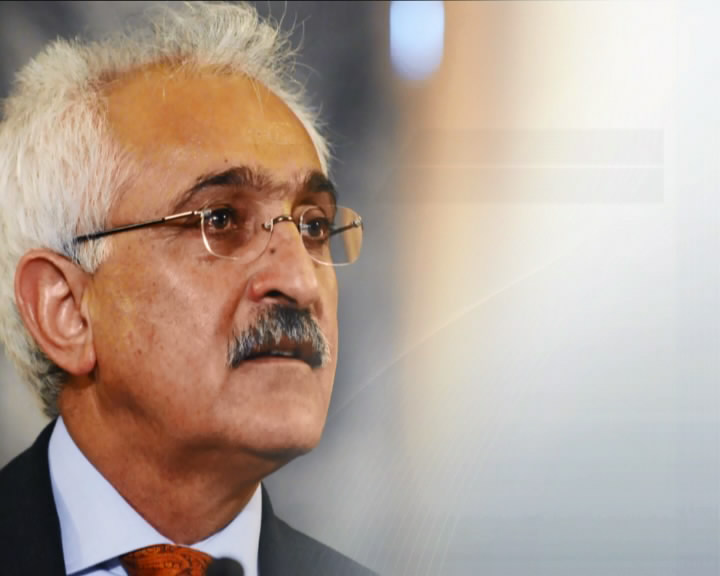
Dr. Rangin Dadfar Spanta is a politician in Afghanistan who last served as National Security Advisor of President Hamid Karzai.
Furthermore; Dr. Rangin Dadfar Spanta Ex-Afghan national security advisor also disqualifies Pakistan role on peace negotiations with Taliban insurgent groups.
Spanta declared, “Pakistan military and intelligence forces are backing Taliban insurgent groups in Afghanistan that is why I doubt about the results of the negotiations, although I support Kabul peace initiatives”.
These statements come after Kabul and Islamabad recently started security cooperation to bring peace in Afghanistan.
Experts believe though Afghan leaders visited top Pakistani military officials many times and the Pakistani partner has promised to force Taliban leadership restart the peace process, but they have never struggled to accelerate this process honestly.
Now Afghan NUG is trying to start peace talks practically with the support of Pakistan and Islamabad leadership have to prove that they are truly committed to fight against terrorist groups actively operating in Pakistan territory and will support Afghan-Taliban peace talks.
Reported by: Rafi Sediqi


Sheikh Hibatullah Akhundzada, supreme leader of the Islamic Emirate, has said that the Islamic Emirate would not compromise on Islam or Islamic law with any country or group, but remains ready to engage with the international community within the framework of Sharia.
In his Eid al-Adha sermon at the Eidgah in Kandahar, Akhundzada said Afghans are prepared to endure economic hardships and external pressure, but “will not bow to infidels” or abandon their religious values. “The world should not expect us to compromise on the religion of Allah or give up our faith,” he said.
The Supreme Leader also stressed the importance of unity and preventing discord, saying solidarity among the people is essential for maintaining peace and preventing conflict in the country.
“I do not protect myself with the lives of the people; I protect the people with my own life,” he said. “I stood for unity, harmony and peace among the people so that war and discord would not return, and I remain committed to that.”
Sheikh Hibatullah Akhundzada also referred to the amnesty announced for former government officials and urged them to return to Afghanistan and live without fear. He said the country belongs to all Afghans and that everyone has the right to live in their homeland.
Latest News
Bayat Power, Ministry of Energy extend power production agreement for another 10 years
The latest agreement follows a series of energy partnerships signed by Bayat Power in recent months aimed at strengthening Afghanistan’s domestic electricity production and reducing reliance on imported power.

Bayat Power has extended its agreement with Afghanistan’s Ministry of Energy and Water to continue producing 40 megawatts of gas-fired electricity in Jawzjan province for another ten years, reinforcing one of the country’s most significant domestic energy partnerships.
The agreement was signed between Bayat Power CEO Ali Kasemi and Afghanistan’s Minister of Energy and Water Mawlavi Mohammad Younus Akhundzada, further securing long-term electricity generation from domestic natural gas resources.
Kasemi welcomed the extension and said the company remains committed to supporting Afghanistan’s development through reliable local energy production.
“We welcome the signing of this agreement and reaffirm Bayat Power’s commitment to helping develop Afghanistan through sustainable and dependable electricity generation,” Kasemi said.
The renewed deal ensures that electricity generated from natural gas in northern Afghanistan will continue to be distributed through Da Afghanistan Breshna Sherkat (DABS), supplying homes, businesses and key public services across the country.
The latest agreement follows a series of energy partnerships signed by Bayat Power in recent months aimed at strengthening Afghanistan’s domestic electricity production and reducing reliance on imported power.
In April, Bayat Power renewed its natural gas supply agreement with Afghan Gas for another ten years, securing continued fuel supplies for the company’s operations in Jawzjan province.
Earlier in January, Bayat Power and DABS also signed a separate 10-year extension agreement for electricity production and distribution. The deal included a technical memorandum of understanding focused on expanding operational cooperation and exploring opportunities to increase future production capacity.
Bayat Power is currently Afghanistan’s largest private electricity producer and operates Bayat Power-1, the country’s first modern gas-to-electricity plant.
Located in Jawzjan province, the facility uses Siemens Energy’s advanced SGT-A45 mobile gas turbine technology and remains a central part of Afghanistan’s efforts to strengthen domestic energy production and improve long-term energy security.
The power plant currently generates more than 300 million kilowatt-hours of electricity annually and supplies power to hundreds of thousands of end users.
The project was developed as a public-private partnership involving Bayat Power, Siemens Energy, Afghan government institutions including the Ministries of Mines and Petroleum and Energy and Water, Afghan Gas, and DABS.
Officials say the continued extension of these agreements reflects growing efforts to support Afghanistan’s economic development through local investment, infrastructure expansion and increased energy self-reliance.
Latest News
Russia claims Asia-based drug network expanding toward Russia and the West
Islamic Emirate of Afghanistan have said that they have reduced the cultivation, production, and trafficking of narcotics in Afghanistan to close to zero.
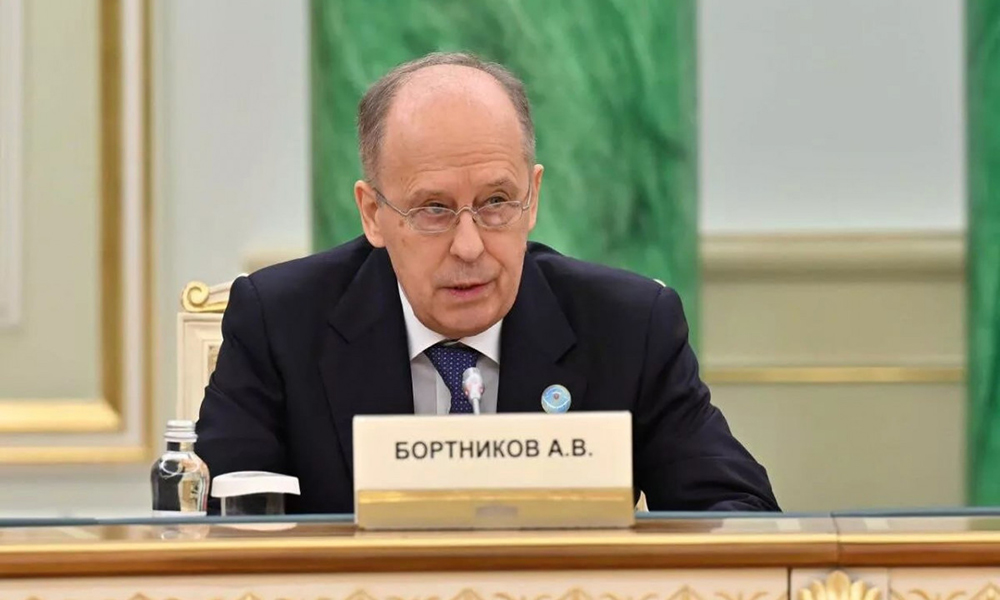
Russia’s security chief has warned that a growing synthetic drug production network is emerging across parts of Asia, with potential trafficking routes extending toward Russia and Western countries.
Alexander Bortnikov, Director of the Federal Security Service, said a “drug production belt” is taking shape across Southeast Asia, Afghanistan, and Iran, as criminal groups increasingly shift toward synthetic narcotics manufacturing.
Speaking at a meeting of the Council of Heads of Security Agencies of the Commonwealth of Independent States, Bortnikov argued that cooperation with the Islamic Emirate on counter-narcotics efforts could be “reasonable,” citing changes in the regional drug trade.
He said Afghan traffickers are moving away from traditional narcotics toward synthetic drug production, contributing to what he described as an expanding transnational supply chain linking Southeast Asia, Afghanistan, and Iran.
According to him, this network is increasingly extending into Central Asian states, where more illicit laboratories are reportedly being established to produce new synthetic substances.
Bortnikov also claimed that organized crime groups linked to Ukraine have recently become involved in both production and transit operations, allegedly remotely managing drug laboratories in CIS countries. He added that proceeds from these activities are being used, in part, to fund recruitment for attacks in Russia and to acquire weapons.
The FSB chief said Russian security services, working with partner agencies, had dismantled nearly 170 drug laboratories across the CIS in 2025 and seized around nine tons of synthetic drugs.


‘We will never bow our heads before infidels,’ says IEA Supreme Leader

Bayat Power, Ministry of Energy extend power production agreement for another 10 years

Iran restores global Internet access after months of restrictions

ATN secures exclusive rights to broadcast Afghanistan Tour of India

Afghanistan announce squad for India series

New Afghanistan-China transport corridor launched via Turkmenistan

Afghanistan signs $46 million deal to develop standard laboratory complexes

Germany to launch online visa system for Afghan study and work applicants in Pakistan

Afghanistan launches first 5G trial in Kabul to boost telecom services

Large blast near Beit Shemesh part of pre-planned test: Israeli defense firm

Tahawol: Islamic Emirate defense minister’s visit to Russia

Saar: Calls to expand Afghanistan-Qatar ties discussed

Tahawol: Afghanistan-Japan relations reviewed

Saar: Afghanistan’s relations with regional countries, incl Russia and China discussed

Saar: Shahbaz Sharif’s trip to China
-
 Business3 days ago
Major pharma firms eye investment in Afghanistan
-
 Latest News4 days ago
China restricts export of chemical substances to Afghanistan
-

 World4 days ago
One dead, 36 injured in explosion at New York dry dock
-

 Sport5 days ago
Mohammadi crowned champion of 2nd season of Ariana Snooker Championship
-
 Latest News3 days ago
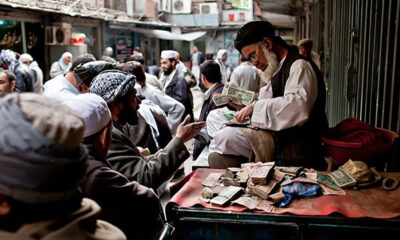
Deadly shooting near Kabul’s Sarai Shahzada leaves four dead
-
 Latest News4 days ago
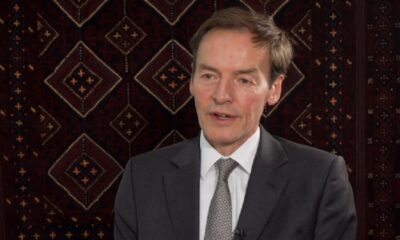
Britain says recognition of IEA conditional on women’s rights, counterterrorism
-

 Sport2 days ago
IPL 2026 Playoffs Confirmed: RCB, GT, SRH and RR reach top four
-
 Regional3 days ago
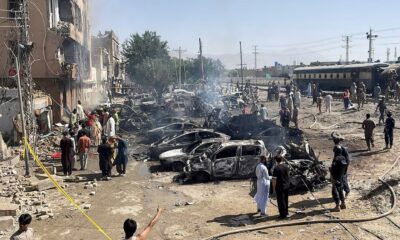
At least 24 killed in deadly train bombing in Pakistan’s Balochistan