
Regional
At least 24 killed in deadly train bombing in Pakistan’s Balochistan
The blast occurred shortly after 8am near the Chaman Phatak area of Quetta as the train was travelling from a military zone toward the city’s main railway station.

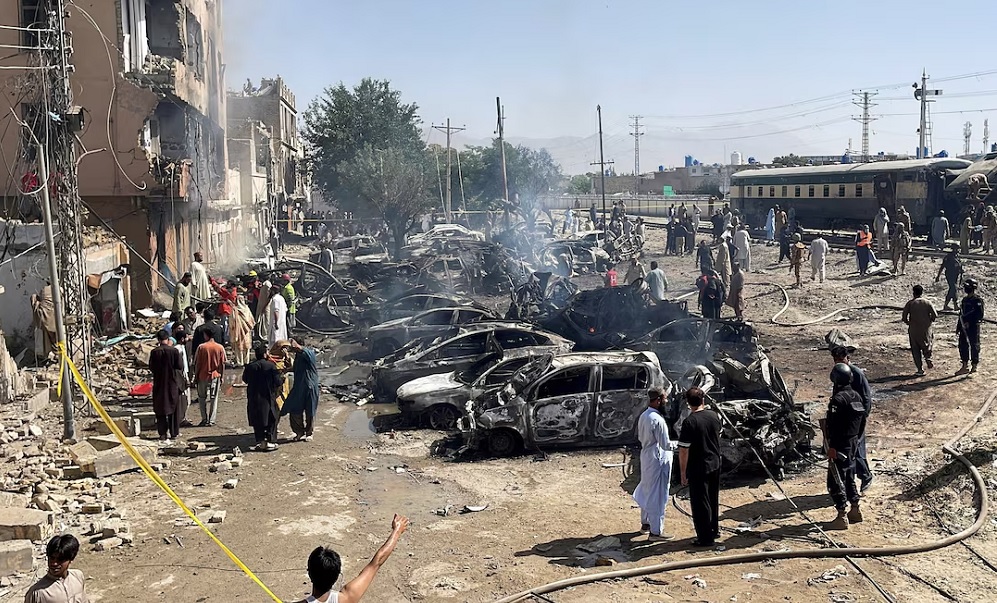
At least 24 people were killed and nearly 70 injured after a powerful explosion targeted a train carrying military personnel in Balochistan province on Sunday morning, according to officials and local media reports.
The blast occurred shortly after 8am near the Chaman Phatak area of Quetta as the train was travelling from a military zone toward the city’s main railway station.
Authorities said the explosion caused severe damage to the railway track and partially damaged the train. Three coaches, including the locomotive, were derailed while two overturned following the blast.
The impact of the explosion was reportedly heard across Quetta and shattered windows and glass panels in nearby buildings. Several vehicles parked near the scene caught fire, with at least 10 vehicles damaged in the blast. Material damage was also reported in surrounding homes and buildings.
Emergency rescue teams, firefighters and security forces rushed to the scene soon after the attack, cordoning off the area and launching rescue and recovery operations. Firefighters worked to contain flames that spread to nearby vehicles after the explosion.
Authorities later declared an emergency in government hospitals across Quetta, with doctors and medical staff placed on high alert to treat the large number of injured victims.
The separatist militant group Baloch Liberation Army (BLA) claimed responsibility for the attack. In a statement, the group said its Majeed Brigade, described as its suicide attack wing, had targeted security personnel travelling from Quetta Cantonment in what it called a “well-planned fidayee attack”.
The group said further details regarding casualties and damage would be released later.
Following the attack, the Peshawar-bound Jaffar Express was halted at Quetta Railway Station as a precautionary measure.
Pakistan Railways Minister Hanif Abbasi condemned the bombing, describing it as a cowardly act of terrorism aimed at spreading fear and chaos in the country.
Abbasi alleged that anti-Pakistan elements based in India and Afghanistan were involved in attempts to destabilize Pakistan through such attacks. He said railway operations would continue despite the incident and vowed that those responsible would face justice.
Babar Yousafzai, spokesperson for Pakistan’s interior ministry, said all relevant institutions had been placed on high alert following the explosion. He urged residents to avoid gathering near the blast site to allow emergency teams to carry out rescue operations safely.
Counter-terrorism teams and explosives experts later arrived at the scene to begin technical investigations into the nature of the explosive device and identify those responsible.
The bombing is one of the deadliest incidents reported in Balochistan in recent months. The province has long faced insurgent violence, with separatist groups frequently targeting security forces, transport infrastructure and government installations.






Regional
Trump says US will not attack Iran before midterm elections in November
Some 60% of Americans — including one in four Republicans — disapprove of how Trump is handling the situation in Iran.
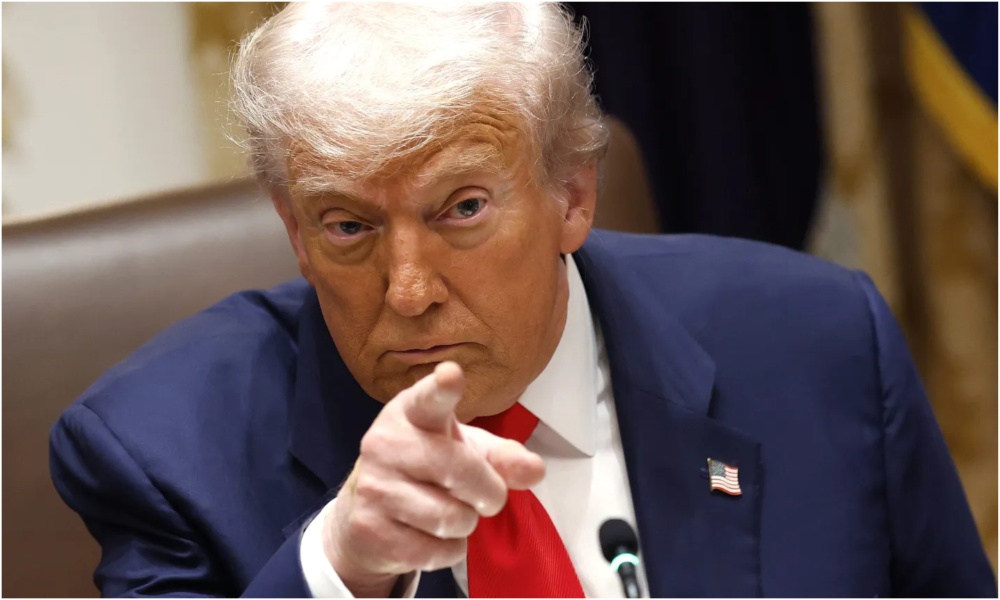
President Donald Trump said on Thursday that the US will not launch an attack on Iran before November’s US midterm congressional elections, asserting that the two countries are having “productive” talks about ending the six-month-old war, Reuters reported.
“We are having productive discussions with the Islamic Republic of Iran,” Trump wrote in a post on Truth Social. “We will not be attacking Iran at any time prior to the midterm elections to be held in the United States on November 3rd.”
The war, which began in February when the US and Israel launched strikes on Iran, has helped drive Trump’s domestic approval ratings downward and is weighing heavily on his fellow Republicans as they seek to preserve their narrow legislative majorities in November’s election.
Some 60% of Americans — including one in four Republicans — disapprove of how Trump is handling the situation in Iran, according to a recent Reuters/Ipsos poll. The conflict has pushed gasoline prices sharply higher at a time when voters say their top concern is the cost of living.
Trump has repeatedly said he expects oil prices to drop after the elections, but he has not offered a detailed plan for exiting the war, read the report.
Iran and the US have exchanged proposals in recent weeks aimed at ending the war and reopening the Strait of Hormuz, a vital global energy shipping route. Trump rejected Tehran’s latest offer.
Iran’s state media reported on Thursday that Tehran would not abandon uranium enrichment or hand over its uranium stockpile, citing the head of the country’s Atomic Energy Organization, days after US Vice President JD Vance told Reuters that Iran must make “meaningful” reductions in its enrichment capacity.
The US, Israel and Western allies have long accused Iran of seeking nuclear weapons, an accusation Iran has denied.
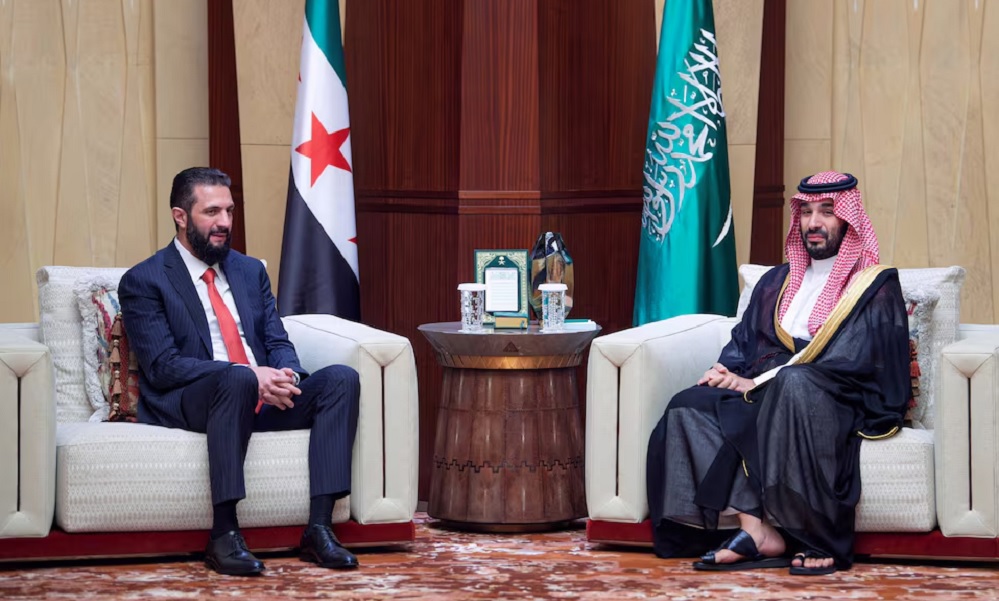
Syria is carefully considering providing military assistance to key ally Saudi Arabia amid an escalating war against the Iran-backed Houthis in Yemen, Reuters reported citing a US official and a Syrian military official.
Options being considered include defensive aid to protect the kingdom from attacks, or deployment of forces in an offensive capacity to help Saudi-backed Yemeni troops fight the Houthis, the sources said.
The US official said Saudi Arabia had requested that Syria deploy forces to fight the Houthis – an assertion denied by the Syrian president’s media adviser, Ahmad Zaidan, in a post on X following the publication of this story.
In response to a request for comment to the Syrian foreign ministry, a Syrian diplomat said Syria stood firmly with Saudi Arabia in the face of Houthi attacks but that the government’s primary focus was on domestic priorities such as recovery from the country’s civil war.
“Should Saudi Arabia request any military cooperation or exchange of expertise, this would take place exclusively through official channels and within the framework of the bilateral agreements governing relations between our two brotherly countries,” the diplomat said in a statement.
The Saudi government media office and Yemen’s information minister did not respond to requests for comment.
Saudi Arabia has been requesting assistance far and wide, from the US to Europe and the Middle East, for both defensive and offensive support in a renewed war against the group that follows weeks of Houthi missile and drone attacks on the kingdom.
The war is being led on the ground by a patchwork of Yemeni government forces with Saudi air support. They have made limited advances since the campaign was launched on Monday.
Syrian President Ahmed al-Sharaa made a public visit to Riyadh on Tuesday and met Saudi Crown Prince Mohammed bin Salman, also known as MbS. He discussed potential Syrian military assistance for the kingdom, among other matters, the US official said.
Footage broadcast by Syrian state media showed that he was escorted back to his plane by Saudi Defense Minister Khalid bin Salman, a brother of the crown prince who has overseen the Yemen file.
DEPLOYMENT COULD DEEPEN TENSIONS WITH NEIGHBOURS
Syrian fighters from opposition groups that battled former leader Bashar al-Assad in the country’s civil war have in past years been recruited as mercenaries for other conflicts, notably Libya’s internal conflict and the Russia-Ukraine war.
But for Damascus, any potential deployment carries risks.
The militias that made up the armed opposition are now under the nascent Syrian state, which has adopted a policy of avoiding engagement in conflict, including the Iran war, to focus on recovery from the 14-year Syrian civil war.
The state is still piecing together its army from the various militia groups from the former rebel coalition that toppled Assad, which included many hardline Sunni Islamist and foreign fighters, and trying to contain tensions with minorities including the Alawites, a Shi’ite offshoot to which Assad belonged.
A conflict between that army and the Houthis, who are also adherents of an offshoot of Shi’ite Islam, could have divisive religious undertones that the Syrian leadership and its Western partners want to avoid, the US official said.
It is for this reason that it previously rejected a US request to help fight Hezbollah in Lebanon.
Involvement in a battle against the Iran-backed Houthis could also be viewed as a hostile act by Iran and its allies Hezbollah in Lebanon and militias in Iraq, with which the Syrian rebels-turned-rulers have a history of conflict.
KEEN TO SHOW SUPPORT
At the same time, Sharaa is keen to show the country’s support for Saudi Arabia and MbS, who played a decisive role helping the former jihadist gain international legitimacy, including by brokering a May 2025 meeting between Sharaa and US President Donald Trump.
Saudi Arabia has also provided financial assistance to Syria and a Syrian show of support could result in that increasing, the US official said.
“A new Syria sending defensive personnel of a very small number to the most holy places in the Islamic world, alongside technical support to neutralise incoming drones, would be tremendously and positively symbolic,” said H.A. Hellyer, senior associate fellow at the Royal United Services Institute in London.
“But anything beyond, particularly in terms of Syrian boots on the ground, I think would be a wholly different proposition, and one I think Damascus would avoid, given the priorities they need to focus on in Syria,” he said.
Regional
Yemeni government forces seize strategic strait from Houthis
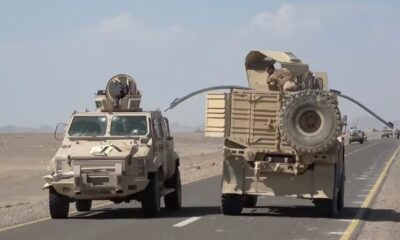
The Yemeni forces of the internationally recognised government, backed by heavy Saudi air strikes, reached the outskirts of Mocha late on Monday and Houthi fighters were retreating into the highlands, four government sources said. The Defence Ministry said the city had fallen.
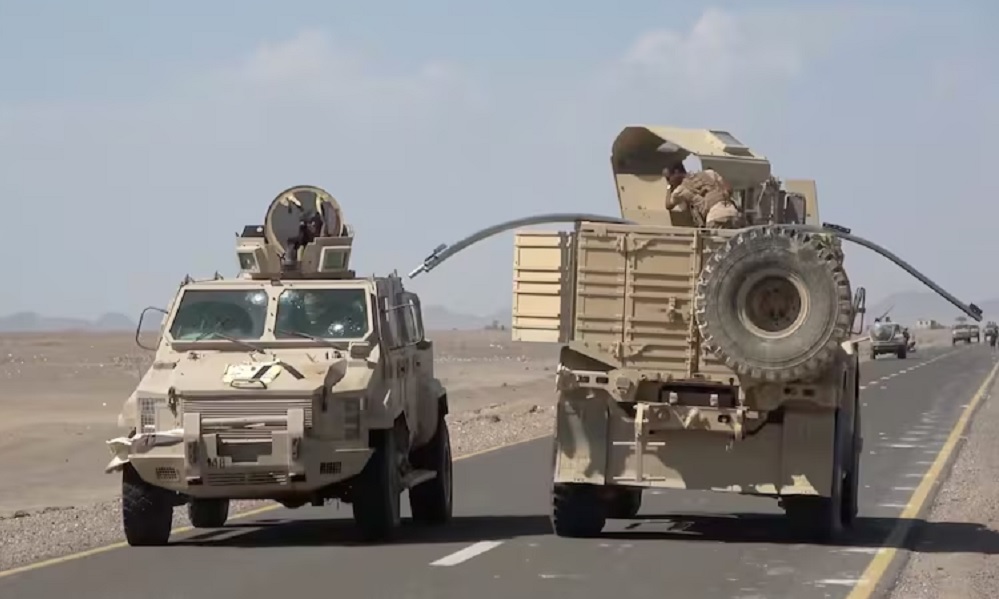
Saudi-backed Yemeni government forces staged a lightning advance on Monday to retake the coast around the Bab el-Mandeb Strait up to the city of Mocha, the government said, pushing the Iran-backed Houthis out of most of the areas they seized last month.
In response, the Houthis said they had attacked key locations in Saudi Arabia including the King Khalid International Airport in Riyadh, an Aramco refinery in Rabigh, the Abha international airport and the Khamis Mushait military base, Reuters reported.
The claims could not be immediately verified. Saudi Arabia and Aramco did not immediately respond to a request for comment.
The Yemeni forces of the internationally recognised government, backed by heavy Saudi air strikes, reached the outskirts of Mocha late on Monday and Houthi fighters were retreating into the highlands, four government sources said. The Defence Ministry said the city had fallen.
The advance, if confirmed, would loosen the Houthis’ grip on a vital Red Sea oil route already roiling energy markets alongside Iran’s closure of the Strait of Hormuz, though the group could still strike vessels with drones from other positions.
Fighting has raged along several front lines in Yemen for weeks since a dormant civil war erupted in a spillover from the US-Iran conflict, with the Houthis seeking to control the Bab el-Mandeb Strait and firing missiles and drones at Saudi cities and infrastructure.
The Saudi-led coalition fighting the Houthis also said late on Monday that naval forces carried out a military operation in Yemen’s Red Sea governorate of Hodeidah. The government forces had already taken key positions including an airstrip in the Dhubab district at the mouth of the strait whose seizure by the Houthis last month sent shock waves through energy markets.
Reuters could not independently verify the extent of the government gains. The Houthis, who have controlled many of Yemen’s more populous areas including the capital Sanaa since 2014, said the Saudi-backed government’s claims were baseless.
Meanwhile, the Houthis themselves made important advances near the third-largest city of Taiz, gaining sections of a mountain road to leave government forces besieged, according to five military sources with the Yemeni government. One government source denied the road had been cut.
The group also threatened to attack traffic in Saudi airspace.
The escalating conflict has prompted Riyadh’s allies to act. Saudi Arabia, Turkey and Pakistan agreed at an emergency meeting in Riyadh on Monday to rapidly deploy military forces and capabilities in Saudi Arabia under their Mecca defence pact, according to a joint statement.
The fighting has worsened a humanitarian crisis in Yemen, the poorest state in the Arab region. The UN migration agency said on Monday that 184,000 people had been displaced since the war resumed.
Yemen’s internationally recognised president, Rashad al-Alimi, swore on Sunday to fight “until the country is liberated from the grip of the terrorist militia”.
Saudi Arabia said on Monday it had attacked hundreds of targets to provide air cover for the Bab el-Mandeb Strait and Yemeni ground forces. The Yemeni government said it had launched attacks on several fronts including in Sanaa province.
The Houthi-run health ministry said two people had been killed and seven wounded in strikes on the province’s Sanhan and Sa’wan districts.
HEAVIEST FIGHTING IS IN SOUTHWEST YEMEN
While the war has raged on several fronts, the heaviest fighting has been in the southwest, both in the coastal area near the strait and in the hills around Taiz.
The Houthis damaged a culvert on the Taiz-Aden road, making it impassable, and on Sunday their fighters made new advances into the town of al-Turbah, five government military sources said, though another government source denied this.
A Houthi-run news agency on Monday cited a military source as saying the group had driven government forces from the al-Mawasit district of Taiz province, reaching the home of Alimi, head of Yemen’s interim presidential council.
The advances left Taiz,a city with a population of over half a million and a garrison of thousands of government fighters, surrounded by Houthi forces, the government military sources said.
In al-Mudhaffar area, just outside Taiz but within the area besieged by the Houthis, a long queue formed outside a petrol station as people waited for fuel and cooking gas canisters.
“This is the daily state in Taiz,” said Shehab Hazaa.
MECCA ALLIANCE AGREES TO DEPLOY MILITARY FORCES IN SAUDI
In a statement following their meeting, Saudi Arabia, Turkey and Pakistan accused the Houthis of attempting to target Islam’s holiest sites, Mecca and Medina.
“The Parties also condemned in the strongest terms the attempted targeting of Mecca and Medina, as well as the continuing attacks targeting cities and civilian and economic facilities in the Kingdom, reaffirming their unequivocal rejection of any attack or threat against the Kingdom’s security and territorial integrity,” the statement said.
The “Mecca Joint Defence Agreement,” signed in August, is intended to strengthen collective deterrence against any act of aggression and stipulates that an armed attack against any of the three countries would be regarded as an attack on all.


Energy and Water Minister heads to Saudi Arabia for World Energy Forum

Saar: Ongoing expulsion of Afghan refugees from Iran and Pakistan discussed

Afghanistan trail Bangladesh by 135 runs at stumps on Day Two

Afghanistan placed in Tier 3 in US human trafficking report

WHO calls for greater mental health support in Afghanistan

EU and FAO launch €5m programme to strengthen Afghanistan’s agrifood sector

Omar Zawak, Toofan Herat secure victories in Afghanistan Champions League

Houthi advance in Yemen puts U.S. in a new bind

Cricket Bonanza: Afghanistan set for packed international schedule

New warnings reignite debate over AI threat to humanity
Saar: Ongoing expulsion of Afghan refugees from Iran and Pakistan discussed

Tahawol: CSTO meeting on Afghanistan reviewed

Saar: Guterres’s talks with Pakistani officials on Afghanistan discussed

Tahawol: Consequences of US war in Afghanistan reviewed

Saar: Expulsion of Afghan refugees from Pakistan discussed
-

 Latest News5 days ago
Ariana Afghan Airlines ends 15-year control of ticketing and operational systems by Pakistani firm
-
 World5 days ago
▶️Saudi Arabia, Turkey, Pakistan activate Mecca defense pact
-
 Latest News5 days ago
IEA rejects ICC arrest warrants, says Afghanistan does not recognize court
-
 Regional5 days ago
Yemeni government forces seize strategic strait from Houthis
-
 Sport4 days ago
Aino Mina Kandahar defeat Istiqlal Kabul 3–2
-

 Health5 days ago
Russia investigates suspected pneumonic plague; Trump ready to ‘help’
-

 Latest News5 days ago
Thirty US states seek access to Afghan assets for 9/11 victims
-

 Regional2 days ago
Trump says US will not attack Iran before midterm elections in November