
Latest News
UN: ‘Survival will be an achievement’ for new Afghan gov’t

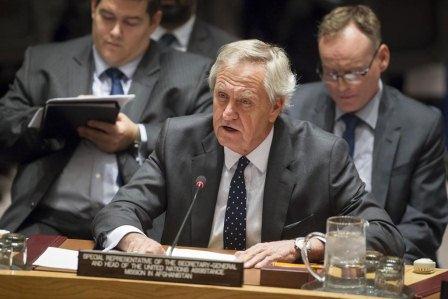
Special Representative and head of the UN Assistance Mission in Afghanistan (UNAMA) Nicholas Haysom. UN Photo/Loey Felipe
The United Nations Security Council held a session on the situation in Afghanistan on late Tuesday and extended UN mission in the country for another year.
Nicholas Haysom, the Special Representative of the Secretary-General for Afghanistan, briefed the 15-member Council on the situation in Afghanistan.
Top UN official highlighted five challenges ahead of the Afghan national unity government for survival in 2016, including a contracting economy, an intensifying insurgency, an increasingly divided political environment, significant medium-term financial demand, and the need to achieve progress towards a sustainable peace.
“For 2016, survival will be an achievement” for the Government, Haysom said. “Some may criticize this benchmark as being low, but survival does not mean inaction, or merely ‘treading water,’ but it means active engagement in confronting the five challenges,” he added.
Low economic growth
On the economic front, there had been an assumption in 2012 that the economy will continue eight per cent annual growth and the exploitation of Afghanistan’s abundant mineral resources would drive economic development.
“It is now clear however that neither would occur,” Mr. Haysom said. The World Bank now expects low economic growth, off a low base, which in turn has resulted in high unemployment, with hundreds of thousands of young people entering the work force each year finding no jobs.
Security threats
Turning to the security situation, the Taliban, emboldened by its military successes in Kunduz and elsewhere, will continue to test the Afghan security forces across the country, he noted. Yet in this first year of independent command, the Afghan security forces have largely held their own in the face of continuing high rates of attrition, he added.
“The stakes are high, not least because the loss of a provincial capital, even if temporarily, would have significant repercussions for the National Unity Government’s political standing,” he said.
On a positive note, since his previous briefing, the presence of Islamic State in Iraq and the Levant (ISIL/Da’esh) has been confined to a smaller area to the east of the country, following operations by Afghan security forces with support from the international military.
Divided political situation
On the political transition, the Government continues to be subject to criticism on account of the economic and security deterioration even though this is not of its own making. It is being challenged by fractious political elite, the erosion of a necessary sense of national unity, and consequentially that most precious political commodity, confidence in the future, he said.
In the face of calls for reviewing the current political framework, the United Nations and the international community have made it clear to all stakeholders that it stands firmly behind the new Government. Despite delays in effective decision-making, the Government has now appointed an Attorney General and a Minister of Interior. A number of key posts, however, remain to be filled.
With an election date of 15 October announced, electoral reform is important for the National Unity Government to indicate progress in democratisation. The Government has finally issued a decree establishing a new Selection Committee to nominate Independent Election Commissioners this week. Yet the urgency to complete preparations remains.
Medium-term funding needs
In the coming months, the international community will make critical decisions at Warsaw and Brussels on the level and type of assistance it will continue to provide to Afghanistan, Mr. Haysom said.
As the country continues to rely on external funding sources for 69 per cent of Government expenditures, failure by the international community to pledge a medium-term commitment to Afghanistan will have a devastating impact, both materially and on the levels of confidence of ordinary Afghans. Donor expectations of Afghanistan’s reform agenda must be realistic, taking into account the formidable challenges facing the country.
Progress towards peace
The final hurdle is progress towards a sustainable peace. “Afghan’s want peace, they deserve peace, but most importantly they need peace,” he said. Without a peace process, the sustainability and viability of all of efforts, in Brussels, Warsaw, New York, and elsewhere to bring stability and prosperity to Afghanistan will be called into question.
The establishment of the Quadrilateral Coordination Group is a welcome development that has reinvigorated efforts to put a peace process on track, he said, acknowledging the efforts of Pakistan to assist in midwifing such talks. A successful peace process will require the support of neighbouring countries and the wider region.
He, however, called for direct talks between the Taliban and the Afghan Government, noting that he again met with the Taliban Political Commission last week and stressed the need for an intra-Afghan dialogue involving Taliban. They however reiterated that they were not yet ready to engage directly with the Government, he said.
He welcomed today’s adoption by the Council of a resolution which renewed UNAMA’s mandate until 17 March 2017 and reaffirmed its important supporting role, at the request of the Afghan Government.
Based on UN News reports

International Sports
FIFA appoints record number of match officials for 2026 World Cup
A total of 52 referees, 88 assistant referees and 30 video match officials have been selected from across all six confederations and 50 member associations.
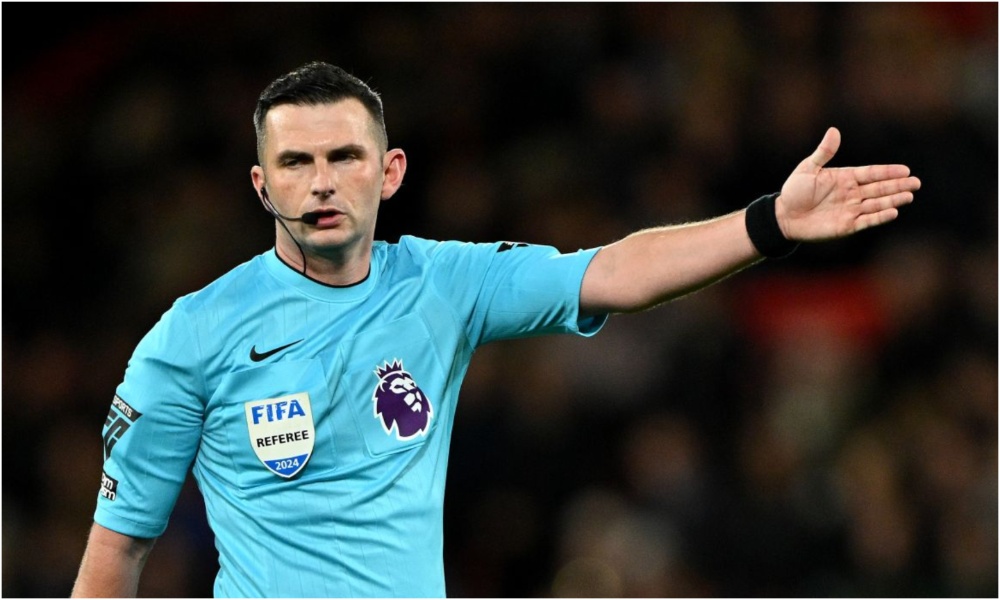
FIFA has announced the full list of match officials for the upcoming FIFA World Cup 2026, confirming what will be the largest refereeing team in the tournament’s history.
A total of 52 referees, 88 assistant referees and 30 video match officials have been selected from across all six confederations and 50 member associations, following a rigorous evaluation process that spanned more than three years.
The selection was based on FIFA’s “quality first” principle, with officials assessed on their consistency and performances in domestic leagues, international competitions and previous FIFA tournaments.
Pierluigi Collina said the chosen officials represent the highest standard in global football officiating. He noted that candidates were closely monitored over several years, taking part in seminars and major tournaments while undergoing regular performance reviews.
“This will be the biggest World Cup in history,” Collina said, referring to the expanded 48-team format and 104 matches set to be played across three host countries. He added that the officiating team has grown significantly compared to the 2022 tournament in Qatar, reflecting the increased scale of the competition.
Collina also highlighted the continued inclusion of women referees, with six female match officials selected, building on progress made during the previous World Cup.
Officials will undergo final preparations at a training camp in Miami starting on May 31, where they will receive support from fitness coaches, medical staff and match analysts to ensure they are in peak physical and mental condition ahead of the tournament.
Massimo Busacca said preparations began immediately after the conclusion of the 2022 World Cup, with a structured programme of workshops, monitoring and technical development designed to maintain the highest standards.
During the tournament, referees will continue daily training sessions, supported by detailed match analysis and on-field simulations involving local players.
Technology is also set to play a central role, with FIFA confirming the use of goal-line technology, an enhanced version of semi-automated offside systems and connected ball technology.
In a first for the World Cup, fans will also be able to view matches from the referee’s perspective using newly introduced body cameras, enhanced by artificial intelligence to improve video quality.
Following the Miami training camp, video match officials will relocate to Dallas, home of the International Broadcast Centre, while referees and assistant referees will remain in Miami for the duration of the tournament.
FIFA said additional measures aimed at increasing match tempo and reducing time-wasting—approved earlier this year by the International Football Association Board—will also be implemented.
With preparations now entering the final phase, FIFA says it is confident that “Team One” will be ready to meet the demands of what is expected to be a historic and groundbreaking World Cup.
Click here for full list of appointed match officials for the FIFA World Cup 2026.
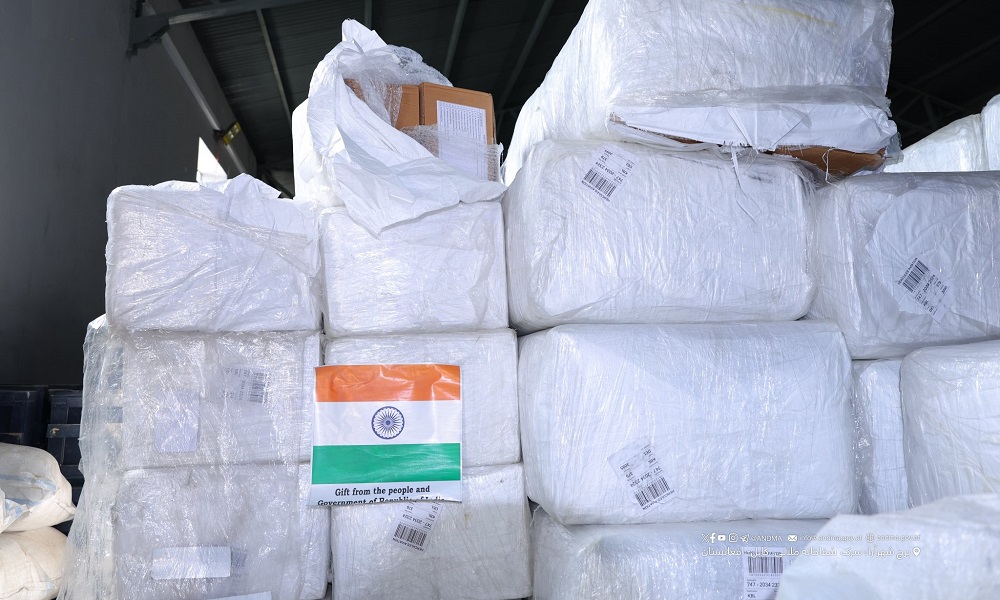
India has delivered three tons of humanitarian assistance to Afghanistan to support families impacted by recent flooding, the Afghanistan National Disaster Management Authority (ANDMA) said on Thursday.
Officials confirmed the aid shipment was received the same day and includes essential relief items such as 300 medical kits, 50 kitchen sets, 495 blankets, and 165 tarpaulins.
ANDMA expressed appreciation for India’s continued humanitarian support, noting that the assistance will help address urgent needs in flood-affected areas.
The authority added that a formal assessment is underway and that the aid will be distributed in a transparent and equitable manner to the most affected and vulnerable families.
Flooding has repeatedly affected several regions of Afghanistan, leaving communities in need of immediate relief and longer-term recovery support.
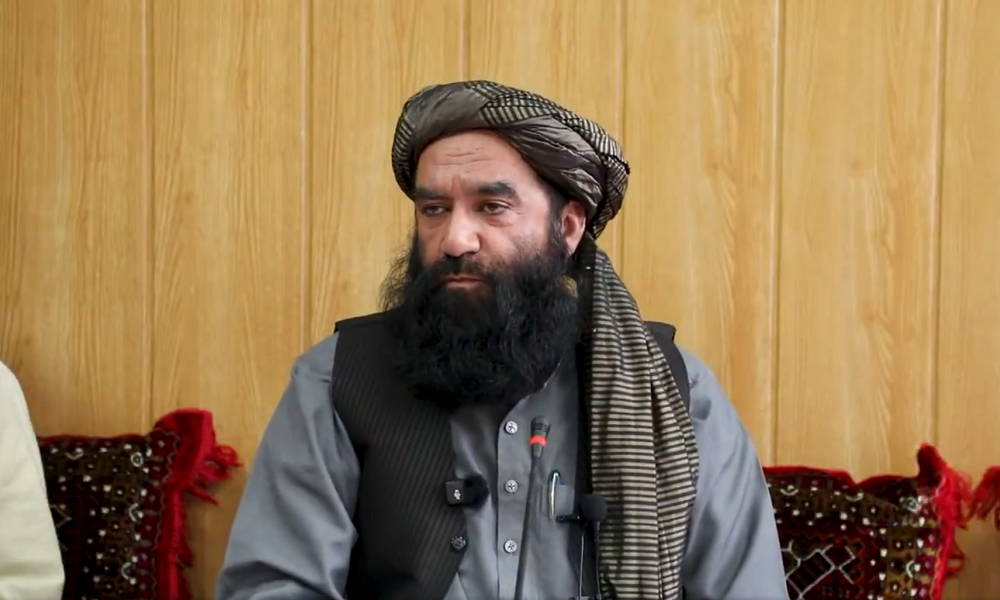
Noorullah Noori, Afghanistan’s Minister of Borders, Ethnic Affairs and Tribes, says the barbed-wire fencing along the disputed Durand Line is viewed by Afghans as a wire placed on the chest of the nation, stressing that Afghans will never accept a foreign barrier imposed on their land.
Noori made the remarks during a meeting with a number of political analysts, tribal elders and university professors at his office, where he emphasized that Afghanistan does not recognize an official border with Pakistan and that this position has been clearly communicated on multiple occasions.
Speaking at the gathering, the minister said the current governing system has emerged from among the people and that public cooperation and support have played a key role in reaching this stage.
He added that the system belongs to all Afghans and that all citizens of the country are treated equally. According to him, since the Islamic Emirate came to power, thousands of tribal and local disputes across the country have been resolved, and serious measures have been taken to safeguard the country’s borders.
Meanwhile, Mohammad Ali Jan Ahmad, Deputy Minister for Jirgas and Tribal Coordination at the ministry, said one of the most important factors behind the success of any society and political system is intellectual and ideological unity among the people.
He noted that such unity exists among the Afghan nation.
During the meeting, political analysts and tribal elders also emphasized the importance of unity and solidarity with the current system, stating that the people of Afghanistan will stand alongside the country’s security and defense forces to protect the nation and its territorial integrity.


ATN seals Ariana Snooker Championship deal for five seasons

Tahawol: China to host 2nd round of Kabul–Islamabad talks discussed

Saar: Fragile ceasefire in the Middle East reviewed

FIFA appoints record number of match officials for 2026 World Cup

Afghanistan U-17s fall to Uzbekistan as CAFA campaign nears conclusion

IEA Supreme Leader issues Eid-ul-Fitr message urging unity and support for Islamic system

14 Pakistani soldiers killed after military post falls along Durand line: MoD

IEA supreme leader orders replacement of foreign terminology in official documents

Afghan airstrikes target Pakistani military sites in retaliation for air attacks

Turkmenistan, Afghanistan discuss steps to speed up land acquisition for TAPI pipeline
Tahawol: China to host 2nd round of Kabul–Islamabad talks discussed
Saar: Fragile ceasefire in the Middle East reviewed

Tahawol: Two‑week truce agreement between Iran-US reviewed

Saar: US–Iran two-week ceasefire agreement discussed

Tahawol: Ongoing negotiations between Kabul-Islamabad discussed
-
 Latest News5 days ago
IEA supreme leader orders replacement of foreign terminology in official documents
-
 Latest News5 days ago
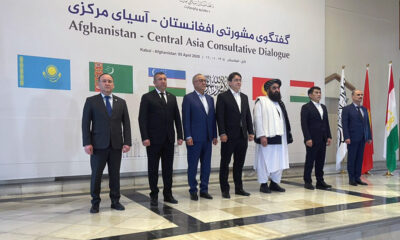
Afghanistan hosts inaugural Afghanistan–Central Asia Consultative Dialogue to strengthen regional cooperation
-
 Latest News5 days ago
IEA accuses Pakistan of war crimes amid heavy civilian losses
-

 World5 days ago
US rescues 2nd F-15 pilot hit above Iran: Trump
-
 Latest News3 days ago
China seeking to build trust between Afghanistan and Pakistan
-
 Regional5 days ago
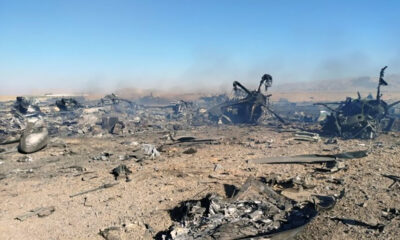
Iran claims it shot down US C-130 support aircraft in Isfahan
-

 International Sports4 days ago
IPL 2026: Lucknow hold nerve in final over to defeat Sunrisers
-
 Latest News4 days ago
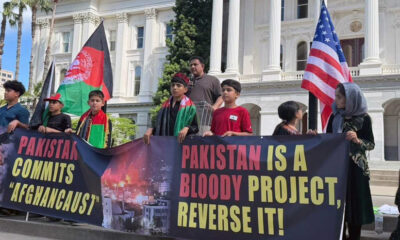
Afghan community in California condemns Pakistani strikes amid growing global protests