
Latest News
Loya Jirga urges govt to release prisoners in order to kick start peace talks

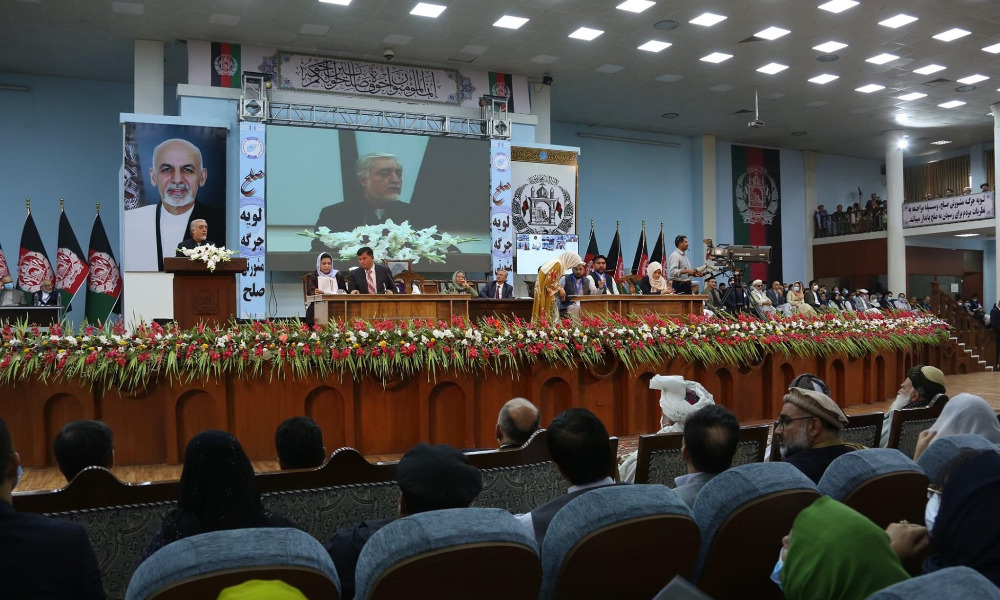
Afghanistan’s Loya Jirga, or grand council of tribal elders, community leaders, and politicians, on Saturday, urged the government to release the remaining 400 Taliban prisoners so as to move forward with intra-Afghan talks.
The Loya Jirga, called to determine the fate of the prisoners, convened Friday and wrapped up on Saturday. Over 3,200 delegates participated.
The delegates were split up into 50 working committees and discussed the prisoner release issue for two days.
Once each group had made their decision they submitted their recommendations to the Jirga’s administrative board.
All 50 committees recommended government free the 400 controversial prisoners.
Abdullah Abdullah, the head of the High Council of National Reconciliation and the chair of the Loya Jirga, said Saturday that the committees recommended the prisoners be released but that the Jirga would officially “announce the outcome tomorrow.”
“I congratulate all Jirga members divided into 50 working committees for promptly ending their free deliberations. I welcome their input and recommendations as part of this important consultative exercise as we compile & announce the outcome tomorrow,” Abdullah said in a tweet.
I congratulate all Jirga members divided into 50 working committees for promptly ending their free deliberations. I welcome their input and recommendations as part of this important consultative exercise as we compile & announce the outcome tomorrow. pic.twitter.com/K5TjBnYf4H
— Dr. Abdullah Abdullah (@DrabdullahCE) August 8, 2020
Meanwhile, Abdullah said that the direct talks between the Afghan government and the Taliban would begin three days after the end of the Jirga.
“Three days after the end of the jirga, Afghan talks will begin and we are ready to move this process forward properly to end the war in Afghanistan,” Abdullah said.
A readout of their conclusions, seen by Ariana News, indicates that these committees urged the international community, especially the United States, to guarantee the start of intra-Afghan negotiations and a comprehensive ceasefire for the release of prisoners.
In their recommendations, the committees recommended that the government and the High Council of National Reconciliation consider the following points regarding the release of the prisoners and the hoped-for intra-Afghan peace talks:
- To achieve lasting and dignified peace, the parties must show the necessary flexibility;
- Release 400 remaining Taliban prisoners so that there is no excuse to postpone peace talks;
- Unconditional ceasefire shall be established with the release of Taliban prisoners and the parties shall remain committed to it;
- Peace talks should begin as soon as possible;
- The formation of an all-inclusive national body for peace negotiations capable of defending the values and achievements of the last 19 years;
- Afghan-led peace talks should preferably be held in Afghanistan;
- The countries involved in the Afghan issue should stop supporting the Taliban and not escalate tensions;
- The Taliban should no longer carry out terrorist attacks under the name of ISIS (Daesh);
- Prisoners should be released on national and international bail so that they do not rejoin the battlefield;
- Guarantee from the international community from the start and success of the talks and the establishment of lasting peace in Afghanistan;
- Release prisoners of the country’s security forces in order to prevent the weakening of their national spirit;
- Decisively defend the republic and the achievements of the last 19 years in the peace negotiations;
- Defend the constitution, especially the second chapter of the constitution and the democratic system in negotiations;
- Protect civil liberties and rights enshrined in the Constitution, especially the rights and freedoms of women;
- Preserve freedom of speech and freedom of the press;
- Share the progress of peace talks with the people of Afghanistan during the talks;
- The government must obtain the consent of the families of war victims;
- Involve all different sections of society, especially women and youth in the peace negotiating team;
- The negotiating team must have the full capacity for dialogue;
- Peace agreements under the supervision and guarantee of the United Nations, major world and regional powers;
“All the members of the relevant committees emphasized that the people of Afghanistan have been making sacrifices for years. War has taken a heavy toll on us. To achieve peace and stability and to end the devastating phenomenon of war, we agree to release Taliban prisoners, provided that the international community guarantees the success of the talks and the establishment of lasting peace,” the chairmen of the committees said.
The chairmen added: “Agreeing to release Taliban prisoners does not mean forgiving their crimes. No individual or institution has the right to do so. But achieving peace and stability in the country is a national priority and a public necessity.
“Therefore, to facilitate the success of the peace talks, it is necessary to pave the way for the start of negotiations.”
After submitting the report of the working committees, Abdullah Abdullah, Chairman of the High Council for National Reconciliation and Chairman of the Grand Consultative Peace Jirga, meanwhile expressed his gratitude for the patience, comprehensive advice and constructive and comprehensive suggestions made by the members of the Jirga and said: “The High Council for National Reconciliation is very important and we will make great use of it in the negotiations.”
The Speaker of the Grand Consultative Peace Jirga expressed satisfaction with the successful completion of the working committees and said: “Afghanistan is at a critical and historic stage. It is a great success to understand the sensitivity of the situation and to give your advice in the light of the current situation and with the national interest in mind. However, the conditions are not favorable. But what definitely guarantees our victory is our unity.”
Meanwhile, some committees objected to the composition of the current negotiating team, urging the government to reconsider its make up and select new members for the team.
But sources close to the Taliban say that after the release of 400 prisoners, early talks are not possible and the demands of the parties involved have not been finalized.
Sayed Akbar Agha, a former member of the Taliban, said: “The Taliban are waiting for the release of 400 prisoners and the Taliban are ready for Afghan talks, but it is possible that other figures will join the government’s negotiating team and this will not be possible in a short time.”





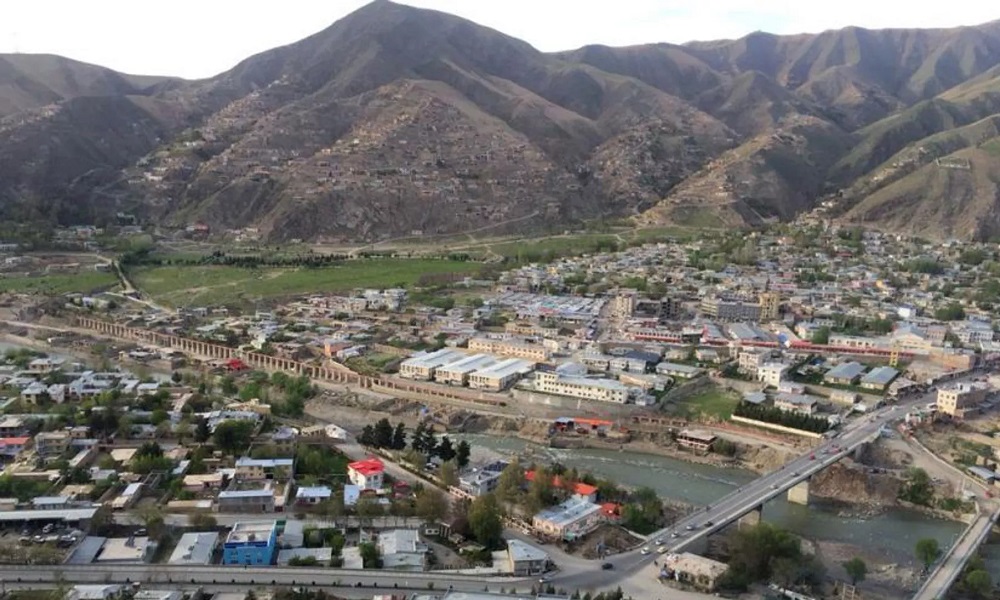
Two people have been killed amid protests against a poppy eradication campaign in northeastern Badakhshan province, local officials said.
Authorities said counter-narcotics forces were deployed on Friday to Atan Jalo area of Argo district to destroy poppy fields. Clashes erupted after a number of farmers and residents reportedly attempted to block the operation.
Officials said a child was killed during Friday’s unrest, while another person died on Saturday as protests and tensions continued in the area.
According to local authorities, demonstrators also temporarily blocked the Kishm–Faizabad highway, disrupting traffic for several hours before it was reopened following coordinated efforts by security officials, religious scholars, and community elders.
Officials blamed “drug traffickers and criminal groups” for inciting the unrest and said security forces have since regained control of the area.
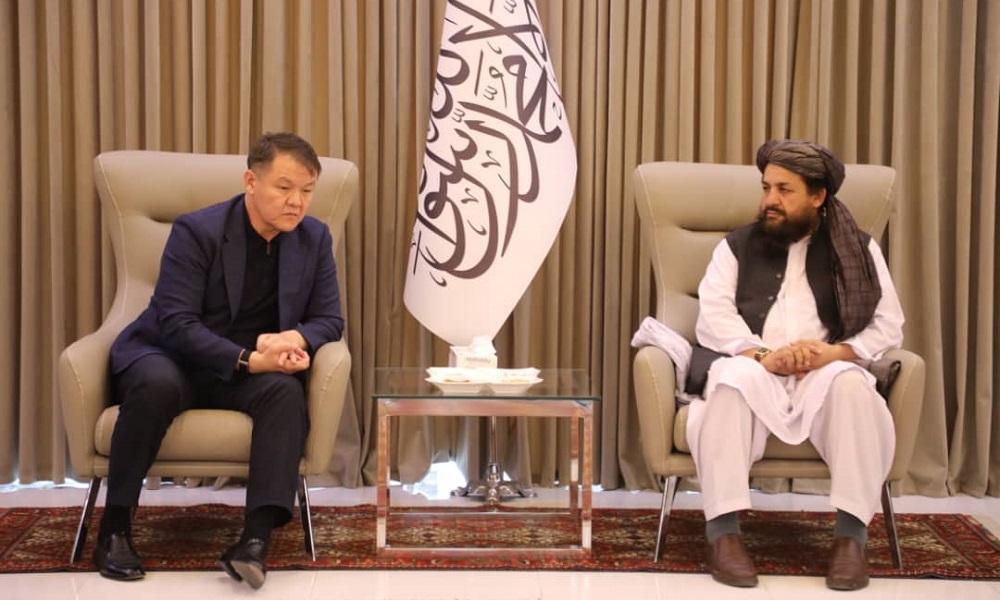
A high-ranking Uzbek delegation comprising government officials and private sector representatives from the Republic of Karakalpakstan arrived in Kabul on Saturday to discuss the expansion of trade and economic cooperation with Afghanistan.
The delegation is headed by Amanbay Orinbayev, Chairman of the Supreme Council of Karakalpakstan.
According to a statement from the Ministry of Industry and Commerce, the delegation is expected to hold talks with Nooruddin Azizi, the Minister of Industry and Commerce, focusing on strengthening bilateral trade and economic relations.
The ministry said the visiting delegation will also participate in trade connectivity meetings and business-to-business sessions aimed at enhancing commercial cooperation between the two sides.
As part of the visit, the Uzbek delegation is also scheduled to travel to Balkh province, where members will attend additional trade meetings and inaugurate an exhibition showcasing Uzbekistan’s domestic products.


Tahawol: Discussion on unknown fate of Middle East crisis

Saar: Problems and challenges of Afghan refugees in the world discussed

Afghan cricket delegation travels to China for technical cooperation

Two killed in protests against poppy field destruction in Badakhshan

High-ranking Uzbek delegation arrives in Kabul to boost trade ties

Bayat Power extends gas supply deal with Afghan Gas

Etihad Airways to expand Kabul–Abu Dhabi flights to daily service amid surging demand

Afghanistan’s new cricket head coach Richard Pybus arrives in Kabul

Afghanistan moves toward self-sufficiency in car battery production

Germany to launch online visa system for Afghan study and work applicants in Pakistan
Tahawol: Discussion on unknown fate of Middle East crisis
Saar: Problems and challenges of Afghan refugees in the world discussed

Tawsia: Discussion on Afghanistan’s economic path and position

Tahawol: Pressure on Afghan refugees from Tajikistan to Europe discussed

Saar: Ongoing criticism of Pakistan’s Afghanistan policy discussed
-
 Business2 days ago
New Afghanistan-China transport corridor launched via Turkmenistan
-
 Latest News4 days ago
Pakistan’s Achakzai pushes for Afghanistan dialogue amid economic strain
-
 Business3 days ago
Uzbekistan launches new cargo corridor linking China and Afghanistan
-
 Business3 days ago
Afghanistan presses Chinese contractor over delays in Mes Aynak copper project
-
 Latest News5 days ago
Food prices surge 20% in Afghanistan as Hormuz crisis disrupts supply routes
-

 International Sports5 days ago
Mumbai Indians pull off record chase as IPL action continues
-
 Health5 days ago
Midwives Day: UN urges greater investment to protect mothers and newborns in Afghanistan
-
 Latest News4 days ago
UNICEF report highlights progress and ongoing challenges for Afghan children