
Latest News
Civil society groups hit out at govt, calling it a ‘dictator’ system

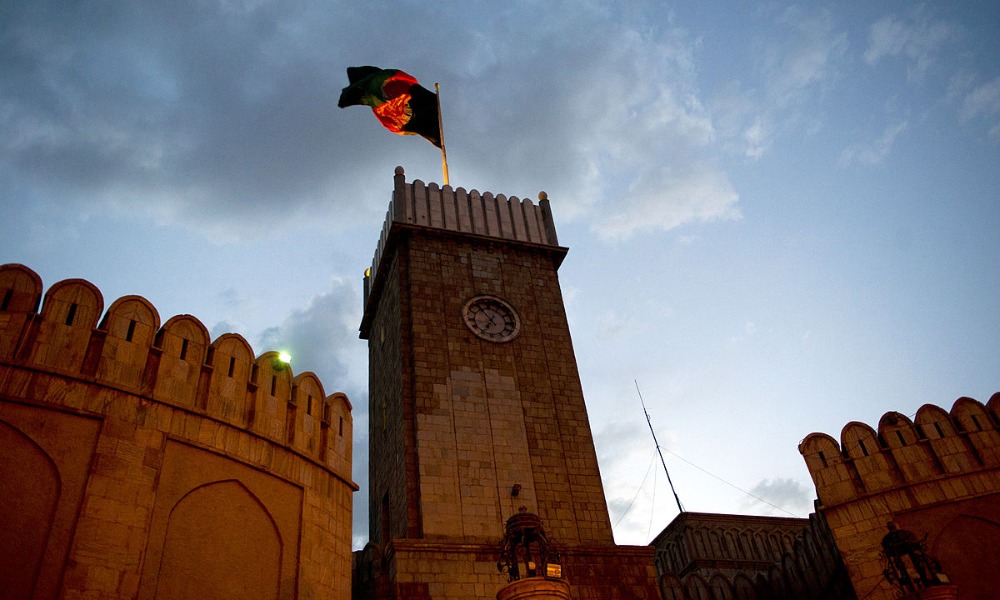
Seven Civil Society Organizations have jointly slammed government for compromising on democratic values, and went as far as to label government a “dictatorship” and Afghanistan a country its people no longer consider safe to live in.
In a position paper on Afghanistan’s Peace Process: Do Not Compromise on Demecratic Values & Civic Rights in the Intra-Afghan Peace Talks, the group said “the incumbent government is steeped in wide-spread corruption that has jeopardized and brought into question the essence of their governance.
They stated the current form of democracy is not ideal and is in fact a nominal one.
“The government epitomizes dictatorship. Power has not been actually separated; autonomy of the three main powers is questionable; and the judiciary is now working under the command of the President leaving judicial institutions with little to no autonomy.
“Even independent commissions have lost their independence and are now under the command of the president,” the paper stated.
The group noted that Afghans have no physical, psychological, nor legal security and every day is marked by a loss of a dear one. People live in “utter fear”, the group said.
The group also pointed out that over the past 20 years, Afghanistan has made enormous strides but despite this and considering the level of financial aid, and military support Afghanistan has received, these achievements could have been far greater in number and in size especially in remote provinces that still remain severely underprivileged and underserved.
The group stated that given that existing circumstances in Afghanistan are more concerning then ever, achievements made are also under serious threat.
The sharp increase in targeted killings has caused the civil society work space to shrink and activists are being restricted at a rapid pace, they said.
According to the group, human rights, particularly those of women, have deteriorated the most. “Many conservative groups have formed in the country which threaten many of Afghans’ contemporary achievements including freedom of speech, democratic ideals, and the civil society.
“Mullah Ansari of Herat, Jihadi Leader of Takhar, and Gulbuddin Hekmatyar in Kabul are a few among many others who have rebelled and who are chronically
instigating their constituents against Afghanistan’s democratic ideals,” the paper read.
On the issue of killings of civil society activists, the group said government has “no workable mechanism in place for the protection of our civil society activists, human rights defenders and journalists, and for them, their protection is clearly not a priority.”
“Civil society activists, human rights defenders, and journalists are being systematically targeted and killed,” the group stated.
They stated that recent targeted killings have adversely affected people’s emotional and psychological wellbeing to a point where people now live every moment of their lives in fear.
“People have been severely discouraged, they no longer have the willpower, the desire or the motivation to create or innovate or to initiate civic undertakings.”
The group also questioned the legality and legitimacy of political governance in the country. Given that provincial council elections should have been held three years ago, the group stated that these official bodies have since been functioning illegally.
The group also stated that “independence of the three state powers is critically questionable”, the paper stated adding that “the president has always exploited his power and authority and has brought into question the independency of the other two powers” – that being parliament and the judiciary.
The group also stated that “wide-spread corruption has resulted in turbulence among the masses, decreasing social services to the lowest. Government’s accountability against its work and decisions is poor and access to information is also very limited.”
On the issue of the peace process, the group of seven said: “Despite months of negotiations, there has yet been no sensible and concrete results obtained by either of the sides, and an exacerbation of the problem is that the negotiating sides are yet to agree on the agenda and procedures of the negotiations.
The group also decried the fact that many local stakeholders including civil society and the youth have been excluded form the negotiations.
The group also asks what could the outcome be should Washington’s new peace plan be implemented.
It was made clear in the paper that should an interim government be the only way to resolve the crisis then the United Nations bust safeguard Afghanistan’s achievements.












Kazakhstan’s Foreign Minister Mukhtar Tileuberdi has called for pragmatic and coordinated international engagement with Afghanistan, saying the country’s long-term stability is closely linked to the security and sustainable development of Central Asia.
Speaking during the general debate of the 81st session of the United Nations General Assembly in New York on Friday, Tileuberdi said humanitarian assistance to Afghanistan remains essential but alone cannot break the cycle of poverty, displacement and dependency.
He said Kazakhstan supports a “pragmatic, coordinated and step-by-step” approach to international engagement with Afghanistan, with the United Nations playing a central role.
Tileuberdi also said Kazakhstan is working with the UN to operationalize the United Nations Regional Centre for the Sustainable Development Goals for Central Asia and Afghanistan in Almaty.
He said the success of the centre should be measured by the results and assistance it delivers to the region.


Abu Muslim Farah defeat Khurasan Faryab 2-0 in ACL season six

Saar: Concerns over Pakistan’s political crisis discussed

Afghanistan Champions League: Omar Zawak Herat beat Toofan Herat 1-0

Blast in Pakistan’s Dera Ismail Khan kills 11, injures 30

Ariana Afghan Airlines increases Kabul-Delhi cargo flights

Saudi energy group signs major Afghanistan deals covering gas exploration and pipeline plans

Trump floats idea of renaming Atlantic or Pacific Ocean

US hits Egyptian bank branches with Iran sanctions as war marks six months

Nepal flood rescue mission enters critical phase as thousands remain missing

Iranian clubs to face Gulf opponents at neutral venues in Asian Champions League Elite
Saar: Concerns over Pakistan’s political crisis discussed

Exclusive interview with Abdul Latif Mansoor, Minister of MRRD

Tawsia: Overview of Afghanistan’s iron mines

Tahawol: Discussion on fresh Pakistani airstrikes on Afghanistan

Saar: Calls for international support for Afghanistan discussed
-

 World5 days ago
CNN, MS NOW and Politico sue Trump, challenging White House ban
-

 Latest News3 days ago
Ariana Afghan Airlines ranks seventh among 45 Central Asian airlines
-

 Latest News4 days ago
UN reiterates call for respect for international law after Kunar airstrikes
-

 Regional3 days ago
US and Iran hold first talks since June after Trump’s ‘annihilation’ threat
-

 Latest News3 days ago
Silk Road highway in Wakhan corridor now reaches the China border
-

 Latest News4 days ago
Afghan Official: Pakistan’s airstrikes will not go unanswered
-

 Sport4 days ago
Afghan boxing referee heads to China for international festival
-

 Regional5 days ago
G7 foreign ministers call on Iran to stop arming Houthis