
Latest News
Al-Qaeda operating across Afghanistan: Report

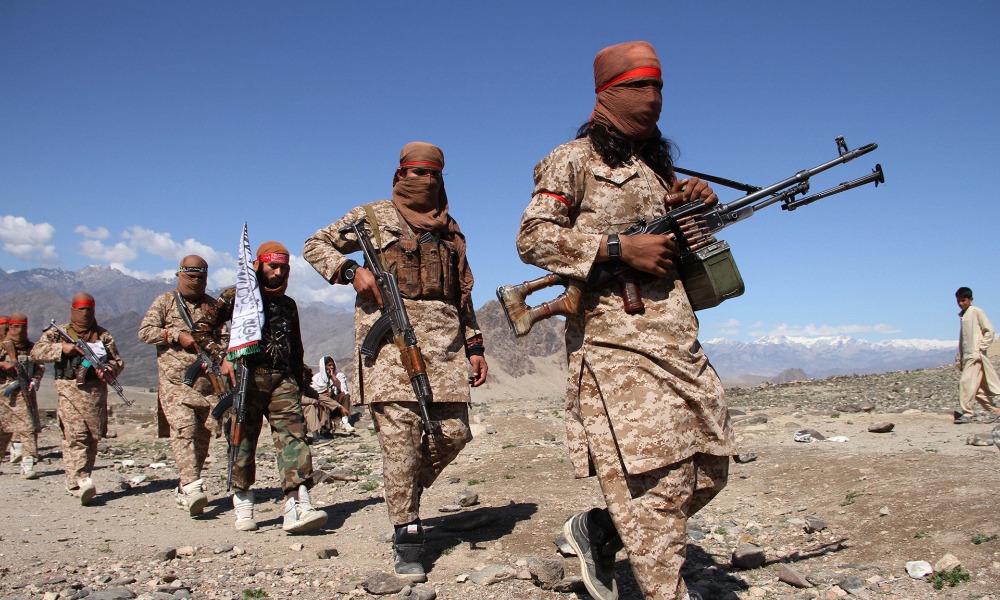
Al Qaeda and its regional branch, Al Qaeda in the Indian Subcontinent, continue to operate across Afghanistan despite repeated claims by the Taliban that the group has no presence in the country, the Long War Journal said in a report.
According to the report, Al Qaeda’s enduring presence in Afghanistan is visible both through press reporting on Coalition operations against the terror group, and Thabat, Al Qaeda’s own media arm that has noted the group’s operations in 18 provinces.
“Afghan security forces have targeted Al Qaeda operatives in two additional provinces. In all, Al Qaeda is operating in at least 21 of Afghanistan’s 34 provinces,” the report said.
Thabat, a weekly Al Qaeda newsletter that covers its operations across the globe and is analogous to the Islamic State’s Al Naba news service, has noted multiple reports of Al Qaeda’s activities in Afghanistan. Thabat is described by the United Nations Analytical Support and Sanctions Monitoring Team as “one of the group’s [Al Qaeda’s] media arms.”
While the Taliban, on its official website Voice of Jihad, reports on dozens of attacks daily against Afghan security forces and government targets, Thabat only reports on attacks in which Al Qaeda in the Indian Subcontinent, as well as allied groups such as the Islamic Jihad Union, the Islamic Movement of Uzbekistan, Lashkar-e-Taiba, Jaish-e-Mohammed, Katibat Imam Bukhari, Jamaat Ansarullah, and others, are directly involved.
An analysis of 16 issues of Thabat (issues 3 through 18) shows that Al Qaeda and its constellation of allies in Afghanistan have been involved in dozens of attacks from Nov. 2020 to the present day in 18 of Afghanistan’s provinces.
The provinces where Thabat reported on operations are Badakhshan, Balkh, Farah, Faryab, Ghazni, Helmand, Jawzjan, Kapisa, Kabul, Kandahar, Kunar, Kunduz, Khost, Logar, Nangarhar, Takhar, Uruzgan, and Zabul.
The Journal stated that the Afghan press reports from Sept. 2020 to the present confirms that Al Qaeda and its allies are operating in seven of the provinces noted by Thabat, the Long War Journal reported.
Those provinces are Badakhshan, Farah, Ghazni, Helmand, Kapisa, Kunar, and Nangarhar. Additionally, Afghan security forces targeted Al Qaeda in two other provinces that were not mentioned by Thabat: Nimroz and Paktika.
“There are over a dozen press reports noting Al Qaeda’s operations in the nine provinces. For instance, in late March 2021, Afghanistan’s National Directory of Security killed Abu Muhammad al Tajiki, a senior AQIS military commander in Paktika province. Also, in July 2020, Afghan officials noted that Al Qaeda was operating a training camp in southern Helmand and also operating in Nimruz,” the report read.
According to the report, the information is consistent with the previous reporting on Al Qaeda’s presence in Afghanistan.
“In July 2020, the United Nations Security Council Analytical Support and Sanctions Monitoring Team reported that Al Qaeda “is covertly active in 12 Afghan provinces: Badakhshan, Ghazni, Helmand, Khost, Kunar, Kunduz, Logar, Nangarhar, Nimruz, Nuristan, Paktiya and Zabul.” This corresponds to nine of the 18 provinces mentioned by Thabat (Badakhshan, Ghazni, Helmand, Khost, Kunar, Kunduz, Logar, Nangarhar, and Zabul).”
The Analytical Support and Sanctions Monitoring Team noted that AL Qaeda is estimated to have between 400 and 600 operatives in Afghanistan, the report said.
In May 2019, General Austin Miller, the commander of Resolute Support Mission and US Forces – Afghanistan, noted that Al Qaeda is operating “across the country” and not confined to one region.
“We have seen al-Qaeda in Afghanistan. Yes, in different parts of Afghanistan,” Miller said at the time quoted by the Journal.
“In different parts of Afghanistan, we can find them, so it’s not one particular region, it’s across the country,” Miller stated.
In March 2019, the Analytical Support and Sanctions Monitoring Team estimated that Al Qaeda was operating in 13 of Afghanistan’s 34 provinces.
“FDD’s Long War Journal has tracked al Qaeda’s presence in Afghanistan for well over a decade, using press releases and public statements from the US military, NATO’s command in Afghanistan, and Afghan security services, as well as the jihadist groups’ own martyrdom statements,” the report said.
“The data clearly shows that al Qaeda and allied terrorist groups have been operating on Afghan soil for the past two decades with the approval of the Taliban. These terrorist organizations often operate in areas controlled by the Taliban – and the jihadists killed in coalition or Afghan raids often die alongside members of the Afghan Taliban.”
“Between 2007 and 2019, NATO, US, and Afghan forces have launched at least 373 operations against these foreign terror groups in 27 of Afghanistan’s 34 provinces. Many of the raids against Al Qaeda and its allies have gone unreported,” the report concluded.












Kazakhstan’s Foreign Minister Mukhtar Tileuberdi has called for pragmatic and coordinated international engagement with Afghanistan, saying the country’s long-term stability is closely linked to the security and sustainable development of Central Asia.
Speaking during the general debate of the 81st session of the United Nations General Assembly in New York on Friday, Tileuberdi said humanitarian assistance to Afghanistan remains essential but alone cannot break the cycle of poverty, displacement and dependency.
He said Kazakhstan supports a “pragmatic, coordinated and step-by-step” approach to international engagement with Afghanistan, with the United Nations playing a central role.
Tileuberdi also said Kazakhstan is working with the UN to operationalize the United Nations Regional Centre for the Sustainable Development Goals for Central Asia and Afghanistan in Almaty.
He said the success of the centre should be measured by the results and assistance it delivers to the region.


Abu Muslim Farah defeat Khurasan Faryab 2-0 in ACL season six

Saar: Concerns over Pakistan’s political crisis discussed

Afghanistan Champions League: Omar Zawak Herat beat Toofan Herat 1-0

Blast in Pakistan’s Dera Ismail Khan kills 11, injures 30

Ariana Afghan Airlines increases Kabul-Delhi cargo flights

Saudi energy group signs major Afghanistan deals covering gas exploration and pipeline plans

Trump floats idea of renaming Atlantic or Pacific Ocean

US hits Egyptian bank branches with Iran sanctions as war marks six months

Nepal flood rescue mission enters critical phase as thousands remain missing

Iranian clubs to face Gulf opponents at neutral venues in Asian Champions League Elite
Saar: Concerns over Pakistan’s political crisis discussed

Exclusive interview with Abdul Latif Mansoor, Minister of MRRD

Tawsia: Overview of Afghanistan’s iron mines

Tahawol: Discussion on fresh Pakistani airstrikes on Afghanistan

Saar: Calls for international support for Afghanistan discussed
-

 World5 days ago
CNN, MS NOW and Politico sue Trump, challenging White House ban
-

 Latest News3 days ago
Ariana Afghan Airlines ranks seventh among 45 Central Asian airlines
-

 Latest News5 days ago
UN reiterates call for respect for international law after Kunar airstrikes
-

 Regional4 days ago
US and Iran hold first talks since June after Trump’s ‘annihilation’ threat
-

 Latest News4 days ago
Silk Road highway in Wakhan corridor now reaches the China border
-

 Regional3 days ago
Iran airlines cancel flights as US sanctions hit
-

 Latest News5 days ago
Afghan Official: Pakistan’s airstrikes will not go unanswered
-
 Regional5 days ago
G7 foreign ministers call on Iran to stop arming Houthis