Latest News
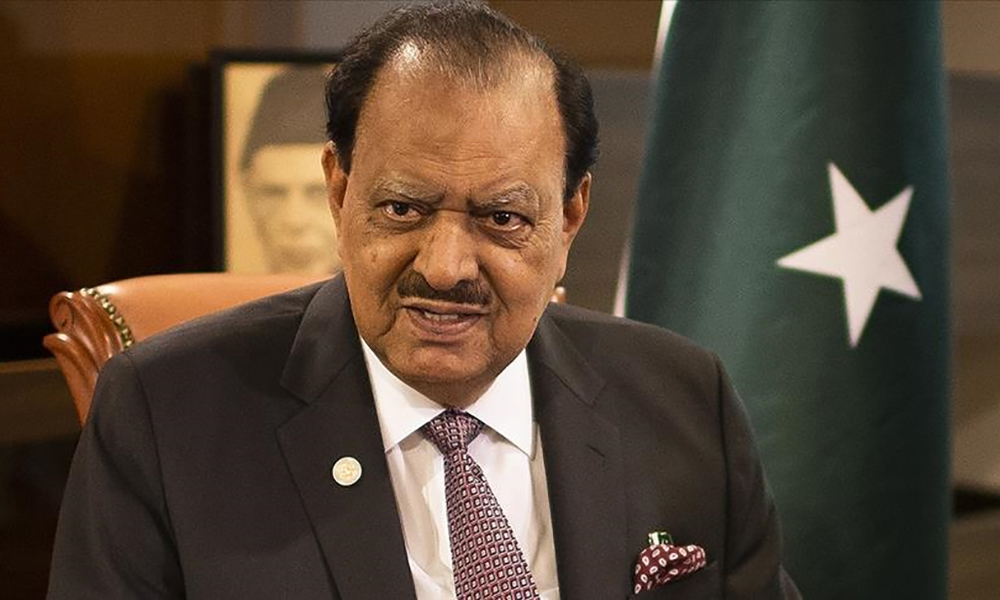
Pakistan’s former president Hussain dies at 80
Pakistan’s former president Mamnoon Hussain died in Karachi on Wednesday at the age of 80 after a long illness, his family confirmed.
Hussain served as the 12th President of Pakistan between September 2013 and September 2018.
He was diagnosed with cancer in February last year and had been receiving treatment at a private hospital in Karachi for a few days when he died, Dawn News reported.
Hussain is survived by his wife and three sons.

Latest News
Da Afghanistan Bank strengthens Islamic banking through new training initiatives
Officials at Da Afghanistan Bank (Central Bank) say the Afghanistan Institute of Banking and Finance represents an important step toward professionalizing the country’s banking sector and strengthening financial decision-making.
Hasibullah Noori, spokesperson for the central bank, said broad programs have been launched to expand Islamic banking services across Afghanistan, with several institutions already operating in the sector.
According to Noori, parts of the country’s banking activities have already been aligned with Islamic banking principles, while additional training programs are underway to strengthen the capacity of banking staff and support the further expansion of Islamic banking services.
Mustafa Safi, head of the Afghanistan Institute of Banking and Finance, which operates under the supervision of the central bank, said the institute has introduced extensive human resource training and capacity-building programs aimed at developing Islamic banking services in Afghanistan.
Economic analysts have welcomed the initiative, saying the gradual expansion of Islamic banking could improve transparency in the financial system and help increase public trust in banks.
Officials said more than 1,200 central bank employees have already benefited from the institute’s training programs, while additional courses are planned for students at public and private universities.
The Afghanistan Institute of Banking and Finance officially began operations in 1403 under the supervision of Da Afghanistan Bank.
Latest News
IEA leader urges scholars to strengthen Sharia implementation and preserve Jihad history
The leader emphasized that implementing Islamic law and properly explaining it to the public are among the key responsibilities of scholars.
The supreme leader of the Islamic Emirate of Afghanistan Hibatullah Akundzada has called on religious scholars to strengthen the implementation of Sharia and preserve the history of jihad.
The call was made at a meeting with members and officials of the Ulema councils of Parwan and Kapisa provinces, Hamdullah Fitrat, Deputy Spokesman of the Islamic Emirate said.
Fitrat said the meeting was attended by the Foreign Minister, a number of religious scholars, and senior officials of the Islamic Emirate.
During the gathering, the leader praised the activities of the Ulema councils in Parwan and Kapisa, saying scholars now have an important opportunity to promote Islamic teachings and strengthen public awareness among the people.
He said scholars are responsible for addressing religious issues in their provinces and guiding society in accordance with Islamic principles.
“Strengthen unity and solidarity among yourselves, because the unity of scholars leads to the unity of the Muslim Ummah,” the leader told participants, according to Fitrat.
He also stressed the importance of Fiqh discussions, saying such gatherings help improve religious research, clarify religious matters, and strengthen cooperation and brotherhood among scholars.
According to Fitrat, the leader said Allah has honored religious scholars with Islamic knowledge, describing them as inheritors of the prophets and trustees of Allah on earth.
He said scholars throughout history have made sacrifices to protect Islam and Sharia through both intellectual efforts and armed struggle, while also contributing to the spread of religion through books, commentaries, and other religious writings.
The leader emphasized that implementing Islamic law and properly explaining it to the public are among the key responsibilities of scholars.
He also said scholars should help explain decrees and laws issued by the Islamic Emirate and raise public understanding of their importance.
In another part of his speech, the leader called on scholars to cooperate with the Directorate for Preservation of Jihadi Works under the Ministry of Information and Culture to preserve the history and legacy of jihad.
He stressed the importance of documenting martyrdom sites, installing plaques on the graves of martyrs, preparing books and publications about their sacrifices, and recording the history of jihad for future generations.
The leader also urged scholars to educate the public about the sacrifices made by Mujahideen, martyrs, disabled veterans, and orphans so that the history of jihad is not forgotten.
According to the statement, participating scholars renewed their allegiance to the leader of the Islamic Emirate at the end of the meeting and pledged continued support for the leadership and the Islamic system.
Latest News
Durand Line closure, Iran conflict worsening hunger crisis in Afghanistan: UN
The United Nations says nearly one million additional Afghan children at risk of malnutrition could have received food assistance if tensions with Pakistan and the war involving Iran had not sharply increased transport costs and disrupted supply routes.
Carl Skau, deputy executive director of the World Food Programme, told AFP that Afghanistan is facing an escalating nutrition emergency, with malnutrition cases reaching record levels in 2025.
“It is a nutrition crisis here in Afghanistan,” Skau said, adding that the rise in malnutrition this year is even worse than last year’s unprecedented surge.
According to WFP estimates released in January, around five million Afghan women and children are expected to suffer life-threatening malnutrition this year.
The crisis has been compounded by a near-total closure of the Durand Lin for eight months, as well as the broader economic fallout from the conflict involving Iran. The disruptions have driven up food and fuel prices and affected supply chains.
“If we weren’t struggling with the supply chain, both delays and costs, we would be able to feed a million more children here in Afghanistan,” Skau said.
He cited the example of thousands of tons of fortified biscuits intended for Afghan schoolchildren that were originally scheduled to enter Afghanistan through Pakistan. After the Durand Line closure, the supplies were rerouted through Dubai and Iran, but renewed regional conflict forced another diversion through several countries, including Saudi Arabia, Turkiye, Georgia and Turkmenistan.
“It’s about to arrive this week, but it’s taken… months. It cost us way more,” Skau said.
The WFP has also struggled to secure funding for Afghanistan, receiving only eight percent of its targeted budget for this year.
-
Business4 days agoAfghanistan signs $46 million deal to develop standard laboratory complexes
-
World17 hours agoLarge blast near Beit Shemesh part of pre-planned test: Israeli defense firm
-
Latest News4 days agoMinister of Refugees meets Sadin Ay Yildiz, discusses Afghan migrant issues in Turkey
-
Latest News3 days agoIEA FM receives credentials of new ICRC head in Afghanistan
-
Latest News2 days agoAfghan migrant arrested over alleged assault of schoolgirl in Germany
-
World5 days agoUS war in Iran has cost $29 billion so far, Pentagon says
-
Latest News3 days agoUS CENTCOM chief says Afghanistan remains key terrorism concern
-
Latest News5 days agoKhalilzad accuses Pakistan of playing ‘double game’ amid Iran-US tensions