
Latest News
Airlift begins for Afghans who worked for US during its longest war

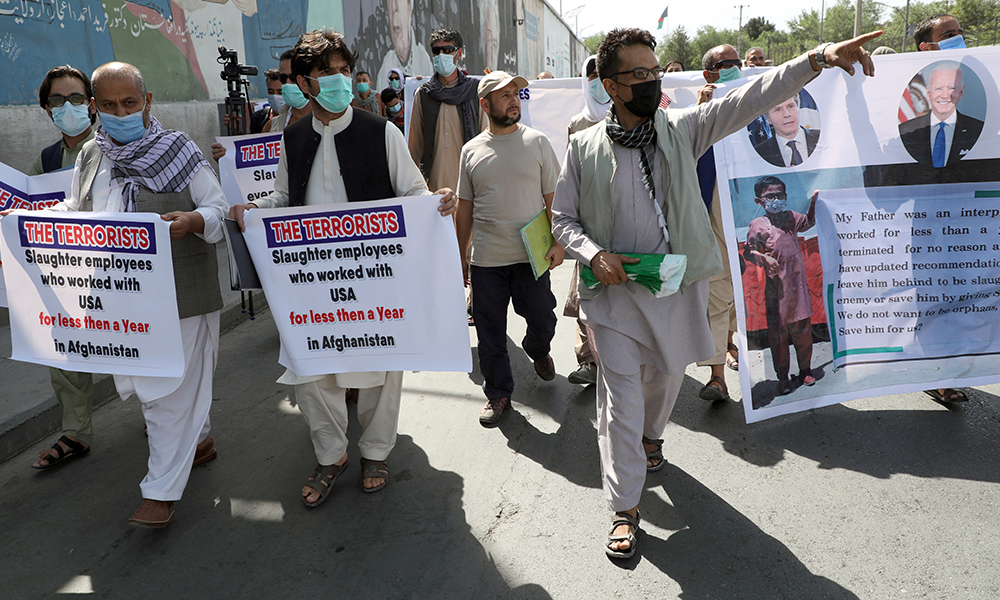
Some 200 Afghans were set to begin new lives in the United States on Friday as an airlift got underway for translators and others who risk Taliban retaliation because they worked for the United States during its 20-year war in Afghanistan, U.S. officials said.
The operation to evacuate U.S.-affiliated Afghans and family members comes as the U.S. troop pullout nears completion and government forces struggle to repulse Taliban advances.
The first planeload of 200 evacuees arrived at Fort Lee, a military base in Virginia, for final paperwork processing and medical examinations.
The Afghans are being granted Special Immigrant Visas (SIV) entitling them to bring their families. As many as 50,000 or more people ultimately could be evacuated in “Operation Allies Refuge”.
“These arrivals are just the first of many as we work quickly to relocate SIV-eligible Afghans out of harm’s way — to the United States, to U.S. facilities abroad, or to third countries — so that they can wait in safety while they finish their visa applications,” President Joe Biden said in a statement.
Secretary of State Antony Blinken said in a separate statement that the U.S. would continue to use “the full force of our diplomatic, economic, and development toolkit” to support the Afghan people after the United States’ longest war.
The first group of arrivals is among some 2,500 SIV applicants and family members who have almost completed the process, clearing them for evacuation, said Russ Travers, Biden’s deputy homeland security adviser.
The Afghans were expected to remain at Fort Lee for up to seven days before joining relatives or host families across the country.
The evacuees underwent “rigorous background checks” and COVID-19 tests, Travers added. Some were already vaccinated, and the rest will be offered shots at Fort Lee.
Approximately 300 U.S. service members from several installations will provide logistics, temporary lodging, and medical support at Fort Lee, said Defense Secretary Lloyd Austin.
Around 75,000 other Afghans have been resettled in the United States in the last decade, he said in a statement, adding there is a “moral obligation” for the country “to help those who have helped us.”
The surging violence in Afghanistan has created serious problems for many SIV applicants whose paperwork is in the pipeline amid reports – denied by the Taliban – that some have been killed by vengeful insurgents.
Some applicants are unable to get to the capital Kabul to complete the required steps at the U.S. embassy or reach their flights.
The SIV program has also been plagued by long processing times and bureaucratic knots that led to a backlog of some 20,000 applications. The State Department has added staff to handle them.
The majority of those would likely miss out on the airlift operation, including the roughly 50% who were in the early stages of the process as the clock counts down towards the U.S. withdrawal by September.
Applicants in that group have held multiple protests in Kabul in recent months and they and advocates say they face the risk of violence while they wait that will be heightened once troops withdraw.
Ross Wilson, Charge D’Affaires of the U.S. Embassy in Kabul, told reporters that after the initial round of flights taking out those who received security clearances, around 4,000 applicants and their families who were in the later stages but still needed interviews would be taken somewhere outside the United States for processing.
That left roughly 15,000 applicants in earlier stages waiting in Afghanistan.
“We’ve felt it appropriate that we focus our energies on those parts of the SIV applicant pool who have demonstrated that they meet the criteria under the law and then work to relocate them,” he said, adding efforts were taking place in Washington to help early-stage applicants access documents.
Adam Bates, policy counsel for the International Refugee Assistance Project, which provides legal aid for refugees, said the United States had had 20 years to anticipate what the withdrawal would look like.
“It’s unconscionable that we are so late,” he said.
Kim Staffieri, co-founder of the Association of Wartime Allies, which helps SIV applicants, said surveys conducted over Facebook show that about half of the applicants cannot reach Kabul, including many approved for evacuation.
Wilson said that they believed the “overwhelming majority” of people the airlift was offered to were able to get to Kabul.
“We’re focusing our efforts on those that we can get out,” he said. “We cannot through this program solve every problem in this country.”
Congress created SIV programs in 2006 for Iraqi and Afghan interpreters who risked retaliation for working for the U.S. government.







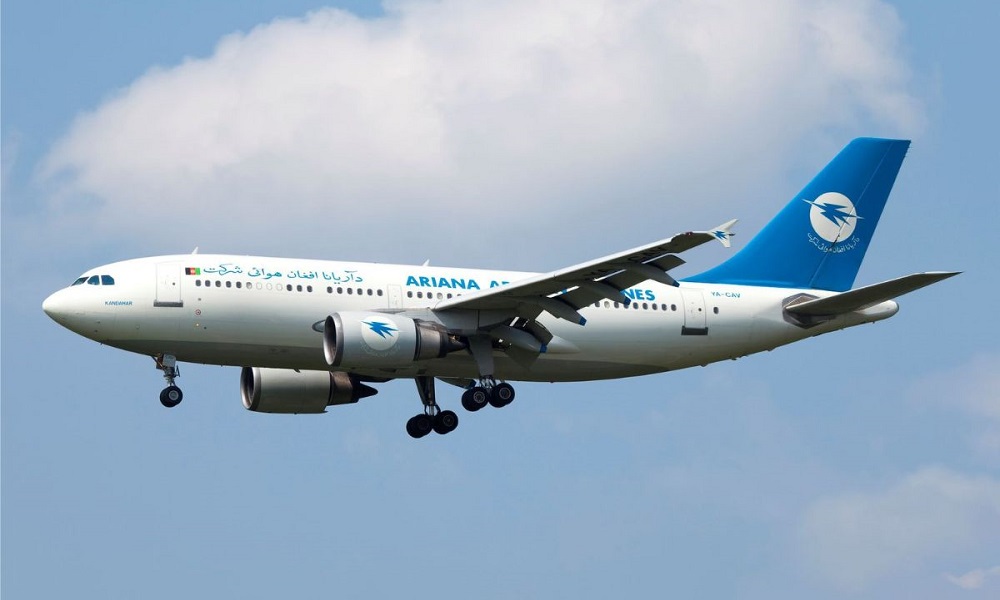
Ariana Afghan Airlines has ranked seventh among 45 airlines in Central Asia in Skytrax’s 2026 rankings.
Company officials say Ariana Afghan ranked eighth on the list in 2025, but moved up one place this year following improvements in service quality and the expansion of its operations.
According to the officials, in 2026 the airline met criteria including service quality, flight safety, professional cabin crew, and experience in the aviation sector, placing it among the top 10 airlines in Central Asia.
Skytrax is an international organization that evaluates and ranks the quality of services in the aviation industry and airlines, assessing and ranking carriers annually based on specific criteria.
Latest News
Silk Road highway in Wakhan corridor now reaches the China border
The road is expected to be officially opened for use in the near future, potentially improving connectivity through the remote Wakhan Corridor.
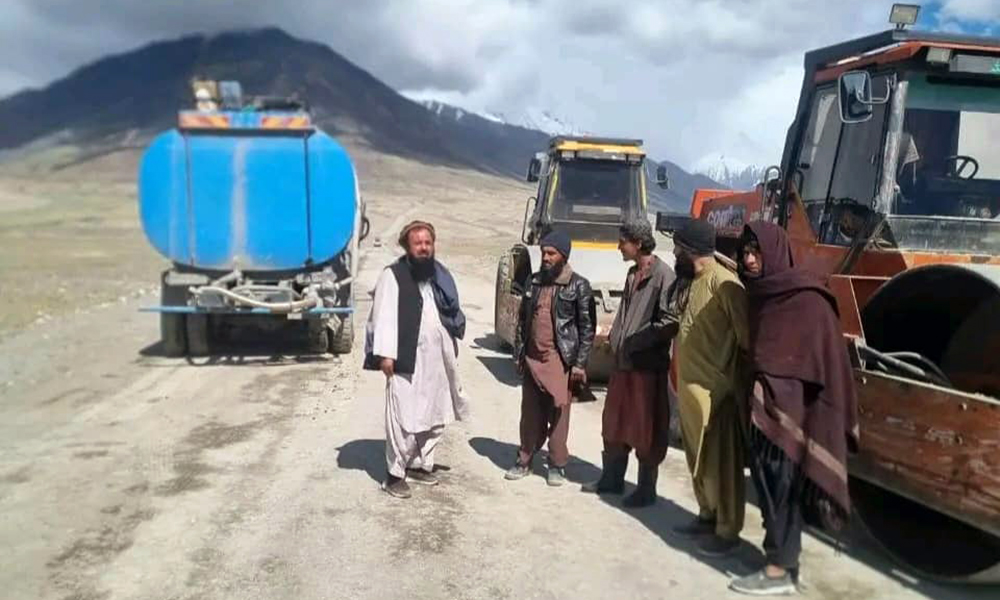
The construction of the Silk Road Highway in Afghanistan’s Wakhan Corridor has been fully completed after five years of work, officials in Badakhshan province said.
Amanullah Chehra, head of Rural Rehabilitation and Development in Badakhshan, said the 121.13-kilometre road begins in the Barghil area and stretches to Bzai Gonbad near the Chinese border.
According to officials, the road is between 7 and 10 metres wide and includes three major bridges, each measuring approximately 20 to 22 metres in length. Numerous smaller drainage structures have also been built along the route to facilitate the flow of water.
The road is expected to be officially opened for use in the near future, potentially improving connectivity through the remote Wakhan Corridor.
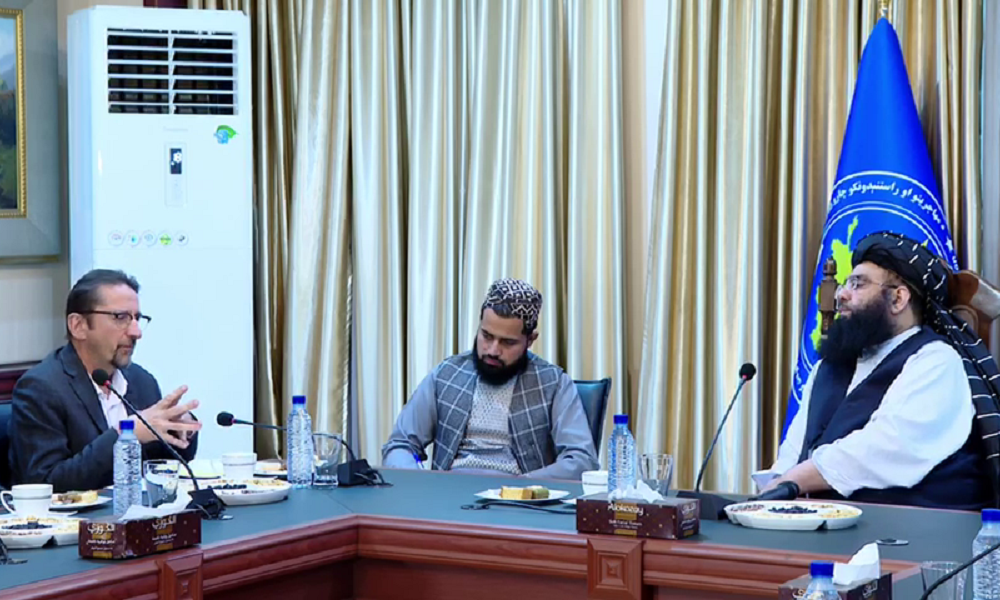
Afghanistan’s Minister of Refugees and Repatriation, Mawlawi Abdul Kabir, met on Wednesday with Bruno Lemarquis, UNAMA’s Deputy Head for Humanitarian Affairs, to discuss the situation of Afghan returnees and humanitarian assistance.
The Ministry of Refugees and Repatriation said Lemarquis briefed the minister on assessments conducted by UN agencies during visits to several provinces to identify the needs of returnee families.
Lemarquis said joint cooperation between UN agencies and the Islamic Emirate is needed to support and resettle returnees. He added that UN agencies are currently assisting thousands of families and called for the expansion of humanitarian assistance.
He also said the international community should pay greater attention to the needs of Afghans, adding that UNAMA is ready to cooperate in addressing challenges facing returnees.
Abdul Kabir welcomed UNAMA’s support and thanked the United Nations for its assistance to Afghans. He said various government institutions have been tasked with addressing returnees’ needs.
The minister also called on aid organizations to continue supporting returnee families, saying a program to resettle thousands of internally displaced families is also underway.
Kabir further said the necessary facilities have been provided for UN agencies to operate and that the Islamic Emirate welcomes UNAMA’s humanitarian cooperation.


Tahawol: Opening of the 81st UN General Assembly Session

Saar: OIC Assessment of Afghanistan’s humanitarian and development situation discussed

Ariana Afghan Airlines ranks seventh among 45 Central Asian airlines

Silk Road highway in Wakhan corridor now reaches the China border

Refugees minister, UNAMA deputy discuss challenges facing returnees

Saudi energy group signs major Afghanistan deals covering gas exploration and pipeline plans

ATN secures exclusive rights to broadcast T20I series in India across Afghanistan

China evacuates thousands as Typhoon Narra brings torrential rain

Trump floats idea of renaming Atlantic or Pacific Ocean

US hits Egyptian bank branches with Iran sanctions as war marks six months
Tahawol: Opening of the 81st UN General Assembly Session
Saar: OIC Assessment of Afghanistan’s humanitarian and development situation discussed

Tahawol: Reactions to Pakistan’s attacks on Afghanistan discussed

Saar: Uncertain fate of Afghanistan’s seat at UN discussed

Tahawol: Uncertain future of Afghanistan’s permanent UN seat
-

 Sport3 days ago
Afghanistan to face Japan and Nepal in Asian Games cricket group stage
-

 World5 days ago
US and Denmark reach deal on Greenland, Trump says
-
 Latest News3 days ago
Pakistan says Kohat attackers had roots in Afghanistan
-
 Latest News5 days ago
Afghanistan condemns mosque attack in Khyber Pakhtunkhwa
-
 Latest News4 days ago
OIC to hold Afghanistan Contact Group meeting on sidelines of UN General Assembly
-
 Latest News5 days ago
Afghan official meets Iranian oil minister to discuss energy cooperation
-
 Regional4 days ago
Flames, smoke seen near Riyadh airport; Houthis claim attacks on Saudi capital
-
 Regional3 days ago
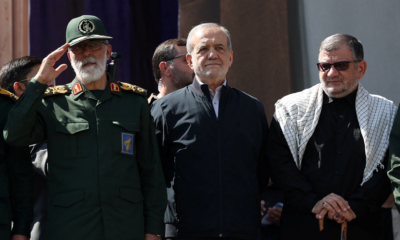
Iran and US trade threats after Houthi attacks escalate regional conflict