
World
California police flatten pro-Palestinian camp at UCLA, arrest protesters

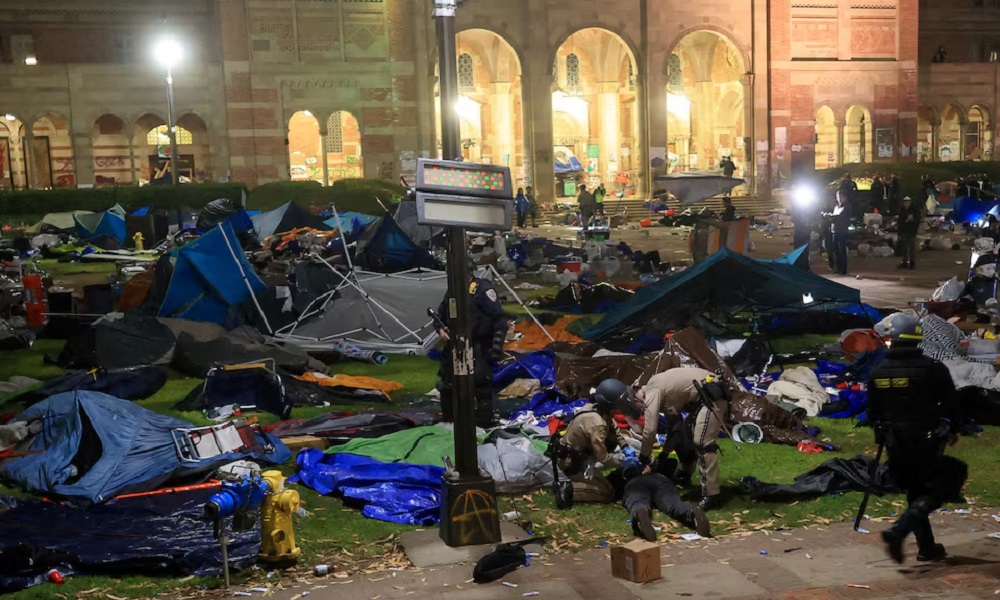
Hundreds of helmeted police swarmed the site of a pro-Palestinian protest at the University of California at Los Angeles early on Thursday, firing flash bangs, arresting defiant demonstrators and dismantling their encampment.
The pre-dawn police crackdown at UCLA marked the latest flashpoint in mounting tensions on U.S. college campuses, where protests over Israel’s war in Gaza have led to student clashes with each other and with law enforcement, Reuters reported.
“I’m a student here. I’m an English major,” one student said to television cameras, as police dragged him away. “Please don’t fail us. Don’t fail us.”
Prior to moving in, police urged demonstrators in repeated loudspeaker announcements to clear the protest zone, which occupied a central plaza about the size of a football field.
After massing around the campus for hours, officers eventually moved through the area in lines holding batons as protesters – some in white helmets – linked arms, attempting to block their advance.
Live TV footage showed officers taking down tents, tearing apart barricades and removing the encampment, while arrested protesters sat with their hands restrained behind their backs with zip-ties.
Students have rallied or set up tent encampments at dozens of schools in recent days, calling for an immediate ceasefire in Gaza and demanding schools divest from companies that support Israel’s government. Many of the schools, including Columbia University in New York City, have called in police to quell the protests.
Campus clashes
At UCLA, dozens of loud explosions were heard during the clash from flash bangs, or stun grenades, fired by police as the moved into the camp in the early morning hours.
Demonstrators, some carrying makeshift shields and umbrellas, sought to block the officers’ advance by sheer numbers, while chanting “push them back” and flashing bright lights in the eyes of the police.
Others on the opposite side of the camp gave up quickly, and were seen walking away with their hands over their heads under police escort.
Local television station KABC-TV estimated 300 to 500 protesters had been hunkered down inside the camp, many wearing the traditional Palestinian keffiyeh scarves, while around 2,000 more had gathered outside the barricades in support, Reuters reported.
Those numbers dwindled on Thursday as protesters left the camp and were arrested.
Some of the protesters had been seen donning hard hats, goggles and respirator masks in anticipation of the siege a day after the university declared the encampment unlawful.
By sunrise, the plaza was strewn with detritus from the destroyed encampment: tents, blankets, food containers, a Palestinian flag, an upturned helmet. A line of officers carrying batons stood at the plaza’s edge, while a small group of remaining protesters shouted chants at them nearby.
The protests follow the deadly Oct. 7 attack on southern Israel by Hamas militants from the Gaza Strip, which killed 1,200 people and saw dozens taken hostage, and an ensuing Israeli offensive that has killed about 34,000 and created a humanitarian crisis.
Protesters have called on President Joe Biden, who has steadfastly supported Israel’s right to defend itself, to do more to stop the bloodshed and ease the humanitarian crisis.
The campus demonstrations have been met with counter-protesters accusing them of fomenting anti-Jewish hatred. The pro-Palestinian side, including some Jews opposed to Israeli actions in Gaza, say they are being unfairly branded as antisemitic for criticizing Israel’s government and expressing support for human rights.
The issue has taken on political overtones in the run-up to the U.S. presidential election in November, with Republicans accusing some university administrators of turning a blind eye to antisemitism.
Crackdown a day after clashes
UCLA had canceled classes for the day on Wednesday following a violent clash between the encampment’s occupants and a group of masked counter-demonstrators who mounted a surprise assault late Tuesday night on the tent city.
The occupants of the camp, set up last week, had remained mostly peaceful before the melee, in which both sides traded blows and doused each other with pepper spray.
Members of the pro-Palestinian group said fireworks were thrown at them and they were beaten with bats and sticks. University officials blamed the disturbance on “instigators” and vowed an investigation.
The confrontation went on for two or three hours into early Wednesday morning before police restored order. A spokesperson for California Governor Gavin Newsom, a Democrat, later criticized the “limited and delayed campus law enforcement response” to the unrest as “unacceptable”.
Taylor Gee, a 30-year-old pro-Palestinian protester and UCLA law student, said the police operation on Thursday felt “especially galling” to many protesters given the slow police response a night earlier.
“For them to come out the next night to remove us from the encampment, it doesn’t make any sense, but it also makes all the sense in the world,” he said.
UCLA officials said the campus, with nearly 52,000 students, would remain shuttered except for limited operations on Thursday and Friday.
The police action at UCLA came after police in New York City on Tuesday arrested pro-Palestinian activists who occupied a building at Columbia University and removed a tent city from the campus of the Ivy League school.
Police arrested about 300 people at Columbia and City College of New York, Mayor Eric Adams said.







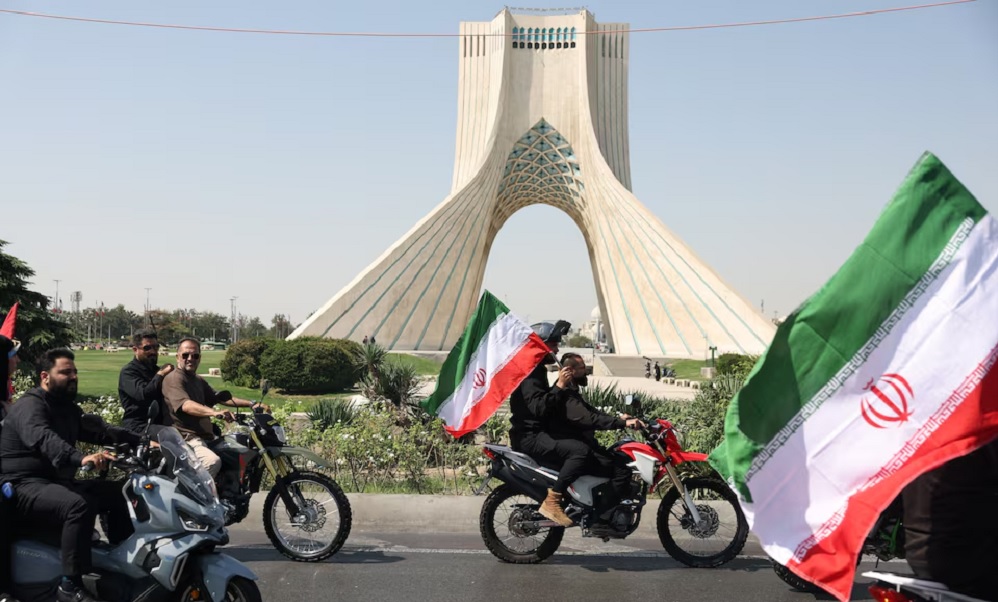
Iran on Saturday awaited an official US response to its proposal to reopen the Strait of Hormuz and end fighting in the wider Middle East war after the Wall Street Journal reported that US President Donald Trump had rejected the deal.
Iran raised the diplomatic initiative at the United Nations General Assembly in New York, saying it had been transmitted to the Americans via Qatari mediators and could reopen the strategic waterway and put an end to hostilities in the region within seven days, Reuters reported.
The Iranians also engaged their Saudi rivals regarding the strait, underscoring the stakes of a seven-month-old conflict that has disrupted oil flows through one of the world’s most critical shipping lanes and taken a toll on the global economy.
Iranian Foreign Minister Abbas Araqchi told reporters at the United Nations on Friday the deal would trigger a seven-day countdown to reopening the strait and a pause in regional fighting.
“If there is seriousness on the US side to come to a deal and reopen the Strait of Hormuz, everything is now prepared,” Araqchi said.
If the US were to agree, the warring parties could start wider talks “on mutually agreed subjects,” Araqchi said.
That could potentially include discussions of Iran’s nuclear program. Trump has vowed that Tehran will never acquire a nuclear bomb, while a senior Iranian official told Reuters that Iran will show no flexibility over its nuclear program even if the United States accepts its peace deal.
Iran would grant no concessions over its rights, including enriching uranium or shipping its highly enriched uranium out of the country, the official said.
Even so, Iran had put forward a plan that would halt hostilities on all fronts, including Lebanon. The plan in turn would require the United States to lift its blockade on Iranian ports, release Iran’s frozen funds, and waive its oil sanctions, Araqchi said.
A US official, speaking on condition of anonymity, had previously called discussions through mediators “positive and constructive.”
But Trump was privately skeptical that Iran would meet his demands, the Journal report said, and he told his staff that he sees a renewed bombing campaign as likely.
Reuters could not immediately confirm the Journal report.
SAUDI ALLIES UNITE
Previous attempts at diplomacy have failed to end the war, which began on February 28 with US and Israeli attacks.
Since then the war has alternated between pauses and renewed strikes, killing thousands while degrading Iran’s conventional forces and damaging Iran’s already ailing economy.
Iran and its allies have retaliated by extending the conflict throughout the region. Iran, which controls the strait along with Oman, has struck US allies in the Gulf with drones and missiles while its Houthi allies in Yemen have targeted Saudi interests. Iranian-aligned militias in Iraq were blamed for a pipeline attack that temporarily took more Saudi oil off the market. All the while, Iranian-backed Hezbollah has been engaged with Israeli forces in Lebanon.
Araqchi briefed his Saudi counterpart Prince Faisal bin Farhan on the understanding between Iran and Oman regarding safe shipping routes in the Strait of Hormuz, Iran’s foreign ministry said early Saturday.
The war’s widening toll has also united Saudi Arabia’s allies to shore up the kingdom’s defenses.
The Saudi-backed, internationally recognized Yemeni government has come under assault from Iran-linked Houthi fighters, with Houthi missiles striking inside the kingdom.
Yemen’s Saudi-led coalition said early Saturday it intercepted two drones launched by the Houthis towards the Saudi capital Riyadh in addition to intercepting a ballistic missile launched by the Houthis toward Khamis Mushait.
The Houthis, who control the most populous parts of Yemen and much of the north, have launched attacks against Saudi Arabia since declaring a naval blockade against Riyadh in July, with strikes targeting Saudi vessels in the Red Sea.
The attacks have targeted Saudi cities, energy infrastructure and shipping, adding to pressures on global oil supplies caused by the US-Israeli war on Iran and putting at risk the main alternative Red Sea route for Gulf exports while traffic through the Strait of Hormuz remains largely blocked.
Defense officials of Turkey and Pakistan, both partners in a joint defense pact with Saudi Arabia, met in Riyadh on Friday to review the security situation and discuss intelligence cooperation, military coordination, and integrating forces, the Saudi defense ministry said in a statement.
The statement came a day after Saudi, Pakistani and Turkish foreign ministers met within the framework of the Mecca Joint Defense Agreement.
The violence in Yemen has prompted a new humanitarian crisis, the United Nations children’s agency said on Friday, reporting a rise in acute malnutrition among children.
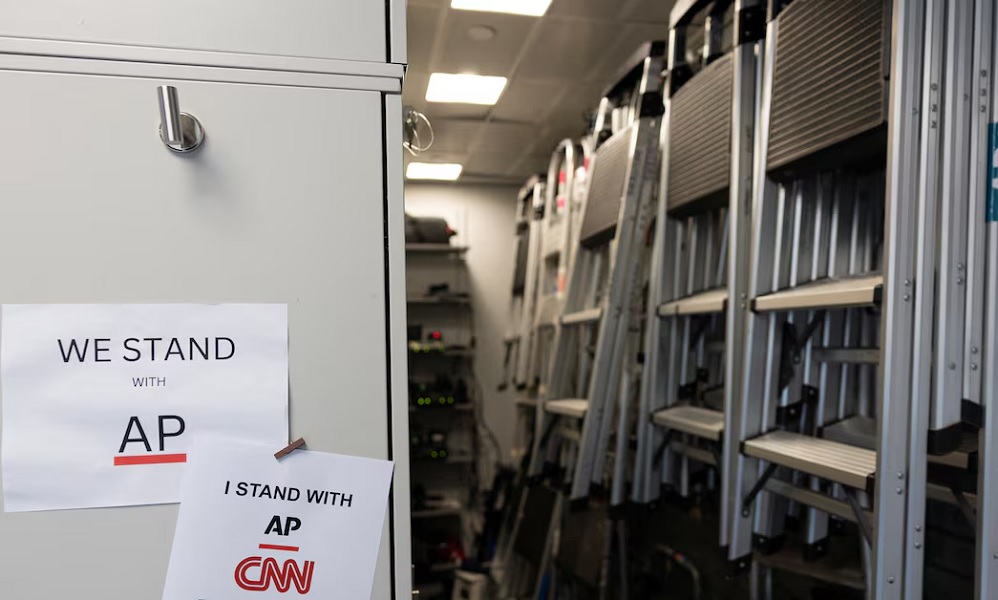
The White House said on Thursday it has reinstated journalists from CNN, MS NOW and Politico after a federal judge deemed US President Donald Trump’s ban of the three news outlets likely unconstitutional and ordered their access immediately restored.
The midday reinstatement came after a chaotic few hours earlier on Thursday when the journalists continued to be blocked from entering the White House grounds. That prompted the three news organizations to request an immediate hearing before US District Judge Tim Kelly, who issued his decision overnight, Reuters reported.
Kelly, acting in a lawsuit brought by CNN, MS NOW and Politico on Monday, ordered a halt to Trump’s ban for 14 days in a press freedom case that has played out over the past week in the courtroom and White House grounds.
Kelly found that the revocation of the White House credentials of the journalists “likely violated their constitutional due process rights.”
The judge, who Trump appointed in 2017 during his first presidential term, also raised doubts about the US Justice Department’s national security arguments for justifying the ban, noting that Trump himself had said the action was due to what the president alleged was false or negative coverage.
Hours after Kelly issued his order, CNN, MS NOW and Politico told the judge they remained barred, and asked for the emergency hearing. Politico said its reporter’s credentials were confiscated. An MS NOW reporter said she was blocked from the White House. CNN said some of its staff members were denied entry onto the grounds.
In response, Micah Stopperich, the director of press operations at the White House, said in a court filing that the White House began the process of reinstating press badges for affected reporters at 7:25 a.m., and that the “White House press team dropped badges at the entry gate for members of the press to pick up around 9:55 a.m.”
After receiving Stopperich’s declaration, the judge denied the request by the news organizations for an emergency hearing but gave them an opportunity to inform him of any factual developments later in the day.
The sharpest conflict yet between Trump and the press played out during a key diplomatic moment for the US president: his appearance at the United Nations General Assembly in New York and his hosting of Chinese President Xi Jinping on Thursday.
A source familiar with the White House television press pool said its members would not reinstate their coverage until the White House formally reinstates CNN to the pool. Earlier this week, they had suspended pooled coverage in solidarity with CNN.
There were no TV pool cameras set up for Xi’s arrival on the White House’s South Lawn on Thursday morning, and FOX News, MS NOW and CNN did not air the two leaders’ arrival ceremony live.
During Trump’s welcome of Xi to the White House, the president made a joke to photographers in the Oval Office about the Chinese having the friendliest press corps.
CNN is one of the five news organizations – along with ABC, CBS, FOX News and NBC – that make up the primary White House television pool. They share the costs of covering the president, take turns organizing coverage and provide footage to other outlets.
CNN had been scheduled to cover Trump’s trip to New York for the General Assembly on Monday, but was not able to provide a pool feed.
NATIONAL SECURITY CONCERNS
Trump announced the ban on Friday on his social media platform, saying those news organizations “shouldn’t be able to constantly write or report FICTION and LIES when they’re covering the President of the United States.” Trump framed their reporting as a threat to US national security.
The three outlets sued Trump and other members of his administration, saying the ban violated the US Constitution’s First Amendment protections for free speech and a free press, as well as their due process rights. A coalition of press freedom groups and dozens of news organizations, including Reuters, later filed a legal brief supporting the three news outlets.
Kelly ordered the Trump administration to immediately return the outlets’ press passes and stop enforcing the ban for two weeks. The judge rejected the administration’s stated national security concerns.
“The record lacks factual support for defendants’ contention that the revocation of plaintiffs’ hard passes will in fact protect national security or that national security will be endangered if the court orders their passes reinstated while this litigation proceeds,” Kelly wrote.
In a filing on Tuesday, the Justice Department accused the outlets of threatening national security with their coverage, citing stories about US missile stockpiles, construction of Trump’s White House ballroom and turnout at the recent Republican midterm convention.
Theodore Boutrous, an attorney for the three outlets, welcomed the judge’s decision in a statement, saying: “This is a strong ruling vindicating freedom of the press, due process and the rule of law. We greatly appreciate the court’s swift action.”
TENSIONS WITH THE PRESS
Although other presidential administrations have battled with the press, Trump’s campaign against the media has been unprecedented. Upending decades of tradition, his White House had denied basic access to many major news organizations, launched personal attacks on journalists and filed multiple lawsuits against news organizations.
Kelly’s ruling came a day after Trump experienced another legal setback.
On Wednesday, an Iowa judge dismissed Trump’s 2024 lawsuit against the Des Moines Register newspaper and pollster J. Ann Selzer. Trump sued the Register, its parent company Gannett and Selzer over a poll published ahead of the November 2024 US election that showed Democratic presidential candidate Kamala Harris leading him in Iowa. Trump accused the newspaper and its longtime pollster of fraudulently misleading readers.
In his ruling Wednesday, Iowa District Judge Scott Beattie said the poll was legally protected speech.
World
Trump welcomes Chinese President Xi as US-China summit gets underway
WATCH: ▶️ Trump’s decision to meet Xi at Joint Base Andrews airport marked the first time since 1962 that a US president has personally welcomed a foreign leader at the base.
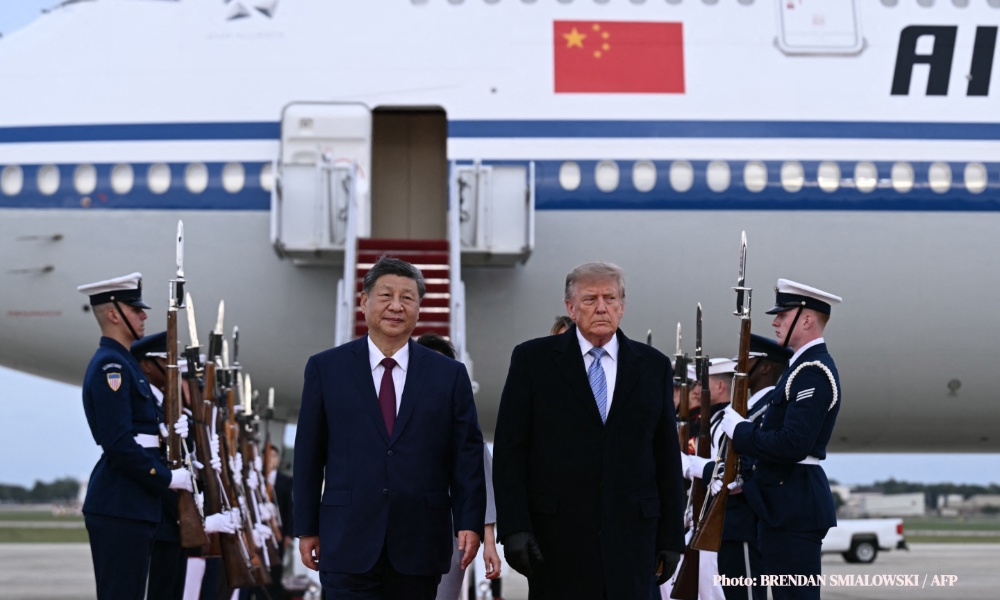
US President Donald Trump welcomed Chinese President Xi Jinping to Washington with a high-profile military ceremony, as the two leaders begin a three-day summit focused on trade, technology and other major areas of tension between the two countries.
Xi arrived at Joint Base Andrews in Maryland on Wednesday evening, where Trump and First Lady Melania Trump personally greeted him and his wife, Peng Liyuan.
The Chinese leader was welcomed with a red carpet, a military honor guard, marching band and a flyover by two US B-1 bombers. Trump’s decision to meet Xi at the airport marked the first time since 1962 that a US president has personally welcomed a foreign leader at the base.
Xi’s visit to Washington is his first since 2015 and comes as the two countries seek to maintain a fragile trade truce.
US Treasury Secretary Scott Bessent said on Wednesday that Washington and Beijing had agreed to extend their current trade truce until January. The arrangement had been due to expire on 10 November.
The agreement has involved the US lowering tariffs on some Chinese goods in exchange for China easing restrictions on exports of rare earth minerals.
Bessent said discussions with Chinese Vice Premier He Lifeng also covered the possibility of reaching a broader trade agreement.
In a statement carried by China’s state news agency Xinhua, Xi said the US and China should be “partners rather than rivals”, adding that cooperation between the two countries could benefit the world.
The summit is expected to address a wide range of issues, including trade and tariffs, rare earth minerals, agricultural exports, artificial intelligence, Taiwan and the ongoing conflict involving Iran.
Trump is expected to seek increased Chinese purchases of US agricultural products, greater access to Chinese rare earth minerals and lower Chinese tariffs on American goods.
Taiwan is also expected to feature in the talks, with Beijing opposing US arms sales to the self-governing island.
Xi is travelling with senior Chinese officials including Cai Qi, a member of the Communist Party’s Politburo Standing Committee, Vice Premier He Lifeng and Foreign Minister Wang Yi.
The Chinese president is expected to attend a state dinner at the White House on Thursday, with leaders from the US artificial intelligence industry among the guests.
The two countries are competing for greater influence in AI, while also debating the regulation and potential risks associated with the technology.
Xi’s visit will conclude on Friday.


Abu Muslim Farah defeat Khurasan Faryab 2-0 in ACL season six

Saar: Concerns over Pakistan’s political crisis discussed

Afghanistan Champions League: Omar Zawak Herat beat Toofan Herat 1-0

Blast in Pakistan’s Dera Ismail Khan kills 11, injures 30

Ariana Afghan Airlines increases Kabul-Delhi cargo flights

Saudi energy group signs major Afghanistan deals covering gas exploration and pipeline plans

Trump floats idea of renaming Atlantic or Pacific Ocean

US hits Egyptian bank branches with Iran sanctions as war marks six months

Nepal flood rescue mission enters critical phase as thousands remain missing

Iranian clubs to face Gulf opponents at neutral venues in Asian Champions League Elite
Saar: Concerns over Pakistan’s political crisis discussed

Exclusive interview with Abdul Latif Mansoor, Minister of MRRD

Tawsia: Overview of Afghanistan’s iron mines

Tahawol: Discussion on fresh Pakistani airstrikes on Afghanistan

Saar: Calls for international support for Afghanistan discussed
-

 World5 days ago
CNN, MS NOW and Politico sue Trump, challenging White House ban
-

 Latest News3 days ago
Ariana Afghan Airlines ranks seventh among 45 Central Asian airlines
-

 Latest News5 days ago
UN reiterates call for respect for international law after Kunar airstrikes
-

 Regional4 days ago
US and Iran hold first talks since June after Trump’s ‘annihilation’ threat
-

 Latest News3 days ago
Silk Road highway in Wakhan corridor now reaches the China border
-

 Latest News5 days ago
Afghan Official: Pakistan’s airstrikes will not go unanswered
-

 Regional3 days ago
Iran airlines cancel flights as US sanctions hit
-

 Sport5 days ago
Afghan boxing referee heads to China for international festival