
Latest News
Solar year 1403: Another year in isolation for Afghanistan
Establishing an inclusive government, respecting human rights, especially the rights of women and minorities, and combating terrorist groups and drugs have always been considered important preconditions for the international community to recognize the Islamic Emirate.

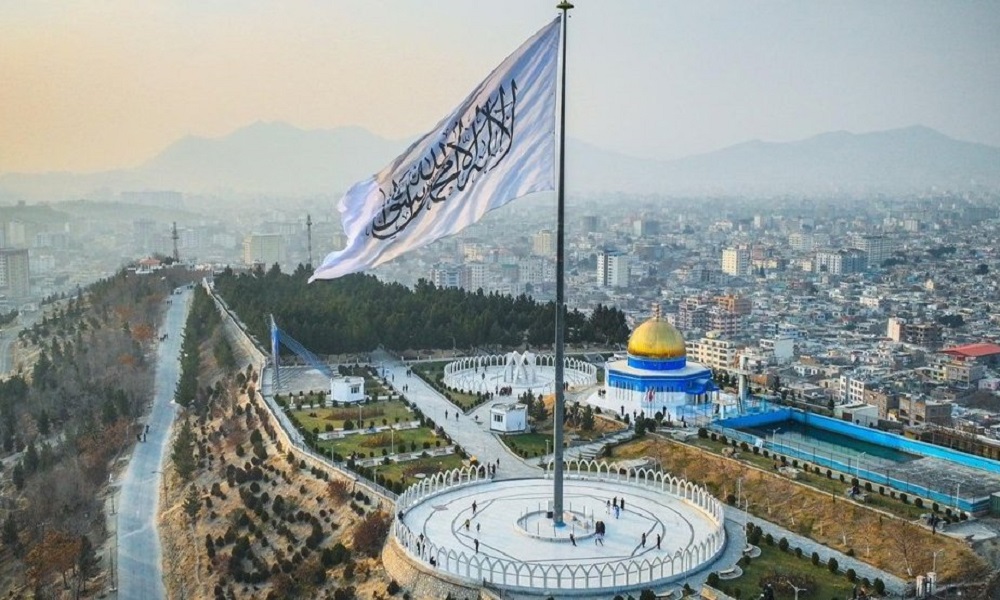
Solar year 1403 (March 21, 2024 to March 20, 2025) has been yet another year of political isolation and non-recognition for the Islamic Emirate of Afghanistan (IEA) government.
It was also another year that the United Nations refused to hand over Afghanistan’s seat at the UN.
No country has yet officially recognized the IEA government and added to this, the International Criminal Court’s prosecutor submitted a request for the arrest of the Islamic Emirate’s supreme leader.
Despite this however, the Islamic Emirate views 1403 as a year with many achievements.
Officials have said the government has made good progress in many sectors. They feel they have strengthened ties and expanded interaction with many countries in the region and around the world.
The IEA has in fact said that relations which many countries have with Afghanistan are tantamount to them recognizing the Islamic Emirate.
Establishing an inclusive government, respecting human rights, especially the rights of women and minorities, and combating terrorist groups and drugs have always been considered important preconditions for the international community to recognize the Islamic Emirate.
In addition to the Islamic Emirate’s failure to achieve global legitimacy, the pressures and sanctions of the international community against the Islamic Emirate continued.
During this year, for the first time, Karim Khan, the Prosecutor of the International Criminal Court, submitted a request to the court to arrest the leader of the Islamic Emirate and the head of Afghanistan’s Supreme Court.
The request, which the Islamic Emirate considered to be without a fair legal basis, resulted from political moves,they said. This led the IEA to cancel Afghanistan’s ICC membership.
During 1403, however, high-level delegations from a number of countries continued to visit Afghanistan, and delegations from the Islamic Emirate also traveled to neighboring countries and the region.
Late this year, Iran’s Foreign Minister led a high-level delegation to Kabul and met with the Prime Minister and a number of other senior officials. This was a visit that both sides declared the start of a new chapter in relations between Kabul and Tehran.
On the other hand, former government officials, lawyers and some politicians who fled Afghanistan when the former government collapsed, continued to return home.
But, the IEA’s cabinet remained in a caretaker capacity in 1403.
The Supreme Leader of the IEA Hibatullah Akundzada meanwhile visited the northern provinces of the country for the first time since August 2021 and encouraged local officials to serve the people honestly.
Many meetings held in Kabul and in provinces about the need for officials and people to support the system.
The Deputy Prime Minister for Economics said at a recent meeting of the Shiite community in Kabul that the Islamic Emirate respects ethnic diversity and considers it a symbol of unity in the country.
Nevertheless, the Islamic Emirate considers the year 1403 to be a year of achievements in the political sphere and emphasizes that good progress has been made during the year in the field of expanding diplomatic relations with countries in the region and the world.
The Islamic Emirate meanwhile continues to call on the international community and countries to abandon the politics of force and pressure and instead establish interactive relations with the Islamic Emirate.
The IEA continues to emphasize that it has fulfilled all the conditions of a legitimate state, but the United Nations is making excuses in the matter of handing over Afghanistan’s seat at the UN.









Kazakhstan’s Foreign Minister Mukhtar Tileuberdi has called for pragmatic and coordinated international engagement with Afghanistan, saying the country’s long-term stability is closely linked to the security and sustainable development of Central Asia.
Speaking during the general debate of the 81st session of the United Nations General Assembly in New York on Friday, Tileuberdi said humanitarian assistance to Afghanistan remains essential but alone cannot break the cycle of poverty, displacement and dependency.
He said Kazakhstan supports a “pragmatic, coordinated and step-by-step” approach to international engagement with Afghanistan, with the United Nations playing a central role.
Tileuberdi also said Kazakhstan is working with the UN to operationalize the United Nations Regional Centre for the Sustainable Development Goals for Central Asia and Afghanistan in Almaty.
He said the success of the centre should be measured by the results and assistance it delivers to the region.


Trump rejects Iranian proposal to open Hormuz and end fighting

Abu Muslim Farah defeat Khurasan Faryab 2-0 in ACL season six

Saar: Concerns over Pakistan’s political crisis discussed

Afghanistan Champions League: Omar Zawak Herat beat Toofan Herat 1-0

Blast in Pakistan’s Dera Ismail Khan kills 11, injures 30

Saudi energy group signs major Afghanistan deals covering gas exploration and pipeline plans

Trump floats idea of renaming Atlantic or Pacific Ocean

US hits Egyptian bank branches with Iran sanctions as war marks six months

Nepal flood rescue mission enters critical phase as thousands remain missing

Iranian clubs to face Gulf opponents at neutral venues in Asian Champions League Elite
Saar: Concerns over Pakistan’s political crisis discussed

Exclusive interview with Abdul Latif Mansoor, Minister of MRRD

Tawsia: Overview of Afghanistan’s iron mines

Tahawol: Discussion on fresh Pakistani airstrikes on Afghanistan

Saar: Calls for international support for Afghanistan discussed
-

 Latest News4 days ago
Ariana Afghan Airlines ranks seventh among 45 Central Asian airlines
-

 Latest News5 days ago
UN reiterates call for respect for international law after Kunar airstrikes
-

 Regional4 days ago
US and Iran hold first talks since June after Trump’s ‘annihilation’ threat
-

 Latest News4 days ago
Silk Road highway in Wakhan corridor now reaches the China border
-

 Regional3 days ago
Iran airlines cancel flights as US sanctions hit
-

 Regional5 days ago
G7 foreign ministers call on Iran to stop arming Houthis
-

 Latest News5 days ago
Afghan Official: Pakistan’s airstrikes will not go unanswered
-

 Sport5 days ago
Afghan boxing referee heads to China for international festival