
Latest News
UNAMA urges greater human rights protections in Afghanistan on Human Rights Day
UNAMA stressed that Afghanistan’s authorities must take steps to align with international human rights obligations, calling this not only a legal duty but a practical path toward peace and development.

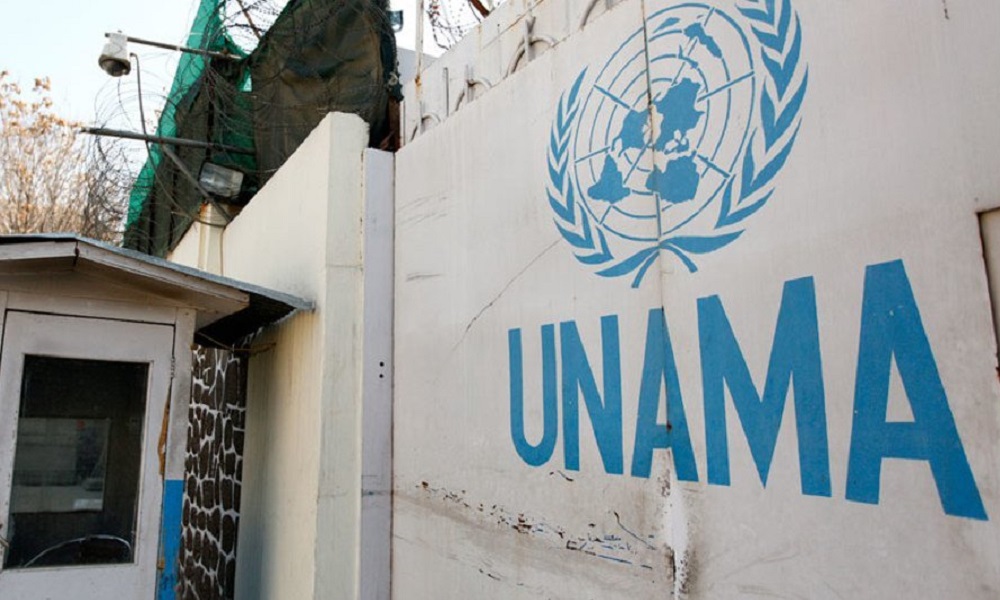
The United Nations Assistance Mission in Afghanistan (UNAMA) marked Human Rights Day with a renewed call for the protection of fundamental freedoms, stressing that human rights are “everyday essentials” necessary for dignity, opportunity, and security.
Highlighting this year’s global theme, UNAMA underscored that human rights are not abstract ideals but the conditions that allow people to live meaningful lives — including the rights to education, health, work, expression, and participation in society. The Mission warned that these basic rights remain inaccessible for many Afghans.
Women and girls, UNAMA noted, continue to face severe restrictions on schooling, employment, and public life, undermining both their rights and the country’s long-term prospects. Uneven access to healthcare has further weakened families and communities.
The Mission also raised concern over the growing number of Afghans being involuntarily returned from abroad. It said certain groups — including women, former government and security officials, civil society members, and journalists — remain at heightened risk of reprisals and other rights violations.
UNAMA stressed that Afghanistan’s authorities must take steps to align with international human rights obligations, calling this not only a legal duty but a practical path toward peace and development.
Protecting rights, the Mission said, builds public trust, promotes inclusion, and enables Afghans to contribute to national recovery.
“Human rights are not optional. They are the everyday essentials that sustain life,” said Georgette Gagnon, Officer in Charge of UNAMA and Deputy Special Representative of the UN Secretary-General. “Ensuring women and girls can learn, work, and participate fully is indispensable to recovery.”
Fiona Frazer, Representative of the UN High Commissioner for Human Rights in Afghanistan, reiterated that the principles of the Universal Declaration of Human Rights — adopted 77 years ago — remain vital. “Everyday essentials—education, health, livelihoods, and freedom—are rights that must be afforded to all Afghans. Yet too many are denied them.”
On Human Rights Day, UNAMA called on Afghanistan’s authorities, communities, and international partners to uphold human rights as the foundation for the country’s path toward stability and hope.





International Sports
Mexico and South Africa set to open historic 2026 World Cup
Historically, Mexico has enjoyed the upper hand between the two nations, winning two of their previous four meetings. South Africa has won once, while the teams shared the points in their memorable World Cup encounter in 2010.

The FIFA World Cup 2026 gets underway on Thursday as co-hosts Mexico take on South Africa in the opening match of the tournament at the iconic Estadio Azteca in Mexico City.
The Group A clash marks the start of the largest World Cup in history, with 48 teams competing across the United States, Canada and Mexico over the next 39 days.
The opening fixture also rekindles memories of the 2010 World Cup curtain-raiser in Johannesburg, when South Africa and Mexico played to a 1-1 draw in the first World Cup ever held on African soil.
More than 80,000 spectators are expected at Estadio Azteca, which will become the first stadium to host the opening match of three World Cups, having previously staged the tournament openers in 1970 and 1986.
Mexico enters the competition as one of the favourites to advance from Group A, which also includes South Korea and the Czech Republic. Ranked 14th in the world, El Tri will be looking to capitalize on home support and continue an eight-match unbeaten run.
Head coach Javier Aguirre’s side arrives in strong form after recent victories over Ghana, Australia and Serbia in warm-up matches.
South Africa, meanwhile, returns to the World Cup for the first time since 2010 and will be making just its fourth appearance at the global showpiece. Despite being ranked 60th in the world, Bafana Bafana coach Hugo Broos believes his side can challenge the hosts.
“For us, it will be a fantastic experience,” Broos said ahead of the match. “It is very important that we stick to our game plan and focus on what happens on the field.”
South Africa’s preparations were disrupted by visa delays that affected several members of the traveling party, but the team will hope to frustrate Mexico as they did 16 years ago.
Historically, Mexico has enjoyed the upper hand between the two nations, winning two of their previous four meetings. South Africa has won once, while the teams shared the points in their memorable World Cup encounter in 2010.
The match will be preceded by an opening ceremony featuring international music stars, including Colombian singer Shakira, as football’s biggest tournament begins its latest chapter.
Probable lineups
Mexico: Raul Rangel; Jesus Gallardo, Johan Vasquez, Cesar Montes, Israel Reyes; Brian Gutierrez, Erik Lira, Alvaro Fidalgo; Julian Quinones, Roberto Alvarado, Raul Jimenez.
South Africa: Ronwen Williams; Khuliso Mudau, Ime Okon, Mbekezeli Mbokazi, Aubrey Modiba; Teboho Mokoena, Sphephelo Sithole, Thalente Mbatha; Tshepang Moremi, Lyle Foster, Oswin Appollis.
Kickoff is scheduled for 11:30 pm Kabul time and the match will be broadcast live across Afghanistan exclusively on Ariana Television and Ariana FM radio.
Fans however, can tune in from 10:30 pm for a pre-match show.
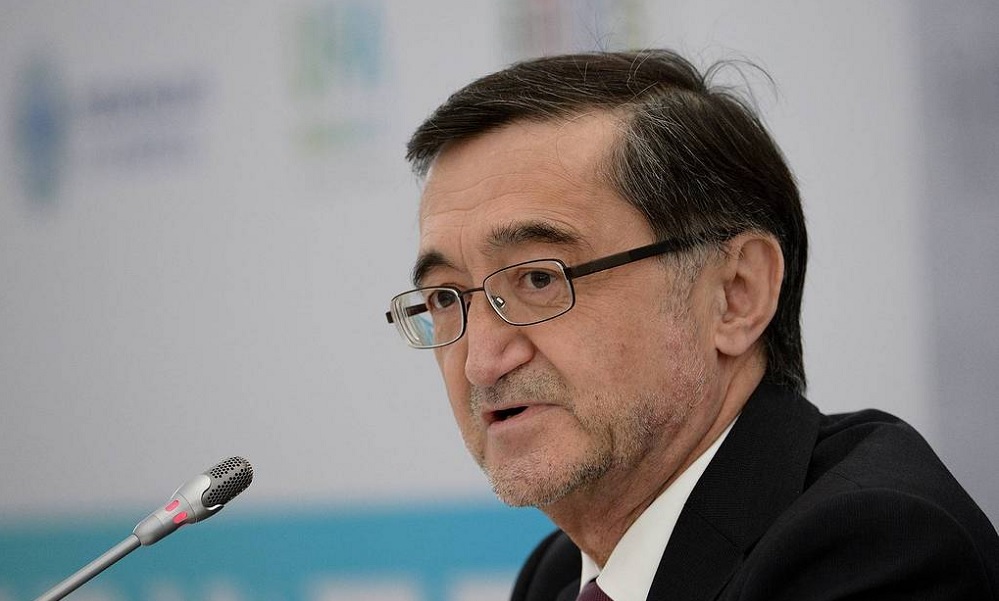
Russia has expressed support for reviving the Shanghai Cooperation Organization (SCO)-Afghanistan Contact Group, saying there is broad backing among SCO member states for renewed engagement with Afghanistan through the regional body.
Speaking at a briefing, Russia’s Special Representative for SCO Affairs, Bakhtiyor Khakimov, said Moscow maintains stable relations with Kabul and views the resumption of the contact group’s activities as an important step toward strengthening regional cooperation.
“We believe the SCO-Afghanistan Contact Group, which was established in 2007, should resume its activities,” Khakimov said. “This understanding generally prevails within the organization.”
Khakimov noted that efforts to revive the mechanism gained momentum during special consultations on Afghanistan held in Dushanbe in September last year at the initiative of Tajikistan. Participants agreed to examine possible ways to restart the group and enhance coordination on Afghanistan-related issues.
He acknowledged that procedural challenges remain, as the contact group is traditionally co-chaired by the deputy foreign minister of the SCO’s rotating chair country and a representative from Afghanistan.
Because not all SCO member states have formally recognized the current authorities in Kabul, Khakimov said progress toward reactivating the mechanism is likely to be gradual.
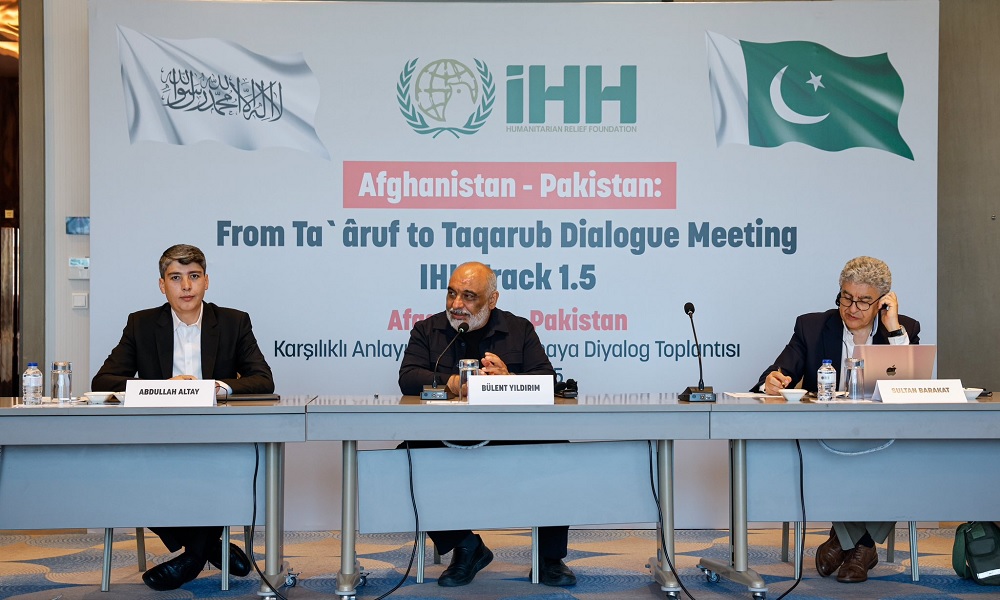
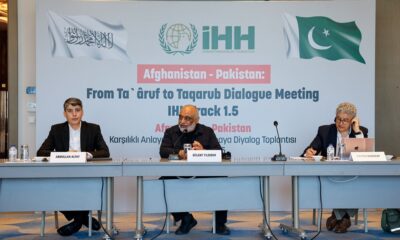
Representatives from Afghanistan and Pakistan met in Istanbul this week for the second round of the Afghanistan-Pakistan Track 1.5 Dialogue Process, as both sides seek to improve communication amid ongoing tensions between the neighboring countries.
The talks, held on June 8-9, were organized by the Turkish humanitarian organization IHH Humanitarian Relief Foundation and brought together participants in what organizers described as a constructive and cordial atmosphere.
According to IHH, the dialogue aims to promote mutual understanding, build trust and encourage cooperation between Afghanistan and Pakistan, with the broader goal of supporting regional stability and prosperity.
The organization said the process provides an informal platform for discussion and engagement between the two countries and could help strengthen communication on issues of shared concern.
Türkiye and Qatar also played facilitating roles in the dialogue.
IHH expressed hope that continued meetings would contribute to reducing tensions, expanding cooperation and fostering greater understanding between the two sides.
The discussions come at a time when relations between Afghanistan and Pakistan remain strained over a range of political and security issues.
The meeting also follows recent Pakistani air strikes inside Afghanistan that, according to Afghan officials, killed 13 civilians, including children, and injured 14 others.
Despite ongoing challenges in bilateral relations, organizers said continued dialogue remains important for addressing differences and promoting constructive engagement between the two neighboring countries.


At least 15 killed, dozens injured as protests rock Pakistan-administered Kashmir

Mexico and South Africa set to open historic 2026 World Cup

Russia backs revival of SCO-Afghanistan Contact Group

Afghanistan-Pakistan dialogue held in Türkiye amid efforts to ease tensions

Etihad Airways to launch twice-daily Kabul flights from July

Afghanistan signs $46 million deal to develop standard laboratory complexes

Large blast near Beit Shemesh part of pre-planned test: Israeli defense firm

Trump returns from China with stability but little progress

Norway’s Viking-inspired World Cup team photo goes viral

Afghanistan announce squad for India series

Tahawol: Fresh Pakistani military attacks on Afghanistan discussed

Saar: Emphasis on continued Indian support for Afghanistan discussed

Tahawol: Calls for Afghanistan’s integration discussed

Saar: Alleviating impact of pressure on Afghanistan discussed

Tahawol: The Shadow of War Returns to the Middle East
-
 International Sports2 days ago
Norway’s Viking-inspired World Cup team photo goes viral
-

 Latest News4 days ago
UNAMA voices concern over reported detention of women in Herat
-

 International Sports3 days ago
World Cup 2026: Ten attacking stars set to steal the show in North America
-

 International Sports4 days ago
Midfield Maestros: 10 players set to control the 2026 FIFA World Cup
-

 International Sports1 day ago
One Day to Go: Everything you need to know about FIFA World Cup 2026
-
 Latest News4 days ago
UN Security Council to review Afghanistan situation as UNAMA mandate nears expiry
-
 Business3 days ago
Afghan banks to finance Herat–Mazar railway project
-
 Regional4 days ago
US eyes Iranian assets for Gulf allies’ reconstruction, source says