
Regional
Hamas names Khalil Al-Hayya as new overall leader
Hayya was among top Hamas officials targeted in 2025 in an Israeli attack in Doha, where he is based, Israeli officials told Reuters.

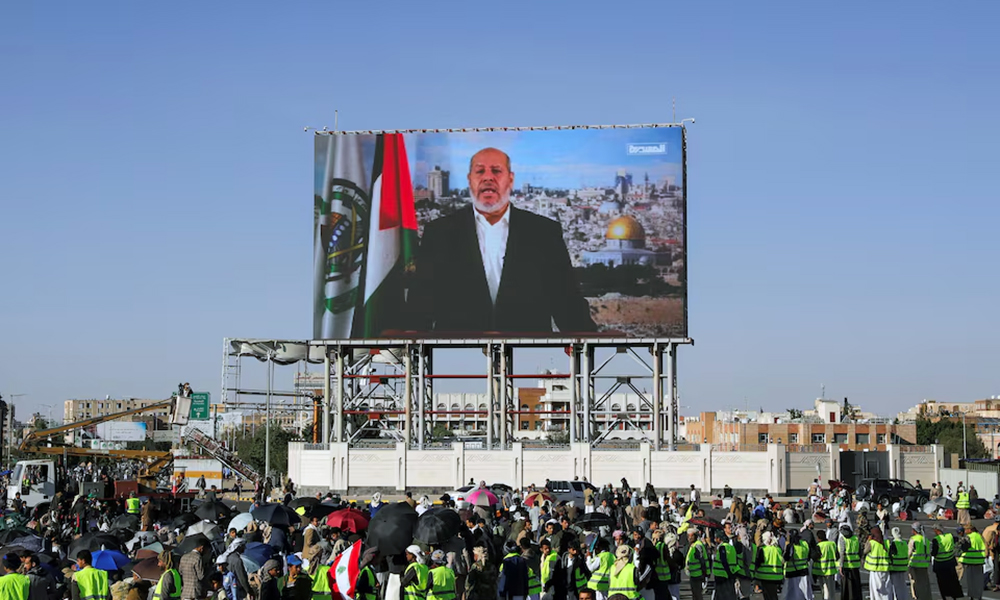
Hamas has named Khalil Al-Hayya as its overall leader, according to a statement from the Palestinian militant group on Monday, in a move an analyst says could signal a tougher stance by the group towards disarmament calls, Reuters reported.
Hayya replaces Yahya Sinwar, who was killed in combat with Israeli forces in October 2024 as Hamas fought a full-scale, two-year war with Israel in the Gaza Strip.
Hayya, the group’s exiled Gaza chief and top negotiator, has become an increasingly central figure in the leadership of Hamas since the deaths of Sinwar and Ismail Haniyeh, who was killed in Iran in July 2024.
He is seen as more hardline than Khaled Meshaal, the head of the group’s office in exile and the other frontrunner for the leadership.
Hayya was among top Hamas officials targeted in 2025 in an Israeli attack in Doha, where he is based, Israeli officials told Reuters.
The militant Islamist group faces some of the toughest challenges since it was founded in 1987, battered by two years of war ignited by its October 7, 2023, attack on Israel and facing international demands to disarm.
While fighting has abated in Gaza since the U.S.-brokered ceasefire in October, Israel still holds more than 60% of the coastal enclave, attacks continue, and conditions for Gaza’s 2 million people remain dire.
Israel says it targets Hamas and other Gaza militants who pose an imminent threat. The office of Israeli Prime Minister Benjamin Netanyahu did not immediately comment on Hayya’s selection.
On Monday, an Israeli strike killed at least three Palestinians driving in a vehicle in Khan Younis in southern Gaza, medics said. The Israeli military told Reuters it struck a militant in the area, without providing details.
Later on Monday, medics told Reuters that three people were killed after an Israeli strike on a shelter in a hospital in Jabalia in northern Gaza Strip. Most of the wounded from the evening strike were children, the medics said.
There was no immediate comment from the Israeli military.
The deaths add to a toll of more than 1,150 Palestinians, mostly civilians, killed by Israeli attacks since the October ceasefire, according to Gaza health officials. Four Israeli soldiers were killed by militants in Gaza over the same period.
Hamas does not usually disclose its losses.
Since Sinwar was killed, Hamas has resorted to a five-member higher council that included Hayya and Meshaal, in addition to three other officials, read the report.
The election of a Hamas chief is a lengthy process that began in January and was interrupted by the wars in Iran and Lebanon and continuing Israeli military operations in Gaza.
The selection is made by a 50-member council made up of Hamas members in Gaza, the occupied West Bank — including Israeli prisons — and those in exile.
Palestinian political analyst Reham Owda said Hayya’s victory is a message that Hamas remains committed to armed struggle, rejects disarmament under any conditions, and intends to rebuild its military strength while preserving its alliance with Iran and the so-called “Axis of Resistance.”
“This indicates that negotiations related to disarmament are likely to face significant difficulties and obstacles,” Owda told Reuters.
U.S. President Donald Trump’s ceasefire plan for Gaza demands Hamas’ disarmament and Israeli military withdrawals. It foresees the enclave being run by a technocratic Palestinian administration overseen by Trump’s Board of Peace.
But talks between Hamas, mediators, Egypt, Qatar, Turkey and Trump’s Board of Peace envoys have so far failed to reach a broad agreement to end the conflict.
Hamas has drawn criticism within Gaza because of the heavy toll inflicted by the war, with much of the enclave reduced to ruins and more than 73,000 people killed, according to Gaza health authorities.
Hamas-led militants killed some 1,200 people and abducted 251 others in their October 7, 2023, attack.





Regional
Rubio heads to Central Asia while other US officials hit foreign policy hot spots
US officials have portrayed resource-rich Central Asia — the region between China, Russia and Iran — as worthy of more attention than it received from US President Donald Trump’s predecessors.
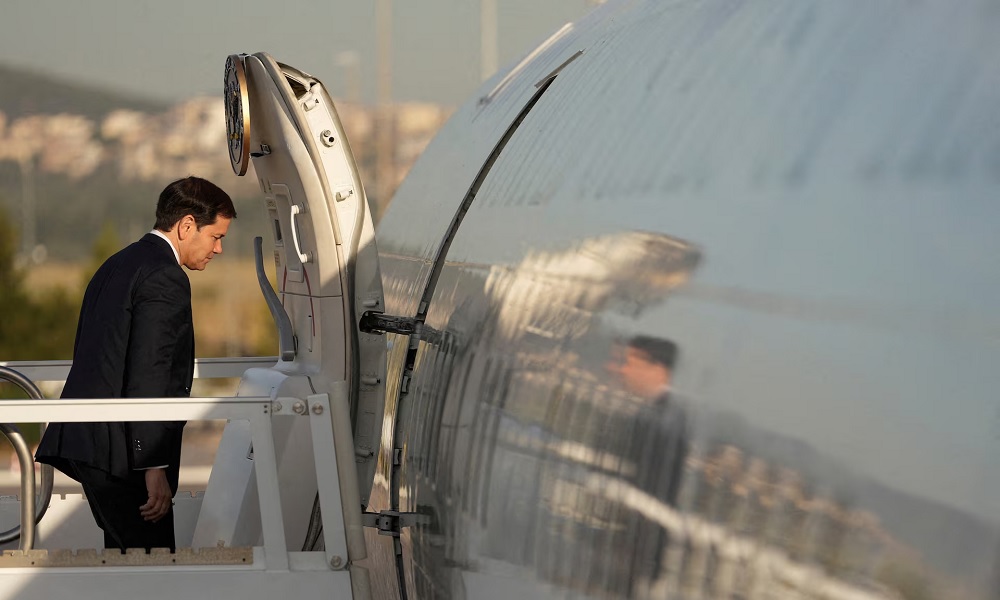
While the Iran war smolders, Saudi Arabia fights the Houthis and a new rift opens in US-Ukraine relations, Secretary of State Marco Rubio travels on Sunday to Uzbekistan, a nation far removed from the biggest US foreign policy challenges.
The top US diplomat is scheduled to land in Samarkand on Sunday to meet with leaders from the C5+1, a grouping that brings together the United States and the Muslim-majority post-Soviet states of Uzbekistan, Kazakhstan, Kyrgyzstan, Tajikistan and Turkmenistan.
US officials have portrayed resource-rich Central Asia — the region between China, Russia and Iran — as worthy of more attention than it received from US President Donald Trump’s predecessors.
Trump hosted C5 leaders at the White House last November, when Kazakhstan agreed to join the Abraham Accords, a series of agreements under which Muslim-majority countries have normalized or deepened relations with Israel. Separately, Trump met with Uzbek President Shavkat Mirziyoyev at the United Nations General Assembly last September.
Regional politics aside, the trip fits an emerging pattern in which Rubio often visits regions not at the center of the news cycle, while leaving some more fraught foreign-policy portfolios to other Trump aides, including special envoys Steve Witkoff and Jared Kushner and Vice President JD Vance.
For instance, Rubio has not visited Kyiv or Moscow since becoming secretary of state. He was not present for talks between US and Ukrainian officials in Florida earlier this month, when US officials pressed Ukraine to stop hitting Russian refineries. Vance, not Rubio, represented the US in Pakistan during peace talks with Iran in April.
Rubio’s previous foreign trip, in early October, took him to Greece, Portugal and Iceland.
Trump administration officials have typically rejected any suggestion that cabinet-level officials should focus their travels on geopolitical capitals and hot spots.
Deputy Secretary of State Christopher Landau, for instance, said on X last week that the idea only certain destinations were worthy of visits from secretaries of state “perfectly encapsulates the decadence and degeneracy of the contemporary US foreign policy establishment.”
US-RUSSIA RELATIONS LOOM
One Central Asian diplomat, speaking on the condition of anonymity, said officials in the region are wondering to what extent the US will continue targeting Russian sanctions evasion. All C5 states, while drawing closer to the US, have deep historical ties with Moscow, and the region has facilitated Russian imports and exports that violate US and European Union sanctions, Western officials say.
In the past, the US has pushed regional states to clamp down on those illicit flows.
But Trump struck a deal with Moscow this month to import Russian diesel, a move to lower domestic fuel prices before the congressional midterm elections. On Friday, Trump waived all provisions of legislation that would have allowed him to slap massive tariffs on some nations that buy significant amounts of Russian crude or otherwise help Moscow evade sanctions. Among the nations that could have been affected, experts have said, are India and Kazakhstan.
India, which Rubio will visit after Uzbekistan, remains the world’s No. 2 Russian crude importer after China, despite Trump saying in February that India had agreed to stop buying oil from Russia.
Additional questions hang over a potential trade deal with India and an expansion of the Abraham Accords in Central Asia.
A US official, speaking on the condition of anonymity, described the trade deal on Friday as “pretty much done,” raising the possibility that an agreement could be announced during the Rubio trip.
Separately, the US has talked to additional Central Asian nations about joining the Abraham Accords, Reuters reported last year, conversations that could in theory continue in Samarkand.
More than 200 business executives will accompany Rubio to Uzbekistan, the State Department said. The Central Asian diplomat said the Trump administration has focused its commercial efforts on expanding access to the area’s rare earth mineral resources.
The trip to Uzbekistan was largely organized by Sergio Gor, the US ambassador to India, the Central Asian diplomat said. Gor, who was born in Uzbekistan and is a friend of Rubio, also serves as the US special envoy for South and Central Asian affairs.
After Uzbekistan, Rubio will visit the Indian cities of Mumbai and Jamnagar to meet with business leaders, including Reliance Industries Chairman Mukesh Ambani, who earned the Trump administration’s favor earlier in the year by backing a new refinery in Texas. Rubio most recently visited India five months ago.
The trip is due to wrap up on Thursday.
Regional
Trump says US may strike Iran’s ‘Pickaxe Mountain’ nuclear facility
Pickaxe Mountain is a heavily fortified underground facility linked to Iran’s nuclear programme, located near one of the country’s major nuclear sites.
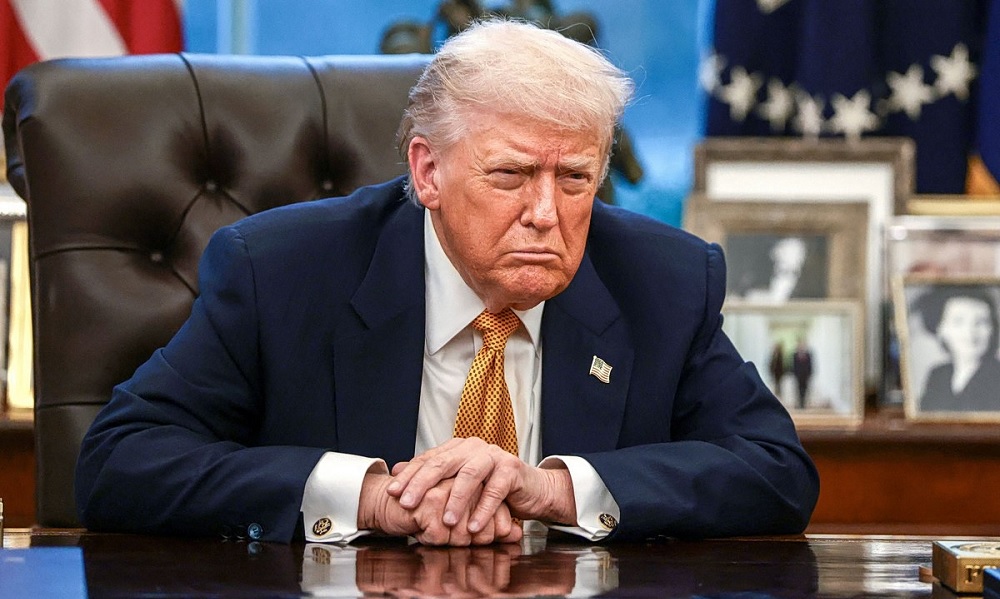
US President Donald Trump has said Washington may launch further strikes against Iran’s underground nuclear facilities, including the site known as Pickaxe Mountain, as he seeks to prevent Tehran from developing a nuclear weapon, Reuters reported.
In an interview with Newsmax on Thursday night, Trump said the United States was determined to ensure Iran never obtains a nuclear weapon, arguing that such a development would pose a serious threat.
“Their nuclear is buried under millions of tons of mountain. Now we’re looking at Pickaxe Mountain. We may have to go there. We’ll take a shot at that one. We’ll knock it out fast,” Trump said.
Pickaxe Mountain is a heavily fortified underground facility linked to Iran’s nuclear programme, located near one of the country’s major nuclear sites.
Trump also ruled out the use of nuclear weapons in the conflict, saying conventional military capabilities would be sufficient to achieve US objectives.
“I wouldn’t use nuclear. We don’t have to,” he said.
The US president reiterated that he was not considering deploying American ground troops into Iran, signalling that Washington’s military approach would continue to rely on other forms of military action.
Trump did not confirm whether he had authorised the use of the GBU-43/B Massive Ordnance Air Blast (MOAB) bomb, commonly known as the “Mother of All Bombs,” against Iranian energy infrastructure or nuclear facilities. He stressed that the weapon was not nuclear, read the report.
The remarks come amid escalating tensions between Washington and Tehran following US-Israeli strikes on Iran that began in February, with Iran’s nuclear programme remaining a central issue in the conflict.
The potential targeting of deeply buried nuclear facilities could further intensify the conflict and raise concerns about the broader regional security situation.
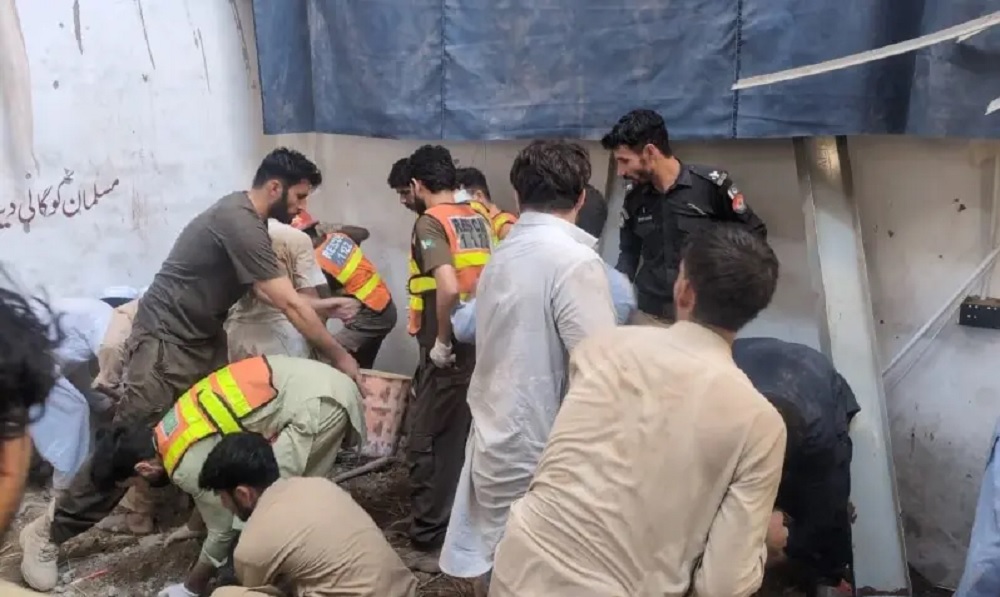
Twenty-one pupils and a teacher were killed on Thursday after a roof collapsed at a school in the northwest Pakistani city of Peshawar, a hospital official said.
Asim Khan from Peshawar’s Lady Reading Hospital confirmed the toll to AFP, adding that over 30 people were injured, with six believed to be in a critical condition.
Pakistan’s Prime Minister Shehbaz Sharif in a statement expressed “deep sorrow and grief over the loss of precious lives”.
“The Prime Minister extends his condolences to the bereaved families and prays for them to have the strength and patience to bear this irreparable loss,” the statement said.
Roof and building collapses are common across Pakistan, mainly because of poor safety standards and shoddy construction materials in the South Asian country of more than 240 million people.
In June this year more than a dozen children were killed in a roof collapse at a tutoring centre in the eastern city of Lahore.
In 2025, 27 people were killed and 10 injured when a five-storey building collapsed in the impoverished area of Lyari in the southern city of Karachi. – AFP


Trump blames migrants for violence in France as US midterms loom

UK criticises Hegseth for downplaying NATO allies’ role in Afghanistan war

Iran, Russia agree on reducing tension between Afghanistan and Pakistan: Araqchi

Atal’s century and Rashid’s four wickets seal Afghanistan’s 158-run win over Zimbabwe

EU condemns restrictions on women and girls in Afghanistan

Cricket Bonanza: Afghanistan set for packed international schedule

Silk Road highway in Wakhan corridor now reaches the China border

Afghanistan says 28 killed, 32 captured in Nuristan operation

CNN, MS NOW and Politico sue Trump, challenging White House ban

Afghanistan on climate front line as Kabul faces groundwater warning

Tahawol: US–Iran tensions escalate with mutual threats

Saar: IEA–UNAMA relations: five years under review

Iran calls for extending Herat railway to Uzbekistan border

Violent protests spread across Europe as Albanian PM blames ‘foreign hand’

Tahawol: Afghanistan’s empty seat at OIC Meeting
-

 Sport2 days ago
Afghanistan reach Brazil futsal tournament final after beating Cape Verde 4-2
-
 Business4 days ago
Regional partners seek progress on Trans-Afghan corridor and CASA railway
-
 Latest News4 days ago
Nearly 19.2 million Afghans face winter hunger as child malnutrition set to surge, UN agencies warn
-
 World4 days ago
Trump says he is talking to Russia and China about denuclearization
-
 Regional3 days ago
Trump says US may strike Iran’s ‘Pickaxe Mountain’ nuclear facility
-
 Latest News3 days ago
Afghanistan’s hunger crisis deepens as 16 million face food insecurity ahead of winter
-

 Sport4 days ago
Afghanistan Champions League: Abu Muslim Farah beat Sarsabz Yashlar 3-1
-
 Latest News4 days ago
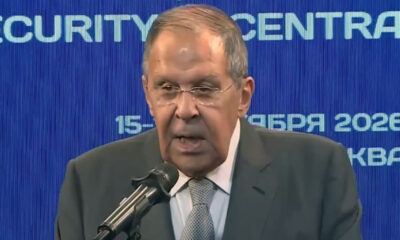
Lavrov warns of western-backed ‘color revolutions,’ raises concerns over Afghanistan’s regional security