
Regional
Iran and US widen attacks, raising fears for Gulf shipping and water supplies
U.S. Secretary of State Marco Rubio vowed that the United States would continue to target Iran as long as it attacked global commercial shipping.

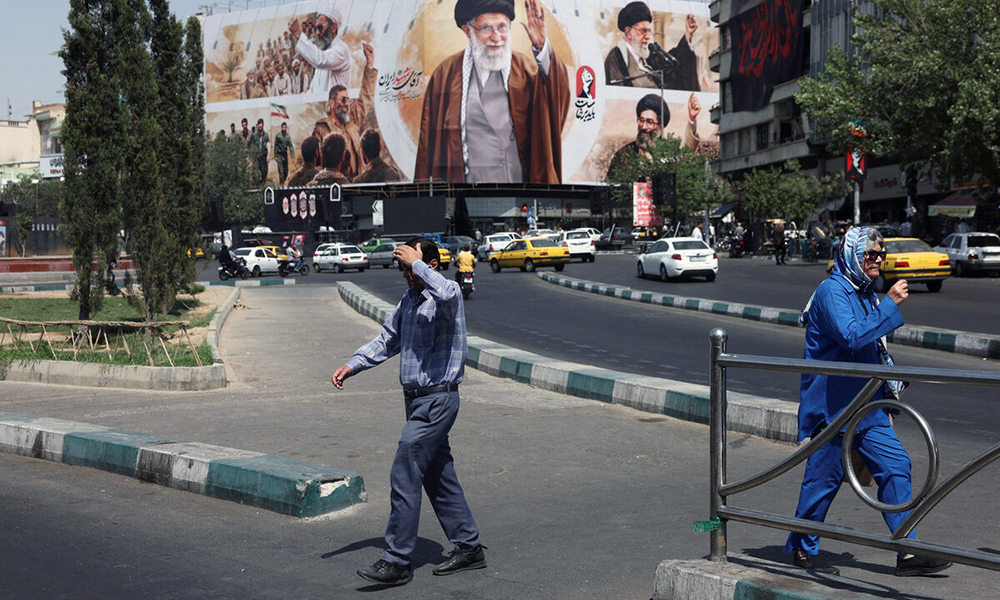
Iran’s Revolutionary Guards said on Monday they had struck U.S. military assets across the Middle East after another night of U.S. bombardment of Iranian cities, part of a cycle of attacks that has all but wrecked an interim ceasefire agreement, Reuters reported.
Oil prices briefly jumped above $90 a barrel after renewed disruption to shipping through the Strait of Hormuz, while U.S. President Donald Trump defended the latest strikes as retaliation for American military deaths, despite mounting political pressure at home from rising gasoline prices.
The conflict also escalated with attacks on desalination facilities, raising the prospect of water shortages across parts of the Gulf and opening a new front in a war that is increasingly threatening civilian infrastructure.
Yet even as both sides traded strikes, Tehran and Washington separately signalled they had not ruled out a return to negotiations.
Trump said the latest U.S. strikes were carried out “in honor of the … great patriots”, referring to as many as three U.S. service members killed in recent Iranian attacks.
The Islamic Revolutionary Guard Corps (IRGC) said two oil tankers had “exploded” and were immobilised after attempting to transit the strait via an “unsafe” route. On Sunday, the IRGC had said two ships were involved in an “accident” in the same area. It was unclear whether the two incidents were related.
Reuters could not immediately verify the incident. The IRGC statement gave no details about the vessels or any casualties.
Separately, a vessel was struck by an unknown projectile off Oman’s coast, overlooking the Strait of Hormuz, the United Kingdom Maritime Trade Operations agency said. The vessel remains adrift but the crew are safe, it said.
In a statement, U.S. Central Command said its ninth consecutive night of strikes against Iran aimed at “degrading” the country’s ability to attack commercial vessels in the strait’s vital shipping lanes. It gave no further details.
Iran’s semi-official Tasnim news agency said U.S. missiles had struck several Iranian cities early on Monday.
Explosions were reported in Tabriz, Chabahar, Konarak, Bandar Mahshahr and Bandar Imam Khomeini. One person was killed and several others wounded southwest of Tabriz, according to state news agency IRNA.
The IRGC said it targeted U.S. aircraft at Jordan’s Aqaba airport with ballistic missiles, as well as military assets at Kuwait’s Al-Adiri camp and Ali Al Salem Air Base, and positions in Syria.
Sirens sounded in Bahrain on Monday morning, the interior ministry said, while Kuwait’s army said it intercepted hostile drones during an Iranian attack.
Kuwait’s government said a desalination plant had been attacked on Sunday for the second day running, causing a fire, in what it called a direct strike on vital civilian infrastructure.
Desalination facilities supply most drinking water in many Gulf states, serving tens of millions of people in one of the world’s driest regions.
Iran, which accused the United States on Saturday of hitting one of its own desalination plants, has repeatedly said it would target such plants in Gulf states in retaliation for U.S. attacks on its energy infrastructure. The U.S. did not confirm that it had struck an Iranian desalination facility.
U.S. Secretary of State Marco Rubio vowed that the United States would continue to target Iran as long as it attacked global commercial shipping.
“As long as Iran insists on controlling an international waterway, we’re gonna have to respond to that. The United States always remains open to a diplomatic solution,” Rubio said.
Iran’s Foreign Ministry signalled that Tehran also did not rule out a return to diplomacy despite the escalating violence, when asked if the door to talks with the U.S. was now closed.
“Diplomacy is a tool through which we pursue our national interests, just like war,” spokesperson Esmaeil Baghaei said on Monday.
Baghaei also said Iran’s interior minister would hold talks on Monday in Pakistan – the main mediator between Tehran and Washington since the start of the conflict – though he said it was a visit focused on bilateral issues.
The conflict, which began when the U.S. and Israel attacked Iran on February 28, seeking to disable Tehran’s nuclear and missile programs and weaken its regional proxies, has killed thousands of people, mostly in Iran and Lebanon, Reuters reported.
U.S. gasoline pump prices crossed the $4 a gallon mark on Monday, a price point of financial pain for households. They had dipped below that threshold in June after the U.S. and Iran signed their memorandum of understanding to end the war.
Trump’s Republican Party faces the risk of a voter backlash in midterm congressional elections in November.
The U.S. military said two service personnel died in Jordan on Friday and that a third was missing in action. On Sunday, Central Command said that “unidentified remains” had been found at the site of Friday’s attack and that “an examination process to verify the remains is ongoing”.
Trump said the campaign against Iran was achieving its aims.
“Iran has been very, very badly damaged… We control the strait. They don’t control anything… But we hit them very hard again tonight. And we did that in honor of the — probably three, it’s probably three, as opposed to two — great patriots.”




Regional
Rubio heads to Central Asia while other US officials hit foreign policy hot spots
US officials have portrayed resource-rich Central Asia — the region between China, Russia and Iran — as worthy of more attention than it received from US President Donald Trump’s predecessors.
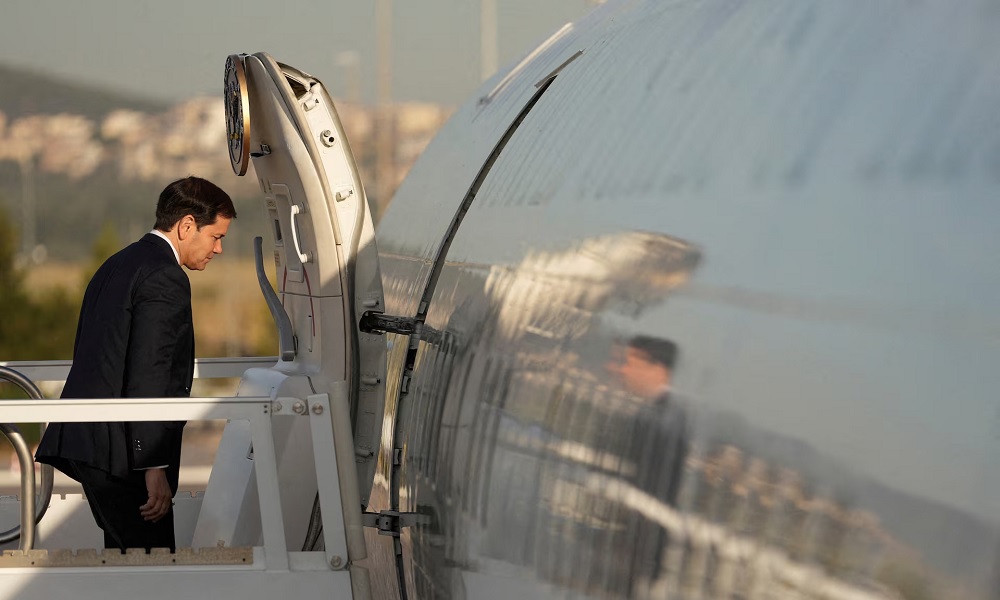
While the Iran war smolders, Saudi Arabia fights the Houthis and a new rift opens in US-Ukraine relations, Secretary of State Marco Rubio travels on Sunday to Uzbekistan, a nation far removed from the biggest US foreign policy challenges.
The top US diplomat is scheduled to land in Samarkand on Sunday to meet with leaders from the C5+1, a grouping that brings together the United States and the Muslim-majority post-Soviet states of Uzbekistan, Kazakhstan, Kyrgyzstan, Tajikistan and Turkmenistan.
US officials have portrayed resource-rich Central Asia — the region between China, Russia and Iran — as worthy of more attention than it received from US President Donald Trump’s predecessors.
Trump hosted C5 leaders at the White House last November, when Kazakhstan agreed to join the Abraham Accords, a series of agreements under which Muslim-majority countries have normalized or deepened relations with Israel. Separately, Trump met with Uzbek President Shavkat Mirziyoyev at the United Nations General Assembly last September.
Regional politics aside, the trip fits an emerging pattern in which Rubio often visits regions not at the center of the news cycle, while leaving some more fraught foreign-policy portfolios to other Trump aides, including special envoys Steve Witkoff and Jared Kushner and Vice President JD Vance.
For instance, Rubio has not visited Kyiv or Moscow since becoming secretary of state. He was not present for talks between US and Ukrainian officials in Florida earlier this month, when US officials pressed Ukraine to stop hitting Russian refineries. Vance, not Rubio, represented the US in Pakistan during peace talks with Iran in April.
Rubio’s previous foreign trip, in early October, took him to Greece, Portugal and Iceland.
Trump administration officials have typically rejected any suggestion that cabinet-level officials should focus their travels on geopolitical capitals and hot spots.
Deputy Secretary of State Christopher Landau, for instance, said on X last week that the idea only certain destinations were worthy of visits from secretaries of state “perfectly encapsulates the decadence and degeneracy of the contemporary US foreign policy establishment.”
US-RUSSIA RELATIONS LOOM
One Central Asian diplomat, speaking on the condition of anonymity, said officials in the region are wondering to what extent the US will continue targeting Russian sanctions evasion. All C5 states, while drawing closer to the US, have deep historical ties with Moscow, and the region has facilitated Russian imports and exports that violate US and European Union sanctions, Western officials say.
In the past, the US has pushed regional states to clamp down on those illicit flows.
But Trump struck a deal with Moscow this month to import Russian diesel, a move to lower domestic fuel prices before the congressional midterm elections. On Friday, Trump waived all provisions of legislation that would have allowed him to slap massive tariffs on some nations that buy significant amounts of Russian crude or otherwise help Moscow evade sanctions. Among the nations that could have been affected, experts have said, are India and Kazakhstan.
India, which Rubio will visit after Uzbekistan, remains the world’s No. 2 Russian crude importer after China, despite Trump saying in February that India had agreed to stop buying oil from Russia.
Additional questions hang over a potential trade deal with India and an expansion of the Abraham Accords in Central Asia.
A US official, speaking on the condition of anonymity, described the trade deal on Friday as “pretty much done,” raising the possibility that an agreement could be announced during the Rubio trip.
Separately, the US has talked to additional Central Asian nations about joining the Abraham Accords, Reuters reported last year, conversations that could in theory continue in Samarkand.
More than 200 business executives will accompany Rubio to Uzbekistan, the State Department said. The Central Asian diplomat said the Trump administration has focused its commercial efforts on expanding access to the area’s rare earth mineral resources.
The trip to Uzbekistan was largely organized by Sergio Gor, the US ambassador to India, the Central Asian diplomat said. Gor, who was born in Uzbekistan and is a friend of Rubio, also serves as the US special envoy for South and Central Asian affairs.
After Uzbekistan, Rubio will visit the Indian cities of Mumbai and Jamnagar to meet with business leaders, including Reliance Industries Chairman Mukesh Ambani, who earned the Trump administration’s favor earlier in the year by backing a new refinery in Texas. Rubio most recently visited India five months ago.
The trip is due to wrap up on Thursday.
Regional
Trump says US may strike Iran’s ‘Pickaxe Mountain’ nuclear facility
Pickaxe Mountain is a heavily fortified underground facility linked to Iran’s nuclear programme, located near one of the country’s major nuclear sites.
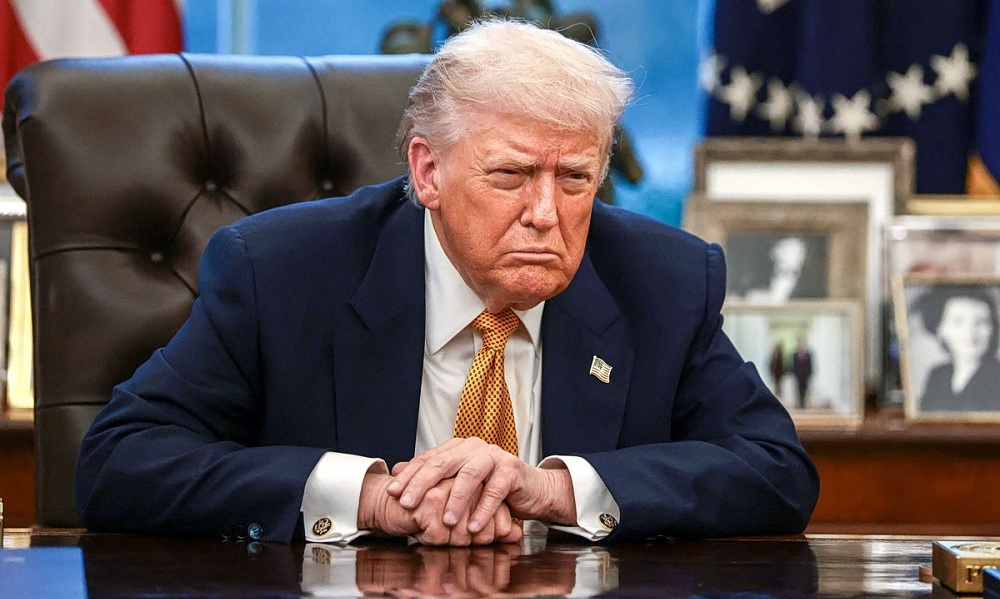
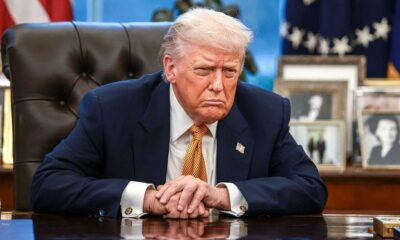
US President Donald Trump has said Washington may launch further strikes against Iran’s underground nuclear facilities, including the site known as Pickaxe Mountain, as he seeks to prevent Tehran from developing a nuclear weapon, Reuters reported.
In an interview with Newsmax on Thursday night, Trump said the United States was determined to ensure Iran never obtains a nuclear weapon, arguing that such a development would pose a serious threat.
“Their nuclear is buried under millions of tons of mountain. Now we’re looking at Pickaxe Mountain. We may have to go there. We’ll take a shot at that one. We’ll knock it out fast,” Trump said.
Pickaxe Mountain is a heavily fortified underground facility linked to Iran’s nuclear programme, located near one of the country’s major nuclear sites.
Trump also ruled out the use of nuclear weapons in the conflict, saying conventional military capabilities would be sufficient to achieve US objectives.
“I wouldn’t use nuclear. We don’t have to,” he said.
The US president reiterated that he was not considering deploying American ground troops into Iran, signalling that Washington’s military approach would continue to rely on other forms of military action.
Trump did not confirm whether he had authorised the use of the GBU-43/B Massive Ordnance Air Blast (MOAB) bomb, commonly known as the “Mother of All Bombs,” against Iranian energy infrastructure or nuclear facilities. He stressed that the weapon was not nuclear, read the report.
The remarks come amid escalating tensions between Washington and Tehran following US-Israeli strikes on Iran that began in February, with Iran’s nuclear programme remaining a central issue in the conflict.
The potential targeting of deeply buried nuclear facilities could further intensify the conflict and raise concerns about the broader regional security situation.
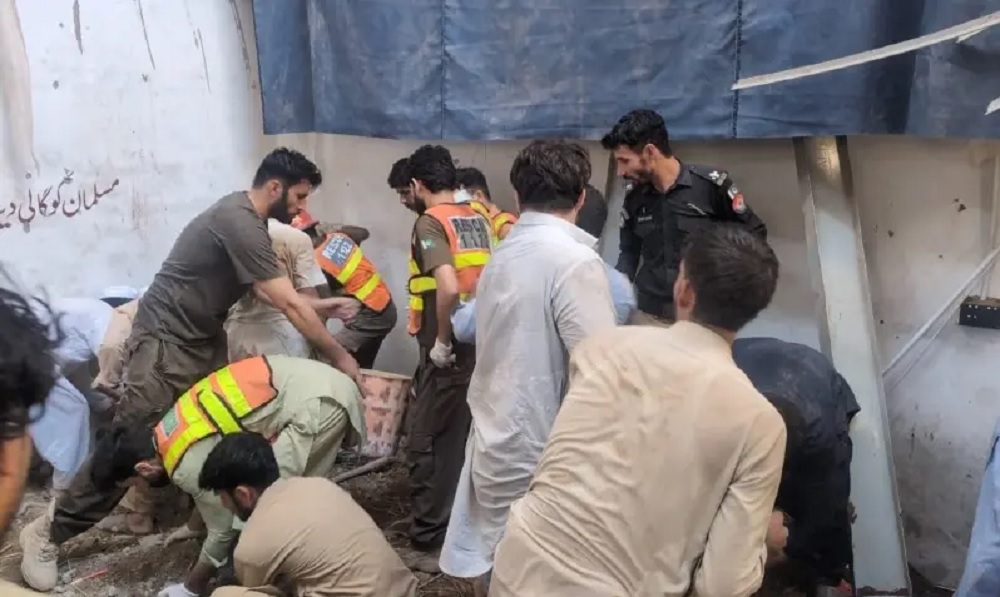
Twenty-one pupils and a teacher were killed on Thursday after a roof collapsed at a school in the northwest Pakistani city of Peshawar, a hospital official said.
Asim Khan from Peshawar’s Lady Reading Hospital confirmed the toll to AFP, adding that over 30 people were injured, with six believed to be in a critical condition.
Pakistan’s Prime Minister Shehbaz Sharif in a statement expressed “deep sorrow and grief over the loss of precious lives”.
“The Prime Minister extends his condolences to the bereaved families and prays for them to have the strength and patience to bear this irreparable loss,” the statement said.
Roof and building collapses are common across Pakistan, mainly because of poor safety standards and shoddy construction materials in the South Asian country of more than 240 million people.
In June this year more than a dozen children were killed in a roof collapse at a tutoring centre in the eastern city of Lahore.
In 2025, 27 people were killed and 10 injured when a five-storey building collapsed in the impoverished area of Lyari in the southern city of Karachi. – AFP


Trump blames migrants for violence in France as US midterms loom

UK criticises Hegseth for downplaying NATO allies’ role in Afghanistan war

Iran, Russia agree on reducing tension between Afghanistan and Pakistan: Araqchi

Atal’s century and Rashid’s four wickets seal Afghanistan’s 158-run win over Zimbabwe

EU condemns restrictions on women and girls in Afghanistan

Cricket Bonanza: Afghanistan set for packed international schedule

Afghanistan says 28 killed, 32 captured in Nuristan operation

Silk Road highway in Wakhan corridor now reaches the China border

CNN, MS NOW and Politico sue Trump, challenging White House ban

Afghanistan on climate front line as Kabul faces groundwater warning
Trump blames migrants for violence in France as US midterms loom

Tahawol: US–Iran tensions escalate with mutual threats

Saar: IEA–UNAMA relations: five years under review

Iran calls for extending Herat railway to Uzbekistan border

Violent protests spread across Europe as Albanian PM blames ‘foreign hand’
-

 Sport2 days ago
Afghanistan reach Brazil futsal tournament final after beating Cape Verde 4-2
-
 Business4 days ago
Regional partners seek progress on Trans-Afghan corridor and CASA railway
-
 Latest News4 days ago
Nearly 19.2 million Afghans face winter hunger as child malnutrition set to surge, UN agencies warn
-
 World4 days ago
Trump says he is talking to Russia and China about denuclearization
-
 Regional3 days ago
Trump says US may strike Iran’s ‘Pickaxe Mountain’ nuclear facility
-
 Latest News3 days ago
Afghanistan’s hunger crisis deepens as 16 million face food insecurity ahead of winter
-

 Sport4 days ago
Afghanistan Champions League: Abu Muslim Farah beat Sarsabz Yashlar 3-1
-
 Latest News4 days ago
Lavrov warns of western-backed ‘color revolutions,’ raises concerns over Afghanistan’s regional security