
Regional
Pakistan worries about being drawn into US-Iran conflict after Houthis attack Saudi Arabia

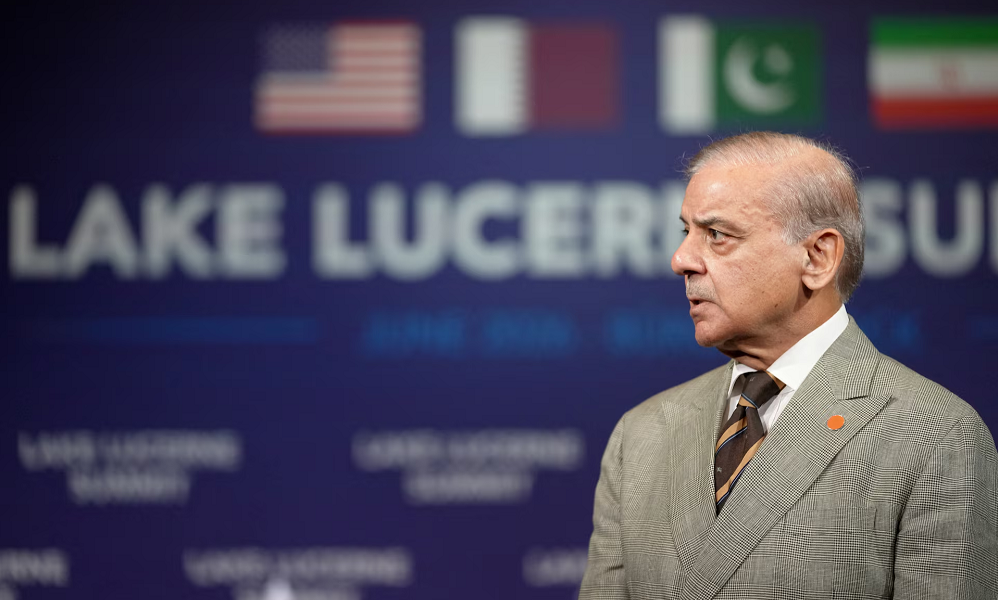
Attacks on Saudi Arabia by Yemen’s Iran-aligned Houthis this week have frustrated Pakistan and threaten to draw Islamabad into the conflict, complicating any future role it may have as a mediator between the United States and Iran, Reuters reported.
Nuclear-armed Pakistan, which helped broker an interim deal last month in the war between Washington and Tehran, signed a mutual defence agreement with Saudi Arabia last year and thousands of Pakistani soldiers have been deployed to the kingdom, alongside a squadron of fighter jets.
Pakistan had already voiced anger about Iranian strikes on Saudi Arabia earlier this year, but regional analysts and officials said the attacks this week had pushed Islamabad’s frustration with Iran to a new level as they raised the prospect of a new Saudi-Houthi conflict.
The Houthis fired missiles at Saudi Arabia after accusing the kingdom of bombing an airport under their control on Monday. The cross-border fire pierced a four-year truce but has so far been contained to a single incident.
“Our top civil and military leaders have conveyed to Iran at the highest level that the attacks on Saudi Arabia are attacks on Pakistan,” a Pakistani official told Reuters. “It is our red line.”
The source and other Pakistani officials interviewed for this article spoke on condition of anonymity because they were not allowed to speak publicly.
“Pakistan wasn’t anticipating that the tensions will rise so suddenly,” said Muhammad Amir Rana, a Pakistani security analyst.
Pakistan’s frustration appears rooted in growing concerns that Houthi involvement may be more likely to draw Pakistan into the conflict than the Iranian missile strikes were earlier this year. Pakistani soldiers are deployed near the Saudi border with Yemen, two Pakistani officials said, increasing their direct exposure.
There are also concerns in Islamabad that a Houthi-led escalation could disrupt shipping in the Red Sea, an important trade route that Pakistan and many other countries depend on. A widening conflict there could be more difficult to contain and could target Saudi interests in a way that forces Pakistan to intervene militarily under the terms of its mutual defence pact.
Ghulam Mustafa, a retired Pakistani general, said that for now “Pakistan’s top leaders are still engaged in appeasing all stakeholders.” But he cautioned that this could change “if the Houthis expand the radius of their attacks in Saudi Arabia.”
MOUNTING CONCERNS
This week’s tensions between Yemen’s Houthis and Saudi Arabia have fueled broader concerns in Islamabad about Iran.
Two Pakistani government officials said growing divisions within the Iranian leadership have been watched with concern in Islamabad.
The views and objectives of Iran’s political leaders, including President Masoud Pezeshkian, Foreign Minister Abbas Araghchi and Speaker of Parliament Mohammad Bagher Ghalibaf, increasingly differ from those of the Islamic Revolutionary Guard Corps, the Pakistani officials said.
“The military seems to be dominating the decision making in Iran,” said Muhammad Ali, a Pakistani defence analyst, adding that this is increasingly “being recognised in Islamabad.”
The recent escalation contributed to the postponement of a visit by an Iranian delegation to Islamabad earlier this week that had not been announced publicly, two Pakistani officials said.
The delegation, led by Interior Minister Eskandar Momeni, arrived in Islamabad two days later than planned, on Wednesday, the officials said, with the talks expected to include conversations about the U.S.-Iran deal.
Pakistan’s foreign ministry and the country’s military media wing did not immediately respond to a request for comment.
In a briefing on Thursday, foreign ministry spokesman Tahir Andrabi said Pakistan calls “on all parties to exercise maximum restraint” and that “there is no alternative to sustained engagement, dialogue, and diplomacy.”
PAKISTANI DOUBLE ROLE
As Pakistan seeks a more prominent regional role, analysts say it will also increasingly face the challenges that come with such exposure.
When Pakistan’s defence deal with Saudi Arabia was announced last September, it was widely seen as a sign that Gulf Arab states were growing increasingly wary about the reliability of the United States as a security guarantor and looking to Pakistan and other countries as a possible alternative.
But Pakistan is deeply reliant on Middle Eastern countries for oil and gas. The tensions around the Strait of Hormuz disrupted Pakistan’s supply routes, and the government imposed emergency measures including early business closures to prevent a fuel shortage.
Mediating between the U.S. and Iran has been at least as much about reopening these supply routes as it has been about diplomatic influence, according to analysts and Pakistani officials.
“Yes, there is frustration, but that doesn’t mean that we are abandoning this project,” one official said, referring to the mediation. “We have invested a lot in it, and we have an interest in keeping it afloat.”
Pakistan has rarely appeared closer to having to choose a side than this week, however.
“It’s in everyone’s best interest for the war to end,” said a different Pakistani source aware of the mediation. “But if Saudi calls us in, we will stand by them and there is no doubt about that.”





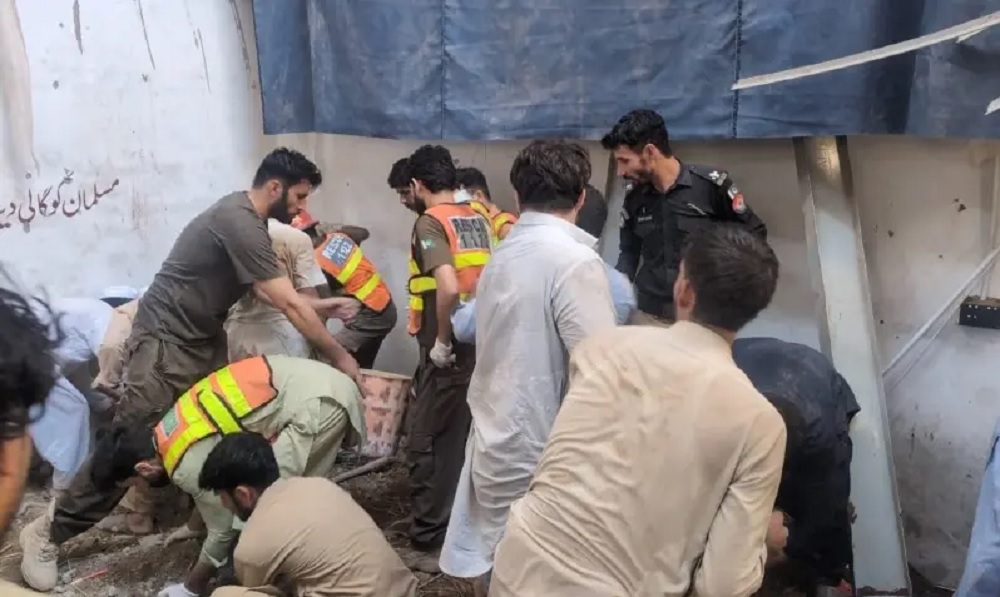
Twenty-one pupils and a teacher were killed on Thursday after a roof collapsed at a school in the northwest Pakistani city of Peshawar, a hospital official said.
Asim Khan from Peshawar’s Lady Reading Hospital confirmed the toll to AFP, adding that over 30 people were injured, with six believed to be in a critical condition.
Pakistan’s Prime Minister Shehbaz Sharif in a statement expressed “deep sorrow and grief over the loss of precious lives”.
“The Prime Minister extends his condolences to the bereaved families and prays for them to have the strength and patience to bear this irreparable loss,” the statement said.
Roof and building collapses are common across Pakistan, mainly because of poor safety standards and shoddy construction materials in the South Asian country of more than 240 million people.
In June this year more than a dozen children were killed in a roof collapse at a tutoring centre in the eastern city of Lahore.
In 2025, 27 people were killed and 10 injured when a five-storey building collapsed in the impoverished area of Lyari in the southern city of Karachi. – AFP
Regional
Saudi Aramco administrative building attacked, limited fire reported
The complex hosts a major operations centre for Aramco, which oversees a vast network of onshore and offshore oil rigs, pipelines, refineries and export terminals.
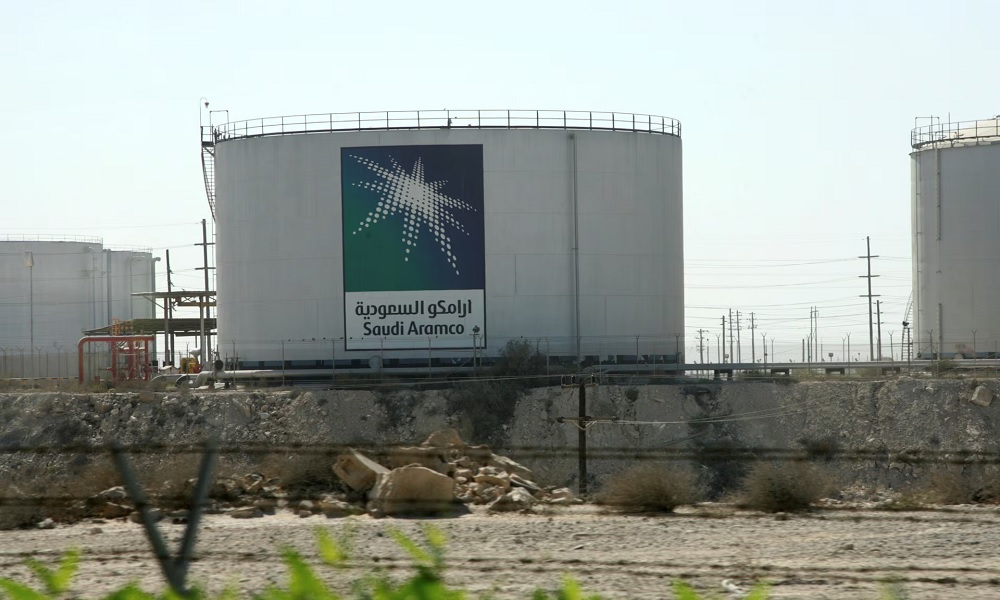
An administrative building belonging to Saudi Arabia’s state-owned oil company Saudi Aramco in the eastern city of Dhahran was attacked, causing a limited fire, the Energy Ministry said in a statement on Wednesday as fighting between Yemen’s Iran-allied Houthis and the kingdom intensified.
Authorities responded to the incident late on Tuesday and took necessary measures, the ministry said, adding that there were no injuries or deaths.
A company source told Reuters earlier that a ballistic missile hit the Aramco headquarters complex in Dhahran. The source said an office tower in the complex was struck and that its top three floors were damaged. The source and two other people with knowledge of the matter said the building was on fire.
The complex hosts a major operations centre for Aramco, which oversees a vast network of onshore and offshore oil rigs, pipelines, refineries and export terminals.
The Houthis have for a week been firing ballistic missiles and drones at key Saudi sites in retaliation for the kingdom’s backing of government forces in Yemen’s reignited civil war. Riyadh’s international airport has received four strikes, including one on Saturday that killed 13 people.
Saturday’s ballistic missile strike on Riyadh airport was the deadliest in Saudi Arabia in a decade, with further attacks grounding flights across the country.
Earlier, six sources told Reuters they heard loud booms near the Aramco complex.
The Saudi-led coalition said fragments of a missile that it had intercepted and destroyed in Dhahran had fallen on a residential area, without providing further details.
Authorities also reported that drones and missiles were intercepted and destroyed in the capital, Riyadh, and the country’s southern region.
Four people were injured in Riyadh after fragments from two Houthi missiles fell following their interception and destruction, Saudi Civil Defense said on Wednesday. The debris caused limited damage to 15 homes in the capital, the Civil Defense spokesperson said, adding that the injured were two women, a man and a child.
The Houthis had threatened a “harsh and painful” response to Saudi-led strikes on the Yemeni capital Sanaa, with spokesperson Yahya Saree saying targets could include the Saudi Aramco headquarters in Dhahran and an oil refinery in Riyadh.
The group has warned oil workers in Saudi Arabia to stay away from sites that could be targets.
The Houthis earlier on Tuesday said Saudi Arabia was attacking Sanaa, and the Saudi-led coalition warned civilians to stay away from an oil depot on the city’s outskirts.
Houthi-run Al-Masirah television reported that the Saudi-led coalition had targeted the Yemen Petroleum Company’s Sabah central station, a fuel depot on the outskirts of Sanaa.
The coalition said in a statement on Tuesday evening that it attacked the station and other sites in an operation aimed at “neutralizing the capabilities of Houthis” to threaten Saudi Arabia, Yemen and international waterways.
The Saudi cabinet, chaired by de facto ruler Crown Prince Mohammed bin Salman, issued a statement on Tuesday before the strike on Saudi Aramco saying the Houthis would face consequences for their repeated attacks on the kingdom.
REIGNITED YEMEN WAR
Saudi Arabia resumed its military campaign in Yemen in support of the internationally recognised government in a bid to reverse the Houthis’ sudden gains last month, when they swept down the Red Sea coast to the critical Bab el-Mandeb Strait.
The strait, the southern gateway to the Red Sea, has become a more vital route for Saudi and other global energy supplies since the start of the Iran war in February, when Tehran closed the Strait of Hormuz leading from the Gulf to the Indian Ocean.
While a government offensive that began a week ago pushed the Houthis from the area closest to the strait, the group remains embedded nearby and has made gains around the city of Taiz this month.
Saudi Arabia has been seeking wider support from allies for its campaign against the Houthis and to help it ward off their missile and drone attacks.
Washington, Saudi Arabia’s strongest ally and longtime security guarantor, has so far rebuffed Saudi efforts to bring it directly into the war against the Houthis.
The Yemen conflict has resumed as a spillover from the wider US-Iran war that began with the US-Israeli attack on the Islamic Republic on February 28.
Iran, Saudi Arabia’s longtime regional rival, has offered to mediate between Saudi Arabia and the Houthis, its foreign minister Abbas Araqchi said on Sunday in statements reiterated by the ministry on Monday.
Regional
Pakistan deploys military to Peshawar after emergency rule declared
Thousands of supporters of Khan have been marching across Khyber Pakhtunkhwa, demanding his release and criticising the government over worsening economic conditions.
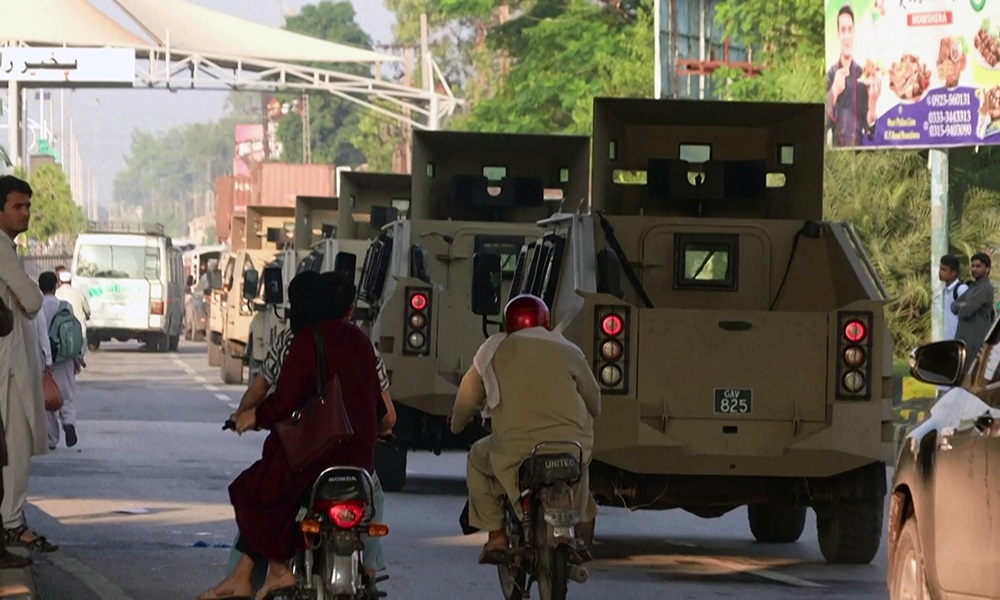
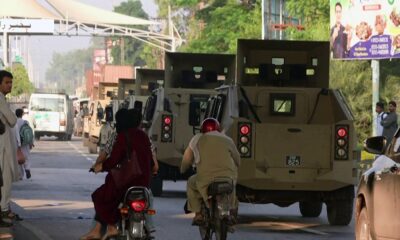
Pakistan deployed security personnel and military vehicles to Peshawar on Monday, a day after the government imposed emergency rule in the northwestern province of Khyber Pakhtunkhwa, a stronghold of jailed former prime minister Imran Khan.
The deployment follows Sunday’s emergency declaration, which came amid anti-government demonstrations by Khan’s supporters and increased militant violence in the region.
Thousands of supporters of Khan have been marching across Khyber Pakhtunkhwa, demanding his release and criticising the government over worsening economic conditions.
The emergency measures effectively sideline the provincial government led by Khan’s Pakistan Tehreek-e-Insaf (PTI) party. Authorities have cited deteriorating security and the failure of negotiations with the opposition.
The move has drawn condemnation from PTI leaders, who have described the emergency declaration as undemocratic and an infringement on the rights of the province’s residents.
Khan has been in prison since August 2023, facing numerous charges that he denies, describing them as politically motivated.
The deployment comes amid heightened political tensions and security concerns in northwestern Pakistan, where authorities have also reported increased militant activity.


Tawsia: Efforts to increase energy production capacity in Afghanistan

Afghanistan Champions League: Abu Muslim Farah beat Sarsabz Yashlar 3-1

IEA ambassador: Daesh leadership and centers ‘completely’ eliminated in Afghanistan

Regional partners seek progress on Trans-Afghan corridor and CASA railway

CSTO chief says IEA has become long-term political actor in Afghanistan

Cricket Bonanza: Afghanistan set for packed international schedule

Afghanistan says 28 killed, 32 captured in Nuristan operation

Silk Road highway in Wakhan corridor now reaches the China border

CNN, MS NOW and Politico sue Trump, challenging White House ban

Dogharoun handles 60% of Iran’s exports to Afghanistan
Tawsia: Efforts to increase energy production capacity in Afghanistan

Saar: Review of state officials’ visits to Kabul over past month discussed

Tahawol: Kyrgyzstan’s rejection of Afghan refugees discussed

Saar: Central Asia’s trade alternative to Pakistan discussed

Tahawol: Warnings over worsening insecurity in Pakistan discussed
-

 World5 days ago
One dead in new attack on Saudi airport, a day after Houthi strike kills 13
-

 Sport3 days ago
Afghan futsal coach: Brazil tournament is first step towards new goals and World Cup
-
 Latest News3 days ago
Afghan official says Durand Line crossings to remain closed until Islamabad accepts demands
-
 Regional5 days ago
Pakistan deploys military to Peshawar after emergency rule declared
-
 Business5 days ago
Afghanistan, US business leaders discuss trade and investment opportunities
-

 Sport5 days ago
Afghanistan U19 begin Asia Cup Preparations with Oman tour
-
 Latest News5 days ago
Mujahid accuses Pakistani military circles of sabotaging talks with Afghanistan
-
 Latest News5 days ago
Afghanistan calls for faster completion of CASA-1000 power project