
Regional
US says it reaches nuclear power deal with Saudi Arabia
A civil nuclear deal with Saudi Arabia has been in the works for years during both President Donald Trump’s first administration and that of former President Joe Biden.

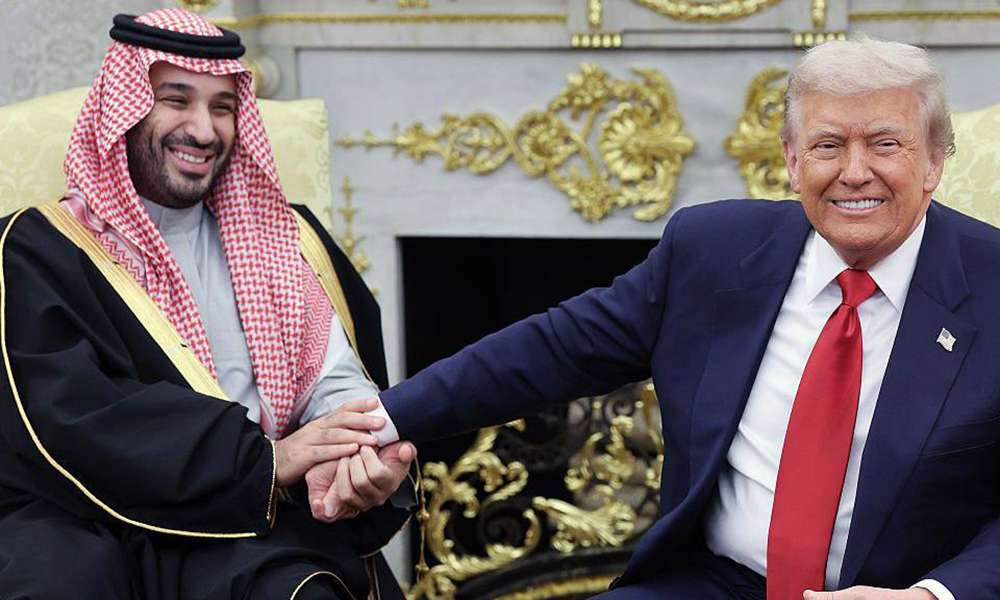
The U.S. and Saudi Arabia have reached a landmark agreement on civil nuclear power, the U.S. Energy Department said on Wednesday, a deal that allows the kingdom to build nuclear reactors using American technology and to enrich uranium, Reuters reported.
A civil nuclear deal with Saudi Arabia has been in the works for years during both President Donald Trump’s first administration and that of former President Joe Biden.
No deal has come together before now, however, in part because of warnings from nonproliferation groups who say that it could offer Saudi Arabia a path to develop a nuclear weapon.
Unlike the Biden plan, the current deal does not include a so-called Additional Protocol that allows the U.N.’s International Atomic Energy Agency to carry out intrusive snap inspections.
The deal would also allow Saudi Arabia to enrich uranium and reprocess nuclear waste, both of which are potential pathways to making a nuclear weapon. The UAE agreed to forgo both of those when it signed a similar deal with the U.S. in 2009.
U.S. Secretary of Energy Chris Wright and his counterpart Prince Abdulaziz bin Salman signed the pact, known as a 123 Agreement, alongside a bilateral safeguards agreement, the U.S. Energy Department said in a release.
The administration said the deal also abides by nonproliferation agreements in the U.S. Atomic Energy Act, which are among the world’s strongest. Saudi Arabia has long said if it does not partner with the U.S., it could partner with China or Russia which have different proliferation standards.
The energy department said the deal now goes to Congress. Unless Congress raises votes to object to the deal within 90 session days, the deal will go into force. But it would need to have a two-thirds majority to override a presidential veto.
Some nuclear experts called on lawmakers to vote down the deal.
“We urge all members of Congress on both sides of the aisle to recognize the risks and to exercise their power to reject or modify Trump’s proposed nuclear deal with Saudi Arabia so as not to open the door for nuclear proliferation in the Middle East even wider,” said Kelsey Davenport, director for nonproliferation policy at the Arms Control Association.
The about 30-year deal for the construction of AP1000 reactors, which is worth tens of billions of dollars, would benefit Westinghouse, jointly owned by Canada-based Cameco (CCO.TO), and Brookfield Asset Management (BAM.N).
An industry source said the deal requires a feasibility study on using U.S. technology in Saudi Arabia. The study and the slow pace of building nuclear power plants and uranium enrichment means it could take many years to build the infrastructure.
Saudi Crown Prince Mohammed bin Salman has repeatedly said he does not want the kingdom to build a nuclear weapon but it would if Iran did, raising concerns about potential proliferation. Several Democratic lawmakers have warned that the deal could start an arms race in the Middle East as the U.S.-Israeli war on Iran grinds on, read the report.
“They are allowing Saudi Arabia, a belligerent and authoritarian nation, to develop nuclear weapons technologies while starting a war with Iran under the guise of preventing an Iranian nuclear bomb,” said Senator Edward Markey, a Democrat. “This deal would make us all less safe.”
Senator Jim Risch, a Republican, said he agrees with the kingdom’s crown prince that the deal stands to benefit both countries.




Regional
Iran tells Pakistan army chief no talks with Washington until demands are met
The demands include ending a US blockade on its ports, the lifting of sanctions on its oil exports as well as ending hostilities on all regional fronts.
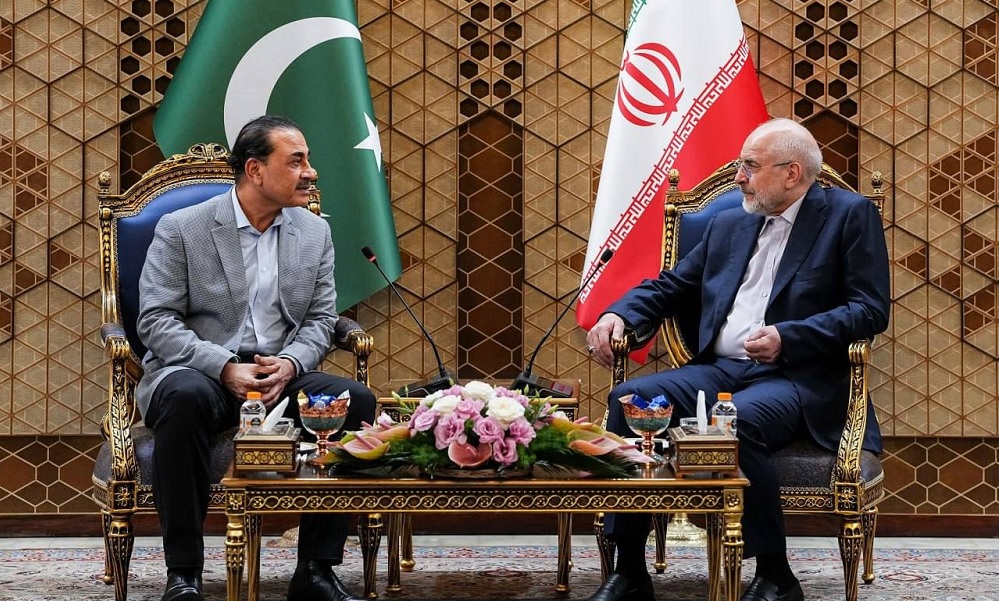
Iran told Pakistan’s army chief on Tuesday that there would be no talks with Washington until Tehran’s demands were met, Iranian media reported, underscoring its hardening stance despite mediation efforts by key interlocutor Pakistan.
President Masoud Pezeshkian discussed mediation efforts and regional developments with Field Marshal Asim Munir in Tehran, according to Nournews.
Pakistan is a key intermediary between the United States and Iran. Earlier mediation efforts helped produce an interim peace agreement in June, but the Islamabad Memorandum quickly unravelled as fighting between Iran and the US resumed weeks after.
Munir also met Iranian parliament speaker Mohammad Baqer Qalibaf, who said Washington could not regain Tehran’s trust until it fulfilled seven conditions Iran set last month for reopening the Strait of Hormuz, according to an Iranian readout of the meeting.
The demands include ending a US blockade on its ports, the lifting of sanctions on its oil exports as well as ending hostilities on all regional fronts.
Iran’s security chief, Mohsen Rezaei, delivered a similar message during a separate meeting with Munir, saying there would be no talks with Washington until Tehran’s demands were met, according to Iranian media.
Rezaei also said all enriched nuclear materials would remain in Iran, reiterating Supreme Leader Ayatollah Mojtaba Khamenei’s position that near-weapons-grade uranium should not be shipped abroad.
US Vice President JD Vance said earlier this month that Iran must make a “meaningful” reduction in its uranium enrichment capacity to satisfy US demands and end the countries’ eight-month-old war.
Israel, the United States and other Western states have long accused Iran of seeking nuclear weapons, including pointing to its move to enrich uranium to 60%, far higher than needed for civilian uses and closer to the 90% needed for a weapon.
Iran denies seeking nuclear weapons.
Regional
Rubio heads to Central Asia while other US officials hit foreign policy hot spots
US officials have portrayed resource-rich Central Asia — the region between China, Russia and Iran — as worthy of more attention than it received from US President Donald Trump’s predecessors.
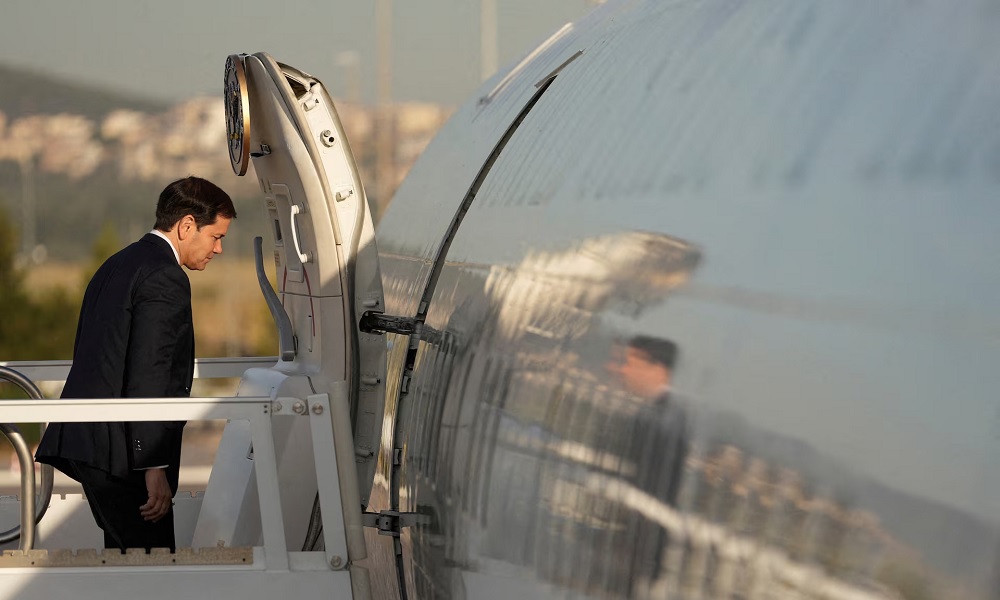
While the Iran war smolders, Saudi Arabia fights the Houthis and a new rift opens in US-Ukraine relations, Secretary of State Marco Rubio travels on Sunday to Uzbekistan, a nation far removed from the biggest US foreign policy challenges.
The top US diplomat is scheduled to land in Samarkand on Sunday to meet with leaders from the C5+1, a grouping that brings together the United States and the Muslim-majority post-Soviet states of Uzbekistan, Kazakhstan, Kyrgyzstan, Tajikistan and Turkmenistan.
US officials have portrayed resource-rich Central Asia — the region between China, Russia and Iran — as worthy of more attention than it received from US President Donald Trump’s predecessors.
Trump hosted C5 leaders at the White House last November, when Kazakhstan agreed to join the Abraham Accords, a series of agreements under which Muslim-majority countries have normalized or deepened relations with Israel. Separately, Trump met with Uzbek President Shavkat Mirziyoyev at the United Nations General Assembly last September.
Regional politics aside, the trip fits an emerging pattern in which Rubio often visits regions not at the center of the news cycle, while leaving some more fraught foreign-policy portfolios to other Trump aides, including special envoys Steve Witkoff and Jared Kushner and Vice President JD Vance.
For instance, Rubio has not visited Kyiv or Moscow since becoming secretary of state. He was not present for talks between US and Ukrainian officials in Florida earlier this month, when US officials pressed Ukraine to stop hitting Russian refineries. Vance, not Rubio, represented the US in Pakistan during peace talks with Iran in April.
Rubio’s previous foreign trip, in early October, took him to Greece, Portugal and Iceland.
Trump administration officials have typically rejected any suggestion that cabinet-level officials should focus their travels on geopolitical capitals and hot spots.
Deputy Secretary of State Christopher Landau, for instance, said on X last week that the idea only certain destinations were worthy of visits from secretaries of state “perfectly encapsulates the decadence and degeneracy of the contemporary US foreign policy establishment.”
US-RUSSIA RELATIONS LOOM
One Central Asian diplomat, speaking on the condition of anonymity, said officials in the region are wondering to what extent the US will continue targeting Russian sanctions evasion. All C5 states, while drawing closer to the US, have deep historical ties with Moscow, and the region has facilitated Russian imports and exports that violate US and European Union sanctions, Western officials say.
In the past, the US has pushed regional states to clamp down on those illicit flows.
But Trump struck a deal with Moscow this month to import Russian diesel, a move to lower domestic fuel prices before the congressional midterm elections. On Friday, Trump waived all provisions of legislation that would have allowed him to slap massive tariffs on some nations that buy significant amounts of Russian crude or otherwise help Moscow evade sanctions. Among the nations that could have been affected, experts have said, are India and Kazakhstan.
India, which Rubio will visit after Uzbekistan, remains the world’s No. 2 Russian crude importer after China, despite Trump saying in February that India had agreed to stop buying oil from Russia.
Additional questions hang over a potential trade deal with India and an expansion of the Abraham Accords in Central Asia.
A US official, speaking on the condition of anonymity, described the trade deal on Friday as “pretty much done,” raising the possibility that an agreement could be announced during the Rubio trip.
Separately, the US has talked to additional Central Asian nations about joining the Abraham Accords, Reuters reported last year, conversations that could in theory continue in Samarkand.
More than 200 business executives will accompany Rubio to Uzbekistan, the State Department said. The Central Asian diplomat said the Trump administration has focused its commercial efforts on expanding access to the area’s rare earth mineral resources.
The trip to Uzbekistan was largely organized by Sergio Gor, the US ambassador to India, the Central Asian diplomat said. Gor, who was born in Uzbekistan and is a friend of Rubio, also serves as the US special envoy for South and Central Asian affairs.
After Uzbekistan, Rubio will visit the Indian cities of Mumbai and Jamnagar to meet with business leaders, including Reliance Industries Chairman Mukesh Ambani, who earned the Trump administration’s favor earlier in the year by backing a new refinery in Texas. Rubio most recently visited India five months ago.
The trip is due to wrap up on Thursday.
Regional
Trump says US may strike Iran’s ‘Pickaxe Mountain’ nuclear facility
Pickaxe Mountain is a heavily fortified underground facility linked to Iran’s nuclear programme, located near one of the country’s major nuclear sites.
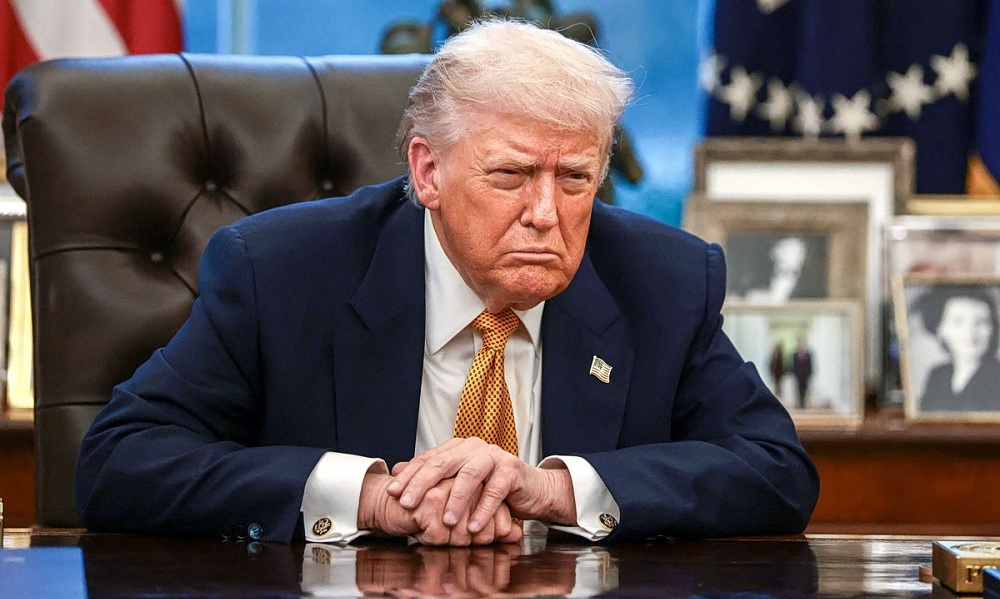
US President Donald Trump has said Washington may launch further strikes against Iran’s underground nuclear facilities, including the site known as Pickaxe Mountain, as he seeks to prevent Tehran from developing a nuclear weapon, Reuters reported.
In an interview with Newsmax on Thursday night, Trump said the United States was determined to ensure Iran never obtains a nuclear weapon, arguing that such a development would pose a serious threat.
“Their nuclear is buried under millions of tons of mountain. Now we’re looking at Pickaxe Mountain. We may have to go there. We’ll take a shot at that one. We’ll knock it out fast,” Trump said.
Pickaxe Mountain is a heavily fortified underground facility linked to Iran’s nuclear programme, located near one of the country’s major nuclear sites.
Trump also ruled out the use of nuclear weapons in the conflict, saying conventional military capabilities would be sufficient to achieve US objectives.
“I wouldn’t use nuclear. We don’t have to,” he said.
The US president reiterated that he was not considering deploying American ground troops into Iran, signalling that Washington’s military approach would continue to rely on other forms of military action.
Trump did not confirm whether he had authorised the use of the GBU-43/B Massive Ordnance Air Blast (MOAB) bomb, commonly known as the “Mother of All Bombs,” against Iranian energy infrastructure or nuclear facilities. He stressed that the weapon was not nuclear, read the report.
The remarks come amid escalating tensions between Washington and Tehran following US-Israeli strikes on Iran that began in February, with Iran’s nuclear programme remaining a central issue in the conflict.
The potential targeting of deeply buried nuclear facilities could further intensify the conflict and raise concerns about the broader regional security situation.


Tahawol: Doha meeting and Afghanistan’s political and economic future discussed

Saar: Concerns over expansion of conflict between Iran and US discussed

Afghanistan, world and Asian canoeing federations hold online meeting

Uzbekistan, Norway discuss Afghanistan and regional security in Oslo

Governments warn citizens over security risks in France after riots

Cricket Bonanza: Afghanistan set for packed international schedule

Afghanistan says 28 killed, 32 captured in Nuristan operation

Silk Road highway in Wakhan corridor now reaches the China border

CNN, MS NOW and Politico sue Trump, challenging White House ban

Afghanistan on climate front line as Kabul faces groundwater warning
Tahawol: Doha meeting and Afghanistan’s political and economic future discussed
Saar: Concerns over expansion of conflict between Iran and US discussed
Governments warn citizens over security risks in France after riots

Tahawol: Iran’s reaction to Pakistan’s mediation discussed

Saar: Review of SCO meeting in Tajikistan
-
 Sport4 days ago
Afghanistan reach Brazil futsal tournament final after beating Cape Verde 4-2
-
 Regional5 days ago
Trump says US may strike Iran’s ‘Pickaxe Mountain’ nuclear facility
-
 World3 days ago
Violent protests spread across Europe as Albanian PM blames ‘foreign hand’
-
 Latest News5 days ago
Afghanistan’s hunger crisis deepens as 16 million face food insecurity ahead of winter
-

 Sport3 days ago
Afghanistan finish runners-up after 6-0 defeat to Brazil in futsal final
-
 Latest News4 days ago
Hegseth says only a few NATO allies were involved in fighting in Afghanistan
-
 World4 days ago
France rocked by nationwide clashes, looting and fires
-
 Tahawol4 days ago
Tahawol: Russian economic delegation’s visit to Kabul