
Business
Digital Technology system in place: MoIT

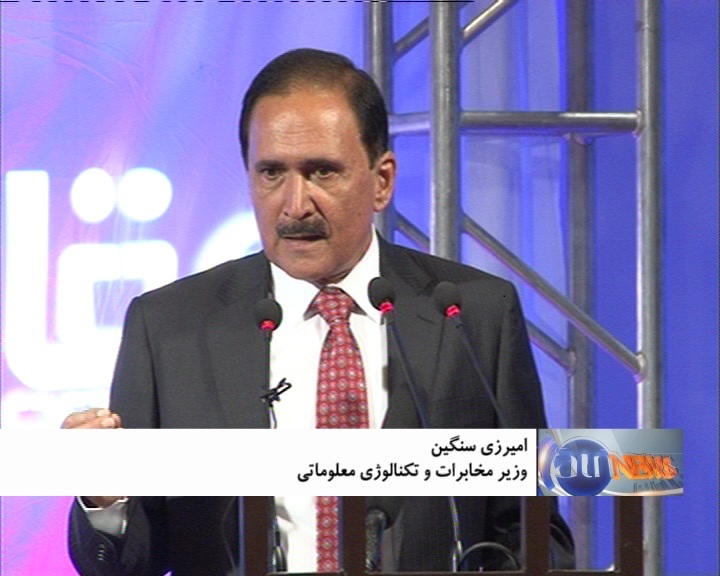

After 13 years of development on the Technology and Information aspect in Afghanistan the Analog system changed into Digital.
Minister of Information and Technology in Afghanistan Amirzai Sangin during his speech in the inauguration ceremony said,” the current technology system is being experienced in Afghanistan that means it will cover 60 Tv stations in the capital city of Kabul and soon will take over all Afghanistan.”
The President second deputy Mohammad Karim Khalili who attended the ceremony urged that the current system will help media develop across the country.
Minister of the Information and Technology in Afghanistan Amirzai stated that there are 35 Tv stations active at the capital city of Kabul, 54 local Tv stations in provinces, 160 local radio stations across the country, which 89 Tv stations, and 122 radio stations are active under the Analog system.
The current Digital system will also encourage investors to invest with less money and have high quality Tv station.
Its said that Digital system will soon cover the following provinces Kunduz, Heart, Mazar-e-Sharif, Jalaabad, Ghazni and Kandahar.

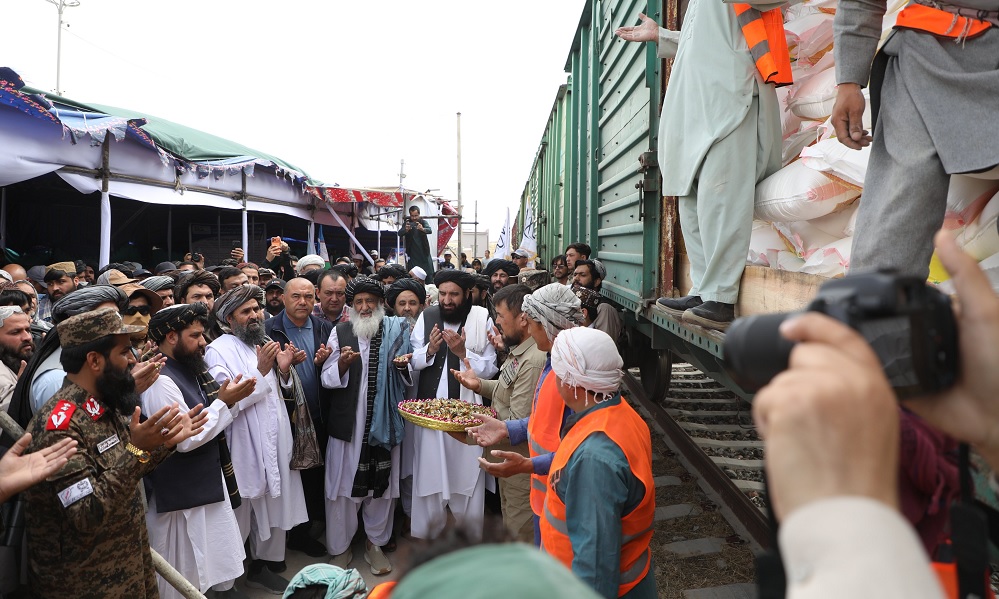
Mullah Abdul Ghani Baradar, the Deputy Prime Minister for Economic Affairs, on Thursday officially reopened the fifth section of the Hairatan–Mazar-e-Sharif railway line in northern Balkh province, marking another step in Afghanistan’s efforts to expand its rail infrastructure and regional trade connectivity.
Speaking at the reopening ceremony, Baradar praised the Ministry of Public Works for its efforts in developing Afghanistan’s railway network and expressed appreciation for Uzbekistan’s cooperation in the project.
He said economic and commercial ties between Afghanistan and Uzbekistan have strengthened significantly in recent years, adding that a joint committee led by the governor of Balkh and involving relevant institutions has been established to further enhance bilateral cooperation.
Officials said the newly reopened section of the railway is 70 kilometers long and includes 30 kilometers of branch lines, five railway stations, and the capacity to unload up to 50 wagons simultaneously.
The government said the reopening of the railway section is expected to improve the transportation of commercial goods, increase trade volume, and facilitate regional economic connectivity between Afghanistan and neighboring countries.
The Hairatan–Mazar-e-Sharif railway is considered one of Afghanistan’s most important trade corridors, linking the country to Central Asia through Uzbekistan.
Business
Kabul, Tashkent push industrial cooperation with planned factory transfers
The talks focused on strengthening collaboration in the light industry sector and making use of Uzbekistan’s experience in manufacturing and industrial development.
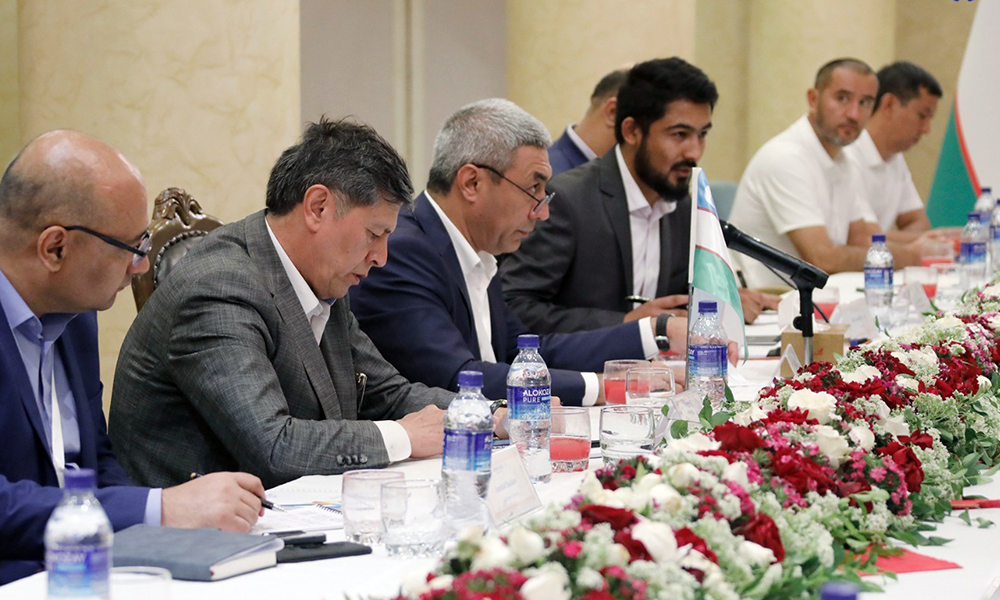
Afghanistan and Uzbekistan have discussed the transfer of 20 light industry factories to Afghanistan as part of efforts to deepen economic cooperation and expand industrial investment between the two countries.
According to Afghanistan’s Ministry of Industry and Commerce, the discussions took place during a bilateral meeting between Nooruddin Azizi, Afghanistan’s Minister of Industry and Commerce, and Nozimjon Kholmurodov, head of the Light Industry Development Agency under Uzbekistan’s Council of Ministers, along with their respective delegations.
The talks focused on strengthening collaboration in the light industry sector and making use of Uzbekistan’s experience in manufacturing and industrial development.
Key topics included standard cotton cultivation in Afghanistan, cotton processing and yarn production, as well as the relocation of cotton processing, leather and cashmere factories from Uzbekistan to Afghanistan. The two sides also discussed the production of leather boots and textiles in Afghanistan and the export of Uzbek-made garments to Afghan markets.
Officials further reviewed plans for transferring 20 factories from Uzbekistan to Afghanistan across various industrial sectors.
Discussions also covered organizing a specialized international light industry exhibition at the Termez joint market and promoting joint investment in Afghanistan’s yarn production industry.
At the conclusion of the meeting, both sides introduced technical and liaison teams tasked with following up on the implementation of the agreed initiatives.


Tahawol: UK’s conditions for recognizing IEA discussed

Saar: Discussion on UN concerns over Afghan refugees’ challenges

China restricts export of chemical substances to Afghanistan

Mullah Baradar approves 15 projects worth around 4.2 billion AFN

U.N. rights envoy calls for probe into deadly strike on Kabul drug rehab hospital

New Afghanistan-China transport corridor launched via Turkmenistan

Afghanistan signs $46 million deal to develop standard laboratory complexes

Bayat Power extends gas supply deal with Afghan Gas

Germany to launch online visa system for Afghan study and work applicants in Pakistan

Afghanistan launches first 5G trial in Kabul to boost telecom services
Saar: Discussion on UN concerns over Afghan refugees’ challenges

Tahawol: Push for agreement between Iran and US discussed

Saar: Afghanistan in China-Russia’s limelight discussed

Tahawol: Call for handing over Afghanistan’s UN seat to IEA discussed

Saar: Pakistan’s emphasis on peaceful ties with Kabul discussed
-
 Regional5 days ago
Revised Iranian proposal to end war shared with US, Pakistani source says
-
 Sport5 days ago
Mexico City Stadium to host opening match of FIFA World Cup 2026
-

 Latest News4 days ago
India announce squads for Afghanistan Test and ODI series
-
 Latest News5 days ago
UK envoy highlights importance of Afghanistan-Pakistan relations and women’s inclusion
-
 Latest News4 days ago
Mullah Baradar launches $150 million Lajward residential complex in Balkh
-
 Climate Change5 days ago
Afghanistan climate and housing challenges highlighted at World Urban Forum in Baku
-
 Business5 days ago
Afghanistan’s domestic pharmaceutical production sees major growth: Mullah Baradar
-
 Latest News4 days ago
Fazlur Rehman says Pakistan’s Afghanistan policy has failed