
Latest News
Abdullah calls for dialogue and decisions, not speeches, at Istanbul summit

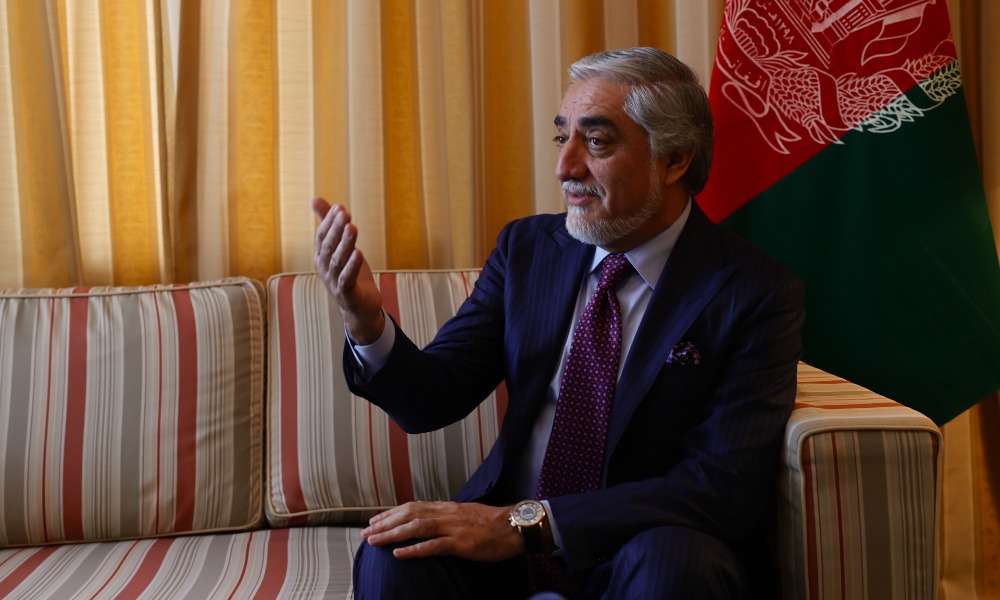
Abdullah Abdullah, the chairman of the High Council for National Reconciliation (HCNR), said this week he hopes “tangible progress” will be made towards a peace settlement at the Istanbul meeting scheduled for April.
Speaking to Anadolu Agency in an exclusive interview, Abdullah said the presence of decision-makers expected to attend the meeting needs to be utilized to push accelerate the settlement of issues in Afghanistan.
“There have been a lot of discussions between both sides in the past few months in Doha. The Doha process will continue and then we have the Istanbul meeting. The Istanbul meeting will be held at a high level.
“There will be top leaders of Afghanistan and Taliban — that’s how it is anticipated,” Abdullah said.
He also urged that the Istanbul opportunity should not be used to give speeches; instead, it should focus on working for “tangible progress.”
“The final, final, final agreement, of course, it takes time, but we should at least agree on few principles. And an agreement on a cease-fire will be very, very important,” Abdullah added.
Anadolu reported that Abdullah emphasized that it was time to go beyond the US – Taliban agreement signed in Doha in February last year that stipulates the withdrawal of the US troops from Afghanistan by May 1. He sought to cut a deal directly between the Afghan government and the Taliban, reported Anadolu.
He said the Taliban’s readiness to move ahead would be tested in the coming days, underlining that Afghan government is ready to have direct agreements.
“Eventually, it has to be a comprehensive agreement between us, there is something between the US and the Taliban, but eventually, we need to agree. The readiness of the Taliban remains to be seen. It will be tested before the meeting in Turkey,” said Abdullah.
Asked about a possible offensive the Taliban might launch if the US fails to fulfill its obligations, Abdullah said the Afghan sides should not be dependent on the US and should work together to end the presence of foreign troops in the country.
“That [Taliban’s threat to resume hostilities] is unfortunate because eventually, we should sort out this among ourselves. We should find a solution, which will work for both sides. And if there is peace, then there is no need for the presence of the international troops,” he told Andadolu.
“In a peaceful Afghanistan, why do we need international troops? If this is the aim of the Taliban, that there shouldn’t be foreign troops in Afghanistan, the way to achieve it is to work together as Afghans and prepare the ground for that. That is my message,” Abdullah said.
He said that the US would maintain its course regarding Afghanistan’s peace process under the new Biden administration.
“On the support of the peace process, the US policy is the same. They support the peace process. And also, they want to see military arrangements, if not tomorrow, then someday in the near future. They also need to respond to the urgency of the need for peace. It’s more urgent for the people of Afghanistan to achieve peace because of the suffering of the people. Should this be the case, they will continue their efforts, enhance their activities with the countries in the region. They want the UN to be involved in it, and we will continue to work together with them,” said Abdullah.
He admitted that the Afghan government has a different view on some points, including the idea of an interim government, which has been made clear to Washington.
He told Andadolu that the Afghan government favors the signing of an agreement with the Taliban ahead of conducting elections. He described this as a “principled position.”
“It is very premature to talk about it [interim government]. These issues have been raised and are also part of that paper that was shared with us by the Americans. We responded to that,” he said.
Abdullah said the Taliban has not yet responded to the US State Department’s letter on the issue of an interim government but said Afghanistan had pointed out weaknesses and raised concerns about various aspects of the letter.
“We said it helps if we could agree on some arrangements before going to the election with the Taliban. If the Taliban wants to go directly to election, get to an agreement and then have elections, that is also not impossible. As long as we can get an agreement,” he said.
About the meeting conducted in Moscow on March 18 and 19, Abdullah said the parties used the opportunity to exchange views on different points informally to better understand each other’s positions and concerns, Anadolu reported.
He stated the Taliban entered Russia using the Afghan passports issued by the Afghan embassy in Qatar for the members of the negotiating team.
“The Taliban talked about their own views, and we talked about ours. And we had an opportunity to get together. It was not a negotiation but, in a sense, that both sides are at the same place, so why not get together, to express a few things in the sort of informal way,” he said.
Abdullah said the statement adopted at the end of the meeting could be assessed as “good”, saying it meets the Afghan people’s expectations.
“The parties should have used the opportunity, which was there. Especially when the whole world, the people of Afghanistan are demanding us to get to a cease-fire and a comprehensive peace settlement,” he told Anadolu.
He noted that the countries that participated in the extended “Troika” comprising Russia, China, the US, and Pakistan asked what the people of Afghanistan are demanding.
“The message for both sides was very clear. I think it will help. But that depends again on both sides,” Abdullah said.
Turkey Summit
In a separate report by Anadolu, Turkey’s foreign minister Mevlut Cavusoglu said this week that the Istabul summit next month is not meant to replace the Doha talks..
This comes after he met with Anthony Blinken, the US Secretary of State, in Brussels on the sidelines of a NATO foreign ministers’ meeting this week.
Cavusoglu said on Wednesday that he and his US counterpart will discuss the date for the summit with all parties concerned.
Earlier this week, President Ashraf Ghani said he would attend the summit if the Taliban’s leader Hibatullah Akhundzada also attends the event.









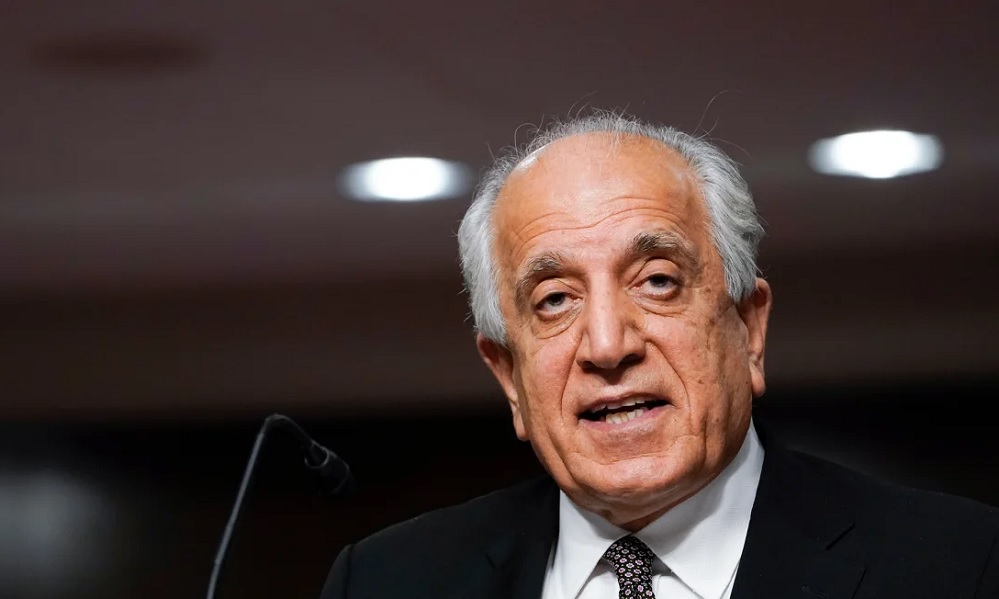
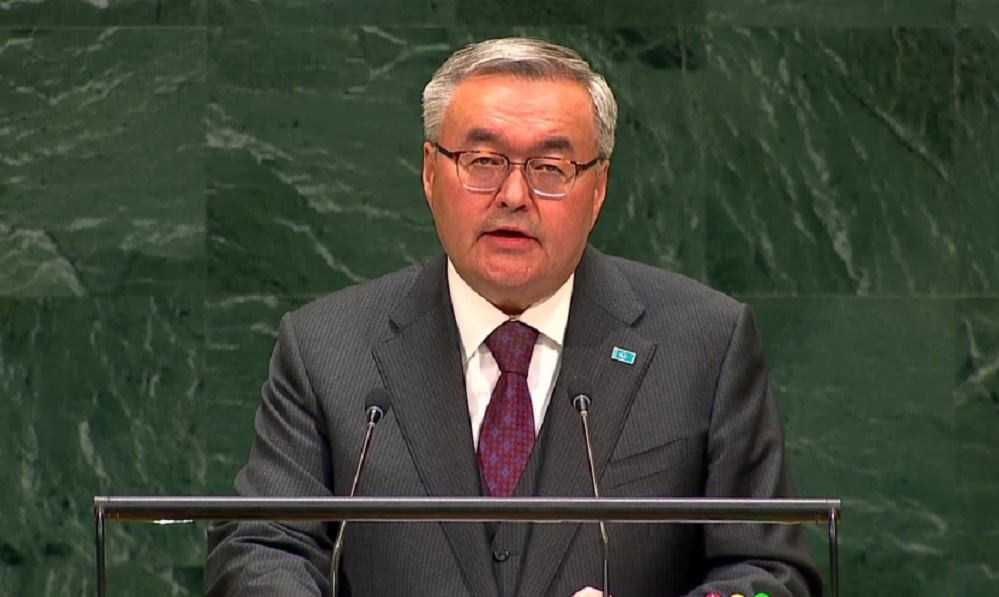
Kazakhstan’s Foreign Minister Mukhtar Tileuberdi has called for pragmatic and coordinated international engagement with Afghanistan, saying the country’s long-term stability is closely linked to the security and sustainable development of Central Asia.
Speaking during the general debate of the 81st session of the United Nations General Assembly in New York on Friday, Tileuberdi said humanitarian assistance to Afghanistan remains essential but alone cannot break the cycle of poverty, displacement and dependency.
He said Kazakhstan supports a “pragmatic, coordinated and step-by-step” approach to international engagement with Afghanistan, with the United Nations playing a central role.
Tileuberdi also said Kazakhstan is working with the UN to operationalize the United Nations Regional Centre for the Sustainable Development Goals for Central Asia and Afghanistan in Almaty.
He said the success of the centre should be measured by the results and assistance it delivers to the region.


Abu Muslim Farah defeat Khurasan Faryab 2-0 in ACL season six

Saar: Concerns over Pakistan’s political crisis discussed

Afghanistan Champions League: Omar Zawak Herat beat Toofan Herat 1-0

Blast in Pakistan’s Dera Ismail Khan kills 11, injures 30

Ariana Afghan Airlines increases Kabul-Delhi cargo flights

Saudi energy group signs major Afghanistan deals covering gas exploration and pipeline plans

Trump floats idea of renaming Atlantic or Pacific Ocean

US hits Egyptian bank branches with Iran sanctions as war marks six months

Nepal flood rescue mission enters critical phase as thousands remain missing

Iranian clubs to face Gulf opponents at neutral venues in Asian Champions League Elite
Saar: Concerns over Pakistan’s political crisis discussed

Exclusive interview with Abdul Latif Mansoor, Minister of MRRD

Tawsia: Overview of Afghanistan’s iron mines

Tahawol: Discussion on fresh Pakistani airstrikes on Afghanistan

Saar: Calls for international support for Afghanistan discussed
-

 World5 days ago
CNN, MS NOW and Politico sue Trump, challenging White House ban
-

 Latest News4 days ago
Ariana Afghan Airlines ranks seventh among 45 Central Asian airlines
-

 Latest News5 days ago
UN reiterates call for respect for international law after Kunar airstrikes
-

 Regional4 days ago
US and Iran hold first talks since June after Trump’s ‘annihilation’ threat
-

 Latest News4 days ago
Silk Road highway in Wakhan corridor now reaches the China border
-

 Regional3 days ago
Iran airlines cancel flights as US sanctions hit
-

 Latest News5 days ago
Afghan Official: Pakistan’s airstrikes will not go unanswered
-
 Sport5 days ago
Afghan boxing referee heads to China for international festival