
Business
Afghan delegation visits Belarus to strengthen economic and industrial ties
The delegation also visited major state and industrial enterprises, including, the State Chemical Service, and agricultural farms under the Ministry of Agriculture.

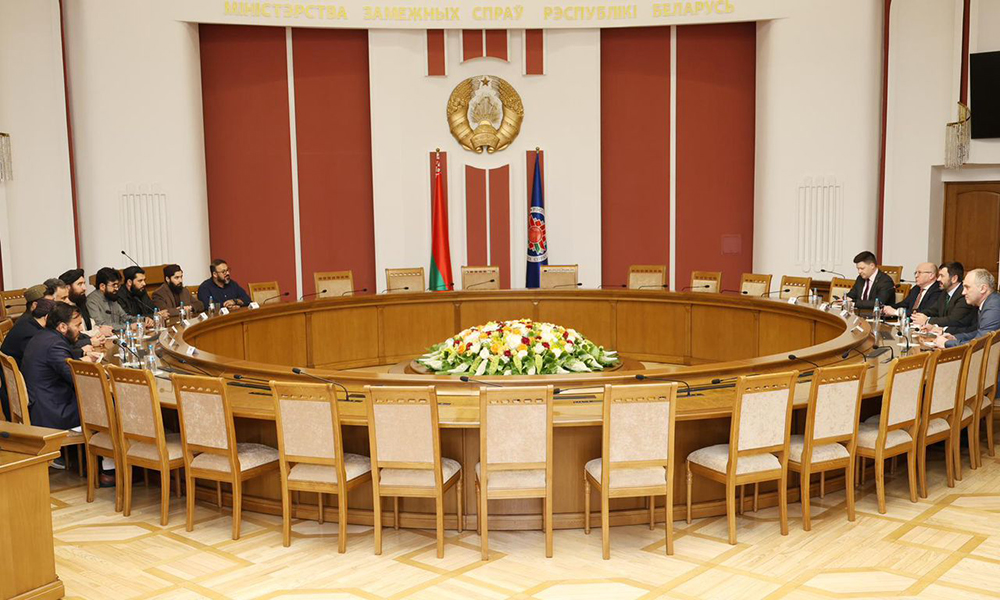
A high-level delegation from the Islamic Emirate of Afghanistan, led by Ahmad Jan Balal, head of the Emirati Companies, and Abdul Rahman Atash, CEO of the National Development Company, accompanied by representatives from the Ministry of Foreign Affairs and technical teams, visited Belarus to advance bilateral cooperation.
According to Nabiullah Arghandiwal, spokesperson for the National Development Company, the Afghan delegation held meetings with officials from Belarus’ Ministries of Foreign Affairs, Agriculture, and Industry to discuss political, economic, and trade-related issues.
The delegation also visited major state and industrial enterprises, including, the State Chemical Service, and agricultural farms under the Ministry of Agriculture.
Arghandiwal added that both sides agreed to strengthen and expand technical collaboration in the fields of industry, agricultural machinery, construction materials, food safety, public health, and education, aiming to enhance long-term economic and industrial partnerships between the two nations.
give me english hashtags with coma in between the words








Business
Afghanistan, Uzbekistan sign $300m worth of trade agreements
Turdimov underscored the long-standing historical and economic links between the two nations and noted the active role of Afghan traders in the Syrdarya region.
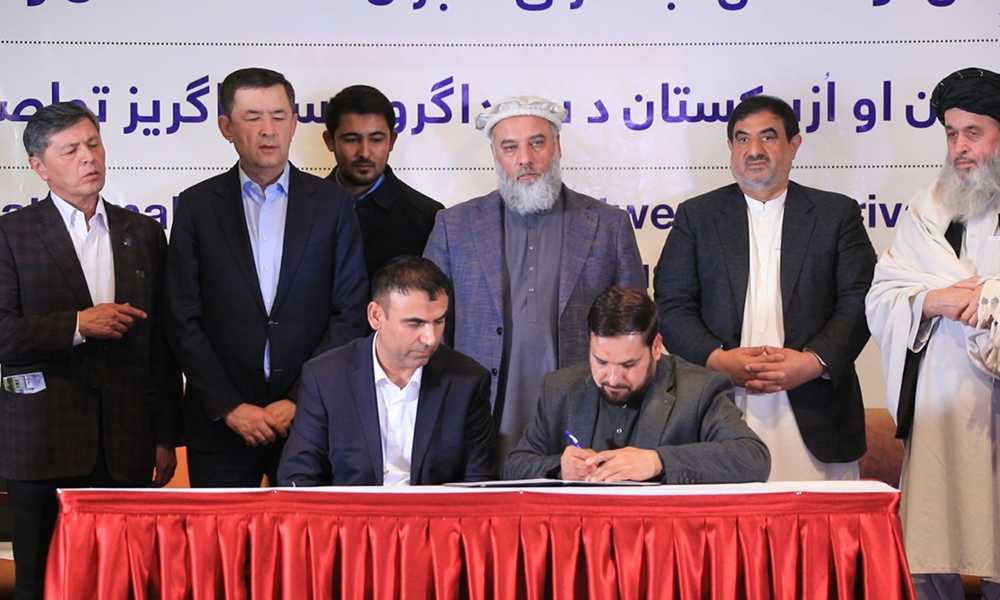
Afghanistan and Uzbekistan have signed 25 commercial memorandums of understanding worth more than $300 million, marking a significant boost to bilateral economic cooperation.
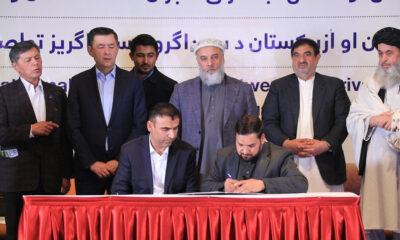
The agreements were concluded at a trade connectivity conference attended by Afghanistan’s Minister of Industry and Commerce, Nooruddin Azizi, and the Governor of Uzbekistan’s Syrdarya region, Erkinjon Turdimov, along with senior officials and business leaders from both countries.
Azizi said there is strong political and economic momentum behind expanding bilateral ties, noting that trade between the two sides has grown at an unprecedented pace in recent years. He added that both countries aim to increase trade volumes in 2025 compared to 2024, pointing to significant untapped potential.
He also highlighted preferential trade arrangements covering eight Afghan export items and six Uzbek products.
Turdimov underscored the long-standing historical and economic links between the two nations and noted the active role of Afghan traders in the Syrdarya region.
He called for deeper cooperation in industry and manufacturing, encouraged joint development projects, and outlined Uzbekistan’s investment opportunities, including access to European export markets.
The newly signed agreements span key sectors such as construction, food products, agriculture, furniture, textiles, and pharmaceuticals, reflecting growing private-sector confidence and signaling a new phase in Afghanistan–Uzbekistan economic partnership.
Business
With Torkham closed, trade losses mount
Business groups report Pakistan’s monthly export losses nearing $177 million, with bilateral trade volumes down by more than half in recent periods.
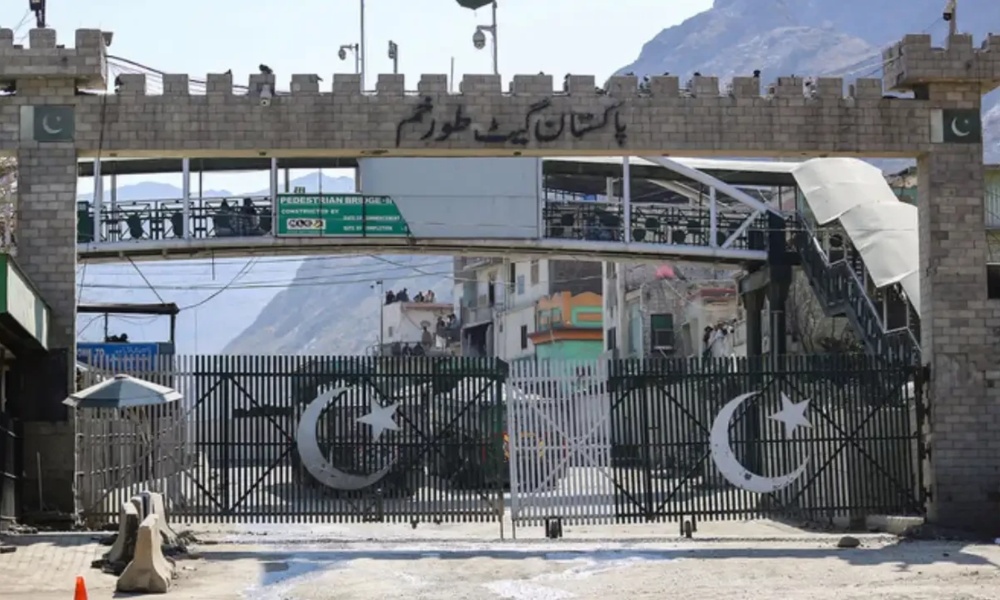
The Torkham crossing, a critical artery for trade between Afghanistan and Pakistan has remained shut to all movement and commercial activity for more than four months, since mid-October last year, deepening economic pain on both sides.
The closure followed clashes between Pakistani and Afghan forces on the night of October 11–12.
Although a ceasefire was later brokered with mediation involving Qatar and Turkey, trade routes have remained sealed amid lingering security concerns.
Alongside Torkham, other crossings—including Kharlachi, Ghulam Khan, Angoor Adda, and Chaman—were also closed, compounding the disruption.
Traders say the economic toll is mounting rapidly. Daily export losses through Torkham from Pakistan alone are estimated at about $2 million, translating to more than $240 million over roughly 120 days.
When stalled imports, lost customs revenue, and knock-on effects are included, the damage runs far higher.
Business groups report Pakistan’s monthly export losses nearing $177 million, with bilateral trade volumes down by more than half in recent periods.
Before the shutdown, Torkham handled around 10,000 travelers a day and 500–700 cargo and passenger vehicles. Its closure has crippled border markets and logistics.
Mujeeb Shinwari, president of Pakistan’s All Customs Clearance Agents Association, said more than 150 clearance offices at Torkham have shut, idling at least 1,000 workers. “This isn’t just about closed offices,” he said. “Entire households have lost their livelihoods.”
Zakir Shinwari, head of the Torkham Labour Union, estimates that over 4,000 daily-wage earners—drivers, loaders, porters, hotel owners, and service providers—have been pushed out of work. Faisal Malook, vice president of the Landi Kotal Traders Union, described a near-total collapse of local commerce, with markets empty and livelihoods cut off.
The shutdown has also distorted prices. Afghan exports of vegetables, cotton, and especially dry fruits—almonds, raisins, figs, pistachios, and pine nuts—have stopped, driving up prices in Pakistani markets.
Meanwhile, Pakistani exports such as potatoes, citrus, bananas, jaggery, and medicines have backed up, depressing prices and inflicting losses on producers.
Beyond the immediate area, factories reliant on Afghan raw materials or markets have slowed. Hopes of wider regional integration, including major power and transit initiatives linking Central and South Asia, have dimmed as prolonged closures and instability continue to undermine confidence in overland trade routes.
Business
Iran–China rail link via Afghanistan proposed to cut transit time
Officials estimate annual traffic on the China–Europe route could rise to 300 trains following regional agreements.
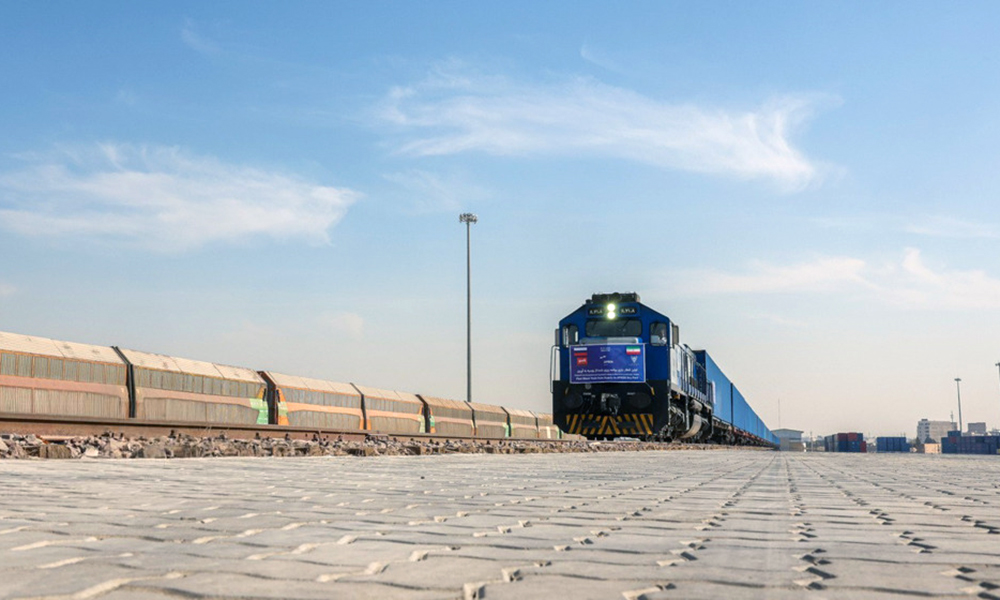
A proposed rail connection linking Iran to China through Afghanistan could reduce transport distances by up to 50 percent and enable direct freight train services to Europe.
The proposed Herat–Mazar-e-Sharif–Wakhan railway would connect China to Europe and West Asia via Afghanistan, Iran, and Turkey, strengthening regional trade corridors, IRNA reported. The project was recently discussed during talks between Afghan public works officials and the CEO of Iran Railways.
Iranian rail officials say the plan would use standard-gauge tracks, allowing trains to travel directly from China to Europe without cargo transfers, easing bottlenecks at borders with Kazakhstan and Turkmenistan. Technical studies are underway to assess investment needs.
Since the start of the current Iranian year, more than 63 China-bound freight trains have entered Iran, up from seven last year.
Officials estimate annual traffic on the China–Europe route could rise to 300 trains following regional agreements.
The project includes a 64-kilometer rail segment to Herat, an extension to Mazar-e-Sharif, and a connection through Afghanistan’s Wakhan region to China’s Xinjiang province. Despite challenging terrain, Iranian and Afghan companies have expressed interest in construction.
Iranian officials say the route would cut costs and transit time, boost trade with China, and strengthen Afghanistan’s integration into regional rail networks.


Afghan delegation visits Belarus to strengthen economic and industrial ties

Afghanistan, Uzbekistan sign $300m worth of trade agreements

International figures congratulate Rashid Khan on historic T20 milestone

Tahawol: Afghanistan’s claim of Pakistan nurturing Daesh

Saar: Central Asian envoys’ meeting on Afghanistan

Afghan traders sign deal to import pharmaceuticals from Bangladesh

AFC Futsal Asian Cup 2026: Day One Review

AFC Futsal Asian Cup: Afghanistan to face Iran in crucial Group D clash

Russia signals interest in expanding investment and trade ties with Afghanistan

Afghanistan shine on Day Two of AFC Futsal Asian Cup Indonesia 2026
Tahawol: Afghanistan’s claim of Pakistan nurturing Daesh
Saar: Central Asian envoys’ meeting on Afghanistan

Tahawol: 37th anniversary of Soviet exit from Afghanistan

Saar: 37th anniversary of Soviet withdrawal from Afghanistan

Tahawol: Impact of continued sanctions on Afghanistan reviewed
-
 Latest News2 days ago
Tajikistan: Recent attacks from Afghanistan aimed at damaging our relations with China
-

 Sport5 days ago
Winter Olympics 2026: Wednesday brings records, first-ever golds and thrilling action
-
 Latest News5 days ago
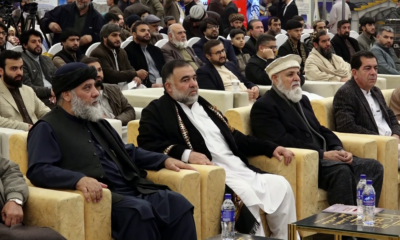
Afghanistan moving toward development and industrialization every day: Azizi
-
 Latest News3 days ago
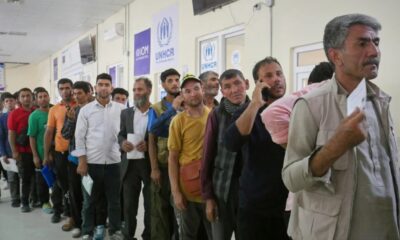
UN warns mass return of Afghans from Pakistan and Iran is pushing Afghanistan to the brink
-

 Latest News3 days ago
Japan maintains direct contacts with IEA officials through Kabul Embassy
-

 Regional5 days ago
Polls close, counting begins in Bangladesh election after high turnout
-
 Business2 days ago
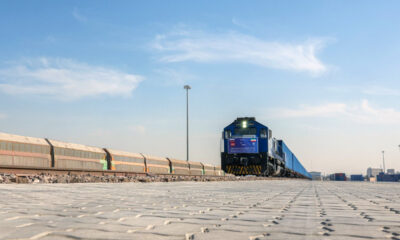
Iran–China rail link via Afghanistan proposed to cut transit time
-

 Regional4 days ago
Bangladesh’s BNP wins two-thirds majority in landmark election