
Sport
Afghan Peaks founder climbs Aconcagua to promote Afghanistan’s mountain potential
The mountain was first climbed in 1960 by a Japanese expedition and remains a major objective for high-altitude mountaineers.

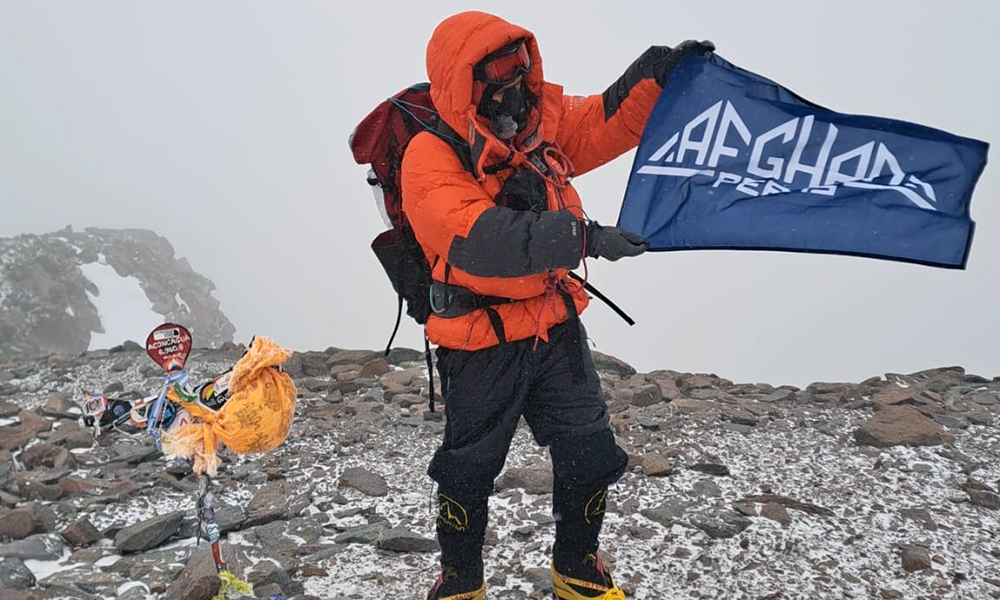
Afghan mountaineer Samuel Sidiqi has successfully summited Mount Aconcagua (6,962 meters), the highest peak in the Americas and one of the famed Seven Summits, as part of his mission to promote mountain sports and outdoor development in Afghanistan.
Sidiqi reached the summit on February 14, 2026, marking another milestone for Afghan mountaineering. His latest achievement builds on his 2023 ascent of Mount Everest, when he became the first Afghan national to stand atop the world’s highest mountain.
The Aconcagua expedition was supported logistically by Grajales Expeditions, one of the longest-operating guiding companies on the mountain. Founded by mountaineering pioneer Fernando Grajales, the company has spent more than five decades assisting climbers with expedition infrastructure and operational expertise.
For Sidiqi, the climb is part of a broader vision tied to his work as founder of Afghan Peaks, a U.S.-registered 501(c)(3) charity focused on building mountain skills among Afghans and promoting environmental stewardship. The organization supports initiatives in skiing, mountaineering, avalanche awareness, and outdoor education, particularly in Afghanistan’s central highlands.
Much of Afghan Peaks’ work is concentrated in the Bamiyan region, where community-based ski programs and youth training initiatives have been expanding. The group aims to foster a sustainable mountain economy by equipping local communities with the skills needed for safe engagement with their environment, while also highlighting Afghanistan’s potential for adventure tourism.
Sidiqi says his international climbs are designed not only as personal challenges but also as a platform to inspire Afghan youth and draw global attention to the country’s natural landscape.
“Each climb is an opportunity to show Afghan boys and girls that there are no limits to what they can achieve. The mountains teach patience, responsibility, and teamwork—values that matter both on and off the mountain,” he said.
Aconcagua is known for its high altitude, unpredictable weather, and physical demands. By reaching its summit, Sidiqi continues to strengthen his role as an advocate for mountaineering, youth development, and mountain safety in Afghanistan.
Afghan Peaks says it will continue working with local and international partners to advance mountain sport development, avalanche education, and environmental preservation initiatives across the country.
Afghanistan’s potential
Afghanistan possesses vast untapped potential for mountaineering, thanks to its dramatic and diverse mountain landscapes.
The country is home to sections of the Hindu Kush, the Pamir Mountains, and the Koh-i-Baba range, offering peaks that rival some of the world’s most celebrated climbing destinations.
With elevations exceeding 7,000 meters, glaciers, high-altitude valleys, and remote alpine terrain, Afghanistan presents significant opportunities for expedition climbing, trekking, ski mountaineering, and alpine training.
Beyond elite mountaineering, the country’s mountains hold promise for grassroots outdoor development, which is exactly what Afghan Peaks also focuses on.
From an economic perspective, mountaineering and adventure tourism could become part of a long-term strategy for sustainable development.
Carefully managed eco-tourism, guided expeditions, and local mountain services would create jobs while encouraging environmental stewardship.
With the right investment in safety standards, training, and infrastructure, Afghanistan’s peaks could one day attract international climbers seeking new and less-crowded challenges.
Afghanistan’s highest peak is Noshaq, which rises to 7,492 meters (24,580 feet) above sea level.
Noshaq is located in the eastern part of the country in the Hindu Kush mountain range, close to Pakistan. It is the second-highest peak in the Hindu Kush and is known for its challenging climbing conditions, extreme altitude, and remote setting.
The mountain was first climbed in 1960 by a Japanese expedition and remains a major objective for high-altitude mountaineers.








Sport
India beat Afghanistan by seven wickets in first T20I
Arshdeep Singh was India’s leading bowler, taking three wickets for 19 runs. Jasprit Bumrah also returned to the Indian playing XI after missing recent assignments because of a left-knee injury.
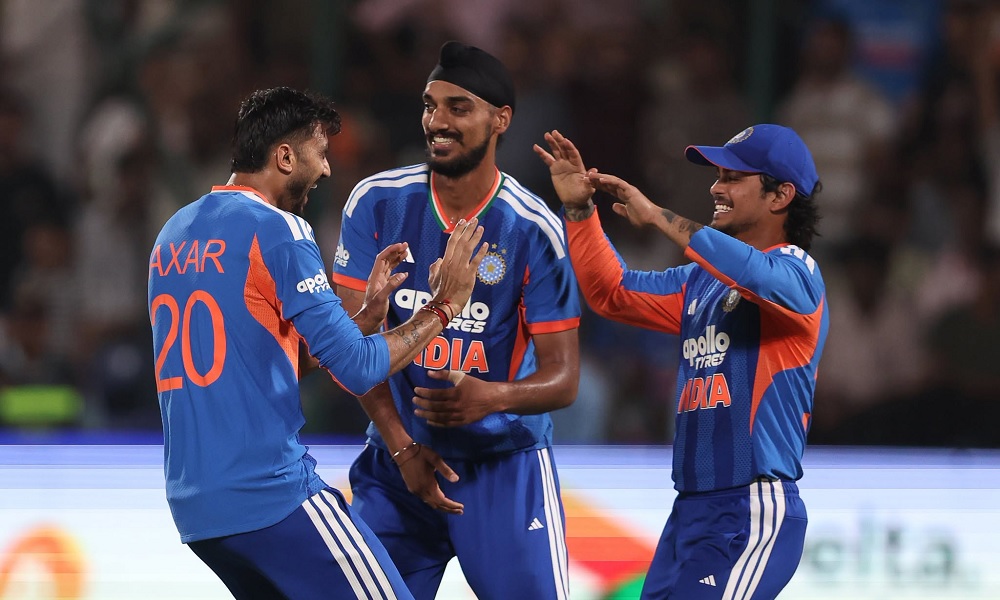
India defeated Afghanistan by seven wickets in the first T20I at the Arun Jaitley Stadium in New Delhi on Sunday, taking a 1-0 lead in the series after chasing down a target of 157 in 13.4 overs.
Afghanistan made a positive start after being asked to bat first, but their innings was disrupted by a sharp collapse in the middle overs. They fell from 38/1 to 43/5, losing four wickets for five runs and putting themselves under significant pressure.
The collapse began with a run-out involving Afghanistan captain Ibrahim Zadran and Sediqullah Atal. After the ball was played towards deep midwicket, the batters attempted a second run but were unable to complete it. Zadran slipped while turning for the run, allowing Ishan Kishan to finish the dismissal with a direct throw.
Afghanistan’s recovery then depended largely on Azmatullah Omarzai and Mohammad Nabi. Omarzai remained unbeaten on 64 from 44 balls, while Nabi contributed 33 as the pair added important runs to take Afghanistan to 156/8 from their 20 overs.
Arshdeep Singh was India’s leading bowler, taking three wickets for 19 runs. Jasprit Bumrah also returned to the Indian playing XI after missing recent assignments because of a left-knee injury.
Afghanistan’s total left little margin for error against India’s batting line-up, and the hosts quickly took control of the chase. Abhishek Sharma scored 82 from 32 balls, reaching his half-century from 22 deliveries with seven fours and seven sixes.
Sharma’s rapid scoring significantly reduced the required run rate and allowed India to maintain control despite the early dismissal of Sanju Samson, who made 10.
Ishan Kishan then provided further stability, scoring 42 from 33 balls. India reached the target in 13.4 overs, with Kishan helping ensure there was no late pressure in the chase.
The sides will meet for their second T20I on Tuesday.
Fans can watch the match live on Ariana Television Network (ATN).
Sport
Zadran calls on Afghan fans to rally behind team against India
Although the matches are being played in India, Afghanistan are the designated hosts for the series.
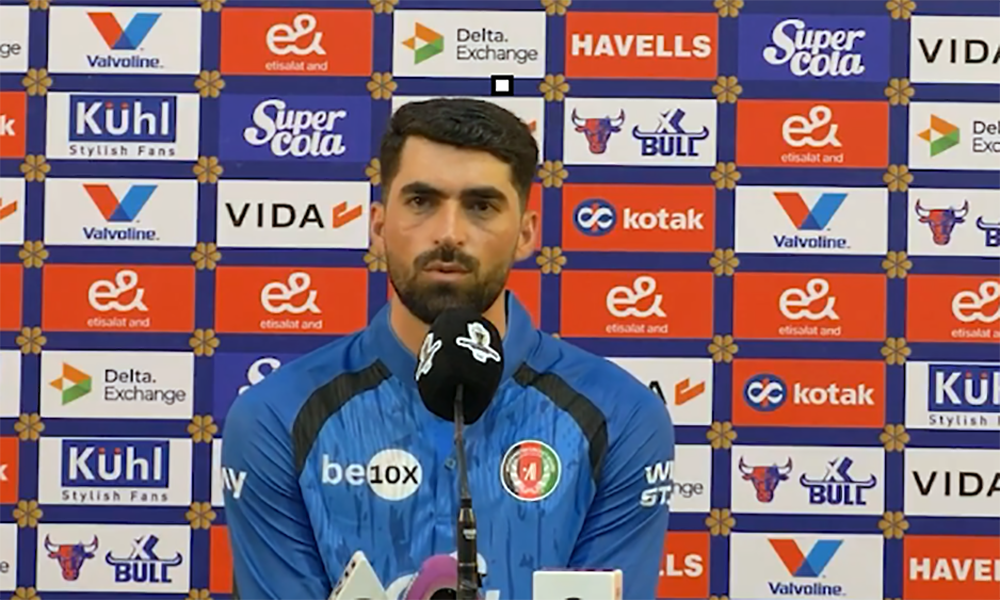
Afghanistan captain Ibrahim Zadran has called on Afghan fans in India to come out in force and support the national team as it begins its three-match T20I series against India today, Sunday September 13.
Speaking at a press conference ahead of the opening match in New Delhi, Zadran said the presence and encouragement of Afghan supporters could provide the team with an important boost.
“All those fans and Afghans who are located in India, if they could come and encourage their team, we will be so pleased,” Zadran said.
“We all wish that our countrymen come to the matches and encourage us because we get lots of energy from their encouragement.”
The series begins today, September 13, with the second T20I scheduled for September 15 and the third on September 17. All three matches will be played at the Arun Jaitley Stadium in New Delhi.
Although the matches are being played in India, Afghanistan are the designated hosts for the series.
Zadran said Afghanistan’s players are also well prepared for the challenge after gaining valuable experience in domestic and international leagues.
“The boys are well prepared. They were all busy in leagues and playing in different parts of the world,” he said.
The captain believes T20 cricket is particularly suited to Afghanistan’s players because of their extensive experience in the format.
“Our boys are talented in this format. I can say this is our best format because the boys are playing in different leagues and have good experience,” he said.
Afghanistan have yet to beat India in a bilateral T20I series, but Zadran said his team would focus on its own strengths rather than being overwhelmed by the challenge.
“So far, we have not won (a series) against India. We will try to make it easy for us and not difficult and focus on what is our ability and what we have in our hands,” he said.
“I am sure we will perform a good match for our countrymen.”
The three-match series runs from September 13 to 17, with Ariana Radio and Television Network (ATN) broadcasting all three matches live and exclusively across Afghanistan.
Afghanistan vs India — T20I Series
1st T20I: September 13
2nd T20I: September 15
3rd T20I: September 17
Venue: Arun Jaitley Stadium, New Delhi
Host: Afghanistan
Live: ATN across Afghanistan
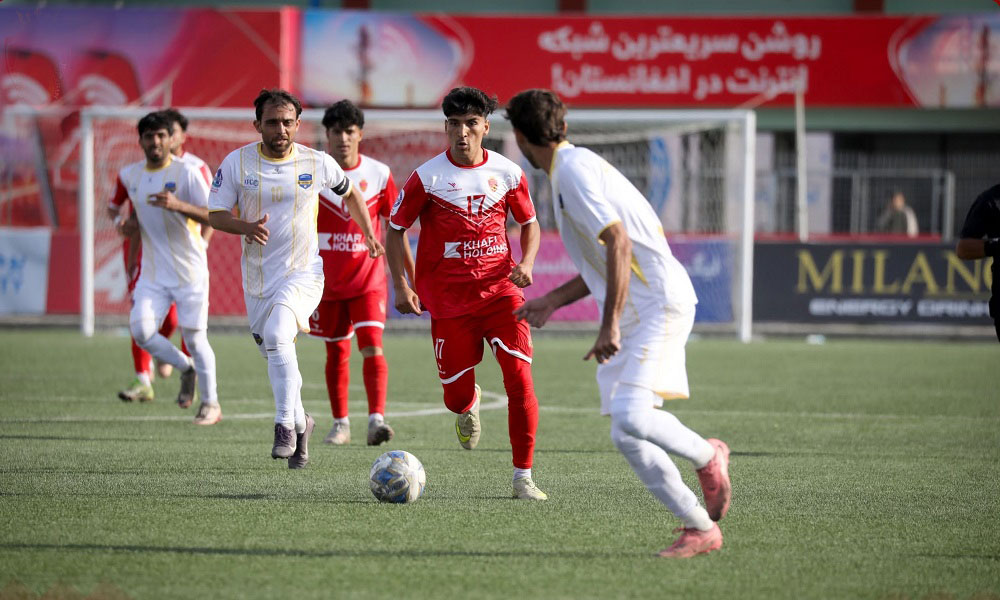
Sorkh Poshan Khafi secured a convincing 3–0 victory over Aino Mina in the fourth match of the sixth season of Afghanistan Champions League Roshan in Kabul on Saturday.
Yar Mohammad Zekrkhail opened the scoring for Sorkh Poshan Khafi, before the side added two more goals to complete a comfortable win.
In the fifth match of the competition, Ariana Khost came from a 1–1 half-time scoreline to beat Arman FC 3–1.
Macdonald Ngwa Niba, an Arman FC player, opened the scoring against Ariana Khost with the team’s only goal.
Ariana Khost’s goals were scored by Jawad Alkozay, Arash Ahmadi, and Habibullah Hotak.
Ariana Khost found the net twice in the second half to seal all three points and secure a strong victory.
The sixth season of Afghanistan Champions League Roshan continues on Monday with two more fixtures:
Abu Muslim Farah vs Isteqlal Kabul | 3:30 PM
Omar Zawak vs Sarsabz Yashlar | 7:00 PM
Ariana Television will broadcast both matches live and exclusively, bringing the action directly to football fans across Afghanistan.


Trump dismisses report China entities helped Iran before attack that killed US troops

India beat Afghanistan by seven wickets in first T20I

Tahawol: Calls for U.S. engagement with Afghanistan

Saar: End of Chinese ambassador’s mission in Kabul

IEA rejects claims of al-Qaeda presence in Afghanistan

Four mediators struggle to secure lasting Pakistan-Afghanistan ceasefire

Juma Khan Fateh surrenders to IEA forces in Badakhshan

Afghanistan’s trade diversification challenges Pakistan

Syria and Saudi Arabia condemn Kabul bombing, express solidarity with Afghanistan

Afghanistan crowned champions of five-match ODI series against Ireland
Tahawol: Calls for U.S. engagement with Afghanistan
Saar: End of Chinese ambassador’s mission in Kabul

Tahawol: Norwegian delegation’s call for engagement with Afghanistan discussed

Saar: Pakistan’s dual policy towards Afghanistan reviewed

Exclusive interview with ACB CEO Naseeb Khan
-
 Latest News5 days ago
Muttaqi and Bangladeshi delegation discuss expansion of bilateral ties
-

 Sport4 days ago
Afghanistan Champions League Season 6 kicks off today: Abu Muslim Farah face Sarsabz Yashlar
-
 Business5 days ago
UAE firm eyes investment in Salang’s second tunnel and pharmaceutical factories
-
 Sport5 days ago
Afghanistan to host Bangladesh and Zimbabwe in the UAE in three-format home season
-
 Latest News5 days ago
Afghanistan, Bangladesh discuss expanding economic ties
-
 Latest News5 days ago
Mujahid calls Pakistan’s order to expel Afghan medical students ‘inhumane’
-

 Sport3 days ago
Omar Zawak, Toofan Herat secure victories in Afghanistan Champions League
-
 Regional4 days ago
Pakistan warns Iran to rein in Houthis as Riyadh strikes back