
Latest News
Afghan pilot told to rejoin air force or leave US protection

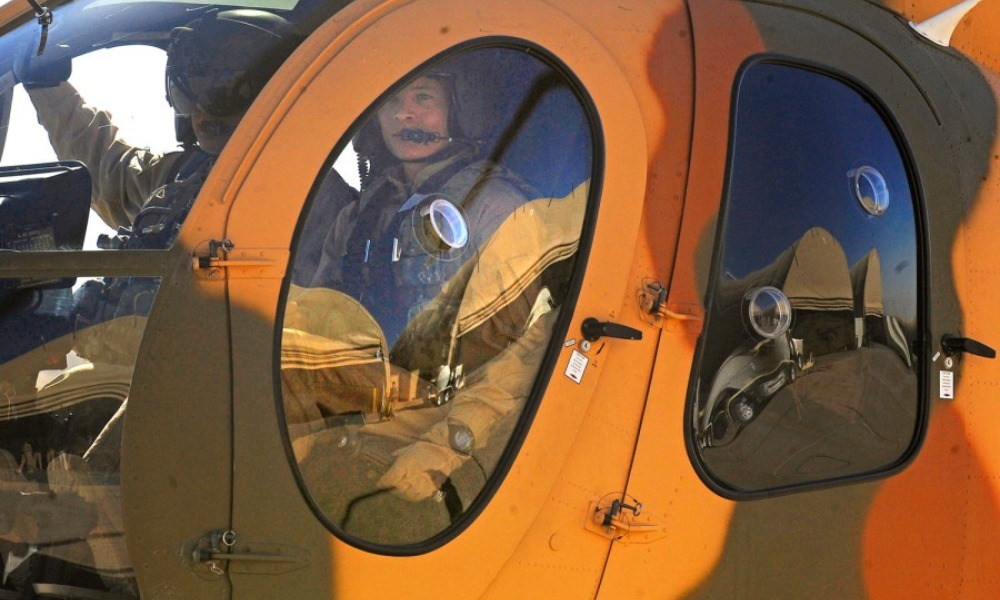
An Afghan major under US protection at an American base fears he could be in danger of being killed by the Taliban after being given an ultimatum following the Pentagon’s reversal on its asylum decision.
Major Mohammed Naiem Asadi, one of Afghanistan’s few elite attack helicopter pilots, his wife and four-year-old daughter had been approved in October to move to the US but this month that decision was overturned.
According to Asadi he has been told he will be forced to leave the US base in Afghanistan on Monday if he does not rejoin the Afghan Air Force, Stars and Stripes reported.
In a letter to US officials, Asadi’s lawyer Kimberly Motley said she was “extremely concerned” the major would be imprisoned and separated from his family if turned over to the Afghan military.
According to Stars and Stripes, the Afghan government has threatened to imprison pilots in the past for attempting to gain asylum in other countries.
For the last month, Asadi and his family have been living under US military protection, but on Sunday afternoon, US and Afghan military officers told Asadi that if he does not rejoin the Afghan Air Force, he will be forced to leave the base, Asadi told Stars and Stripes.
Meanwhile, the Afghan Defense Ministry has said it is committed to protecting him, Asadi said he doubts the Afghan government’s ability and willingness to protect him at a time when the country is witnessing a wave of assassinations by the Taliban.
Asadi meanwhile is said to have killed more Taliban than any other pilot in the Afghan Air Force during thousands of flight hours, Afghan and US military officers told Stars and Stripes.
In the summer, he protected an American pilot who crashed his A-29 Super Tucano attack turboprop in northern Afghanistan, a letter of commendation signed by US Air Force Captain Robert V. Yost said.
Asadi led a flight of two MD-530 attack helicopters that scrambled to protect the crash site in Taliban-contested territory, and Asadi’s efforts were vital to the pilot’s rescue, Yost wrote.
“The incident was just one of countless events where Maj. Asadi’s actions have protected and saved lives,” he wrote.
Asadi applied for asylum in the US under Significant Public Benefit Parole, a temporary status for noncitizens in need of protection. He then passed several background checks, with a US military contractor confirming the authenticity of the Taliban death threats he received, Stars and Stripes reported.
According to Motley, risks to Afghan pilots from the Taliban dramatically increase once it’s known they are applying for a visa to leave the country.
“It is also quite clear that the Afghan government cannot (or will not) protect the Asadi family from the Taliban,” Motley said in her letter. “They simply do not have the capacity or ability.”
Asadi told Stars and Stripes on Sunday he is concerned with what may happen to him and his family should they leave the base.
“It’s very scary for me,” Asadi said. “My wife, she knows too. She is very sad, she didn’t eat lunch or breakfast; we didn’t sleep last night. It’s a very bad situation.”












Kazakhstan’s Foreign Minister Mukhtar Tileuberdi has called for pragmatic and coordinated international engagement with Afghanistan, saying the country’s long-term stability is closely linked to the security and sustainable development of Central Asia.
Speaking during the general debate of the 81st session of the United Nations General Assembly in New York on Friday, Tileuberdi said humanitarian assistance to Afghanistan remains essential but alone cannot break the cycle of poverty, displacement and dependency.
He said Kazakhstan supports a “pragmatic, coordinated and step-by-step” approach to international engagement with Afghanistan, with the United Nations playing a central role.
Tileuberdi also said Kazakhstan is working with the UN to operationalize the United Nations Regional Centre for the Sustainable Development Goals for Central Asia and Afghanistan in Almaty.
He said the success of the centre should be measured by the results and assistance it delivers to the region.


Abu Muslim Farah defeat Khurasan Faryab 2-0 in ACL season six

Saar: Concerns over Pakistan’s political crisis discussed

Afghanistan Champions League: Omar Zawak Herat beat Toofan Herat 1-0

Blast in Pakistan’s Dera Ismail Khan kills 11, injures 30

Ariana Afghan Airlines increases Kabul-Delhi cargo flights

Saudi energy group signs major Afghanistan deals covering gas exploration and pipeline plans

Trump floats idea of renaming Atlantic or Pacific Ocean

US hits Egyptian bank branches with Iran sanctions as war marks six months

Nepal flood rescue mission enters critical phase as thousands remain missing

Iranian clubs to face Gulf opponents at neutral venues in Asian Champions League Elite
Saar: Concerns over Pakistan’s political crisis discussed

Exclusive interview with Abdul Latif Mansoor, Minister of MRRD

Tawsia: Overview of Afghanistan’s iron mines

Tahawol: Discussion on fresh Pakistani airstrikes on Afghanistan

Saar: Calls for international support for Afghanistan discussed
-

 World5 days ago
CNN, MS NOW and Politico sue Trump, challenging White House ban
-

 Latest News3 days ago
Ariana Afghan Airlines ranks seventh among 45 Central Asian airlines
-

 Latest News4 days ago
UN reiterates call for respect for international law after Kunar airstrikes
-

 Regional3 days ago
US and Iran hold first talks since June after Trump’s ‘annihilation’ threat
-

 Latest News3 days ago
Silk Road highway in Wakhan corridor now reaches the China border
-

 Latest News4 days ago
Afghan Official: Pakistan’s airstrikes will not go unanswered
-

 Sport4 days ago
Afghan boxing referee heads to China for international festival
-

 Regional5 days ago
G7 foreign ministers call on Iran to stop arming Houthis