
Regional
Afghan refugees in Pakistan to be repatriated by end-2015

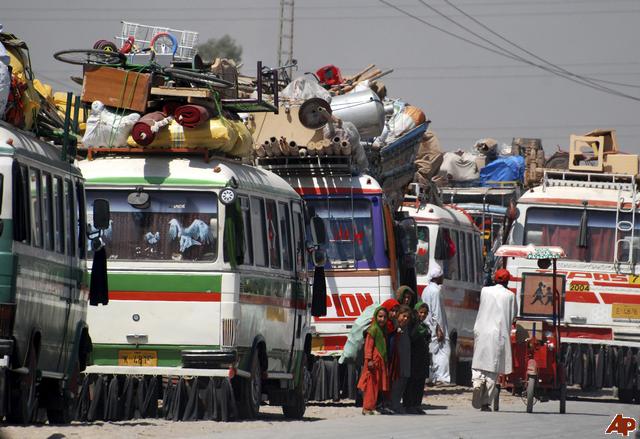

The tripartite agreement between the United Nations Refugees Agency (UNHCR), and the governments of Pakistan and Afghanistan, which grants Afghan refugees an official refugee status in Afghanistan, will come to an end on 31 December 2012.
Therefore, the estimated 1.8 million registered (and an additional 1.3 million unregistered) refugees are to return to Afghanistan as the authorities are preparing to close camps that have been set up, in some cases, over 30 years ago.
The Afghan president reportedly assured Sharif that the repatriation of registered Afghans in Pakistan was a priority for the new Afghan government and steps were being taken to facilitate their return by Dec 31, 2015, which is the extended deadline given by Pakistan for the repatriation.
The extended deadline was heading towards its expiry when Nawaz Sharif granted a “generous” extension to allow the refugees to stay on in Pakistan till Dec 31, 2015.

Regional
Iran ready for ‘fair’ talks with US but not on defence capabilities
U.S.-Iranian tensions have soared in recent weeks after a on protests across Iran by its clerical authorities.
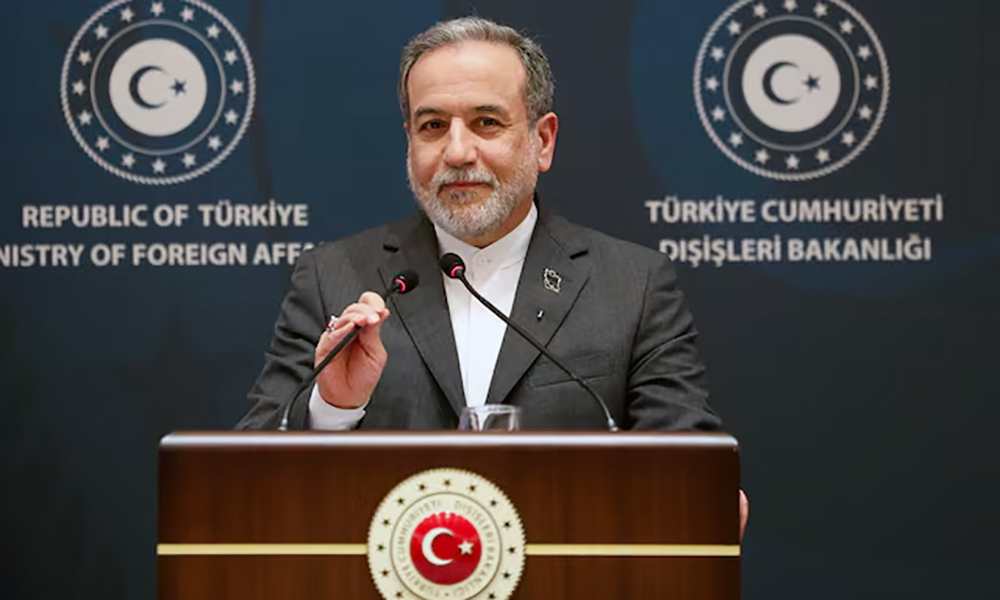
Iran is prepared for the resumption of talks with the United States, but they should be fair and not include Iran’s defence capabilities, Iran’s chief diplomat said on Friday, as regional powers work to prevent military conflict between the two foes, Reuters reported.
U.S. President Donald Trump said on Thursday he planned to speak with Iran, even as the U.S. sent another warship to the Middle East and the Pentagon chief said the military would be ready to carry out whatever the president decided.
U.S.-Iranian tensions have soared in recent weeks after a on protests across Iran by its clerical authorities.
One of the main U.S. demands as a condition for resuming talks with Iran is curbing its missile programme, a senior Iranian official told Reuters last week. Iran rejects that demand.
Speaking at a press conference in Istanbul after talks with his Turkish counterpart, Foreign Minister Abbas Araqchi said Iran was ready to participate in “fair and equitable” negotiations, but added there were currently no meetings with U.S. officials arranged.
“Iran has no problem with negotiations, but negotiations cannot take place under the shadow of threats. They must certainly set aside their threats and change their approach toward a fair and equitable negotiation, as Mr. Trump himself said in his post,” he said.
“I should also state unequivocally that Iran’s defensive and missile capabilities — and Iran’s missiles — will never be the subject of any negotiations,” he added.
“We will preserve and expand our defensive capabilities to whatever extent is necessary to defend the country,” Araqchi said.
Regional allies, including Turkey, the United Arab Emirates, and Saudi Arabia, have been engaging in diplomatic efforts to prevent a military confrontation between Washington and Tehran, read the report.
In response to U.S. threats of military action, Araqchi said Tehran was ready for either negotiations or warfare, and also ready to engage with regional countries to promote stability and peace.
Araqchi and Turkish Foreign Minister Hakan Fidan said they had been speaking to each other almost every day to discuss the tensions.
U.S. officials say Trump his options but has not decided whether to strike Iran.
Trump has repeatedly threatened to intervene if Iran continued to kill protesters in its crackdown on the countrywide demonstrations over economic privations and political repression, but the protests have since abated.
Israel’s Ynet news website said on Friday that a U.S. Navy destroyer had docked at the Israeli port of Eilat.
NATO member Turkey shares a border with Iran and opposes any foreign intervention there. It has called for U.S.-Iran dialogue to avoid further destabilisation and has been in touch with both sides to seek a solution.
Earlier on Friday, Turkish President Tayyip Erdogan told his Iranian counterpart Masoud Pezeshkian in a call that Ankara was ready to play a “facilitator” role between the sides.
Speaking alongside Araqchi, Fidan said he had long discussions on the issue with U.S. special envoy Steve Witkoff on Thursday and would keep lines open with Washington to avoid conflict and the isolation of Iran, Reuters reported.
Fidan said U.S.-Iran nuclear negotiations must restart and would pave the way to lifting sanctions on Iran. “We call the parties to the negotiating table” to address the issues “one by one,” he said.
U.S. President Donald Trump is weighing options against Iran that include targeted strikes on security forces and leaders to inspire protesters, multiple sources said, even as Israeli and Arab officials said air power alone would not topple the clerical rulers, Reuters reported.
Two U.S. sources familiar with the discussions said Trump wanted to create conditions for “regime change” after a crackdown crushed a nationwide protest movement earlier this month, killing thousands of people.
To do so, he was looking at options to hit commanders and institutions Washington holds responsible for the violence, to give protesters the confidence that they could overrun government and security buildings, they said.
One of the U.S. sources said the options being discussed by Trump’s aides also included a much larger strike intended to have lasting impact, possibly against the ballistic missiles that can reach U.S. allies in the Middle East or its nuclear enrichment programmes.
The other U.S. source said Trump has not yet made a final decision on a course of action including whether to take the military path.
The arrival of a U.S. aircraft carrier and supporting warships in the Middle East this week has expanded Trump’s capabilities to potentially take military action, after he repeatedly threatened intervention over Iran’s crackdown.
Four Arab officials, three Western diplomats and a senior Western source whose governments were briefed on the discussions said they were concerned that instead of bringing people onto the streets, such strikes could weaken a movement already in shock after the bloodiest repression by authorities since the 1979 Islamic Revolution.
Alex Vatanka, director of the Iran Program at the Middle East Institute, said that without large-scale military defections Iran’s protests remained “heroic but outgunned.”
The sources in this story requested anonymity to talk about sensitive matters. Iran’s foreign office, the U.S. Department of Defense and the White House did not respond to requests for comment. The Israeli Prime Minister’s office declined to comment.
Trump urged Iran on Wednesday to come to the table and make a deal on nuclear weapons, warning that any future U.S. attack would be more severe than a June bombing campaign against three nuclear sites. He described the ships in the region as an “armada” sailing to Iran.
A senior Iranian official told Reuters that Iran was “preparing itself for a military confrontation, while at the same time making use of diplomatic channels.” However, Washington was not showing openness to diplomacy, the official said.
Iran, which says its nuclear program is civilian, was ready for dialogue “based on mutual respect and interests” but would defend itself “like never before” if pushed, Iran’s mission to the United Nations said in a post on X on Wednesday.
Trump has not publicly detailed what he is looking for in any deal. His administration’s previous negotiating points have included banning Iran from independently enriching uranium and restrictions on long-range ballistic missiles and on Tehran’s network of armed proxies in the Middle East.
LIMITS OF AIR POWER
A senior Israeli official with direct knowledge of planning between Israel and the United States told Reuters Israel does not believe airstrikes alone can topple the Islamic Republic, if that is Washington’s goal.
“If you’re going to topple the regime, you have to put boots on the ground,” he said, noting that even if the United States killed Supreme Leader Ayatollah Ali Khamenei, Iran would “have a new leader that will replace him.”
Only a combination of external pressure and an organised domestic opposition could shift Iran’s political trajectory, the official said.
The Israeli official said Iran’s leadership had been weakened by the unrest but remained firmly in control despite the ongoing deep economic crisis that sparked the protests.
Multiple U.S. intelligence reports reached a similar conclusion, that the conditions that led to the protests were still in place, weakening the government, but without major fractures, two people familiar with the matter said.
The Western source said they believed Trump’s goal appeared to be to engineer a change in leadership, rather than “topple the regime,” an outcome that would be similar to Venezuela, where U.S. intervention replaced the president without a wholesale change of government.
Khamenei has publicly acknowledged several thousand deaths during the protests. He blamed the unrest on the United States, Israel and what he called “seditionists.”
U.S.-based rights group HRANA has put the unrest-related death toll at 5,937, including 214 security personnel, while official figures put the death toll at 3,117. Reuters has been unable to independently verify the numbers.
KHAMENEI RETAINS CONTROL BUT LESS VISIBLE
At 86, Khamenei has retreated from daily governance, reduced public appearances and is believed to be residing in secure locations after Israeli strikes last year decimated many of Iran’s senior military leaders, regional officials said.
Day-to-day management has shifted to figures aligned with the Islamic Revolutionary Guard Corps (IRGC), including senior adviser Ali Larijani, they said. The powerful Guards dominate Iran’s security network and big parts of the economy.
However, Khamenei retains final authority over war, succession and nuclear strategy – meaning political change is very difficult until he exits the scene, they said. Iran’s foreign ministry did not respond to questions about Khamenei.
In Washington and Jerusalem, some officials have argued that a transition in Iran could break the nuclear deadlock and eventually open the door to more cooperative ties with the West, two of the Western diplomats said.
But, they cautioned, there is no clear successor to Khamenei. In that vacuum, the Arab officials and diplomats said they believe the IRGC could take over, entrenching hard-line rule, deepening the nuclear standoff and regional tensions.
Any successor seen as emerging under foreign pressure would be rejected and could strengthen, not weaken the IRGC, the official said.
Across the region, from the Gulf to Turkey, officials say they favour containment over collapse – not out of sympathy for Tehran, but out of fear that turmoil inside a nation of 90 million, riven by sectarian and ethnic fault lines, could unleash instability far beyond Iran’s borders.
A fractured Iran could spiral into civil war as happened after the 2003 U.S. invasion of Iraq, two of the Western diplomats warned, unleashing an influx of refugees, fueling Islamist militancy and disrupting oil flows through the Strait of Hormuz, a global energy chokepoint.
The gravest risk, analyst Vatanka warned, is fragmentation into “early-stage Syria,” with rival units and provinces fighting for territory and resources.
REGIONAL BLOWBACK
Gulf states – long‑time U.S. allies and hosts to major American bases- fear they would be the first targets for Iranian retaliation that could include Iranian missiles or drone attacks from the Tehran-aligned Houthis in Yemen.
Saudi Arabia, Qatar, Oman and Egypt have lobbied Washington against a strike on Iran. Saudi Crown Prince Mohammed bin Salman has told Iranian President Masoud Pezeshkian that Riyadh will not allow its airspace or territory to be used for military actions against Tehran.
“The United States may pull the trigger,” one of the Arab sources said, “but it will not live with the consequences. We will.”
Mohannad Hajj-Ali of the Carnegie Middle East Center said the U.S. deployments suggest planning has shifted from a single strike to something more sustained, driven by a belief in Washington and Jerusalem that Iran could rebuild its missile capabilities and eventually weaponise its enriched uranium.
The most likely outcome is a “grinding erosion – elite defections, economic paralysis, contested succession – that frays the system until it snaps,” analyst Vatanka said.
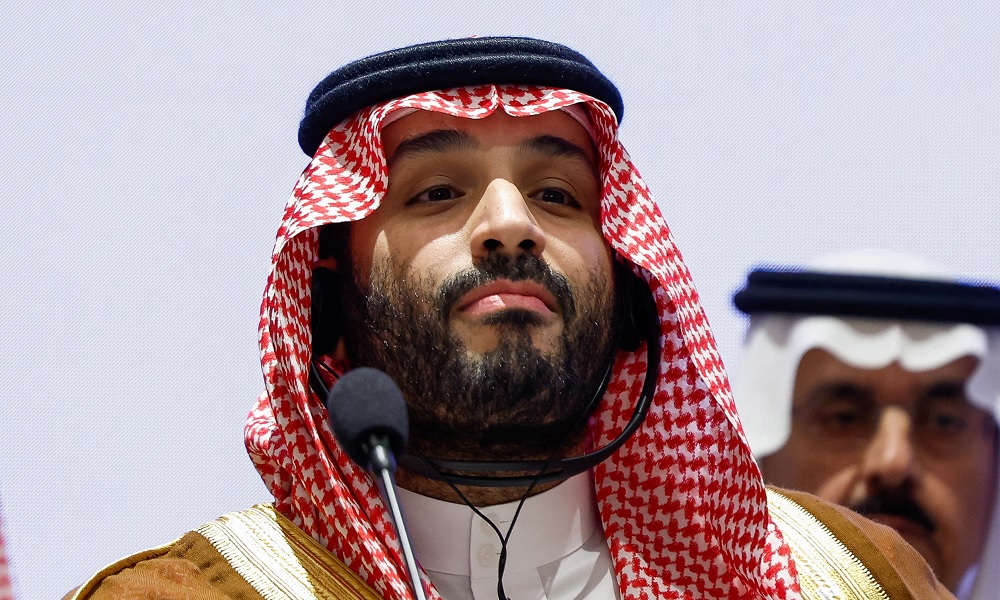
Saudi Crown Prince Mohammed bin Salman told Iranian President Masoud Pezeshkian that Riyadh will not allow its airspace or territory to be used for military actions against Tehran, state news agency SPA reported on Tuesday.
In a phone call with Pezeshkian, the crown prince affirmed his country’s support for any “efforts that would resolve differences through dialogue” to bolster security and stability in the region, Reuters reported.
Earlier, Iranian media reported that Pezeshkian told bin Salman that Tehran welcomes any process, within the framework of international law, that prevents war.
The statement by the Saudi de facto ruler follows a similar statement by the United Arab Emirates that it would not allow any military action against Iran using its airspace or territorial waters.
Uncertainty over the possibility of military action in Iran has lingered after U.S. President Donald Trump said last week that an “armada” was heading toward the country but that he hoped he would not have to use it.
Trump’s warnings to Tehran were against killing protesters or restarting its nuclear programme, but the countrywide demonstrations have since abated.
A U.S. aircraft carrier and supporting warships have arrived in the Middle East, two U.S. officials told Reuters on Monday, expanding Trump’s capabilities to defend U.S. forces, or potentially take military action against Iran.
Iran has been embroiled in protests during which rights groups say security forces killed thousands of people, including bystanders. The rights groups describe the unrest as the biggest crackdown since Shi’ite Muslim clerics took power in the 1979 revolution. Iranian authorities have blamed the unrest and deaths on “terrorists and rioters” backed by exiled opponents.


CSTO to strengthen Tajik–Afghan border security amid escalating clashes

Pakistan, China plan to extend CPEC to Afghanistan, revive trilateral framework

Guterres warns of UN’s ‘imminent financial collapse’

Iran ready for ‘fair’ talks with US but not on defence capabilities

Afghanistan roar into U19 World Cup 2026 semis after defeating Ireland

Turkey withdraws from Afghanistan-Pakistan mediation amid rising tensions

ICG report says Pakistan most impacted by IEA’s return in Afghanistan

Pakistan approves re-export of stranded Afghan transit trade cargo

Afghanistan–China joint market opens in Kabul

Afghanistan set to face West Indies in crucial T20I series

Tahawol: Defense Ministry’s high-level visit to Russia discussed

Saar: Ongoing tensions between US and Iran reviewed

Tahawol: Tashkent’s interest in military cooperation with Kabul discussed

Saar: Kabul, Ashgabat call for regional cooperation discussed

Tahawol: Russia’s reaction to recent US moves discussed
-

 Sport3 days ago
AFC Futsal Asian Cup 2026: Day One Review
-

 Sport4 days ago
Afghanistan’s Mahdi Norouzi ruled out of AFC Futsal Asian Cup due to injury
-

 Sport3 days ago
Scotland name Afghanistan-born Zainullah Ihsan in T20 World Cup squad
-

 Sport2 days ago
Afghanistan shine on Day Two of AFC Futsal Asian Cup Indonesia 2026
-
 Sport2 days ago
Afghanistan eye second straight win ahead of Malaysia clash at AFC Futsal Asian Cup
-
 Business4 days ago
Afghanistan’s exports drop sharply in December 2025: World Bank
-

 Latest News2 days ago
Australia announces $50 million in new humanitarian aid for Afghanistan
-
 Regional4 days ago
EU and India move toward closer defence ties amid shifting global security landscape