
Latest News
Afghan woman putting her life at risk to rid her home of mines

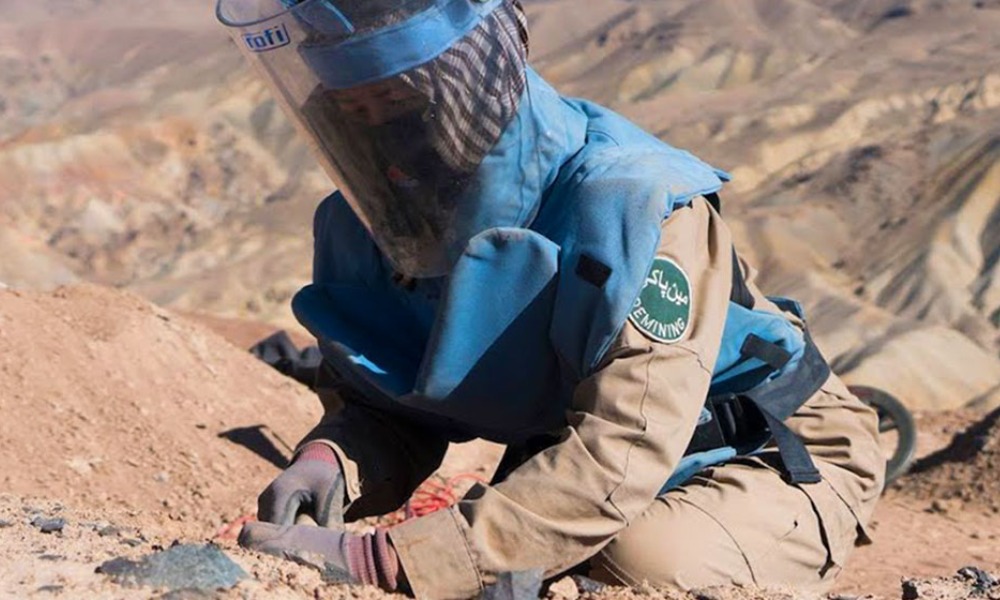
The UK Embassy in Kabul says that over 1.6 million Afghans have received mine risk education and more than 30 km2 of productive land have been also cleared of mines and unexploded ordnance (UXOs) in the last three years to save lives and promote agriculture.
Marking the Mine Awareness Day, the British Embassy stated with the UK has been providing support to United Nations Mine Action Service (UNMAS) in the last three years, aimed at helping the war-torn country manage mine clearance operations.
Fezeh Rezaye, a 26-year-old mother of two, is a member of a 19-strong, all-female demining team, honored for their efforts by the Arms Control Association, which awarded them the Arms Control Person International Award in 2019.
Rezaye explains that how a tragic incident led her to put aside her ambition to be a teacher, and take up a risky demining job instead.
“I had known several people from my village who have been injured or killed by mines in Bamyan. Even our landlord lost his leg in a landmine accident. But it was the death of seven children, all from the same family in our village that really affected me. They had been together in the mountains when they were all killed by a mine explosion. I thought about my own children, that this could have happened to them,” said Rezaye.
Before joining demining team Rezaye was teaching literacy to rural women in Bamyan province. She says that everyone including his family disagreed with her decision to become a deminer.
“My friends and family, including my children, disagreed with my decision to become a deminer. I would tell them that, for the sake of my future and for my children, I wanted Bamyan to be free from mines so that everyone can study and enjoy life,” Rezaye said.
Most families in Afghanistan look at this job as dangerous and risky work and are not welling their daughter’s life.
Rezaye also speaks about threats and challenges against her job in the country.
“I am concerned about my job security because, once these are cleared, I may not be able to work in other provinces, many of which are dominated by the Taliban,” said Rezaye.
Rezaye says that she is also interested in completing a master’s in sociology or archaeology.
Rezaye and her female demining team were the first female deminers team in Afghanistan.
“Winning the Arms Control Award made a big difference for me and the team. After we won, we were recognized by Afghan society and became idols for many women. We were the first female demining team in Afghanistan, and we proved that women can work as hard as men, that we are equal to them, she added.
More than three decades of armed conflict in Afghanistan has left a sorry legacy, with mines, and other explosive remnants of war, contaminating the country. Since 1989, the Mine Action Programme of Afghanistan (MAPA) has been working to clear this dangerous material but, with the conflict still ongoing, some 120 civilian mine-related casualties are recorded every month, and it is considered unlikely that the target of declaring the country free from mines will be reached.
Although explosive remnants of war remain on some firing ranges, Bamyan was declared mine-free since 2019, making it the first mine-free province in Afghanistan, following years of demining work that saw explosive devices removed from some 27,012,116 square meters of contaminated land with explosive devices.
But, in general, Bamyan society is more open than other parts of the country: this is a poor province, with high unemployment, and demining is one of the few opportunities for women to earn money.
As of 2020, Afghanistan is one of the countries most affected by landmines and explosive remnants of war (ERW) in the world. Around 32,000 hazardous areas have been cleared or otherwise canceled since 1989, yet some 1,495 communities remain affected by explosive ordnance (EO) to this day.
Over 38,000 explosive ordnance casualties have been recorded since 1979 (2,090 women, 2,322 girls, 14,646 boys, 19,590 men) of which almost 10,000 resulted in death and more than 29,000 in injuries.
In recent years, improvised explosive devices (IEDs) have become one of the leading causes of civilian casualties in the country.
In 2019 alone, explosive ordnance contamination resulted in 1,692 casualties (143 girls, 122 women, 716 boys, 711 men), resulting in 650 deaths and 1,042 injured victims. The accidents were almost entirely caused by ERW and improvised mines (IM).
Men and boys tend to be killed and injured at a far higher rate than women and girls. Numbers for all groups at least doubled in 2014-2019 compared to 2008-2013, largely due to a sharp increase in IM casualties.

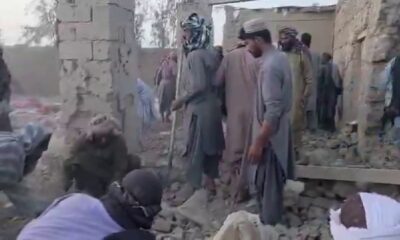






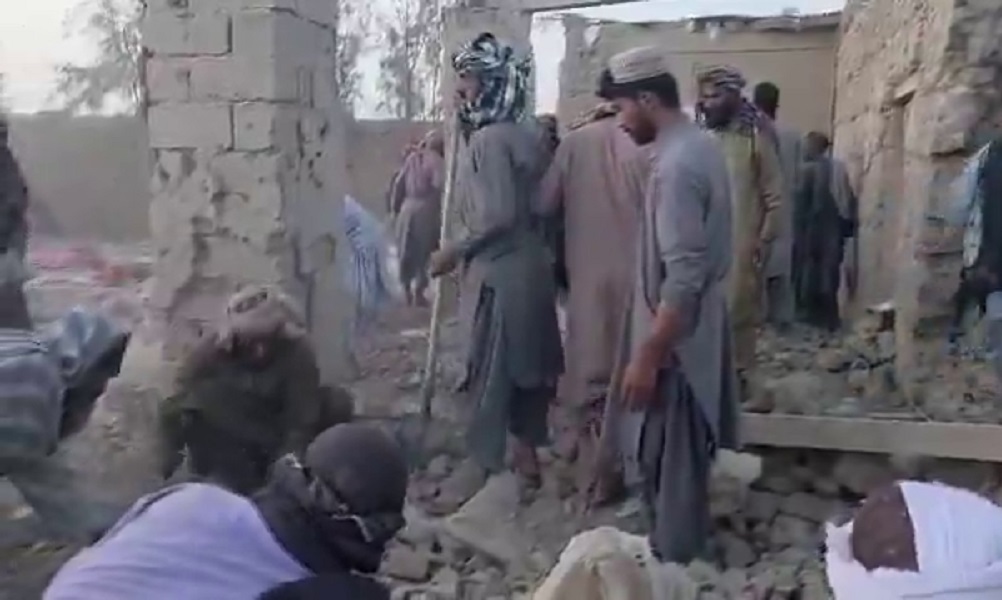
The Islamic Emirate of Afghanistan (IEA) said on Thursday Pakistani aircraft carried out airstrikes on civilian homes in Kunar and Helmand provinces last night, killing nine Afghan civilians, including women and children.
IEA spokesman Zabihullah Mujahid said on X that the strikes targeted the Chogam area of Shultan district in Kunar and the Safar area of Garmser district in Helmand.
According to Mujahid, 11 other people were injured and three homes were destroyed in the attacks.
He condemned the strikes as an act of aggression and a crime, saying they violated all accepted principles.
Latest News
US extends Qatar camp stay for more than 1,000 Afghans
A US official, speaking on condition of anonymity, confirmed the extension.
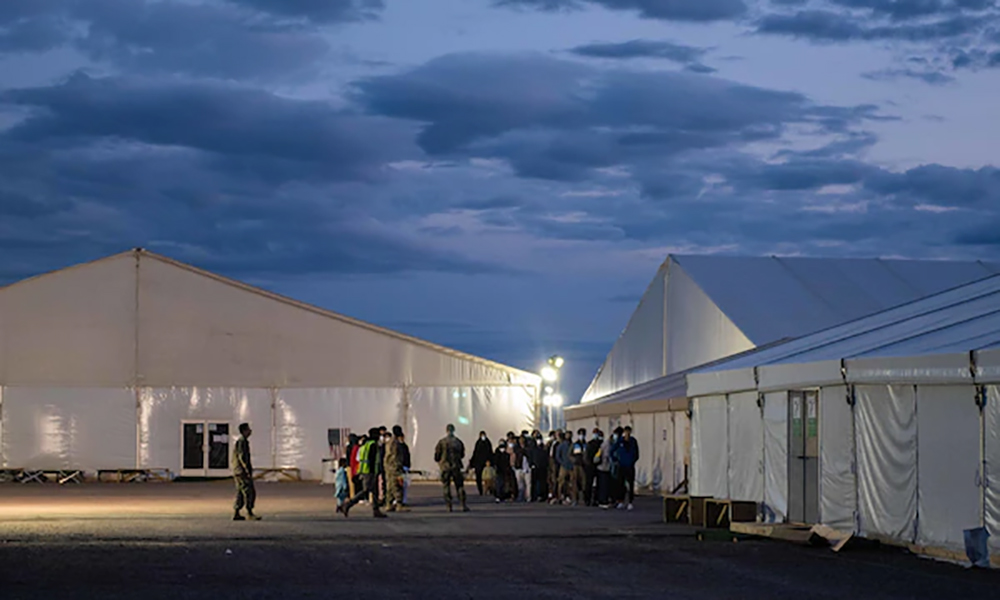
The US administration has extended the operation of a camp in Qatar housing more than 1,000 Afghans who supported US forces during the war in Afghanistan, as well as relatives of American service members.
The United States has agreed to keep Camp As Sayliyah open for another nine months after it had been scheduled to close at the end of the US fiscal year, according to The Associated Press.
A US official, speaking on condition of anonymity, confirmed the extension.
The decision affects 1,039 Afghans, many of whom worked as interpreters or in other roles supporting US forces between 2001 and 2021. Many have remained in Qatar for more than a year while Washington considers options for their resettlement.
US Secretary of State Marco Rubio told Congress in June that Washington was discussing possible arrangements for resettling the Afghans in third countries. AP has previously reported that the Democratic Republic of Congo was among the countries considered by the administration.
The US State Department said it continues to seek a solution that would ensure the safety of those remaining at the camp while addressing US security concerns.
The department has also described the camp as part of a legacy of the Biden administration’s Afghan resettlement effort, a characterization disputed by some former US officials and refugee advocates.
According to figures cited by AfghanEvac, more than 70 percent of the camp’s residents are women and children. The organization has been advocating for the resettlement of Afghans who have remained in limbo following the US withdrawal from Afghanistan in 2021.
Shawn VanDiver, a US Navy veteran and head of AfghanEvac, welcomed the nine-month extension but said a permanent solution was still needed.
Despite the extension, the residents have not been given a clear pathway to the United States. AfghanEvac says only five Afghans from the camp have been admitted to the US since October 2025.
Advocates have warned that without alternative resettlement arrangements, some residents could eventually face the possibility of returning to Afghanistan.
The State Department said it would use the nine-month extension to continue exploring options for the voluntary resettlement of all Camp As Sayliyah residents.
Latest News
DHS review finds errors in 40% of Biden-era Afghan asylum files
Following a 2023 lawsuit against DHS, a settlement required USCIS to adjudicate 90% of OAW asylum applications within 150 days.
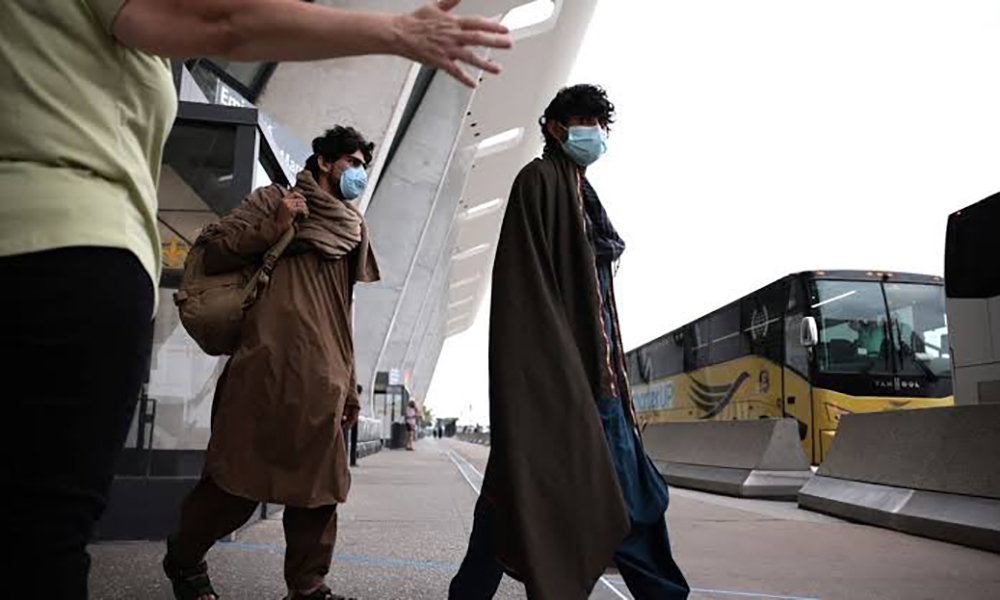
A U.S. Department of Homeland Security (DHS) review has identified errors in 40% of the asylum files examined under the Biden-era Operation Allies Welcome (OAW) programme, raising concerns about gaps in the screening and adjudication process.
According to a DHS statement, the department’s Office of Inspector General (OIG) reviewed the programme between March 2024 and January 2025 after concerns that accelerated processing requirements could limit the ability of U.S. Citizenship and Immigration Services (USCIS) to conduct comprehensive reviews.
The review found that USCIS missed opportunities in some cases to link aliases provided by applicants with other information that could potentially have affected their eligibility for asylum, DHS said.
Operation Allies Welcome was established under the Biden administration following the U.S. withdrawal from Afghanistan. Under the Afghanistan Supplemental Appropriations Act of 2022, USCIS was required to interview OAW asylum applicants within 45 days of filing.
Following a 2023 lawsuit against DHS, a settlement required USCIS to adjudicate 90% of OAW asylum applications within 150 days.
DHS Secretary Markwayne Mullin criticized the programme, saying established asylum-screening procedures had not been followed and arguing that the identified errors could create security risks.
The DHS statement cited several cases involving Afghan nationals admitted to the United States through OAW who were later arrested or charged.
These included an Afghan national arrested in November 2025 on federal charges of threatening to kill Americans; an individual identified by U.S. Immigration and Customs Enforcement (ICE) as an ISIS-K member who was arrested in December 2025; and another Afghan national arrested in March 2026 who had previously been convicted of indecent exposure involving a minor.
DHS said the findings demonstrate the need for stronger screening procedures in asylum processing.
The reported 40% error rate refers to errors identified in the asylum files reviewed by the OIG. It does not mean that 40% of the applicants were members of terrorist groups or had criminal records.
The findings and security concerns cited in the statement are those of DHS and its interpretation of the OIG review.


Pakistani airstrikes kill nine Afghan civilians, injure 11

Passengers foil bid to crash Dubai-Tel Aviv flight, Israel says, after co-pilot stabs pilot

Tahawol: Improvement in Afghanistan-China relations discussed

Saar: Expanding ties with regional and global countries discussed

Abu Muslim Farah beat Omar Zawak Herat 4-0 in Afghanistan Champions League

Saudi energy group signs major Afghanistan deals covering gas exploration and pipeline plans

Iranian clubs to face Gulf opponents at neutral venues in Asian Champions League Elite

Khalilzad: Afghanistan ready to attract major investment

Ariana Television Network secures exclusive rights to Afghanistan’s 2026/27 cricket series

El Niño likely to intensify, may become strongest ever recorded, WMO says
Tahawol: Improvement in Afghanistan-China relations discussed
Saar: Expanding ties with regional and global countries discussed

Tahawol: Absence of Afghanistan’s envoy at UNGA discussed

Saar: Assessment of war between Afghanistan and US discussed

Saar: Afghanistan’s image at UNGA
-

 Sport4 days ago
Afghan bodybuilder Ali Bilal finishes runner-up at Mr Olympia for third straight year
-

 Latest News4 days ago
Afghanistan says 28 killed, 32 captured in Nuristan operation
-

 World4 days ago
Trump rejects Iranian proposal to open Hormuz and end fighting
-
 Sport5 days ago
Afghanistan to face India in Asian Games cricket quarter-final
-

 Sport5 days ago
Afghanistan Champions League: Omar Zawak Herat beat Toofan Herat 1-0
-

 Latest News5 days ago
Khalilzad questions Pakistan’s commitment to Afghan welfare
-
 Latest News4 days ago
UNDP, UN Women launch financing initiative for Afghan women entrepreneurs
-

 Sport3 days ago
Afghanistan vs India Asian Games quarter-final abandoned without a toss