
Climate Change
At least 26 dead in tornadoes in Mississippi and Alabama

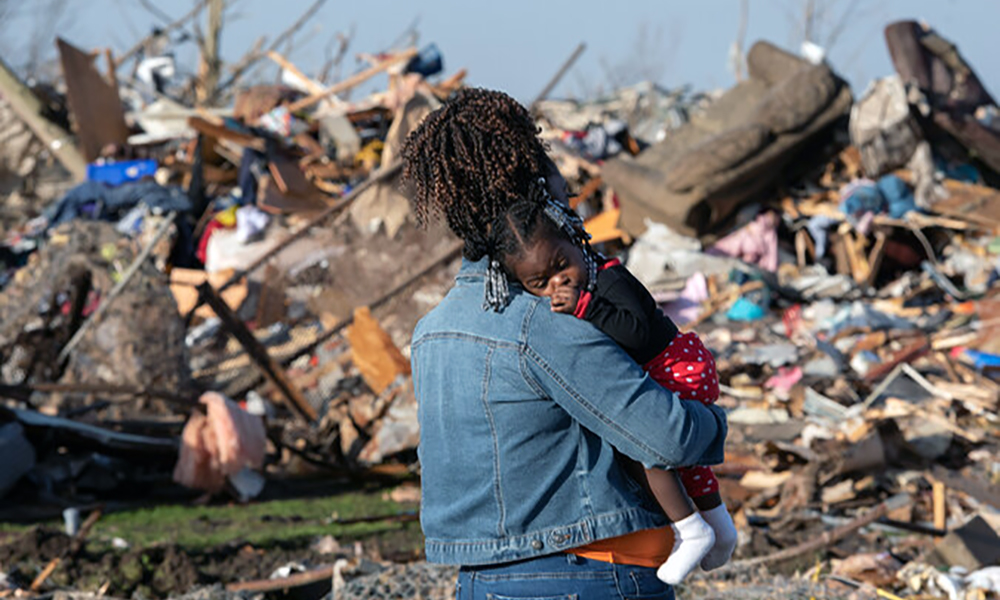
Rescuers raced Saturday to search for survivors and help hundreds of people left homeless after a powerful tornado cut a devastating path through Mississippi in the United States, killing at least 25 people, injuring dozens, and flattening entire blocks as it carved a path of destruction for more than an hour.
One person was also killed in Alabama.
The tornado devastated a swath of the Mississippi Delta town of Rolling Fork, reducing homes to piles of rubble, flipping cars on their sides and toppling the town’s water tower. Residents hunkered down in bath tubs and hallways during Friday night’s storm and later broke into a John Deere store that they converted into a triage center for the wounded.
“There’s nothing left,” said Wonder Bolden, holding her granddaughter, Journey, while standing outside the remnants of her mother’s now-leveled mobile home in Rolling Fork.
Based on early data, the tornado received a preliminary EF-4 rating, the National Weather Service office in Jackson said late Saturday in a tweet. An EF-4 tornado has top wind gusts between 265 kph and 320 kph, according to the service. The Jackson office cautioned it was still gathering information on the tornado.
The Mississippi Emergency Management Agency announced late Saturday afternoon in a tweet that the death toll had risen to 25 and that dozens of people were injured. Four people previously reported missing had been found.
Other parts of the Deep South were digging out from damage caused by other suspected twisters. One man died in Morgan County, Alabama, the sheriff’s department there said in a tweet.
Throughout Saturday, survivors walked around dazed and in shock as they broke through debris and fallen trees with chain saws, searching for survivors. Power lines were pinned under decades-old oaks, their roots torn from the ground.
Mississippi Governor Tate Reeves issued a State of Emergency and vowed to help rebuild as he headed to view the damage in an area speckled with wide expanses of cotton, corn and soybean fields and catfish farming ponds. President Joe Biden also promised federal help, describing the damage as “heartbreaking.”
The supercell that produced the deadly twister also appeared to produce tornadoes that caused damage in northwest and north-central Alabama, said Brian Squitieri, a severe storms forecaster with the weather service’s Storm Prediction Center in Norman, Oklahoma.









Climate Change
Forty drown in France as people seek relief from Europe’s heatwave
France experienced its hottest day on record on Tuesday, Meteo France forecaster said, with a peak of 44.3 degrees Celsius (111.74 degrees Fahrenheit) in one town in the south west.
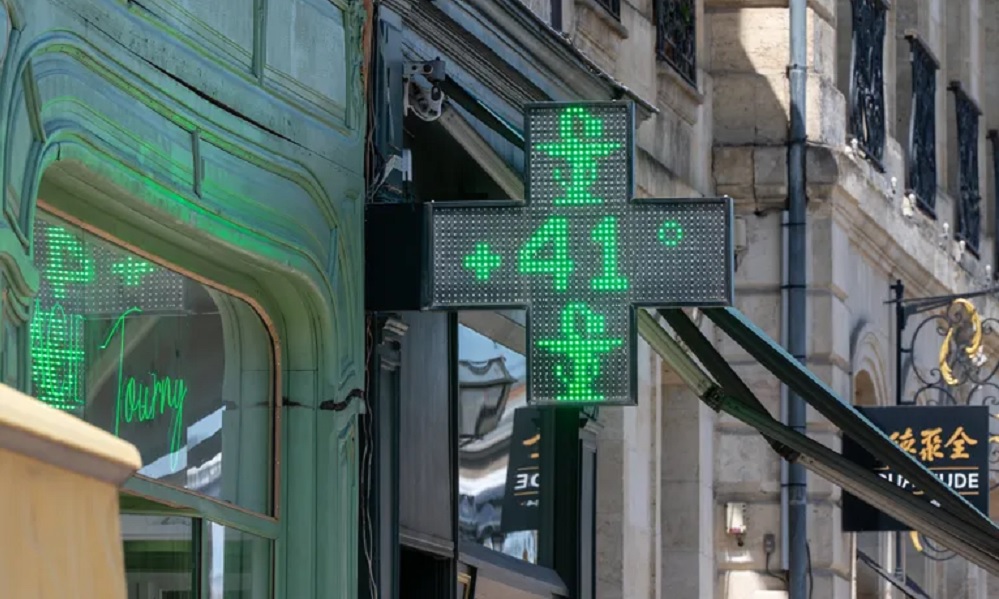
Forty people have drowned in France over recent days as they sought to cool down to escape record heat, the prime minister said on Tuesday, as a heatwave swept across much of Europe.
Britain, Italy, Switzerland and Spain were also sweltering in extreme heat, with record temperatures in some areas disrupting schools and transport networks and forcing tourist sites – including the Eiffel Tower – to shut.
Europe is warming at more than twice the global average, according to the World Meteorological Organization, making such prolonged heat episodes increasingly likely.
HEAT ALERT ACROSS FRANCE
France experienced its hottest day on record on Tuesday, Meteo France forecaster said, with a peak of 44.3 degrees Celsius (111.74 degrees Fahrenheit) in one town in the south west.
Fifty-four departments are under red alerts in what Meteo France said was unprecedented. That will jump to 58 on Wednesday.
Across the country, people have been jumping into canals and rivers to cool off. Sports minister Marina Ferrari said she understood the urge to escape the heat but warned against swimming in unauthorized or dangerous areas.
Speaking ahead of an emergency meeting on the heatwave, Prime Minister Sebastien Lecornu called the drownings “a sad scourge” and said there had been 40 deaths since June 18, most of them young people.
On Monday, first responders were unable to resuscitate two children, aged 2 and 4, who were found unconscious by their mother in the family car outside their home, said a prosecutor in Carpentras, southeast France.
HEAT DOME
The heatwave is being driven by a weather pattern known as an Omega block, because it takes the shape of the Greek letter Ω, with a bulge of hot air trapped between cooler systems, allowing temperatures to build day after day. Heatwaves and storms are being intensified by climate change.
Meteo France said current conditions were comparable to the August 2003 heatwave, which lasted 16 days and led to an estimated 80,000 excess deaths across Europe. It was uncertain how long the current episode would last.
“Thursday will once again be a sweltering day (in France), with temperatures remaining just as high. On Friday, a gradual drop is expected to begin from the Atlantic coast,” the weather forecaster said.
Heatwaves can affect people’s physical and mental health but also force businesses to adapt and put grain harvests at risk.
HEAT ALERTS IN ITALY, BRITAIN
In Italy, the health ministry issued its highest level alert for 15 cities and authorities took measures to curtail work in some sectors. Storms were expected over the Alps and Apennines, bringing heavy rain, gusty winds and hail.
Britain is also in the grip of the heat, with the Met Office forecasting temperatures of up to 37 C in southern England on Tuesday — potentially a new June record — before rising further on Wednesday and Thursday. Dozens of schools planned early closures.
Transport networks across Europe came under strain, with trains cancelled or running more slowly.
CLIMATE SHELTERS
Spain’s meteorological agency has issued red alerts across parts of the country, warning of dangerous heat with temperatures expected to reach 44 C. Dozens of municipalities across northern Spain cancelled traditional bonfires due to wildfire risks.
Madrid has opened climate shelters for the homeless and other vulnerable people.
In Belgium, soaring temperatures forced a primary school near Brussels to relocate its final exams to a nearby church.
In Switzerland, the northeastern canton of St. Gallen restricted water withdrawal from rivers and lakes, citing low levels and high temperatures.
TRYING TO ADAPT
In cities affected by the heatwave, fans and air conditioning units were flying off the shelves.
“I came quick, I haven’t even had my coffee this morning, I ran here to buy an electric fan,” said filmmaker Victoria Yakubov, who managed to snag one last remaining fan in a Paris shop. “Everything was gone in less than 30 minutes.”
It was the same story in London, with fans “flying off the shelves”, John Lewis Oxford street branch manager, Paul Marsden said.
As parts of Europe baked, and the Eiffel Tower closed at 4 p.m. (1400 GMT) because of the heat, cooler northern destinations were drawing tourists seeking a “coolcation”.
“We were thinking about travelling to Croatia, but we came to Sweden because it’s cooler here,” said German tourist Katharina Rexing in Stockholm’s Old Town, on a day when it was 22 C in the Swedish capital and 30 C in Croatia’s Zagreb.
Climate Change
UN urges the world to ready for extreme heat risk from El Nino
The weather pattern is known to disrupt regional climates, potentially bringing warmer temperatures across the globe, while increasing rainfall to the southern parts of South America and the United States, parts of the Horn of Africa and central Asia.
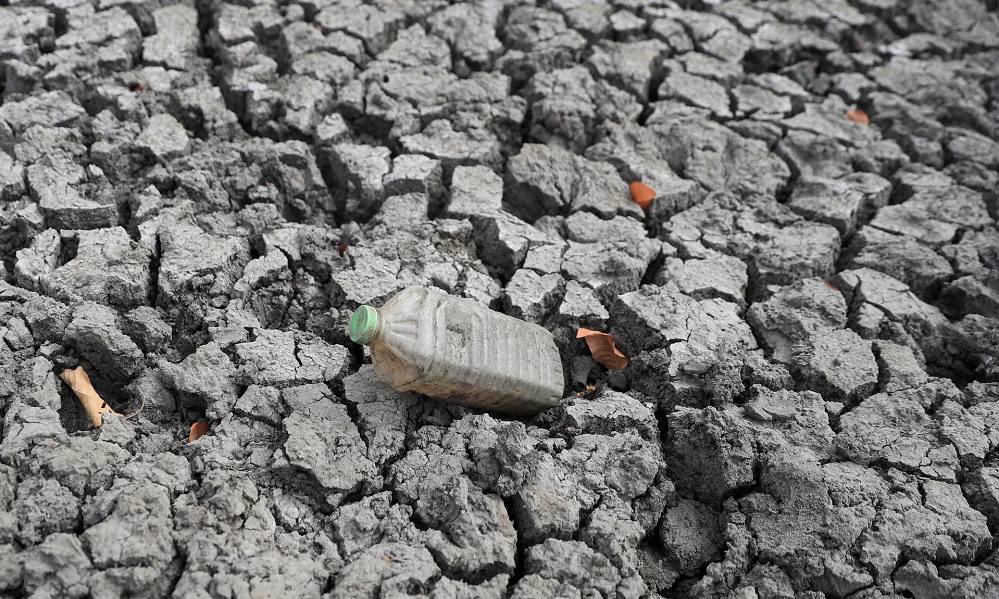
The United Nations weather agency forecast on Tuesday a moderate or possibly a strong El Nino that could drive up global temperatures and increase the risk of extreme weather over the coming months.
El Nino is a periodic warming of sea surface temperatures in the central and eastern Pacific Ocean, which typically lasts between nine and 12 months, according to the World Meteorological Organization.
The WMO said warm ocean waters were driving El Nino’s development and predicted above-average temperatures in most parts of the world from June to August. The WMO said it is likely El Nino will continue until November.
It also said it remained uncertain how strong El Nino will be as models differ on its severity, but officials warned of the need to be ready.
“We need to prepare for a potentially strong El Nino event – which will exacerbate drought and heavy rainfall and increase the risk of heatwaves both on land and in the ocean,” said WMO Secretary-General Celeste Saulo.
MORE DROUGHTS, HURRICANES AND HEAT?
The weather pattern is known to disrupt regional climates, potentially bringing warmer temperatures across the globe, while increasing rainfall to the southern parts of South America and the United States, parts of the Horn of Africa and central Asia.
El Nino can also cause drought in Australia, Central America, Indonesia, and parts of south Asia, and spur hurricane formation in the central and eastern Pacific, the WMO said.
The last El Nino, which meteorologists said was strong, in 2023 to 2024 contributed to making 2024 the hottest year on record, Saulo said.
Saulo said other risks associated with extreme heat included a wider spread of diseases borne by vectors such as mosquitoes and ticks and reduced food and water supplies.
“Communities that were already struggling will be pushed farther beyond their limits,” she said.
For consumers, facing inflation because of the Iran war, food prices may rise further because of El Nino.
Hein Schumacher, CEO of Barry Callebaut, one of the world’s biggest cocoa processors, warned crops in the growing regions of Ecuador and West Africa that account for 60% of global output could be reduced.
“This is something that we are very cautiously observing,” he told media on a call on Tuesday. “El Nino could have an effect that could lead to, you know, a few thousands per ton.”
London cocoa futures are trading at £2,944 ($3,964.10) per metric ton, down from more than 9,000 in April 2024.
Some national weather agencies have forecast the strongest El Nino in a decade.
The WMO is more circumspect but said it had observed unusually warm subsurface conditions across the tropical Pacific with temperatures exceeding 6 degrees Celsius (10.8 degrees Fahrenheit) above average, creating a reservoir of heat that is driving surface warming.
U.N. Secretary-General António Guterres said it was a reminder of the need for a shift away from fossil fuels towards renewable energy.
“The world must treat it as the urgent climate warning it is. El Nino conditions will pour fuel on the fire of a warming world,” he said.
Climate Change
Afghanistan climate and housing challenges highlighted at World Urban Forum in Baku
Speakers also urged developed nations to expand support for vulnerable countries dealing with climate change, rapid urbanization and housing shortages.

The World Urban Forum, which opened Sunday in Baku, Azerbaijan, continued Tuesday with a special session focused on Afghanistan and the country’s growing urban and environmental challenges.
Ariana News correspondent Naweed Bahar, reporting from Baku, said the panel is expected to feature remarks from the head of UN-Habitat in Afghanistan and will examine key issues affecting the country.
According to forum reports, discussions will focus on the impact of climate change in Afghanistan, the social and economic pressures caused by the return of millions of migrants, and the country’s worsening housing crisis.
An Afghan delegation led by officials from the National Environmental Protection Agency is also participating in the forum and is expected to hold meetings with representatives of several countries and international organizations.
Talks are expected to include environmental projects, international assistance for climate-related challenges, and possible cooperation to help address Afghanistan’s housing and urban development needs.
During the forum’s general session on Monday, several world leaders called on the United Nations to strengthen efforts toward creating safe, sustainable and accessible cities around the world.
Speakers also urged developed nations to expand support for vulnerable countries dealing with climate change, rapid urbanization and housing shortages.
The World Urban Forum will continue through May 23, with a series of sessions dedicated to climate change, urban development and housing issues affecting vulnerable nations globally.


Tahawol: Germany’s defense of engagement with IEA discussed

Saar: Rejection of security threats from Afghan soil discussed

Higher Education Minister says IEA committed to development in all fields

34 Hindu families in Canada seeking return to Afghanistan, says former MP

Germany’s Merz rejects IEA normalization claims, says cooperation limited to technical matters

Norway’s Viking-inspired World Cup team photo goes viral

Afghanistan announce squad for India series

Afghanistan, Russia sign military cooperation agreement

Afghanistan expands oil production as investment in Amu Darya fields grows

TAPI project advances in Afghanistan as 84kms of pipeline laid
Tahawol: Germany’s defense of engagement with IEA discussed
Saar: Rejection of security threats from Afghan soil discussed

Tahawol: Efforts to eliminate drugs across Afghanistan discussed

Saar: Brussels meeting and discussion on Afghan refugees discussed

Tahawol: Central Asia, European Union and Afghanistan discussed
-

 Latest News4 days ago
Pakistani truckers return home after 9 months stranded in Afghanistan
-

 International Sports3 days ago
Iran goalkeeper shines in heroic draw against Belgium at FIFA World Cup 2026
-

 Latest News5 days ago
Turkish report uncovers ISIS-K media unit in Pakistan’s Balochistan
-

 International Sports5 days ago
FIFA Fan Festival tops 2 million visitors so far during World Cup 2026
-

 International Sports4 days ago
Messi, David, and Undav lead thrilling 2026 FIFA World Cup Golden Boot race
-
 Latest News4 days ago
Earthquake of magnitude 5.2 strikes Afghanistan’s Hindu Kush region
-

 Business5 days ago
Afghanistan and Kazakhstan seal 25 private sector MoUs for cooperation
-

 Latest News5 days ago
Khalilzad calls on Pakistan to explain why talks with Afghanistan have failed