
Latest News
At UN Biden promises ‘relentless diplomacy,’ not Cold War

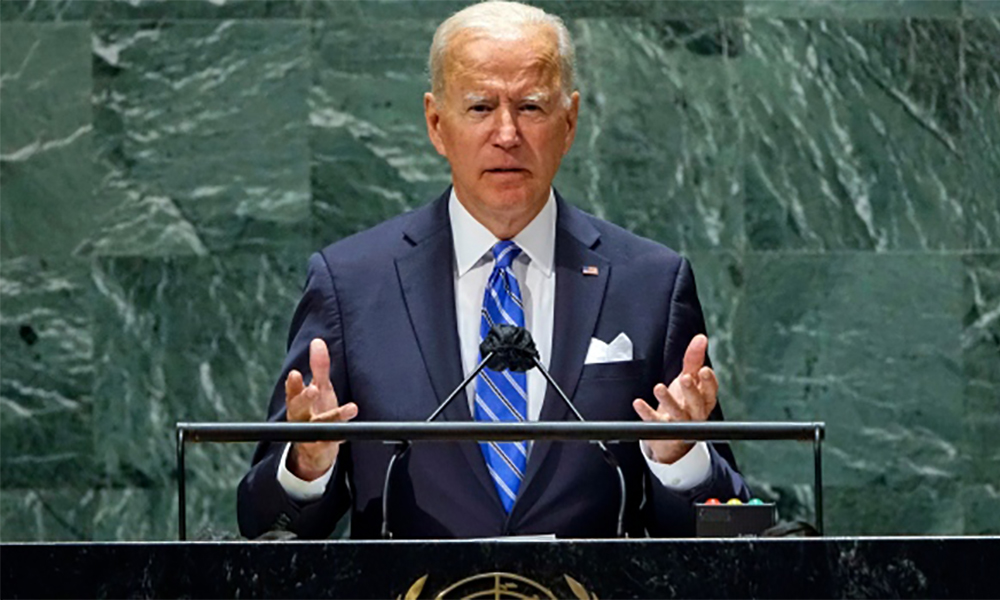
U.S. President Joe Biden mapped out a new era of vigorous competition without a new Cold War despite China’s ascendance during his first United Nations address on Tuesday, promising military restraint and a robust fight against climate change.
The United States will help resolve crises from Iran to the Korean Peninsula to Ethiopia, Biden told the annual U.N. General Assembly gathering.
The world faces a “decisive decade,” Biden said, one in which leaders must work together to combat a raging coronavirus pandemic, global climate change and cyber threats. He said the United States will double its financial commitment on climate aid and spend $10 billion to reduce hunger globally.
Biden did not utter the words “China” or “Beijing” but sprinkled implicit references to America’s increasingly powerful authoritarian competitor throughout his speech, as the two nations butt heads in the Indo-Pacific and on trade and human rights issues.
He said the United States will compete vigorously, both economically and to push democratic systems and rule of law.
“We’ll stand up for our allies and our friends and oppose attempts by stronger countries to dominate weaker ones, whether through changes to territory by force, economic coercion, technical exploitation or disinformation. But we’re not seeking – I’ll say it again – we are not seeking a new Cold War or a world divided into rigid blocs,” Biden said.
Chinese President Xi Jinping, who told the U.N. Tuesday that China would not build new coal-fired power projects abroad, used his video address to obliquely criticize the U.S. as well.
“Recent developments in the global situation show once again that military intervention from the outside and so-called democratic transformation entail nothing but harm,” Xi said.
Biden came to the United Nations facing criticism at home and abroad for a chaotic U.S. withdrawal from Afghanistan that left some Americans and Afghan allies still in that country and struggling to get out.
Biden’s emphasis on allied unity is being tested by a three-way agreement among the United States, Australia and Britain that undermined a French submarine deal and left France feeling stabbed in the back.
Biden met Australian Prime Minister Scott Morrison in New York and was to meet British Prime Minister Boris Johnson at the White House later in the day. His staff has been trying to arrange a phone call between Biden and French President Emmanuel Macron to try to cool tempers over the submarine deal.
“We’ve ended 20 years of conflict in Afghanistan and as we close this era of relentless war, we’re opening a new era of relentless diplomacy,” Biden said.
The United States would defend its national interests, Biden said, but “the mission must be clear and achievable,” and the American military “must not be used as the answer to every problem we see around the world.”
Biden, a Democrat, hoped to present a compelling case that the United States remains a reliable ally to its partners around the world after four years of “America First” policies pursued by his Republican predecessor Donald Trump.
Republicans pounced on Biden with sharp criticism.
“President Biden’s speech today does not match his actions. His failed leadership led to the chaotic and deadly withdrawal from Afghanistan that abandoned our partners, angered our NATO allies and emboldened our adversaries,” said U.S. Representative Michael McCaul, a Texas Republican.
Biden said that he remains committed to peacefully resolving a dispute with Iran over its nuclear program. He vowed to defend U.S. ally Israel but said a two-state solution with the Palestinians is still needed but a distant goal.
He said the United States wants “sustained diplomacy” to resolve the crisis surrounding North Korea’s nuclear and ballistic missile programs. North Korea has rejected U.S. overtures to engage in talks.
Discussing oppression of racial, ethnic and religious minorities, Biden singled out China’s Xinjiang region where rights groups estimate that one million Uyghurs and other ethnic minorities have been interned in camps.
In response to Biden’s reference to Xinjiang, China’s mission to the United Nations, told Reuters: “It’s completely groundless. We totally reject. The U.S. should pay more attention to its own human rights problems.”
U.N. Secretary-General Antonio Guterres, who begins a second five-year term at the helm of the world body on January 1, warned earlier of the dangers of the growing gap between China and the United States, the world’s largest economies.
“I fear our world is creeping towards two different sets of economic, trade, financial and technology rules, two divergent approaches in the development of artificial intelligence – and ultimately two different military and geopolitical strategies,” Guterres said.
“This is a recipe for trouble. It would be far less predictable than the Cold War,” Guterres said.

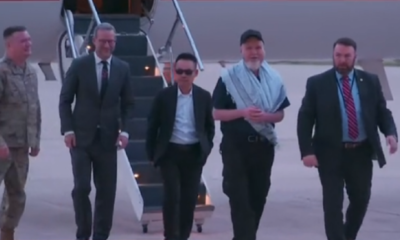





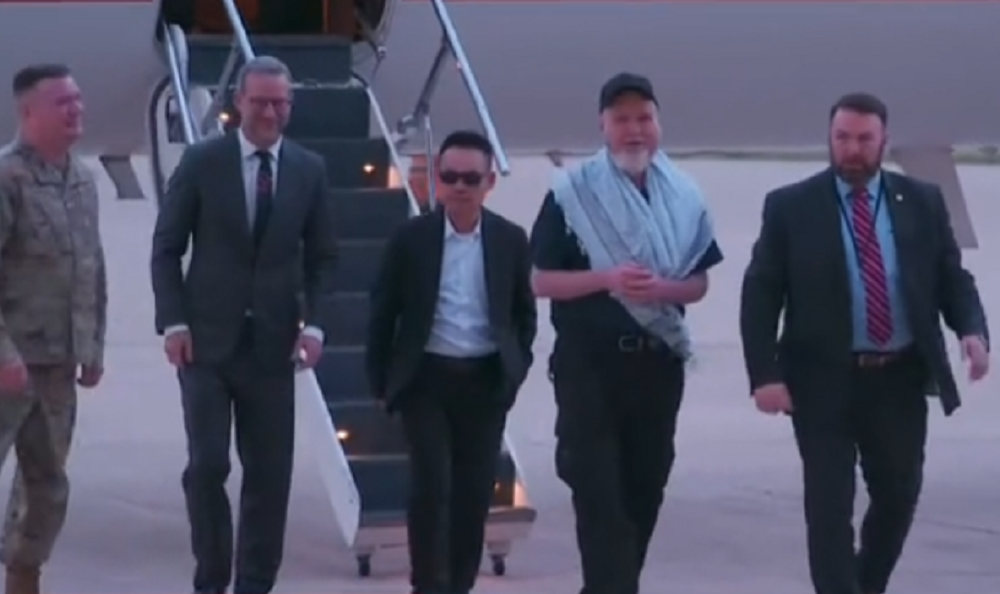
An American citizen, Dennis Coyle, arrived in the United States on Wednesday after being released by the Islamic Emirate in Afghanistan, marking a significant development amid ongoing diplomatic efforts between Washington and Kabul.
U.S. officials confirmed that Coyle arrived on American soil, landing at a major international airport in Texas, where he was met by close family members, including immediate relatives who had long campaigned for his release. Emotional scenes were reported as family members welcomed him home after an extended period in detention.
While authorities have not disclosed full details surrounding his release, officials indicated that quiet diplomatic engagement played a key role in securing his freedom. The case had drawn attention from human rights groups and policymakers, who had called for his release on humanitarian grounds.
Sources familiar with the situation said Coyle is expected to undergo medical evaluations following his return, a standard procedure for detainees released after prolonged confinement. Family members have requested privacy as he begins the process of reintegration.
Coyle’s release comes at a time of complex relations between the United States and the Islamic Emirate, with limited formal diplomatic ties but ongoing indirect engagement on humanitarian and security issues.
Analysts say the development could signal potential openings for further negotiations, particularly regarding other detainees still held in Afghanistan and abroad. It also follows renewed calls by families of other prisoners—including Afghan nationals held overseas—for similar humanitarian consideration.
U.S. officials have not confirmed whether additional releases are under discussion, but emphasized their continued commitment to securing the return of all American citizens detained abroad.
For now, Coyle’s return marks a positive development, offering hope to other families awaiting similar outcomes.
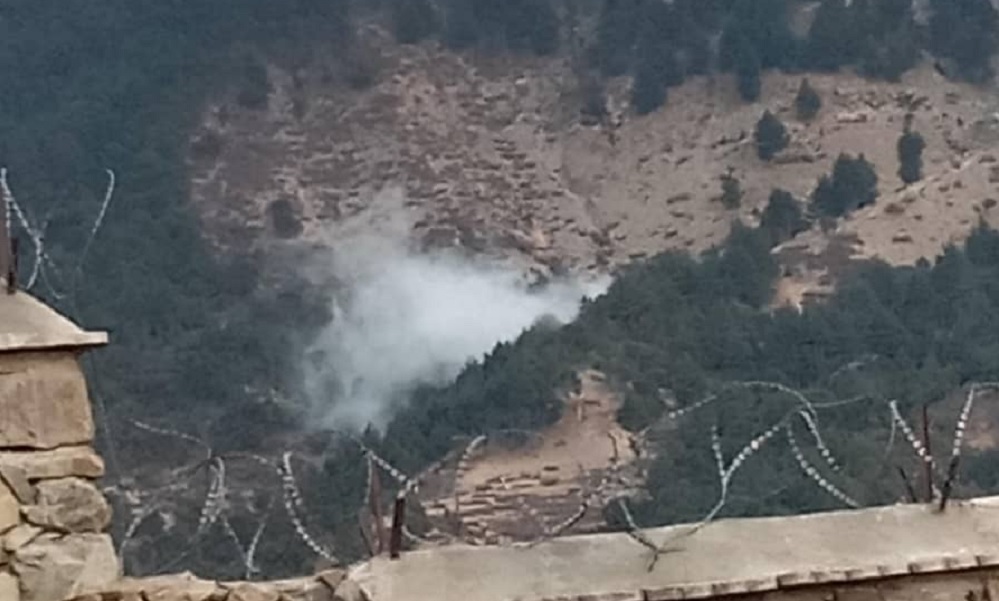
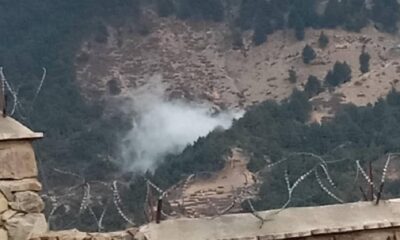
At least two civilians have been killed and eight others wounded following fresh shelling by Pakistan across the disputed Durand Line in Afghanistan’s Kunar province, local authorities said Wednesday.
Officials reported that over the past 24 hours, Pakistani forces fired approximately 85 rockets targeting residential areas across several districts, causing damage to civilian homes and heightening fears among local communities.
According to Zia-ur-Rahman Spin Ghar, head of information at the provincial Directorate of Information and Culture, the heaviest casualties were recorded in Nari district, where one civilian was killed and six others injured. In Sarkano district, another civilian lost their life, while two more people were wounded.
Additional rockets struck areas including Shultan, Marawara, and the outskirts of Asadabad. While no casualties were reported in those strikes, residents described widespread panic and property damage.
Escalating tensions
The latest incident comes amid a broader escalation in cross-Durand Line violence between Afghanistan and Pakistan in recent weeks. Residents in frontier provinces have repeatedly reported shelling, displacement, and disruption to daily life.
Spin Ghar also confirmed that Afghan forces responded with retaliatory strikes, claiming to have destroyed three Pakistani military outposts and killed one Pakistani soldier. There has been no immediate confirmation from Pakistani authorities.
Growing humanitarian concerns
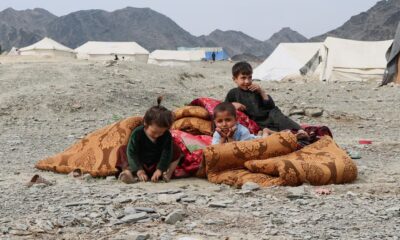
The ongoing hostilities have raised concerns about civilian safety in these areas where communities often find themselves caught in the crossfire. Aid groups warn that continued shelling could lead to further displacement and strain already limited local resources.
With no clear signs of de-escalation, observers say urgent dialogue is needed to prevent further civilian casualties and stabilize the volatile region.

At the 95th Standing Committee of UNHCR, the European Union and its Member States called for urgent de-escalation of tensions between Afghanistan and Pakistan, stressing the need for dialogue and respect for international law.
In a statement, the EU urged all sides to avoid further escalation, ensure the protection of civilians, and uphold territorial integrity. It also reiterated that Afghan soil should not be used to threaten or attack other countries, calling on the Islamic Emirate of Afghanistan to take effective action against militant groups operating within or from the country.
The bloc further expressed concern over the broader humanitarian situation in Afghanistan, highlighting restrictions that continue to affect the work of international organizations and humanitarian partners.
A key issue raised was the return of more than four million Afghans from Iran and Pakistan over the past two years, which the EU said has placed additional strain on Afghanistan’s already fragile economy and public services. It voiced particular concern over forced deportations and emphasized the importance of respecting the right to seek asylum and the principle of non-refoulement.


Saar: End of ceasefire between Afghanistan-Pakistan reviewed

Doyle returns to US after release by Islamic Emirate in Afghanistan

Two civilians killed, eight injured in fresh shelling by Pakistan in Kunar

EU urges de-escalation between Afghanistan and Pakistan, raises rights concerns

IPL 2026: RCB sold for $1.78 billion in landmark deal

Pakistani military jet downed in Afghanistan’s Jalalabad, pilot captured alive

Afghan Air Force conducts airstrikes in Islamabad, other cities

Prominent Muslim scholar issues fatwa calling for Afghanistan-Pakistan ceasefire

Afghan air force strikes key Pakistani military installations in retaliatory operation

IEA: Special circle in Pakistan has launched mission to destabilize region
Saar: End of ceasefire between Afghanistan-Pakistan reviewed

Tahawol: Escalating threats between Iran-US discussed

Tahawol: Possibility of US ground forces entering Iran war discussed

Saar: Using US prisoners as political pressure

Tahawol: Pakistan’s efforts to destabilise Afghanistan
-

 Latest News3 days ago
Deadly violence likely without dialogue between Afghanistan and Pakistan: ICG
-

 Sport4 days ago
Ireland to host Afghanistan for ODI series in August
-
 Latest News4 days ago
Mojtaba Khamenei calls for improved Afghanistan–Pakistan relations, offers help
-
 Latest News4 days ago
Malaysian PM welcomes temporary Afghanistan–Pakistan truce, urges lasting peace
-

 Latest News2 days ago
Pakistan seeks Russian mediation to resolve Afghanistan tensions
-

 International Sports3 days ago
FIFA World Cup 2026: Play-Off Tournament takes centre stage
-
 Sport3 days ago
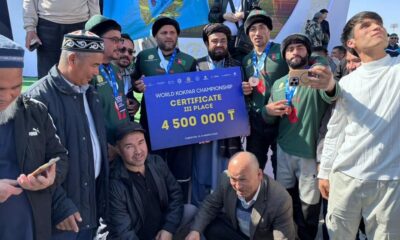
Afghanistan secures third place at 2026 World Kokpar Championship
-

 Business3 days ago
Afghani strengthens nearly 10% against US dollar amid banking sector reforms