
Latest News
Commitment to peace is all that’s keeping Republic’s team in Doha

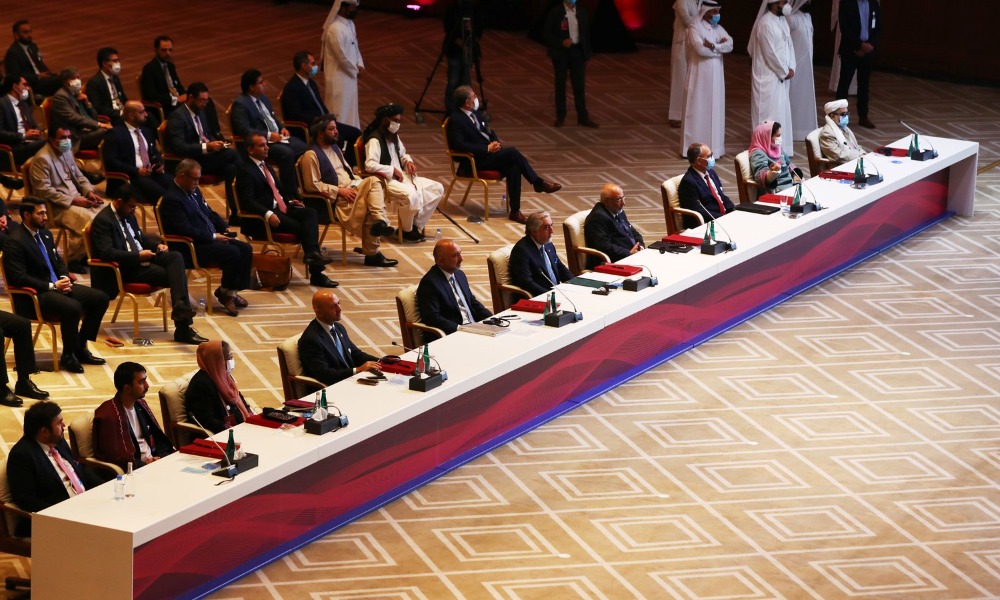
Abdullah Abdullah, Chairman of the High Council for National Reconciliation, said Wednesday the level of violence meted out by the Taliban is so intense that government should have walked away from negotiations but instead a steadfast belief in peace on Afghanistan’s part has kept the negotiations on track in Doha, Qatar.
Speaking at an Afghan Women’s Network meeting, Abdullah said government’s determination at securing peace is the only reason the talks are still underway.
He also said the Taliban must stop calling for the release of more prisoners until they have changed their ways.
“As long as the violence continues at the same level, the negotiations should have been stopped, because the violence escalated and it escalated from the other side, unfortunately. Our commitment to peace is decisive and we will continue the process,” Abdullah said.
“There is hope for the people of Afghanistan; when we are close to peace, then the issue of prisoners won’t be a problem; it is certainly part of the agreements that are being reached,” Abdullah added.
Members of the peace negotiating team meanwhile said the Taliban is not ready for a ceasefire and everytime the topic turns to their request for an Islamic Emirate, the group’s members walk away from the negotiating table.
The Republic’s talks team members also said the Taliban team has not been interested in discussing the agenda for the last ten days.
“Whenever there is a discussion about the issues they raise, they shrug their shoulders and they have repeatedly run away from the negotiating table,” said Farooq Majrooh, a member of the Afghan Republic’s team.
“They want to be superior, to use war and terror as a means, and to have the upper hand in this matter,” said Habiba Surabi, another member of the negotiating team.
However, Afghan women have called for an immediate ceasefire and said that peace talks and violence cannot go hand-in-hand.
“Violence parallel with peace talks is illogical and we want a ceasefire,” said Roshan Sirran, head of Afghan Women’s Network (AWN).
“The more bloodshed there is, the greater the distance, the greater the animosity, and the greater the distance between the parties,” said Sima Samar, former Minister of Government for Human Rights.
The Taliban have in the past stated they will only discuss a ceasefire once a ruling system for Afghanistan has been determined.





Latest News
Ariana Airlines brings $2.3 million Boeing 737 engine from US to Kabul
The airline said the delivery represents an important step in strengthening its technical and operational capacity and supporting the continued operation of its fleet.
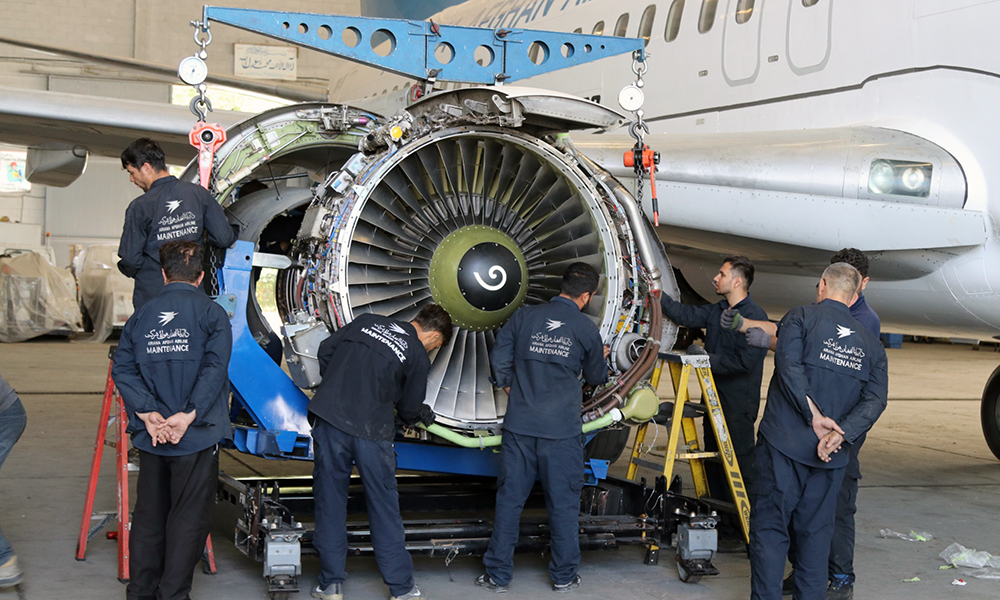
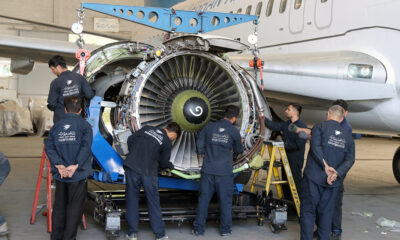
Ariana Afghan Airlines has brought a Boeing 737 aircraft engine from the United States to Kabul following continued efforts by the airline’s leadership to complete the shipment.
According to Ariana Afghan Airlines’ media office, the engine had been held up in the United States due to customs procedures. Following completion of the required process, the engine was cleared and transported to Kabul.
The engine was purchased from US-based Global Engine for $2.3 million. Ariana’s technical team is expected to install the engine on one of the airline’s Boeing 737 aircraft following its arrival.
The airline said the delivery represents an important step in strengthening its technical and operational capacity and supporting the continued operation of its fleet.
Ariana Afghan Airlines’ leadership said it is also working to accelerate the procurement of additional spare parts and technical equipment required to maintain and support the airline’s aircraft and operations.
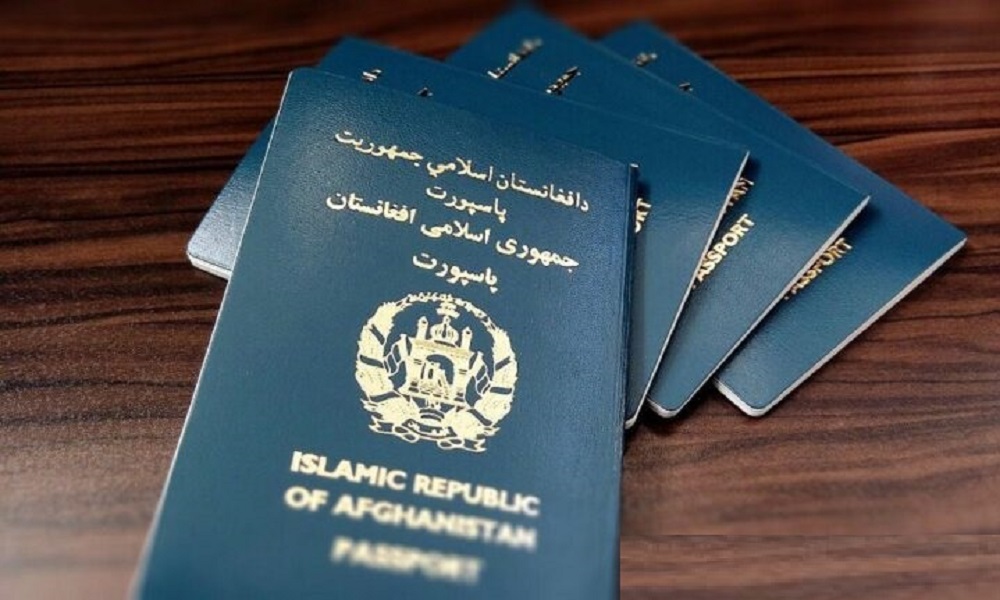
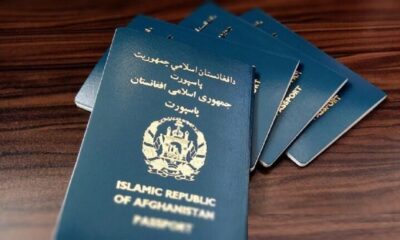
Zabihullah Mujahid, spokesperson for the Islamic Emirate, says more than 650,000 ordinary passports were issued across Afghanistan over the past Hijri year, while the visas of more than 16,000 foreign nationals were extended.
Mujahid made the remarks during the “Government in the Media Mirror” program, held under the theme “Public Services Week.”
According to him, the General Directorate of Statistics and Information also distributed nearly 2 million electronic national ID cards and around 1 million paper ID cards during the 1447 Hijri year.
Mujahid added that the agency provided hundreds of thousands of in-person and online services related to corrections and amendments to national ID cards over the past year.
The Islamic Emirate spokesperson said the General Directorate of Passports has sought to make services faster and easier by reducing the passport application form from nine pages to one page.
He also announced an expansion of services by the state-owned Afghan Post, saying the company delivered more than 5 million domestic mail items over the past year.
According to Mujahid, other measures to expand postal services included verifying and certifying hundreds of thousands of documents, launching express services, establishing a customer service center, and delivering documents directly to people’s homes.
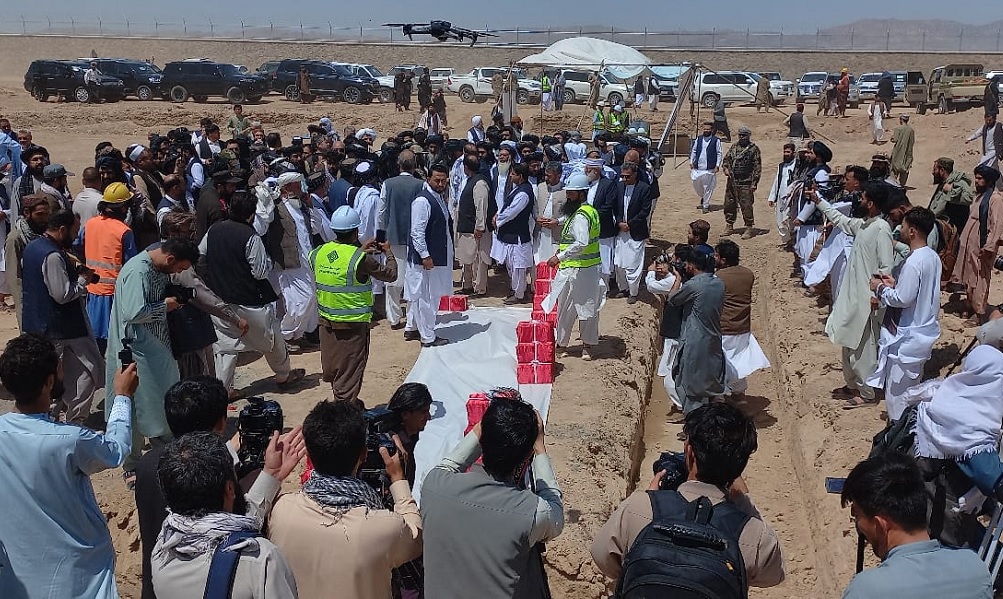
Construction of a major cement production plant has officially begun in Afghanistan’s western Herat province, with the project expected to receive $143 million in investment and create thousands of jobs.
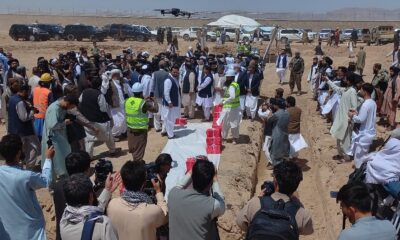
The groundbreaking ceremony was held on Sunday in the presence of senior officials of the Islamic Emirate, including the Deputy Prime Minister for Economic Affairs, the Deputy Prime Minister for Administrative Affairs and several cabinet ministers.
Homayoun Afghan, spokesperson for the Ministry of Mines and Petroleum, said the project has been contracted to a local company and that construction is expected to be completed within two years.
Once operational, the plant is expected to produce around 3,000 tonnes of cement per day, according to the ministry.
Officials say the project will provide direct and indirect employment for approximately 5,000 people, creating jobs and supporting economic activity in the province.
The Herat cement project is considered one of Afghanistan’s major industrial projects. Its development has been anticipated for decades, with residents and officials repeatedly calling for the province’s cement resources to be developed locally.
The plant is located about 30 kilometers west of Herat city in Zinda Jan district.
The project is expected to increase domestic cement production and reduce reliance on imported cement once it becomes operational.


Saar: Pakistan-Saudi-Turkey Pact: Regional Impact

Ariana Airlines brings $2.3 million Boeing 737 engine from US to Kabul

Israel rejects Trump’s 15-point plan for Gaza, PM Netanyahu says

Afghanistan issues more than 650,000 passports in one year

Construction begins on major cement production plant in Herat

Pakistan’s governance system has ‘collapsed’: Mohsin Naqvi

India offers 1,000 online scholarships for Afghan students for 2026-27 academic year

Turkey spent over $120 million to prepare airport for Qatar-donated U.S. presidential aircraft

FIFA’s inaugural YouTube Creator Cup to stream live on Ariana Television and Ariana Sport YouTube channels

FIFA World Cup semi-final line-up confirmed
Saar: Pakistan-Saudi-Turkey Pact: Regional Impact

Tahawol: Escalating disputes over Iran war discussed

Saar: Turkey, Saudi Arabia and Pakistan defense pact reviewed

Tahawol: End of US sanctions waiver for Chabahar Port discussed

Saar: US warns of ISIL-K threat in Afghanistan discussed
-

 Sport5 days ago
Afghanistan aim to strengthen ODI ranking in Ireland series
-
 Latest News4 days ago
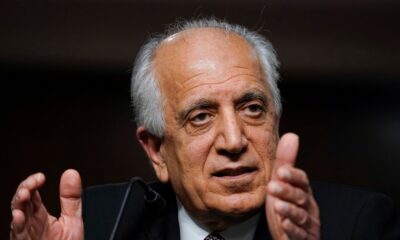
Khalilzad says Pakistan needs ‘reset’ amid economic crisis and rising instability
-

 Latest News4 days ago
First Afghanistan-Ireland ODI abandoned without a ball bowled
-

 Sport4 days ago
Afghanistan aim for winning start against Ireland
-

 Sport3 days ago
Afghanistan holds Russia to 3-3 draw, earns first point at Continental Futsal Championship
-

 Latest News4 days ago
Afghan boxer appears in Greek court over death of Scottish woman
-
 Business3 days ago
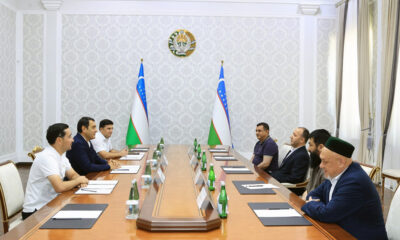
Uzbekistan’s Fergana region strengthens economic ties with Afghanistan
-
 Regional3 days ago
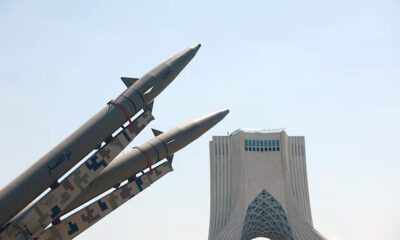
Iran threatens to hit Gulf states if US launches new strikes