
Latest News
How Hamas duped Israel as it planned devastating attack

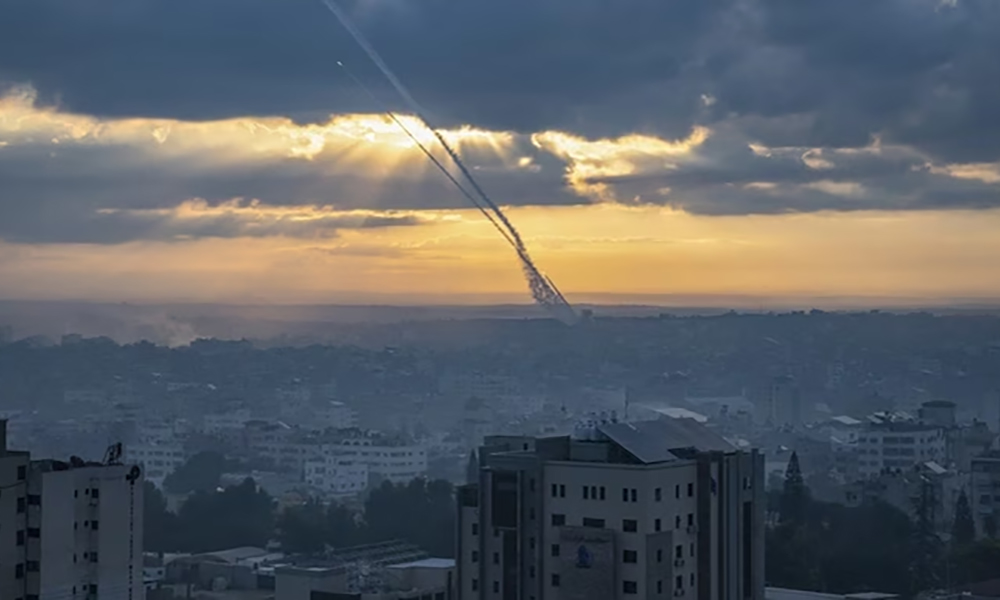
A careful campaign of deception ensured Israel was caught off guard when the Palestinian Islamist group Hamas launched its devastating attack, enabling a force using bulldozers, hang gliders and motorbikes to take on the Middle East’s most powerful army.
Saturday’s assault, the worst breach in Israel’s defenses since Arab armies waged war in 1973, followed two years of subterfuge by Hamas that involved keeping its military plans under wraps and convincing Israel it did not want a fight.
While Israel was led to believe it was containing a war-weary Hamas by providing economic incentives to Gazan workers, the group’s fighters were being trained and drilled, often in plain sight, a source close to Hamas said.
This source provided many of the details for the account of the attack and its buildup that has been pieced together by Reuters. Three sources within Israel’s security establishment, who like others asked not to be identified, also contributed to this account.
“Hamas gave Israel the impression that it was not ready for a fight,” said the source close to Hamas, describing plans for the most startling assault since the Yom Kippur War 50 years ago when Egypt and Syria surprised Israel and made it fight for its survival.
“Hamas used an unprecedented intelligence tactic to mislead Israel over the last months, by giving a public impression that it was not willing to go into a fight or confrontation with Israel while preparing for this massive operation,” the source said.
Israel concedes it was caught off guard by an attack timed to coincide with the Jewish Sabbath and a religious holiday. Hamas fighters stormed into Israeli towns, killing 700 Israelis and abducting dozens. Israel has killed more than 400 Palestinians in its retaliation on Gaza since then.
“This is our 9/11,” said Major Nir Dinar, spokesperson for the Israeli Defence Forces. “They got us.”
“They surprised us and they came fast from many spots – both from the air and the ground and the sea.”
Osama Hamdan, the Hamas representative in Lebanon, told Reuters the attack showed Palestinians had the will to achieve their goals “regardless of Israel’s military power and capabilities.”
In one of the most striking elements of their preparations, Hamas constructed a mock Israeli settlement in Gaza where they practiced a military landing and trained to storm it, the source close to Hamas said, adding they even made videos of the maneuvers.
“Israel surely saw them but they were convinced that Hamas wasn’t keen on getting into a confrontation,” the source said.
Meanwhile, Hamas sought to convince Israel it cared more about ensuring that workers in Gaza, a narrow strip of land with more than two million residents, had access to jobs across the border and had no interest in starting a new war.
“Hamas was able to build a whole image that it was not ready for a military adventure against Israel,” the source said.
Since a 2021 war with Hamas, Israel has sought to provide a basic level of economic stability in Gaza by offering incentives including thousands of permits so Gazans can work in Israel or the West Bank, where salaries in construction, agriculture or service jobs can be 10 times the level of pay in Gaza.
“We believed that the fact that they were coming in to work and bringing money into Gaza would create a certain level of calm. We were wrong,” another Israeli army spokesperson said.
An Israeli security source acknowledged Israel’s security services were duped by Hamas. “They caused us to think they wanted money,” the source said. “And all the time they were involved in exercises/drills until they ran riot.”
As part of its subterfuge in the past two years, Hamas refrained from military operations against Israel, even as another Gaza-based Islamist armed group known as Islamic Jihad launched a series of its own assaults or rocket attacks.
The restraint shown by Hamas drew public criticism from some supporters, again aimed at building an impression that Hamas had economic concerns not a new war on its mind, the source said.
In the West Bank, controlled by Palestinian President Mahmoud Abbas and his Fatah group, there were those who mocked Hamas for going quiet. In one Fatah statement published in June 2022, the group accused Hamas leaders of fleeing to Arab capitals to live in “luxurious hotels and villas” leaving their people to poverty in Gaza.
A second Israeli security source said there was a period when Israel believed the movement’s leader in Gaza, Yahya Al-Sinwar, was preoccupied with managing Gaza “rather than killing Jews”. At the same time, Israel turned its focus away from Hamas as it pushed for a deal to normalise relations with Saudi Arabia, he added.
Israel has long prided itself on its ability to infiltrate and monitor Islamist groups. As a consequence, the source close to Hamas said, a crucial part of the plan was to avoid leaks.
Many Hamas leaders were unaware of the plans and, while training, the 1,000 fighters deployed in the assault had no inkling of the exact purpose of the exercises, the source added.
When the day came, the operation was divided into four parts, the Hamas source said, describing the various elements.
The first move was a barrage of 3,000 rockets fired from Gaza that coincided with incursions by fighters who flew hang gliders, or motorised paragliders, over the border, the source said. Israel has previously said 2,500 rockets were fired at first.
Once the fighters on hang-gliders were on the ground, they secured the terrain so an elite commando unit could storm the fortified electronic and cement wall built by Israel to prevent infiltration.
The fighters used explosives to breach the barriers and then sped across on motorbikes. Bulldozers widened the gaps and more fighters entered in four-wheel drives, scenes that witnesses described.
‘HUGE FAILURE’
A commando unit attacked the Israeli army’s southern Gaza headquarters and jammed its communications, preventing personnel from calling commanders or each other, the source said.
The final part involved moving hostages to Gaza, mostly achieved early in the attack, the source close to Hamas said.
In one well-publicised hostage taking, fighters abducted party-goers fleeing a rave near the kibbutz of Re’im near Gaza. Social media footage showed dozens of people running through fields and on a road as gunshots were heard.
“How could this party happen this close (to Gaza)?” the Israeli security source said.
The Israeli security source said Israeli troops were below full strength in the south near Gaza because some had been redeployed to the West Bank to protect Israeli settlers following a surge of violence between them and Palestinian militants.
“They (Hamas) exploited that,” the source said.
Dennis Ross, a former Middle East negotiator who is now at the Washington Institute for Near East Policy, said Israel had been distracted by violence in the West Bank, leading to a “thin, under-prepared presence in the south.”
“Hamas probably succeeded beyond their expectation. Now they will have to deal with an Israel determined to decimate them,” he said.
Retired General Yaakov Amidror, a former national security adviser to Prime Minister Benjamin Netanyahu, told reporters on Sunday the assault represented “a huge failure of the intelligence system and the military apparatus in the south.”
Amidror, chairman of the National Security Council from April 2011-November 2013 and now senior fellow with the Jerusalem Institute for Strategy and Security, said some of Israel’s allies had been saying that Hamas had acquired “more responsibility”.
“We stupidly began to believe that it was true,” he said. “So, we made a mistake. We are not going to make this mistake again and we will destroy Hamas, slowly but surely.”
Source: Reuters

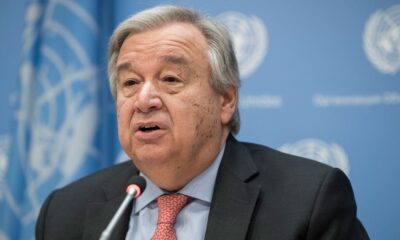




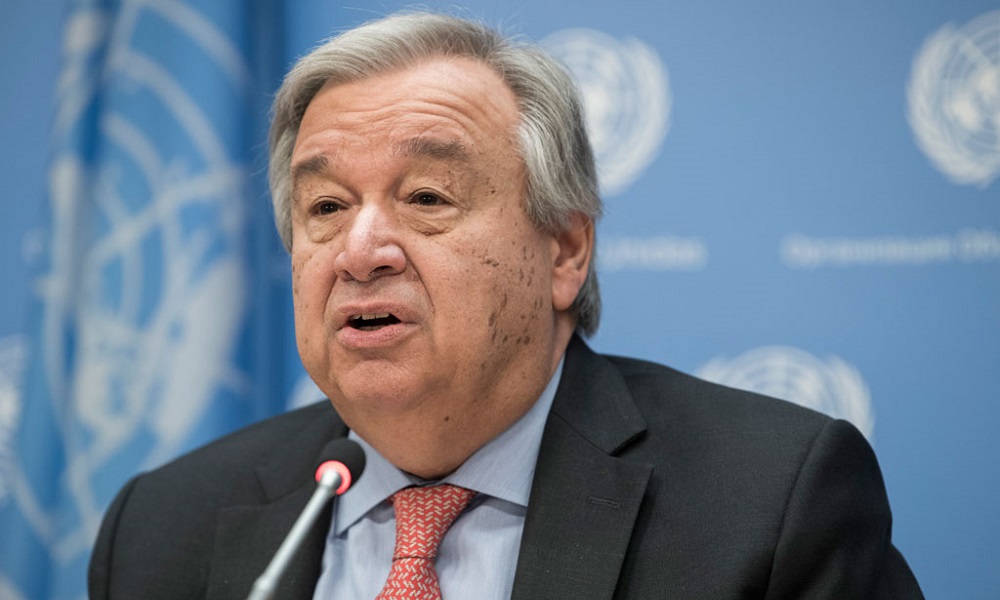
Marking World Water Day, UN Secretary-General António Guterres on Sunday stressed that access to safe water and sanitation is essential for protecting the rights and health of women and girls, urging governments to take stronger action.
In his message, the Secretary-General warned that women and girls bear the greatest burden where water and sanitation services are inadequate. Many are forced to use unsafe facilities, care for relatives affected by waterborne diseases and spend hours each day collecting water—often missing out on education and opportunities.
Highlighting this year’s theme, “Where water flows, equality grows,” Guterres said improving water access can play a key role in advancing gender equality.
He called on governments to boost investment in water and sanitation systems by improving service delivery, strengthening workforce capacity and ensuring sustainable financing. He also urged developed nations to support these efforts by sharing technology, expertise and funding to build resilient infrastructure.
The UN chief emphasized the importance of including women in decision-making processes to ensure water systems effectively meet community needs.
While noting that water scarcity can contribute to conflict, Guterres said it can also foster cooperation and peace. He pointed to the upcoming UN Water Conference as an opportunity for countries to accelerate progress toward universal access to water and sanitation.
“Together, let’s make water a force for gender equality,” he said, calling for global efforts to ensure no community is left behind.
Latest News
Water crisis deepens in Afghanistan as families struggle for access
Traditional sources such as wells and karezes—underground channels that have sustained communities for generations—are now under severe strain.
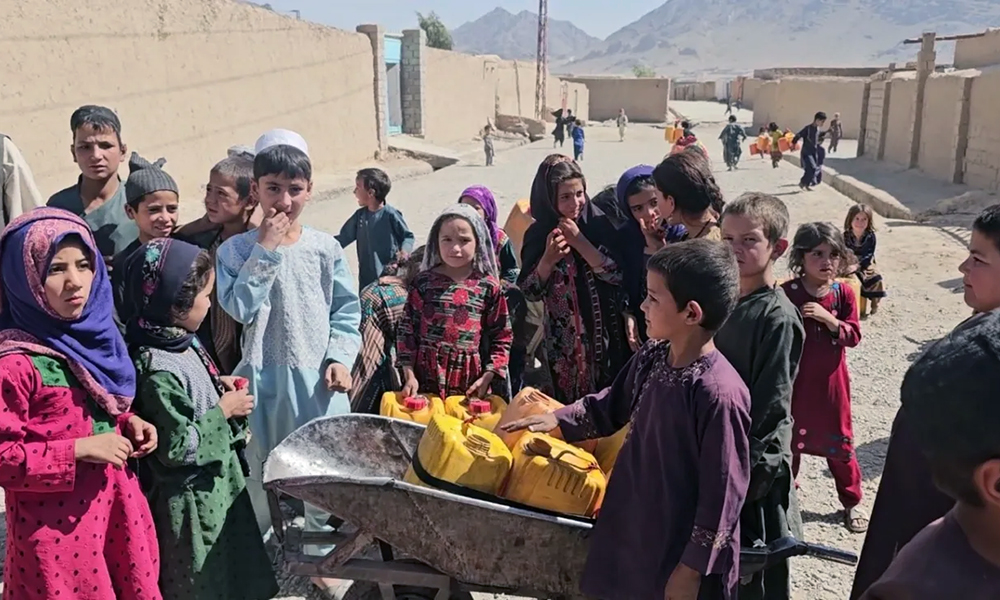
As the world marks World Water Day, Afghanistan is facing a worsening water crisis, with millions of people struggling to access safe and reliable supplies.
Years of drought, declining rainfall, rapid population growth and the return of families from neighbouring countries have placed increasing pressure on already fragile water systems.
Traditional sources such as wells and karezes—underground channels that have sustained communities for generations—are now under severe strain.
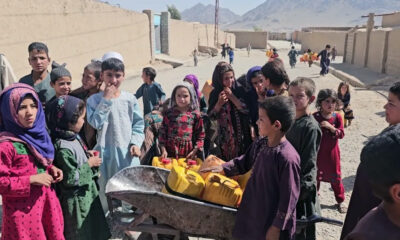
In many rural areas, families are forced to rely on unsafe surface water or travel long distances to meet daily needs. Women and children are most affected, often spending hours each day collecting water.
Urban centres, including Kabul, Mazar-e-Sharif and Kandahar, are also grappling with shortages. Rapid population growth and unregulated groundwater extraction have led to significant depletion, leaving many households dependent on private wells or water deliveries.
The situation in Kandahar is particularly severe. Reports indicate that numerous wells have dried up, while others have dropped to depths of more than 100 metres.
Local community leader Fazil Rahman described water shortages as the most pressing challenge in his area, noting that even deep boreholes are failing to produce sufficient supply. He added that the crisis is disrupting education and livelihoods, as children are often forced to spend hours fetching water instead of attending school.
In response, the International Committee of the Red Cross (ICRC), in partnership with the Urban Water Supply and Sewage State-Owned Corporation, launched a water infrastructure project in Kandahar in 2025. The initiative aims to improve access for more than 100,000 residents through expanded pipelines, new household connections and solar-powered pumping systems.
The ICRC has also upgraded a major water pumping station in Herat, now supplying water to more than 400,000 people through tens of thousands of household connections.
Beyond urban areas, water scarcity is also affecting agriculture, the backbone of many rural livelihoods. Reduced irrigation has led to lower crop yields and increased risks of food insecurity and malnutrition.
To support affected communities, the ICRC has rehabilitated irrigation canals, karezes and flood protection systems in several provinces, including projects in Parwan Province.
Despite these efforts, humanitarian organisations warn that aid alone will not be enough. Long-term investment in infrastructure, improved water management and stronger policies will be essential to address the crisis.
Without sustained and coordinated action, experts caution that water shortages could continue to threaten public health, food security and stability across Afghanistan.


UN chief urges investment in water systems to advance gender equality

North Korea’s Kim Jong Un reappointed as president of state affairs, KCNA says

Tahawol: Possibility of US ground forces entering Iran war discussed

Water crisis deepens in Afghanistan as families struggle for access

Saar: Using US prisoners as political pressure

Pakistani military jet downed in Afghanistan’s Jalalabad, pilot captured alive

Afghan Air Force conducts airstrikes in Islamabad, other cities

Prominent Muslim scholar issues fatwa calling for Afghanistan-Pakistan ceasefire

Afghan air force strikes key Pakistani military installations in retaliatory operation

IEA: Special circle in Pakistan has launched mission to destabilize region
Tahawol: Possibility of US ground forces entering Iran war discussed
Saar: Using US prisoners as political pressure

Tahawol: Pakistan’s efforts to destabilise Afghanistan

Saar: Decline in international assistance to Afghanistan

Tawsia: Assessment of Afghanistan’s economic activities in 1404
-

 Latest News5 days ago
IEA announces temporary pause in defensive operations against Pakistan for Eid
-
 Latest News5 days ago
Pakistan opposes normal Afghanistan–India relations: Shaheen
-

 Latest News5 days ago
Karzai accuses Pakistan of seeking to destabilise Afghanistan after Kabul strike
-
 Latest News4 days ago
Pakistani shelling hits Kunar districts despite ‘pause in hostility’ over Eid
-

 Sport3 days ago
Afghanistan national buzkashi falls short in Kokpar World Championship semifinals
-

 Regional4 days ago
Pakistan among top nuclear threats to America, US intelligence chief tells senate
-
 Latest News5 days ago
Muslim scholars condemn Kabul hospital attack, urge ceasefire
-
 Latest News4 days ago
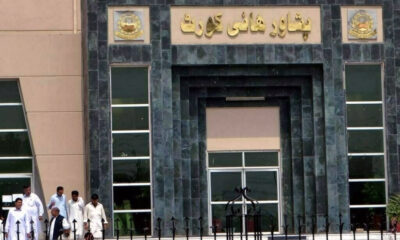
Peshawar High Court grants bail to 68 detained Afghan nationals, including minors