
International Sports
Hundreds arrested as PSG Champions League celebrations turn violent in Paris
According to France’s Interior Ministry, 416 people were arrested nationwide, including 283 in Paris alone, as authorities responded to multiple incidents of disorder linked to the celebrations.

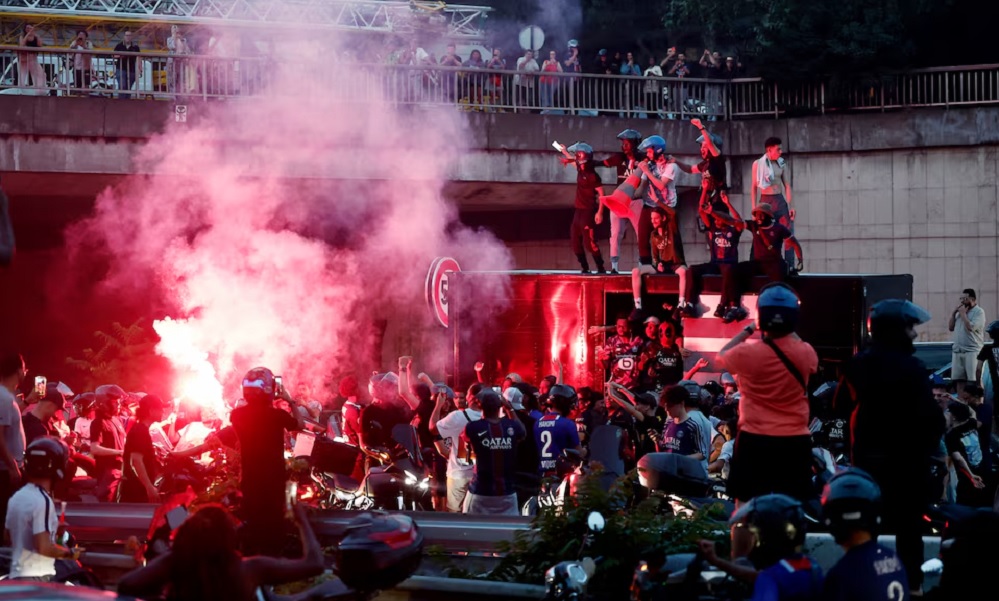
French police arrested hundreds of people overnight after celebrations of Paris Saint-Germain’s Champions League triumph descended into violence in parts of Paris and other cities across France.
Thousands of supporters took to the streets following PSG’s dramatic victory over Arsenal in the Champions League final in Budapest on Saturday evening. The win secured the Paris club’s second consecutive European crown, making PSG only the second team in the modern Champions League era to successfully defend the title.
According to France’s Interior Ministry, 416 people were arrested nationwide, including 283 in Paris alone, as authorities responded to multiple incidents of disorder linked to the celebrations.
Large crowds gathered along the Champs-Élysées and around the Arc de Triomphe, where fans waved flags, set off flares and fireworks, and celebrated into the night. While most supporters marked the occasion peacefully, police reported that smaller groups engaged in vandalism, looting and arson.
Authorities said several vehicles were set on fire, shops were damaged, and fires were started in different parts of the capital. One police officer was reported injured during the disturbances.
Police also dispersed a group that attempted to storm a police station in Paris’s 8th arrondissement. By late evening, dozens of people had already been taken into custody as security forces moved to restore order.
The city’s main ring road was temporarily blocked by celebrating supporters before police cleared the area. Officers also intervened near PSG’s Parc des Princes stadium, where around 1,000 fans had gathered and erected makeshift barricades using bicycles and other objects.
French authorities had deployed large numbers of security personnel in anticipation of mass celebrations, mindful of the scenes that followed PSG’s first Champions League triumph in 2025. Last year, more than 500 people were arrested nationwide and over 200 people were injured in Paris during celebrations.
Despite the unrest, PSG supporters across France celebrated a historic achievement for the club, which has now established itself among Europe’s elite by winning back-to-back Champions League titles.




International Sports
Lionel Messi bids tearful farewell to Argentina after 3-0 win over Benin
The Argentina captain was visibly emotional even before the match, wiping away tears as the team bus travelled through crowds of supporters on its way to the stadium.
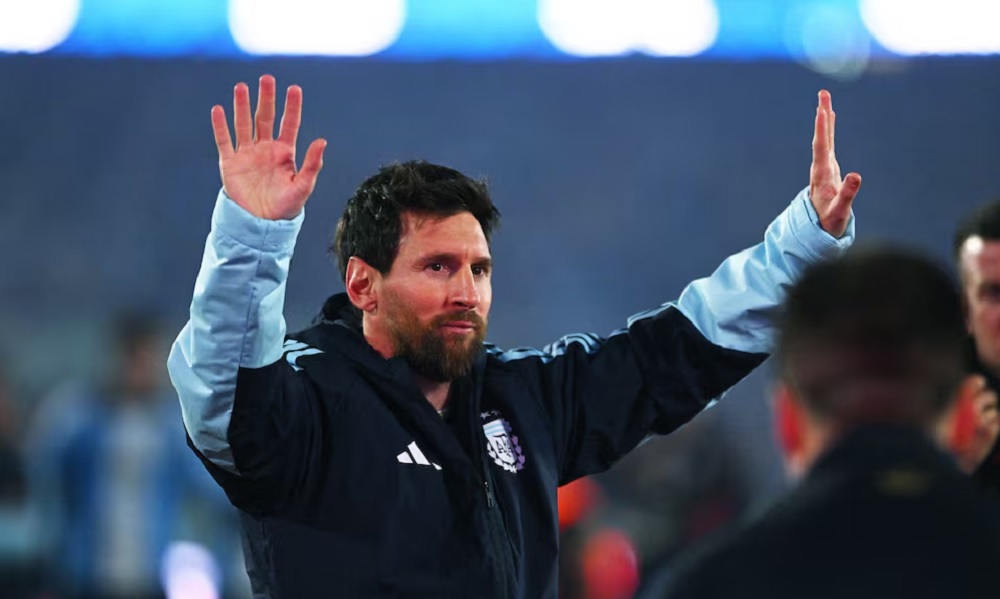
Lionel Messi has brought his 21-year international career with Argentina to an emotional end, scoring in a 3-0 victory over Benin in front of a packed Monumental Stadium in Buenos Aires.
The 39-year-old, widely regarded as one of football’s greatest players, made his record-extending 208th appearance for Argentina and scored his 126th international goal from the penalty spot in the 71st minute.
Messi also provided the assist for Nicolás Otamendi to open the scoring, before Nico Paz added a third as Argentina secured a comfortable victory.
But the result was secondary to the emotional farewell for Messi, who received a huge ovation from around 85,000 supporters.
The Argentina captain was visibly emotional even before the match, wiping away tears as the team bus travelled through crowds of supporters on its way to the stadium.
Messi entered the pitch alongside his three children, while his wife, Antonela Roccuzzo, and mother, Celia Cuccittini, watched from the VIP area.
A giant Argentina shirt displaying the word “Gracias” above Messi’s famous No. 10 was placed on the pitch before kick-off.
The emotion continued during the national anthem, with Messi appearing tearful as Falklands War veteran Fabio Santana sang alongside a banner reading “The Malvinas are Argentine.”
The match was stopped in the 10th minute in honour of Messi’s iconic shirt number, with the entire stadium joining in a minute-long ovation.
Messi then produced the moment fans had hoped for, converting a penalty in the 71st minute to cap his final appearance on home soil.
‘I gave it my all’
After the final whistle, a spectacular drone show illuminated the sky above the Monumental, displaying Messi’s image and paying tribute to the eight-time Ballon d’Or winner.
Messi’s international farewell comes just over two months after Argentina lost the 2026 World Cup final to Spain in New Jersey.
Following that defeat, Messi said: “I gave it my all; I have nothing left to give, and besides, there are great young players coming up who deserve their chance.”
Earlier on Tuesday, Messi was awarded an honorary doctorate by the University of Buenos Aires during a ceremony at the Argentine Football Association headquarters.
Fans also gathered outside the AFA headquarters, unfurling a huge Argentine flag featuring Messi alongside the words “The joy of my life.”
Former Barcelona teammate Neymar paid tribute to Messi, saying the world should thank him for everything he had done for football.
Messi remains under contract with Inter Miami until 2028, although he has previously indicated that he could retire from football sooner than expected.
His Argentina career included the 2022 World Cup triumph, ending the country’s 36-year wait for a third world title, as well as Copa América victories in 2021 and 2024.
Argentina also finished runners-up at the 2014 and 2026 World Cups.
After more than two decades representing the national team, Messi’s final night in Buenos Aires provided an emotional farewell to one of the defining figures in Argentina’s football history.
International Sports
India clinch Asian Games cricket gold after beating Pakistan
The result marked India’s seventh consecutive T20 victory over Pakistan, extending their dominance in the format. India have now won 14 of the 18 T20 meetings between the two sides.
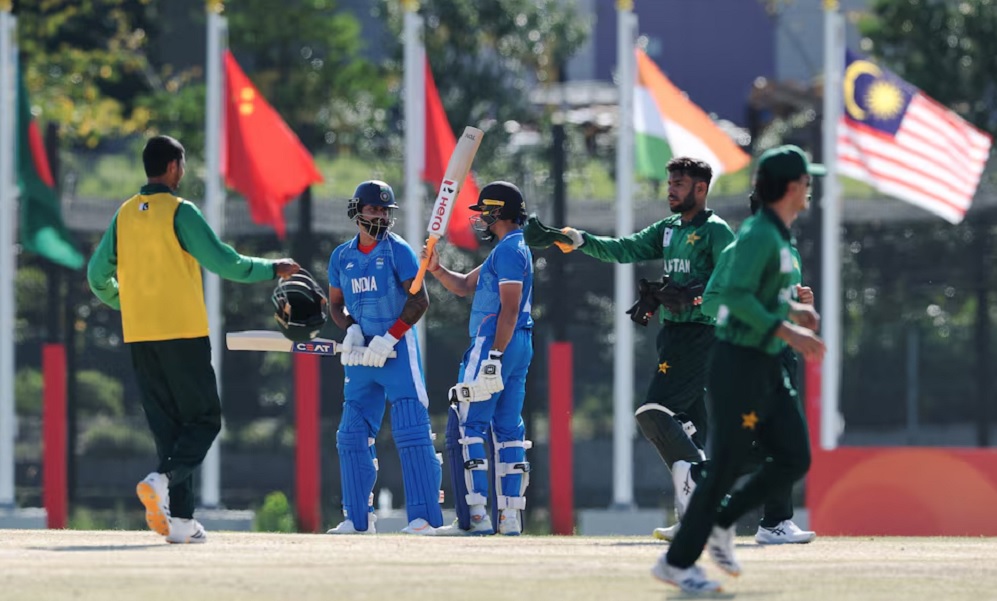
India have won the men’s T20 cricket gold medal at the Asian Games, beating Pakistan by 19 runs in the final in Japan.
India posted an imposing 211-6 from 20 overs, with Abhishek Sharma leading the charge with a blistering 61 off 28 balls.
Abhishek struck seven sixes and three fours, while Tilak Varma added an unbeaten 51 from just 22 deliveries. Shivam Dube also contributed 27 off 15 balls as India finished strongly.
Pakistan struggled early in their chase, falling to 39-3, before Hasan Nawaz launched a counterattack with 96 from 51 balls.
However, Pakistan could only reach 192-6, leaving India to secure a 19-run victory and another Asian Games gold medal.
The result marked India’s seventh consecutive T20 victory over Pakistan, extending their dominance in the format. India have now won 14 of the 18 T20 meetings between the two sides.
India had previously won gold when cricket returned to the Asian Games in China in 2022, making this their second consecutive men’s T20 gold medal.
The 2026 Asian Games in Aichi-Nagoya, Japan, conclude on Sunday, October 4, bringing 16 days of competition to a close.
The Games officially ran from September 19 to October 4, with the closing ceremony taking place in Nagoya on the final day.
The next edition of the Asian Games is scheduled to be held in Qatar in 2030.
International Sports
Afghanistan to face Pakistan, India and Australia at 2027 Cricket World Cup
The Afghan side will begin its World Cup campaign against Pakistan on October 8 in Tshwane of South Africa.
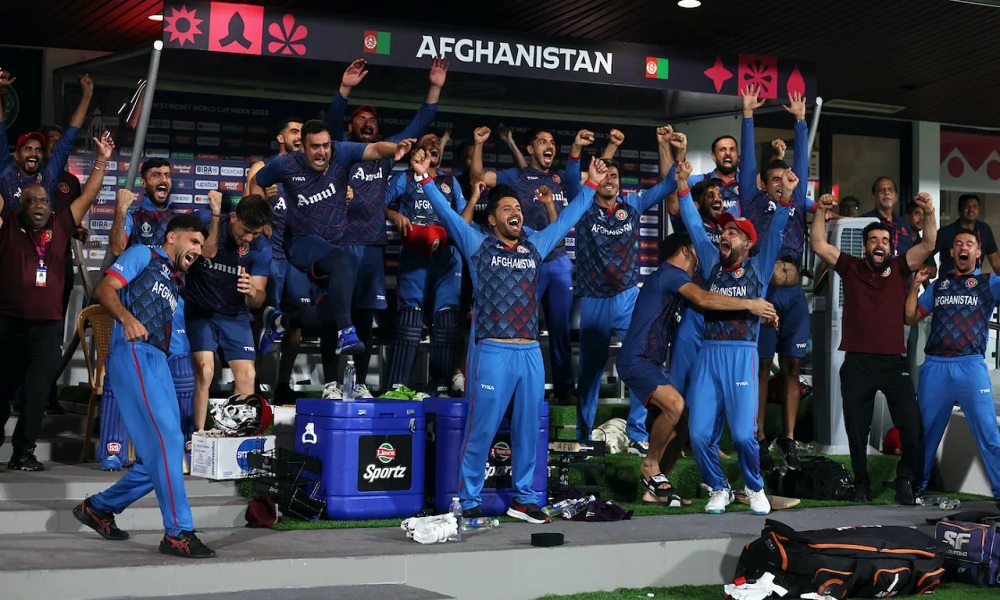
Afghanistan will face Pakistan, Zimbabwe, India and Australia in the group stage of the 2027 Men’s Cricket World Cup, after the International Cricket Council (ICC) announced the tournament schedule.
Afghanistan has been drawn in Group A alongside defending champions Australia, India, Pakistan, Zimbabwe and one qualifier.
The Afghan side will begin its World Cup campaign against Pakistan on October 8 in Tshwane of South Africa.
Afghanistan will then face Zimbabwe on October 11 in Bulawayo of Zimbabwe, followed by a highly anticipated clash with India on October 14 in Tshwane.
The team’s fourth group-stage match will be against Australia on October 18 in KuGompo City of South Africa, before Afghanistan concludes its group campaign against Qualifier A on October 21, also in KuGompo City.
The top three teams from each group will advance to the Super 7 phase, along with the fourth-placed team that has the better record between the two groups.
The Super 7 phase will be played from October 25 to November 14, with the seven teams starting the phase without carrying any points from the group stage. Each team will play six matches.
The top four teams in the Super 7 standings will advance to the semi-finals, scheduled for November 17 and 18 in Cape Town and Tshwane respectively. The final will be played in Johannesburg on November 21.
The 2027 World Cup will be jointly hosted by South Africa, Zimbabwe and Namibia, with the tournament beginning on October 2 with a three-team Super Series in Windhoek.
Afghanistan is among the 12 teams already placed in the group stage. The remaining four World Cup places will be decided through the Cricket World Cup Qualifier, with the qualifier winner advancing directly to the group stage and the other three teams competing in the Super Series for the final spot.
The group stage officially begins on October 7, with Australia facing India in Cape Town in a repeat of the 2023 World Cup final.


Saar: Concerns over potential return of US military bases to Afghanistan discussed

Afghanistan hold Bangladesh to dramatic draw in Abu Dhabi Test

Muttaqi and Qatar’s envoy discuss Afghanistan’s ties with international community

Afghanistan and Iran stress expanding industrial and mining cooperation

Afghanistan suspends BBC radio broadcasts over ‘repeated violations’

Cricket Bonanza: Afghanistan set for packed international schedule

New warnings reignite debate over AI threat to humanity

UN warns of mounting humanitarian and human rights pressures in Afghanistan

Afghanistan says 28 killed, 32 captured in Nuristan operation

CNN, MS NOW and Politico sue Trump, challenging White House ban
Saar: Concerns over potential return of US military bases to Afghanistan discussed

Tahawol: Kabul’s criticism of Islamabad’s policy toward Afghanistan

Saar: Pakistan deploying army in KP

Tahawol: EU appointing new envoy for Afghanistan

Saar: Pakistan’s political, security and economic crises
-

 Regional5 days ago
Trump says US will not attack Iran before midterm elections in November
-
 Latest News3 days ago
Pakistan issues new directives for Afghan medical students and doctors
-
 World4 days ago
Witkoff, Kushner to meet Ukrainians for talks on the war, says US source
-
 Latest News3 days ago
Iranian lawmaker praises Afghanistan’s support, accuses Pakistan of ‘hypocrisy’
-

 Latest News4 days ago
US senator cites Afghanistan visits in Pentagon ‘cover-up’ allegations over Iran war
-
 World4 days ago
US imposes sanctions on ICC amid dispute over international prosecutions
-
 Sport4 days ago
Bangladesh reach 317/8 on Day One against Afghanistan in Test match
-
 Business4 days ago
Iran allocates over 110 hectares in Chabahar for Afghan economic activities