
Latest News
IEA marks fourth anniversary in power, highlights achievements and addresses global concerns

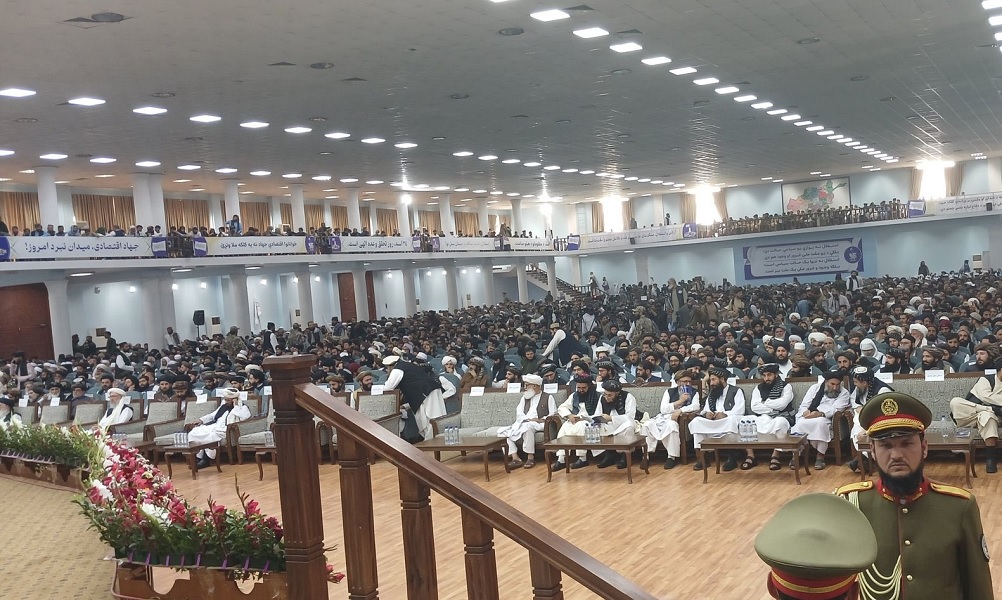
Senior officials of the Islamic Emirate of Afghanistan (IEA) marked the fourth anniversary of their return to power with a high-profile ceremony at the Loya Jirga Hall in Kabul on Friday, where they highlighted progress in security, economic self-reliance, infrastructure, and education — while responding to ongoing international concerns.
Amir Khan Muttaqi, Minister of Foreign Affairs, underscored the IEA’s commitment to a balanced foreign policy and constructive engagement with all nations.
“Our positive relations with regional countries do not mean we oppose engagement with Western nations,” he said. “If others are hesitant to engage, that’s their decision. But our diplomats have already traveled to some European countries.”
Muttaqi also urged Afghans living abroad to return home and leave behind what he called “illusions and false hopes,” declaring: “Afghanistan is now truly a shared home for all Afghans.”
He stressed that the government’s entire operational and development budgets are now financed through domestic revenue, reflecting growing economic independence.
Highlighting progress in education, Muttaqi noted the construction of hundreds of madrasas and schools, bringing the total number of students to 10 million — including 2.8 million girls. He also cited a rise in property values as an indicator of public confidence in stability and long-term security.
Meanwhile, Interior Minister Sirajuddin Haqqani emphasized that the purpose of the jihad was never personal gain but the end of foreign occupation and the establishment of an Islamic system.
He addressed accusations made by international actors, stating: “Some accuse Afghanistan of harboring international terrorists to serve their own political interests, but we remain committed to our obligations under the Doha Agreement.”
Haqqani acknowledged global misunderstandings about the IEA but stressed that these can be resolved through genuine dialogue.
He, however, noted that each country must solve its internal issues independently.
Deputy Prime Minister for Administrative Affairs Abdul Salam Hanafi reiterated the IEA’s stance on justice, stating that no one is allowed to commit oppression under the guise of political disputes or past rivalries.
“If any such incidents occur, they will be treated as individual crimes, and perpetrators will be punished according to Islamic Sharia — no matter where they are,” Hanafi affirmed.



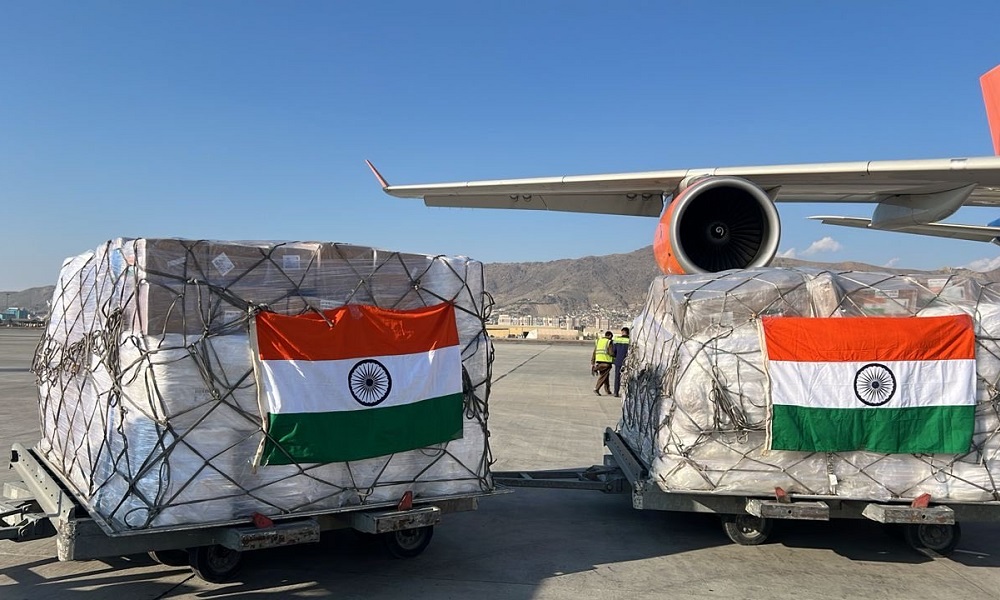
Randhir Jaiswal, spokesperson for India’s Ministry of External Affairs, announced on Friday that a 2.5-ton consignment, including emergency medicines, medical disposables, kits, and equipment has been delivered to Kabul.
According to him, the aid shipment is intended to support the swift recovery of those injured in the recent airstrike by Pakistan’s military regime.
He emphasized that India stands with the people of Afghanistan and will continue to provide all possible humanitarian assistance.
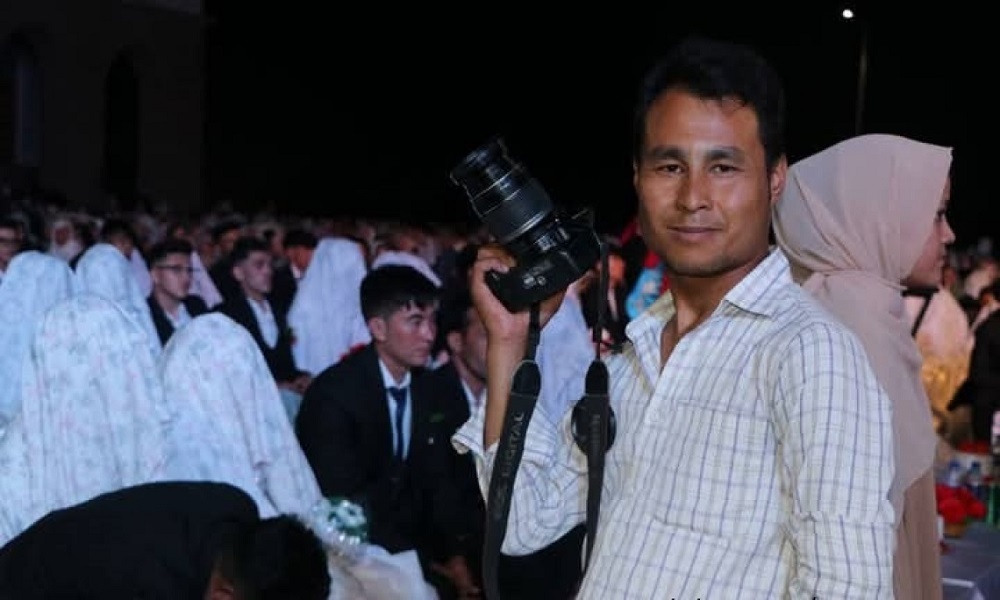
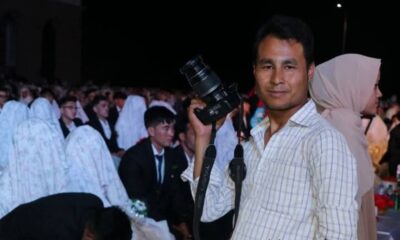
The Afghanistan Journalists Center (AFJC) has announced that Mahdi Ansary, a reporter for the Afghan News Agency (AFKA), has been released after serving one and a half years in Bagram prison.
In a statement welcoming his release, AFJC emphasized that the fundamental rights of this journalist—who had been tried and imprisoned on charges of cooperating with exiled and foreign media—were “seriously” violated.
Ansari was arrested on October 5, 2023, after returning from his workplace in Kabul.
He was sentenced on January 1, 2024 by the Kabul Primary Court to one and a half years in prison on charges of “propaganda against the Islamic Emirate.”
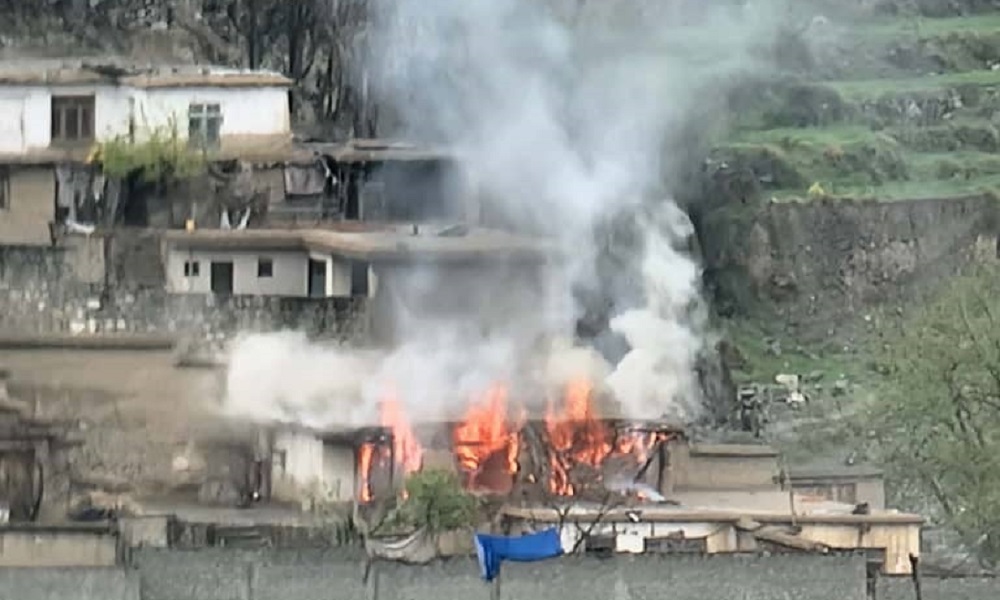
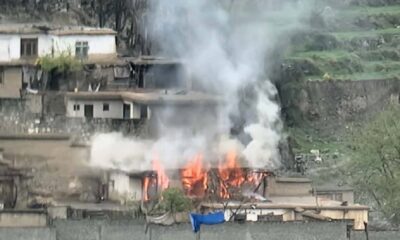
Farid Dehqan, spokesperson for the Khas Kunar police command, said that rocket attacks by the Pakistani military regime are still ongoing in the province.
These attacks come despite earlier announcements by the Pakistani military of a temporary ceasefire for Eid.


Tawsia: Assessment of Afghanistan’s economic activities in 1404

India sends 2.5-ton medical shipment to Afghanistan

Trump compares Iran strikes to Pearl Harbor in meeting with Japan’s leader

Afghanistan national buzkashi falls short in Kokpar World Championship semifinals

Mahdi Ansary, local journalist, released from prison

Pakistani military jet downed in Afghanistan’s Jalalabad, pilot captured alive

Afghan Air Force conducts airstrikes in Islamabad, other cities

Afghanistan welcomes investment and technology partnerships with India

Prominent Muslim scholar issues fatwa calling for Afghanistan-Pakistan ceasefire

Afghan air force strikes key Pakistani military installations in retaliatory operation
Tawsia: Assessment of Afghanistan’s economic activities in 1404

Tahawol: Temporary ceasefire draws broad support

Saar: Emphasis on resolving conflicts through diplomacy

Tahawol: Global reactions to Pakistan’s recent attacks discussed

Saar: Consequences of Pakistani airstrikes on Afghans discussed
-
 Latest News4 days ago
IEA Supreme Leader issues Eid-ul-Fitr message urging unity and support for Islamic system
-

 Business4 days ago
Turkmenistan, Afghanistan discuss steps to speed up land acquisition for TAPI pipeline
-
 Latest News2 days ago
IEA announces temporary pause in defensive operations against Pakistan for Eid
-
 Latest News2 days ago
Pakistan opposes normal Afghanistan–India relations: Shaheen
-
 Sport3 days ago
Afghanistan national buzkashi team defeats Hungary 14–0
-
 Latest News5 days ago
CAIR-Texas calls for probe after Afghan refugee dies in ICE custody
-
 Latest News4 days ago
IEA condemns alleged airstrike by Pakistan on drug treatment hospital in Kabul
-
 Latest News3 days ago
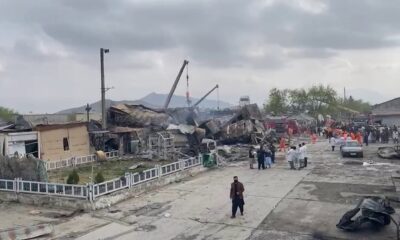
Afghanistan warns Pakistan of ‘teeth-breaking’ response after deadly Kabul bombing