
Regional
Iran sends Russia hundreds of ballistic missiles

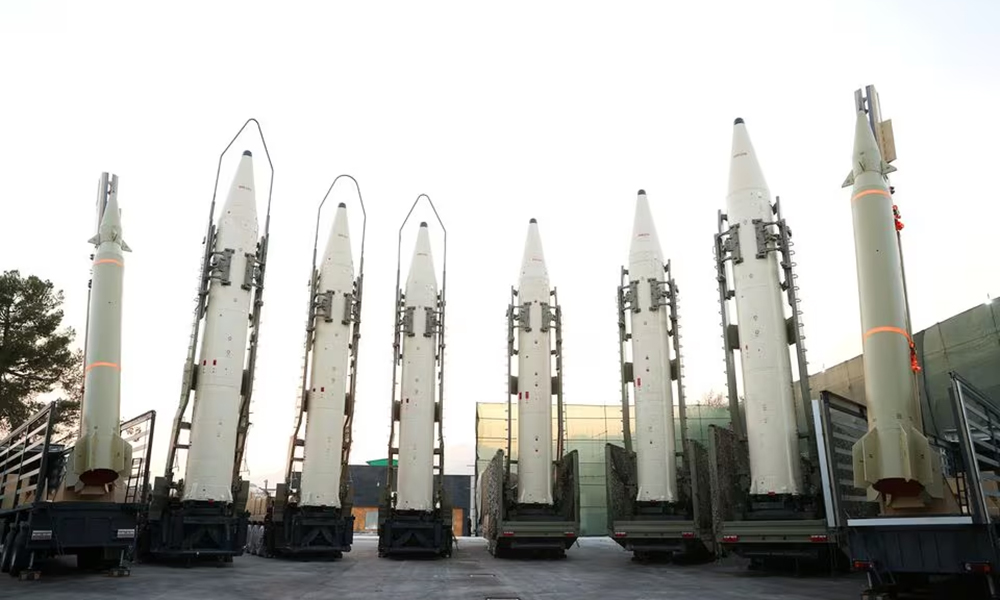
Iran has provided Russia with a large number of powerful surface-to-surface ballistic missiles, six sources told Reuters, deepening the military cooperation between the two U.S.-sanctioned countries, Reuters reported.
Iran’s provision of around 400 missiles includes many from the Fateh-110 family of short-range ballistic weapons, such as the Zolfaghar, three Iranian sources said. This road-mobile missile is capable of striking targets at a distance of between 300 and 700 km (186 and 435 miles), experts say.
Iran’s defence ministry and the Revolutionary Guards – an elite force that oversees Iran’s ballistic missile programme – declined to comment. Russia’s defence ministry did not immediately respond to a request for comment.
The shipments began in early January after a deal was finalised in meetings late last year between Iranian and Russian military and security officials that took place in Tehran and Moscow, one of the Iranian sources said.
An Iranian military official – who, like the other sources, asked not to be identified because of the sensitivity of the information – said there had been at least four shipments of missiles and there would be more in the coming weeks. He declined to provide further details.
Another senior Iranian official said some of the missiles were sent to Russia by ship via the Caspian Sea, while others were transported by plane, read the report.
“There will be more shipments,” the second Iranian official said. “There is no reason to hide it. We are allowed to export weapons to any country that we wish to.”
U.N. Security Council restrictions on Iran’s export of some missiles, drones and other technologies expired in October. However, the United States and European Union retained sanctions on Iran’s ballistic missile programme amid concerns over exports of weapons to its proxies in the Middle East and to Russia.
A fourth source, familiar with the matter, confirmed that Russia had received a large number of missiles from Iran recently, without providing further details.
White House national security spokesperson John Kirby said in early January the United States was concerned that Russia was close to acquiring short-range ballistic weapons from Iran, in addition to missiles already sourced from North Korea.
A U.S. official told Reuters that Washington had seen evidence of talks actively advancing but no indication yet of deliveries having taken place.
The Pentagon did not immediately respond to a request for comment on the missile deliveries.
Ukraine’s top prosecutor said on Friday the ballistic missiles supplied by North Korea to Russia had proven unreliable on the battlefield, with only two of 24 hitting their targets. Moscow and Pyongyang have both denied that North Korea has provided Russia with munitions used in Ukraine.
By contrast, Jeffrey Lewis, an expert with the Middlebury Institute of International Studies at Monterey, said the Fateh-110 family of missiles and the Zolfaghar were precision weapons.
“They are used to point at things that are high value and need precise damage,” said Lewis, adding that 400 munitions could inflict considerable harm if used in Ukraine. He noted, however, that Russian bombardments were already “pretty brutal”.
A Ukrainian military source told Reuters that Kyiv had not registered any use of Iranian ballistic missiles by Russian forces in the conflict. The Ukrainian defence ministry did not immediately reply to Reuters’ request for comment.
Following the publication of this story, a spokesperson for Ukraine’s Air Force told national television that it had no official information on Russia obtaining such missiles. He said that ballistic missiles would pose a serious threat to Ukraine.
Former Ukrainian defence minister Andriy Zagorodnyuk said that Russia wanted to supplement its missile arsenal at a time when delays in approving a major package of U.S. military aid in Congress has left Ukraine short of ammunition and other material.
“The lack of U.S. support means shortages of ground-based air defence in Ukraine. So they want to accumulate a mass of rockets and break through Ukrainian air defence,” said Zagorodnyuk, who chairs the Kyiv-based Centre for Defence Strategies, a security think tank, and advises the government.
Kyiv has repeatedly asked Tehran to stop supplying Shahed drones to Russia, which have become a staple of Moscow’s long-range assaults on Ukrainian cities and infrastructure, alongside an array of missiles.
Ukraine’s air force said in December that Russia had launched 3,700 Shahed drones during the war, which can fly hundreds of kilometres and explode on impact. Ukrainians call them “mopeds” because of the distinctive sound of their engines; air defences down dozens of them each week.
Iran initially denied supplying drones to Russia but months later said it had provided a small number before Moscow launched the war on Ukraine in 2022.
“Those who accuse Iran of providing weapons to one of the sides in the Ukraine war are doing so for political purposes,” Iranian Foreign Ministry spokesperson Nasser Kanaani said on Monday, when asked about Tehran’s delivery of drones to Russia. “We have not given any drones to take part in that war.”
Rob Lee, a senior fellow at the Foreign Policy Research Institute, a Philadelphia-based think tank, said a supply of Fateh-100 and Zolfaghar missiles from Iran would hand Russia an even greater advantage on the battlefield.
“They could be used to strike military targets at operational depths, and ballistic missiles are more difficult for Ukrainian air defences to intercept,” Lee said.
Iran’s hardline clerical rulers have steadily sought to deepen ties with Russia and China, betting that would help Tehran to resist U.S. sanctions and to end its political isolation.
Defence cooperation between Iran and Russia has intensified since Moscow sent tens of thousands of troops into Ukraine in February 2022.
Russia’s Defence Minister Sergei Shoigu met the head of Iran’s Revolutionary Guards Aerospace Force, Amirali Hajizadeh, in Tehran in September, when Iran’s drones, missiles and air defence systems were displayed for him, Iranian state media reported.
And last month, Russia’s foreign ministry said it expected President Vladimir Putin and his Iranian counterpart Ebrahim Raisi to sign a broad new cooperation treaty soon, following talks in Moscow in December.
“This military partnership with Russia has shown the world Iran’s defence capabilities,” said the military official. “It does not mean we are taking sides with Russia in the Ukraine conflict.”
The stakes are high for Iran’s clerical rulers amid the war between Israel and Palestinian Islamist group Hamas that erupted after Oct. 7. They also face growing dissent at home over economic woes and social restrictions.
While Tehran tries to avoid a direct confrontation with Israel that could draw in the United States, its Axis of Resistance allies – including Hezbollah in Lebanon and the Houthis in Yemen – have attacked Israeli and U.S. targets.
A Western diplomat briefed on the matter confirmed the delivery of Iranian ballistic missiles to Russia in the recent weeks, without providing more details, Reuters reported.
He said Western nations were concerned that Russia’s reciprocal transfer of weapons to Iran could strengthen its position in any possible conflict with the United States and Israel.
Iran said in November it had finalised arrangements for Russia to provide it with Su-35 fighter jets, Mi-28 attack helicopters and Yak-130 pilot training aircraft.
Analyst Gregory Brew at Eurasia Group, a political risk consultancy, said Russia is an ally of convenience for Iran.
“The relationship is transactional: in exchange for drones, Iran expects more security cooperation and advanced weaponry, particularly modern aircraft,” he said.





Regional
Pakistan to host talks with Saudi Arabia, Turkey, Egypt amid Iran war diplomacy
Turkish Foreign Minister Hakan Fidan said the meeting would seek to establish a mechanism aimed at de-escalation.
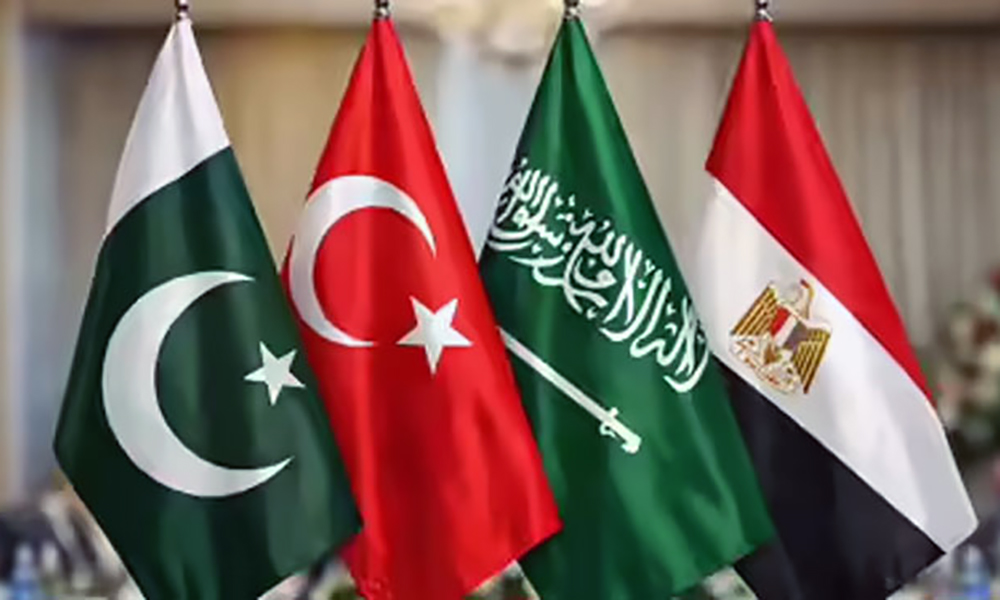
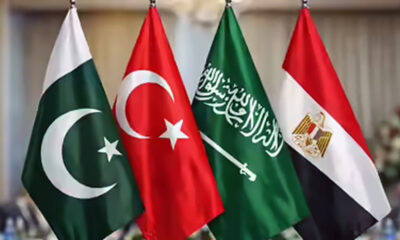
Pakistan will host Saudi Arabia, Turkey and Egypt for talks from Sunday on the Iran war as Islamabad positions itself as a potential venue for U.S.-Iran negotiations on the month-old conflict, Reuters reported.
The four countries’ foreign ministers will hold “in-depth discussions on a range of issues, including efforts to de-escalate tensions in the region” during the two-day talks, Pakistan’s foreign ministry said in a statement on Saturday.
Turkish Foreign Minister Hakan Fidan said the meeting would seek to establish a mechanism aimed at de-escalation.
“We would discuss where the negotiations in this war are heading and how these four countries assess the situation and what can be done,” he told broadcaster A Haber late on Friday.
The four nations have been involved in trying to mediate between Washington and Tehran in the war launched by the U.S. and Israel on February 28, and all are acutely vulnerable to threats to energy supplies and trade routes.
Pakistan has conveyed to Tehran a U.S. proposal for ending the war and offered to host talks, with Iranian officials indicating any negotiations could take place in Pakistan or Turkey.
U.S. President Donald Trump has said talks with Iran were going “very well,” but Tehran denies talking with Washington.
Iran has been reviewing the 15-point U.S. proposal, although one official has dismissed it as “one-sided and unfair”. Its demands range from dismantling Iran’s nuclear programme to curbing its missile development and effectively handing over control of the Strait of Hormuz, according to sources and reports.
Turkey’s Fidan told an Istanbul conference on Saturday that the world’s new “polycentric system” requires a solution to guarding vital energy and trade routes. He said Turkey’s high-level dialogue aims to swiftly chart out “actionable steps” to end the war before there is further destruction to the region and global economy.
Regional
Twelve US troops wounded in Iran strike on base in Saudi Arabia, US official says
Earlier on Friday, the U.S. military said 273 of them had already returned to duty. Thirteen U.S. troops have been killed in the conflict.

Twelve U.S. troops were wounded, two of them seriously, in an Iranian military strike on Prince Sultan Air Base in Saudi Arabia, a U.S. official told Reuters on Friday.
The latest casualties add to the more than 300 U.S. military service members who have been wounded since the war against Iran started on February 28.
Earlier on Friday, the U.S. military said 273 of them had already returned to duty. Thirteen U.S. troops have been killed in the conflict.
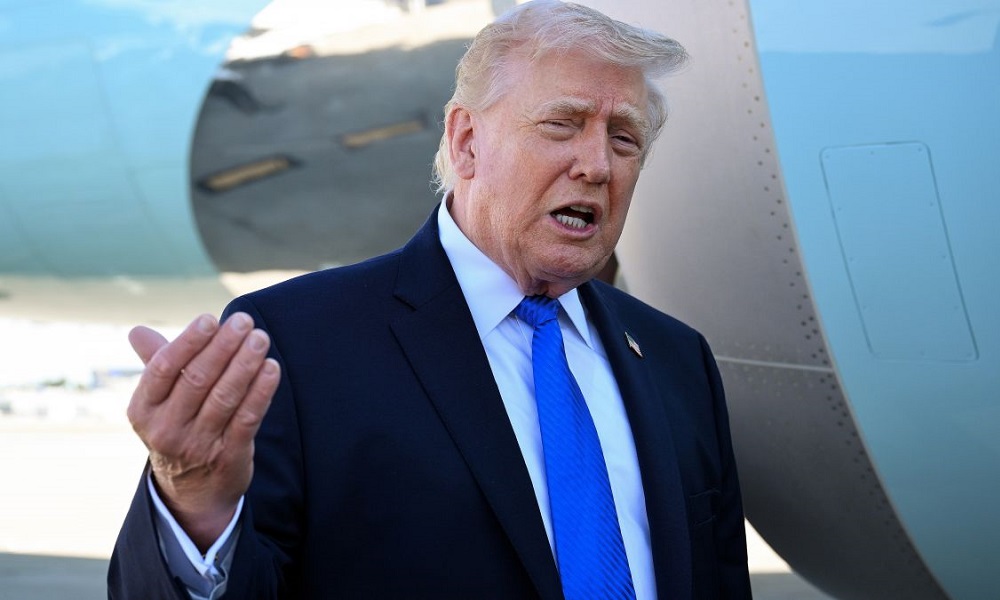
U.S. President Donald Trump announced a new extension of his deadline for Iran to reopen the Strait of Hormuz or face the destruction of its energy plants, after Iran rejected his 15-point proposal to end the war he launched with Israel.
Iran gave no direct indication that it was ready for negotiation or compromise. The Islamic Revolutionary Guard Corps issued a statement reaffirming that all shipping “to and from ports of allies and supporters of the Israeli-American enemies” to any destination was prohibited.
The war has spread across the Middle East, killing thousands of people and causing the biggest disruption in history to energy supplies, hitting the global economy with soaring oil, gas and fertiliser prices that have fuelled inflation fears.
The U.S. and Israel launched strikes on Iran on February 28 during talks with Tehran about its nuclear programme that had not yet yielded a deal. Attacks on Israel by Iran’s Lebanese ally Hezbollah then triggered an Israeli onslaught there that has displaced a fifth of Lebanon’s population.
On Thursday, Trump threatened during a cabinet meeting to increase pressure on Iran if it did not make a deal. He later posted on social media that he would pause threatened attacks on Iranian energy plants for 10 days until April 6 at 8 p.m. Eastern daylight time (0000 GMT on April 7).
“Talks are ongoing and, despite erroneous statements to the contrary by the Fake News Media, and others, they are going very well,” he added in his Truth Social post.


Kohli shines as RCB open IPL title defence with dominant win

Pakistan to host talks with Saudi Arabia, Turkey, Egypt amid Iran war diplomacy

Tahawol: Concerns over spread of Middle East crisis discussed

Saar: Weakening relations between Kabul and Washington discussed

High-level Uzbek delegation arrives in Kabul to boost bilateral trade

Pakistani military jet downed in Afghanistan’s Jalalabad, pilot captured alive

Afghan Air Force conducts airstrikes in Islamabad, other cities

Prominent Muslim scholar issues fatwa calling for Afghanistan-Pakistan ceasefire

Afghan air force strikes key Pakistani military installations in retaliatory operation

IEA: Special circle in Pakistan has launched mission to destabilize region
Tahawol: Concerns over spread of Middle East crisis discussed
Saar: Weakening relations between Kabul and Washington discussed

Exclusive interview with Indrika Ratwatte, Deputy UN Special Representative for Afghanistan

Tawsia: Efforts to boost Afghanistan’s domestic production and economic diplomacy

Tahawol: Discussion on day 27 of Iran–US war
-
 Latest News3 days ago
Tajikistan shifts stance on Afghanistan amid rising border tensions
-
 Latest News5 days ago
Around 2.3 million tourists visited Afghanistan’s recreational areas during Eid: Ghufran
-

 Sport5 days ago
Afghanistan squad hit by withdrawals ahead of AFC Asian Cup Qualifiers
-
 Latest News5 days ago
Islamic Emirate releases American prisoner Dennis Coyle
-
 Latest News2 days ago
Russia deems US military presence in Afghanistan unacceptable
-
 Latest News4 days ago
Two civilians killed, eight injured in fresh shelling by Pakistan in Kunar
-
 Latest News2 days ago
IEA says Iranian drivers no longer need visas to enter Afghanistan
-
 Regional5 days ago
US allies in Middle East ‘edging closer’ to joining conflict