
World
Iran, US end nuclear talks in Rome, agree to meet next week


Iran and the United States agreed on Saturday to hold another round of talks next week over Tehran’s nuclear ambitions, Iranian state TV reported, as they ended their second round of negotiations in Rome over their decades-long standoff.
Iran’s Foreign Minister Abbas Araqchi and President Donald Trump’s Middle East envoy Steve Witkoff negotiated indirectly through an Omani official who will shuttle messages between the two sides, Iranian officials said, a week after a first round of indirect talks in Muscat that both sides described as constructive.
Araqchi and Witkoff interacted briefly at the end of the first round, but officials from the two countries have not held direct negotiations since 2015 under former U.S. President Barack Obama.
Araqchi, in a meeting with his Italian counterpart ahead of the talks, said Iran had always been committed to diplomacy and called on “all parties involved in the talks to seize the opportunity to reach a reasonable and logical nuclear deal”.
“Such an agreement should respect Iran’s legitimate rights and lead to the lifting of unjust sanctions on the country while addressing any doubts about its nuclear work,” Araqchi was quoted as saying by Iranian state media.
He said in Moscow on Friday that Iran believes reaching an agreement on its nuclear programme with the U.S. is possible as long as Washington is realistic.
“Rome becomes the capital of peace and dialogue,” Italian Foreign Minister Antonio Tajani wrote on X. “I encouraged (Araqchi) to follow the path of negotiation against nuclear arms. The hope of the Italian government is that all together may find a positive solution for the Middle East.”
Tehran has however sought to tamp down expectations of a quick deal, after some Iranian officials speculated that sanctions could be lifted soon. Iran’s utmost authority, Supreme Leader Ayatollah Ali Khamenei, said this week he was “neither overly optimistic nor pessimistic”.
For his part, Trump told reporters on Friday: “I’m for stopping Iran, very simply, from having a nuclear weapon. They can’t have a nuclear weapon. I want Iran to be great and prosperous and terrific.”
Meanwhile, Israel has not ruled out an attack on Iran’s nuclear facilities in the coming months, according to an Israeli official and two other people familiar with the matter.
Trump, who ditched a 2015 nuclear pact between Iran and six powers during his first term in 2018 and reimposed crippling sanctions on Tehran, has revived his “maximum pressure” campaign on the country since returning to the White House in January.
Washington wants Iran to halt production of highly enriched uranium, which it believes is aimed at building an atomic bomb.
Tehran, which has always maintained its nuclear programme is peaceful, says it is willing to negotiate some curbs in return for the lifting of sanctions, but wants watertight guarantees that Washington will not renege again.
Since 2019, Iran has breached and far surpassed the 2015 deal’s limits on its uranium enrichment, producing stocks far above what the West says is necessary for a civilian energy programme.
A senior Iranian official, who described Iran’s negotiating position on condition of anonymity, listed its red lines as never agreeing to dismantle its uranium enriching centrifuges, halt enrichment altogether or reduce its enriched uranium stockpile below levels agreed in the 2015 deal.
Iran also rejects negotiating about defence capabilities such as its ballistic missile program and the range of Tehran’s domestically-produced missiles.
Russia, a party to Iran’s 2015 nuclear agreement, has offered “to assist, mediate, and play any role” that will be beneficial to Iran and the U.S..
(Reuters)





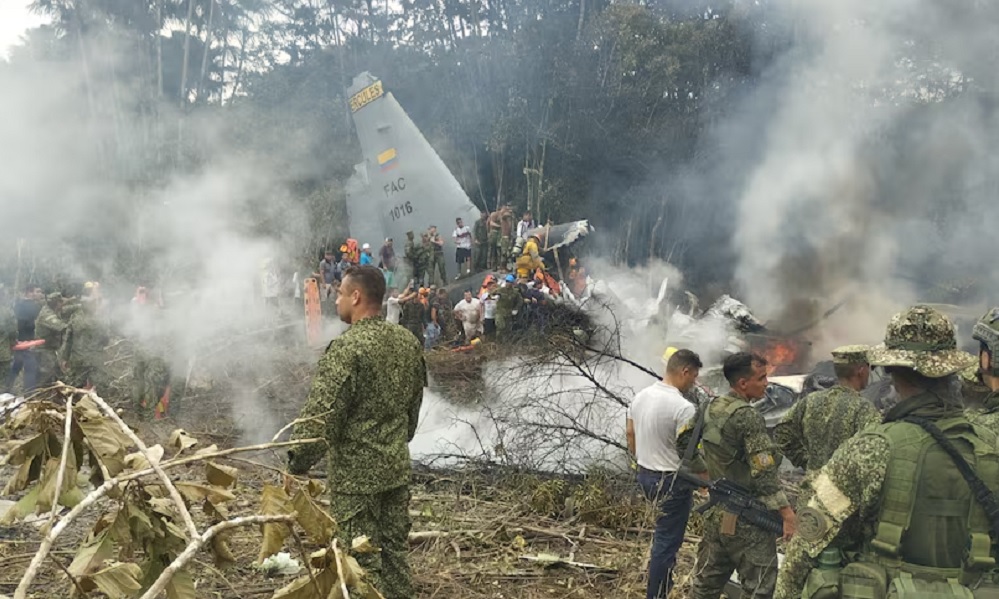
A Colombian military plane crashed in a takeoff disaster on Monday, killing 66 people as rescuers shuttled dozens of survivors to nearby hospitals and searched for four who were still missing, according to a top official.
The Lockheed Martin-built Hercules C-130 transport plane was carrying 128 people, including 11 Air Force members, 115 army personnel and two national police officers, according to Hugo Alejandro Lopez, head of the nation’s armed forces, Reuters reported.
The death toll was nearly double that of the previous figure given by authorities, who continued search and recovery efforts at the site of the deadly crash.
The accident occurred as the plane was taking off from Puerto Leguizamo, on the border with Peru, Defense Minister Pedro Sanchez said on X.
The plane was believed to have suffered an impact near the end of the runway as it was taking off, firefighter Eduardo San Juan Callejas told Caracol, with a wing of the plane later clipping a tree as it was plummeting.
The crash caused the plane to catch fire and detonate some sort of explosive devices on board, he added.
Residents of the remote area were the first to pull out survivors, with videos showing men speeding down a dirt road with wounded soldiers on the back of their motorcycles.
Military vehicles later arrived, though authorities said the crash site was difficult to reach, impeding rescue efforts.
Lopez said that 57 of the survivors had been hospitalized, with 30 of them in non-serious condition at a military clinic.
MODERNIZING THE MILITARY
President Gustavo Petro, in the twilight of his administration, on Monday criticized bureaucratic obstacles for delaying his plans to modernize the military.
“I will grant no further delays; it is the lives of our young people that are at stake,” he said in a post on X. “If civilian or military administrative officials are not up to this challenge, they must be removed.”
Several candidates in Colombia’s upcoming May 31 presidential election offered condolences and called for an investigation.
A spokesperson for Lockheed Martin said the company was committed to helping Colombia as it investigates the incident.
Hercules C-130 planes were first launched in the 1950s and Colombia acquired its first models in the late 1960s. It has more recently modernized some older C-130s with newer models sent from the U.S. under a provision that allows for the transfer of used or surplus military equipment.
Hercules C-130s are frequently used in Colombia to transport troops as part of the military’s operations amid a six-decade-long internal conflict that has claimed more than 450,000 lives.
The tail number of the plane that crashed on Monday matches that of the first of three planes delivered by the U.S. to Colombia in recent years.
At the end of February, another Hercules C-130 belonging to the Bolivian Air Force crashed in the populous city of El Alto, barely missing a residential block.
More than 20 people died in that incident and another 30 were injured, and banknotes from the plane’s cargo scattered around the crash site, prompting clashes between residents and security forces.
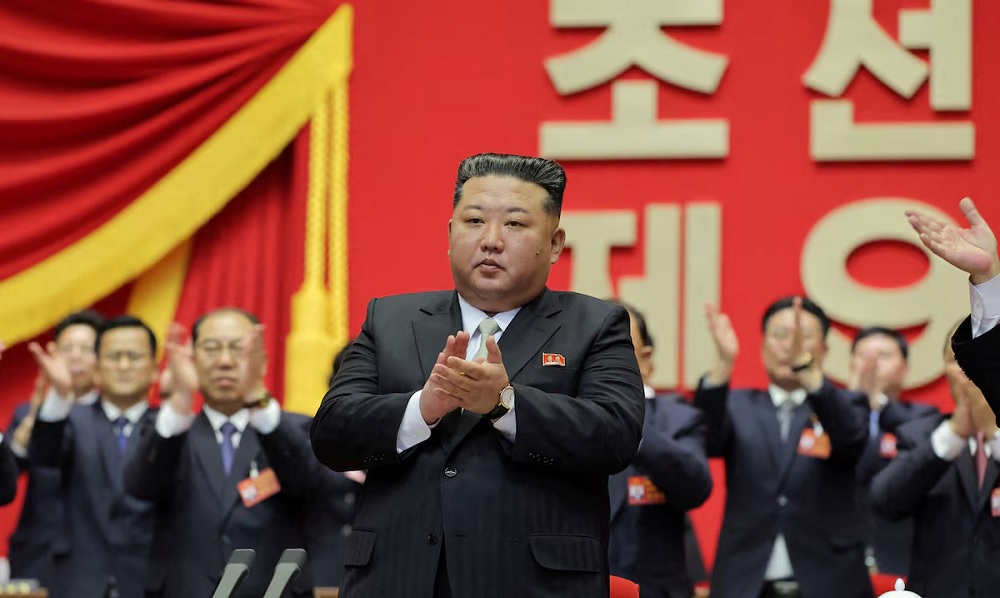
North Korean leader Kim Jong Un was reappointed as president of state affairs, state media KCNA reported on Monday, after the isolated nation convened the first session of its Supreme People’s Assembly a day earlier.
The meeting in Pyongyang will discuss amendments and supplements to the socialist constitution, as well as the election of the chairman of the State Affairs Commission and other state leadership bodies, Reuters reported.
The assembly, North Korea’s rubber-stamp legislature that formally approves state policy, typically meets following a ruling Workers’ Party Congress to turn party decisions into law.
The meeting will also review the country’s economic five-year plan announced at the ninth party congress held in February, KCNA said.
Attention has been focused on whether Pyongyang will revise its constitution to formalise leader Kim Jong Un’s “two hostile states” policy toward South Korea.
In recent years, Kim has abandoned Pyongyang’s long-standing goal of peaceful reunification and redefined the South as a hostile state.
Kim’s powerful sister, Kim Yo Jong, was notably absent from KCNA’s list of members of the State Affairs Commission, the country’s highest leadership body, on which she had served since 2021.
South Korea’s Unification Ministry said it was looking into why she was no longer listed, but analysts said the move did not necessarily signal a loss of influence.
“Her absence suggests not a decline in status but a strategic division of roles,” said Lim Eul-chul, a professor at Kyungnam University, adding that the younger Kim continues to wield real power as a department director in the ruling Workers’ Party, where she may play a higher-level, party-centred role coordinating policy.
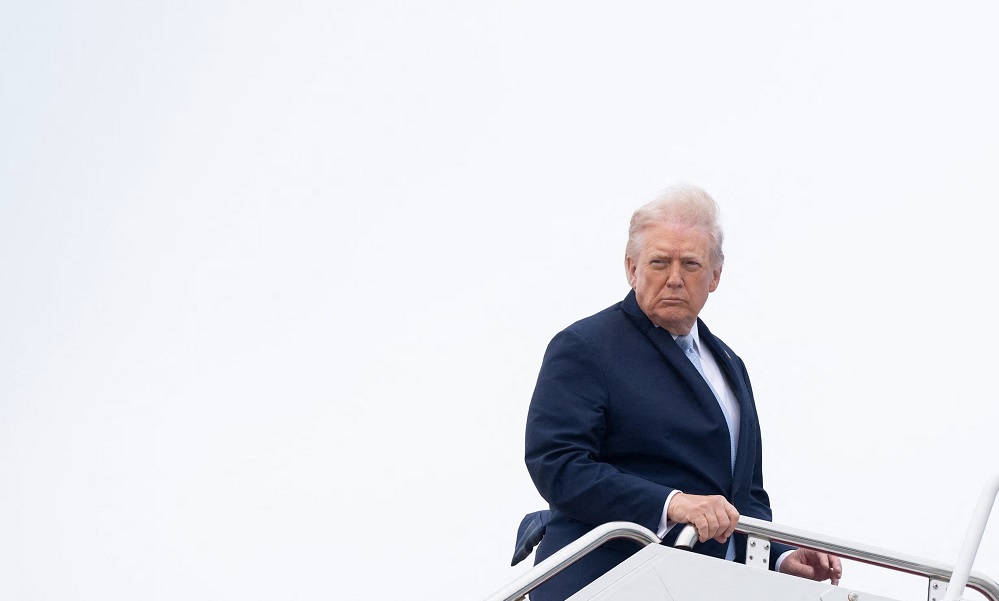
U.S. President Donald Trump on Saturday threatened to “obliterate” Iran’s power plants if Tehran does not fully reopen the Strait of Hormuz within 48 hours, a significant escalation barely a day after he talked about “winding down” the war.
“If Iran doesn’t FULLY OPEN, WITHOUT THREAT, the Strait of Hormuz, within 48 HOURS from this exact point in time, the United States of America will hit and obliterate their various POWER PLANTS, STARTING WITH THE BIGGEST ONE FIRST!” Trump said on social media, Reuters reported.
Trump’s ultimatum would expand the scope of U.S. strikes to infrastructure that affects daily civilian life in Iran.
The threat of Iranian attacks has kept most ships from getting through the strait, a narrow waterway that serves as the conduit for around a fifth of global oil and liquefied natural gas supplies, threatening a global energy shock. Its near-closure sent European gas prices surging as much as 35% last week.
Iran’s Khatam al-Anbiya military command headquarters said Sunday that if the U.S. attacks Iran’s fuel and energy infrastructure, then Iran would target all U.S. energy, information technology and desalination infrastructure in the region.
Energy prices spiked last week after Iran responded to an Israeli attack on its major gas field by hitting Qatar’s Ras Laffan Industrial City, which processes around a fifth of the world’s liquefied natural gas, causing damage that will take years to repair.
The threats to Gulf infrastructure came as the conflict entered dangerous new territory.
Israeli officials said Iranian forces had for the first time fired long-range missiles, expanding the risk of attacks beyond the Middle East, even as an Iranian strike injured dozens of people not far from Israel’s nuclear site.
Iran launched two ballistic missiles with a range of 4,000 km (2,500 miles) at the U.S.-British military base at Diego Garcia in the Indian Ocean, Israeli military chief Eyal Zamir said. The Israeli military said it was the first time Iran had used long-range missiles since the United States and Israel began attacking Iran on February 28.
“These missiles are not intended to strike Israel. Their range reaches European capitals – Berlin, Paris, and Rome are all within direct threat range,” Zamir said in a statement on Saturday.
A source at Britain’s defense ministry said the attack had occurred before the government gave specific authorization on Friday for the U.S. to use British military bases to carry out strikes on Iranian missile sites.
More than 2,000 people have been killed during the war. In Israel, 15 people have been killed in Iranian strikes.
TRUMP SENDS MIXED SIGNALS
Trump and his administration have sent mixed messages about U.S. goals throughout the war, now in its fourth week, leaving U.S. allies struggling to respond.
Trump’s ultimatum on Saturday was the most abrupt shift yet. Trump’s rhetoric pivoted from a drawdown to an explicit 48-hour countdown to strike Iran’s power infrastructure, even as U.S. Marines and heavy landing craft continue heading to the region.
Iran’s largest power plants include the Damavand power plant near Tehran (2,868 megawatts of capacity), the Kerman plant in southeastern Iran (1,910 MW), and the Ramin steam power plant in Khuzestan province (1,890 MW), according to industry and energy databases.
The country’s sole nuclear plant at Bushehr on Iran’s southern coast produces about 1,000 MW.
Earlier this month, Trump raised the idea of destroying Iran’s power grid even while downplaying the notion. “We could take apart their electric capacity within one hour, and it would take them 25 years to rebuild,” Trump told reporters on March 11. “So ideally, we’re not going to be doing that.”
U.S. voters appear increasingly concerned that the war could expand. Energy price shocks are fuelling inflation, hitting consumers and businesses hard, a major political liability for Trump as he seeks to justify the war to the public before November elections in which control of Congress is at stake.
Trump had also accused NATO allies of cowardice over their reluctance to help open the strait. Some allies have said they will consider it, but most say they are reluctant to join a war that Trump started without consulting them.
IRANIAN STRIKES HIT SOUTHERN ISRAEL
The Israeli military said on Sunday that it is conducting strikes in Tehran, hours after attacks on southern Israel.
Late on Saturday, Iranian missiles hit the southern Israeli cities of Dimona and Arad, injuring dozens of people, including children, in separate strikes. Iran’s Revolutionary Guards said in a statement early Sunday that they targeted “military installations” and security centers in southern Israel.
Israeli military spokesperson Brigadier General Effie Defrin said in a post on X that the country’s air defenses were functioning but did not intercept the strikes. “We will investigate the incident and learn from it,” he said.
Israel’s secretive nuclear reactor is about 13 km (8 miles) southeast of Dimona. Both cities lie near several military sites, including Nevatim Air Base, one of the country’s largest.
“This has been a very difficult evening in the battle for our future,” Israeli Prime Minister Benjamin Netanyahu said in a statement released by his office following the strike on Arad.
“We are determined to continue striking our enemies on all fronts,” the statement said.


Islamic Emirate releases American prisoner Dennis Coyle

UK announces additional £3 million in aid for vulnerable people in Afghanistan

Around 2.3 million tourists visited Afghanistan’s recreational areas during Eid: Ghufran

Berlin does not recognize IEA envoy as charge d’affaires of Afghan embassy

US allies in Middle East ‘edging closer’ to joining conflict

Pakistani military jet downed in Afghanistan’s Jalalabad, pilot captured alive

Afghan Air Force conducts airstrikes in Islamabad, other cities

Prominent Muslim scholar issues fatwa calling for Afghanistan-Pakistan ceasefire

Afghan air force strikes key Pakistani military installations in retaliatory operation

IEA: Special circle in Pakistan has launched mission to destabilize region

Tahawol: Possibility of US ground forces entering Iran war discussed

Saar: Using US prisoners as political pressure

Tahawol: Pakistan’s efforts to destabilise Afghanistan

Saar: Decline in international assistance to Afghanistan

Tawsia: Assessment of Afghanistan’s economic activities in 1404
-

 Sport4 days ago
Afghanistan national buzkashi falls short in Kokpar World Championship semifinals
-

 Sport3 days ago
Ireland to host Afghanistan for ODI series in August
-

 Latest News5 days ago
Security Sources: Pakistani military shelling in Kunar and Nuristan leaves female doctor dead
-
 Latest News3 days ago
Mojtaba Khamenei calls for improved Afghanistan–Pakistan relations, offers help
-

 Latest News2 days ago
Deadly violence likely without dialogue between Afghanistan and Pakistan: ICG
-

 Sport4 days ago
FIFA sanctions Israeli Football Association over discrimination violations
-

 Latest News3 days ago
Malaysian PM welcomes temporary Afghanistan–Pakistan truce, urges lasting peace
-
 Latest News4 days ago
IEA defense ministry accuses Pakistan of ceasefire violations