
Latest News
Islamic Emirate’s narcotics policy has ‘devastated’ livelihoods in rural areas: ICG
Farmers have lost an estimated $1.3 billion annually, or eight percent of GDP in 2023.

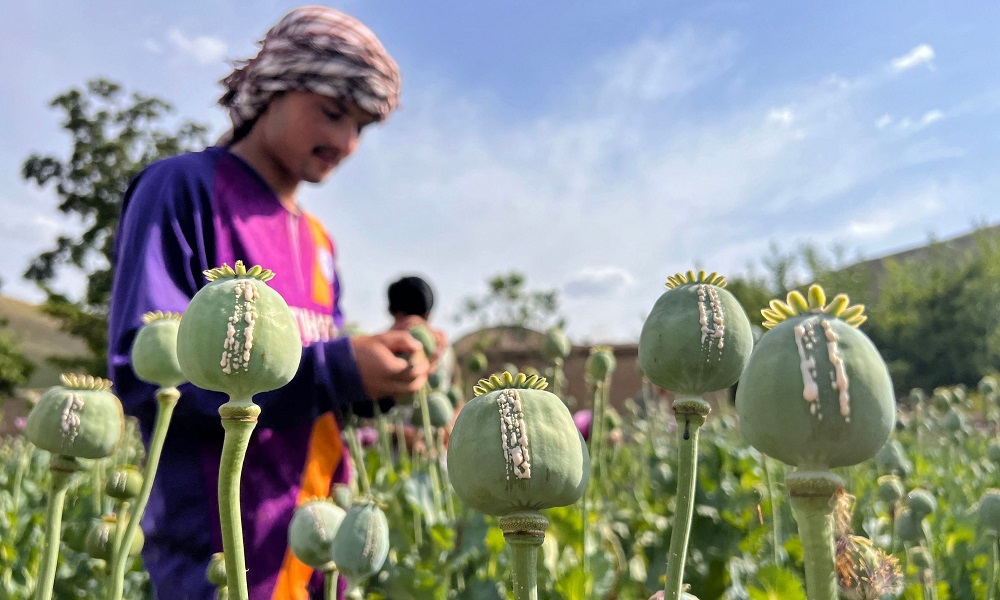
The International Crisis Group (ICG) has said the Islamic Emirate of Afghanistan’s (IEA) anti-drug policies provide an opportunity to stabilize the country’s economy although it has “devastated livelihoods in rural areas”.
ICG, an international think-tank, said in a report published Thursday, titled ‘Trouble In Afghanistan’s Opium Fields: The Taliban War On Drugs’, that the Islamic Emirate’s ban has been “one of the most successful poppy elimination efforts in modern history.”
Late last year, the UN Office on Drugs and Crime said opium cultivation fell throughout the country to just 10,800 hectares in 2023 from 233,000 hectares the previous year, slashing supply by 95 percent following the Islamic Emirate’s ban on all cultivation of opium poppy in April 2022.
However, the report warns that as long as rural Afghans lack alternative livelihood opportunities, the likelihood of large-scale displacement and rising emigration will remain high.
The international think tank, known for policymaking advisories, said: “Making the narcotics policy (of the interim administration) sustainable and equitable will require a multilateral effort between Afghanistan and the outside world.”
“In the meantime, the Taliban (IEA) should adopt more lenient measures as it implements its eradication campaign to enable the poorest farmers and those most impacted by the ban to gradually transition away from the poppy as a cash crop,” ICG stated.
“The anti-drug initiative is in many foreign actors’ interest, creating opportunities for donors to support Afghanistan’s economic stabilization” – ICG
However, legal crops will not offer sufficient employment, so the focus should be on job creation in non-farm industries, the group suggested.
ICG also stated that the ban’s future is uncertain; although the Islamic Emirate is adamant about implementing it, “it could collapse under the weight of economic hardship.”
“Foreign donors, who have much to gain from reduced drug production in Afghanistan, should harness the Taliban’s (IEA) zeal for counter-narcotics and encourage licit economic growth. In the meantime, the Taliban should consider the welfare of the poorest farmers and implement a phased approach to the ban.”
By UN estimates, the halt to opium farming has affected the livelihoods of almost seven million people and while underworld kingpins and big landowners have thrived under the ban, reaping the benefits of skyrocketing prices by selling stockpiles, many farmers have suffered.
Farmers have lost an estimated $1.3 billion annually, or eight percent of GDP in 2023.
Farm work remains the biggest source of employment for Afghan women and the ban has hit them especially hard and the economic shock has been compounded by the Islamic Emirate’s limited capacity to offer farmers and rural workers alternatives.
“Many switched to cultivating wheat or cotton, but struggle to make ends meet. Development of licit agriculture would require more irrigation, cold storage facilities and better roads. The Taliban does not have the budget to develop such infrastructure.
“Meanwhile, the opium price has soared, tempting farmers to flout the ban,” ICG said.
“While the Taliban’s measures have shaken the drug sector to its very foundations, the future of the ban remains in doubt.
“Some experts predict that its economic impact will force the Taliban to backtrack on a signature policy. Of course, it is also possible that the Taliban leadership will remain stubborn and steadfast,” ICG stated.
The group stated that support could focus on rural development, agricultural support, water conservation and investments in agro-processing.
“But the reality is that a drug-free agricultural sector will not provide enough jobs, so the country needs a development plan focusing more broadly on non-farm employment, including for women.”
ICG stated that a full transition away from the dependence on narcotics as a cash crop will take time. Instead, the Islamic Emirate “should show a bit of leniency.”
“Adopting more lenient practices such as turning a blind eye to small garden plots of poppy and cannabis would give the poorest farmers a better chance of survival in the coming years. Farmers selling tiny amounts of opium for prices hundreds of times higher than what is paid for other crops would give them a lifeline without jeopardizing the ban’s overall objectives,” the report stated.





A group of religious scholars from Afghanistan and Pakistan have called on authorities in both countries to extend the pause in hostilities, initially announced for Eid ul-Fitr, until Eid ul-Adha.
The appeal comes after Attaullah Tarar, Pakistan’s Information Minister, announced a temporary ceasefire from March 18–19 midnight until March 23–24 midnight.
In a joint statement signed by 11 Pakistani clerics and as many Afghan clerics, the scholars emphasized that their initiative aims to promote a sustainable and dignified resolution to tensions between Islamabad and Kabul, Dawn newspaper reported.
The clerics urged both Pakistani authorities and the Afghan side to extend the ceasefire to allow pilgrims to perform Hajj in a peaceful environment. They added that this “peace movement” goes beyond the ceasefire appeal and includes broader diplomatic and social efforts to resolve longstanding issues between the two countries.
The scholars expressed hope that their efforts would lead to a mutually acceptable solution and help lay the foundation for lasting stability and regional harmony.
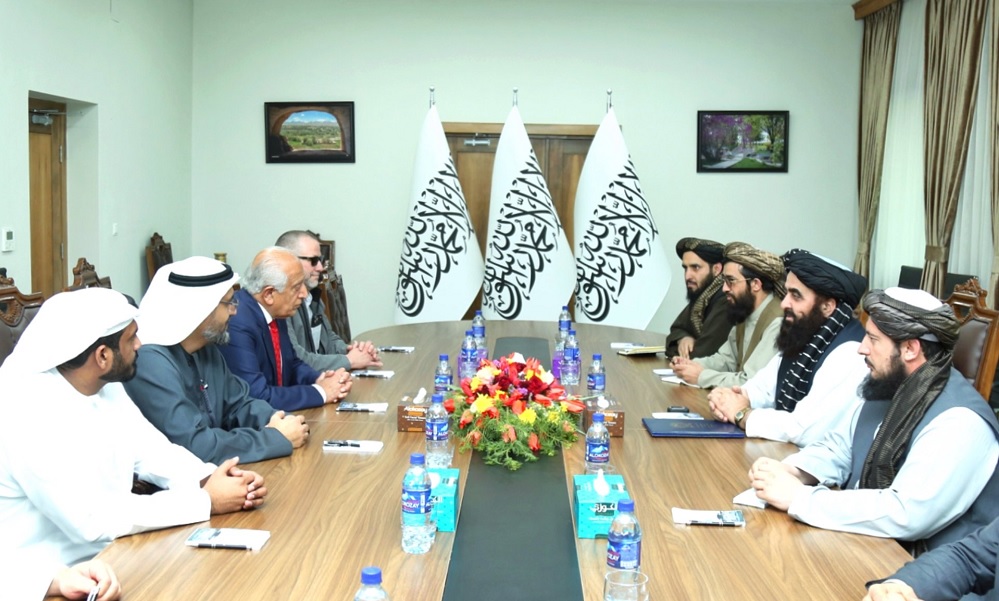
The Ministry of Foreign Affairs of the Islamic Emirate of Afghanistan announced on Tuesday the release of American citizen Dennis Coyle from prison.
According to the ministry, Coyle’s mother had written to the leader of the Islamic Emirate demanding amnesty and the release of her son on the occasion of Eid. The Supreme Court considered time served sufficient and decided to release him.
The Ministry of Foreign Affairs stated that this action was carried out on the basis of humanitarianism and good faith, and it believes that such measures can strengthen trust between countries. The ministry also expressed hope that both countries, in the future, can find solutions to remaining issues through mutual understanding and constructive dialogue.
The Islamic Emirate also expressed appreciation for the cooperation of the United Arab Emirates in this matter.
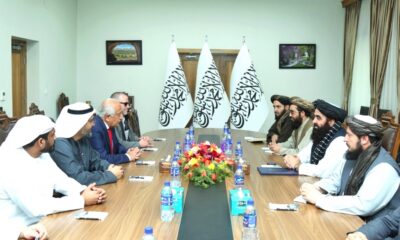
Separately, for Coyle’s release, an American delegation, including Zalmay Khalilzad, former U.S. Special Representative for Afghanistan, met on Tuesday with Amir Khan Muttaqi, the Foreign Minister of the Islamic Emirate.
The meeting was also attended by Saif Mohammed Al-Ketbi, Ambassador of the UAE in Kabul, and a member of the prisoner’s family.
According to the Ministry of Foreign Affairs, Muttaqi stated that the Islamic Emirate has not detained any citizen of any country to achieve political objectives; rather, detentions were the result of legal violations, and individuals were released after completing judicial procedures.
At the meeting, Khalilzad praised the action of the Islamic Emirate and emphasized the importance of continuing discussions on all issues between the two countries, expressing hope for further progress in the future.
Muttaqi also stressed that Kabul and the UAE should provide standard consular services to their citizens, and that the Afghan government is fully prepared in this regard.
He thanked Sheikh Mohamed bin Zayed Al Nahyan, President of the UAE, for their constructive role in facilitating the release of the prisoner and referred to the UAE as a close friend of Afghanistan.
Earlier, Muttaqi had also praised the role of the State of Qatar in facilitating information exchange between the Islamic Emirate and the prisoner’s family.
Additionally, the UAE ambassador expressed his country’s readiness to play a role in humanitarian institutions and called such developments beneficial for everyone.


Afghan, Pakistani clerics urge extension of ceasefire until Eid ul-Adha

Israel strikes Tehran as Trump says US negotiating to end war

Tahawol: Escalating threats between Iran-US discussed

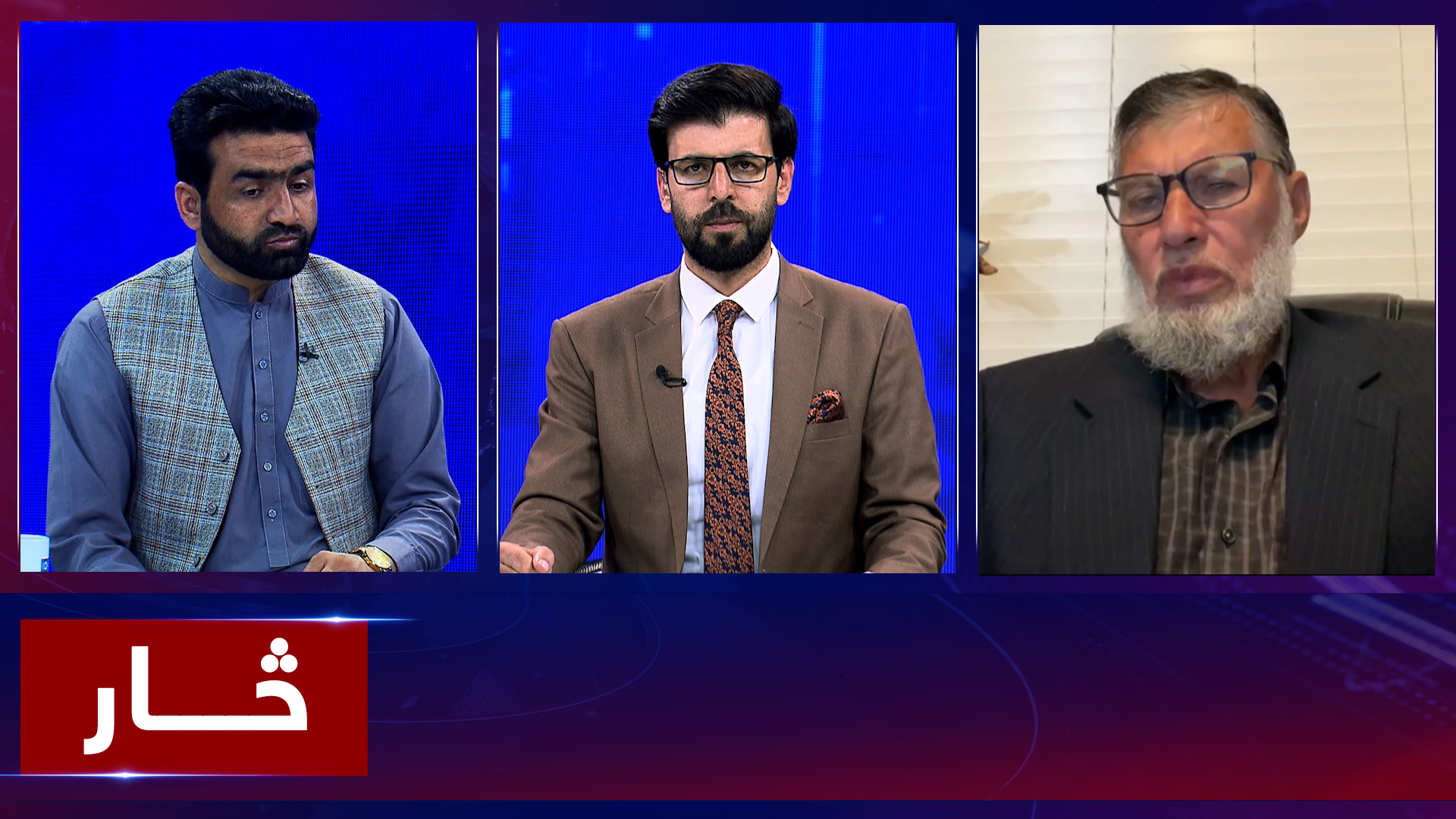
Saar: Discussion on criticism of Pakistan’s policies

Islamic Emirate releases American prisoner Dennis Coyle

Pakistani military jet downed in Afghanistan’s Jalalabad, pilot captured alive

Afghan Air Force conducts airstrikes in Islamabad, other cities

Prominent Muslim scholar issues fatwa calling for Afghanistan-Pakistan ceasefire

Afghan air force strikes key Pakistani military installations in retaliatory operation

IEA: Special circle in Pakistan has launched mission to destabilize region
Tahawol: Escalating threats between Iran-US discussed

Tahawol: Possibility of US ground forces entering Iran war discussed

Saar: Using US prisoners as political pressure

Tahawol: Pakistan’s efforts to destabilise Afghanistan

Saar: Decline in international assistance to Afghanistan
-

 Sport5 days ago
Afghanistan national buzkashi falls short in Kokpar World Championship semifinals
-

 Latest News3 days ago
Deadly violence likely without dialogue between Afghanistan and Pakistan: ICG
-
 Sport4 days ago
Ireland to host Afghanistan for ODI series in August
-
 Latest News4 days ago
Mojtaba Khamenei calls for improved Afghanistan–Pakistan relations, offers help
-
 Latest News4 days ago
Malaysian PM welcomes temporary Afghanistan–Pakistan truce, urges lasting peace
-

 Latest News2 days ago
Pakistan seeks Russian mediation to resolve Afghanistan tensions
-
 International Sports3 days ago
FIFA World Cup 2026: Play-Off Tournament takes centre stage
-
 Sport3 days ago
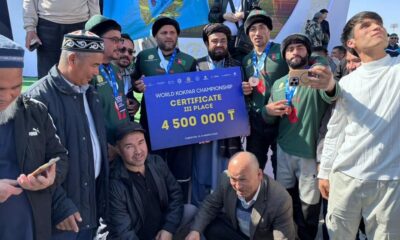
Afghanistan secures third place at 2026 World Kokpar Championship