
Regional
Manmohan Singh, India’s reluctant prime minister, dies aged 92


Described as a “reluctant king” in his first stint as prime minister, the soft-spoken Manmohan Singh, who died on Thursday at the age of 92, was arguably one of India’s most successful leaders.
Singh, the first Sikh to lead his nation, was prime minister from 2004 to 2014, serving a rare two terms. He had been undergoing care for age-related medical conditions, Reuters reported.
Singh is credited with steering India to unprecedented economic growth and lifting hundreds of millions out of dire poverty.
“India mourns the loss of one of its most distinguished leaders,” said Prime Minister Narendra Modi.
Born into a poor family in a part of British-ruled India now in Pakistan, Manmohan Singh studied by candlelight to win a place at Cambridge University before heading to Oxford, earning a doctorate with a thesis on the role of exports and free trade in India’s economy.
He became a respected economist, then India’s central bank governor and a government adviser, but had no apparent plans for a political career when he was suddenly tapped to become finance minister in 1991.
During that tenure to 1996, Singh was the architect of reforms that saved India’s economy from a severe balance of payments crisis and promoted deregulation, as well as other measures that opened an insular country to the world.
Famously quoting Victor Hugo in his first budget speech, he said: “No power on earth can stop an idea whose time has come,” before adding: “The emergence of India as a major economic power in the world happens to be one such idea.”
Singh’s ascension to prime minister in 2004 was even more unexpected.
He was asked to take on the job by Sonia Gandhi, who had led the centre-left Congress Party to a surprise victory. Italian by birth, she feared her ancestry would be used by Hindu-nationalist opponents to attack the government if she were to lead the country.
Riding an unprecedented period of economic growth, Singh’s government shared the spoils of India’s newfound wealth, introducing welfare schemes such as a jobs programme for the rural poor.
In 2008, his government also clinched a landmark deal that permitted peaceful trade in nuclear energy with the United States for the first time in three decades, paving the way for strong relations between New Delhi and Washington.
But his efforts to further open up the Indian economy were frequently frustrated by political wrangling within his own party and demands made by coalition partners.
‘HISTORY WILL BE KINDER TO ME’
While he was widely respected by other world leaders, at home Singh always had to fend off the perception that Sonia Gandhi was the real power in the government.
The widow of former prime minister Rajiv Gandhi, whose family has dominated Indian politics since independence from Britain in 1947, she remained Congress Party leader and often made key decisions.
Known for his simple lifestyle and with a reputation for honesty, Singh was not personally seen as corrupt. But he came under attack for failing to crack down on members of his government as a series of scandals erupted in his second term, triggering mass protests.
The latter years of his premiership saw the Indian growth story that he had helped engineer wobble as global economic turbulence and slow government decision-making battered investment sentiment.
In 2012, his government was tipped into a minority after the Congress Party’s biggest ally quit their coalition in protest at the entry of foreign supermarkets.
Two years later Congress was decisively swept aside by the Bharatiya Janata Party under Narendra Modi, a strongman who promised to end the economic standstill, clean up graft and bring inclusive growth to the hinterlands.
At a press conference not long before he left office, Singh insisted he had done the best he could.
“I honestly believe that history will be kinder to me than the contemporary media or, for that matter, the opposition parties in parliament,” he said.
Singh is survived by his wife and three daughters.



Regional
Trump backs down on strikes on Iran’s power network, says US and Tehran holding talks
Iranian attacks have effectively closed the Strait, which carries a fifth of global oil and liquefied natural gas.
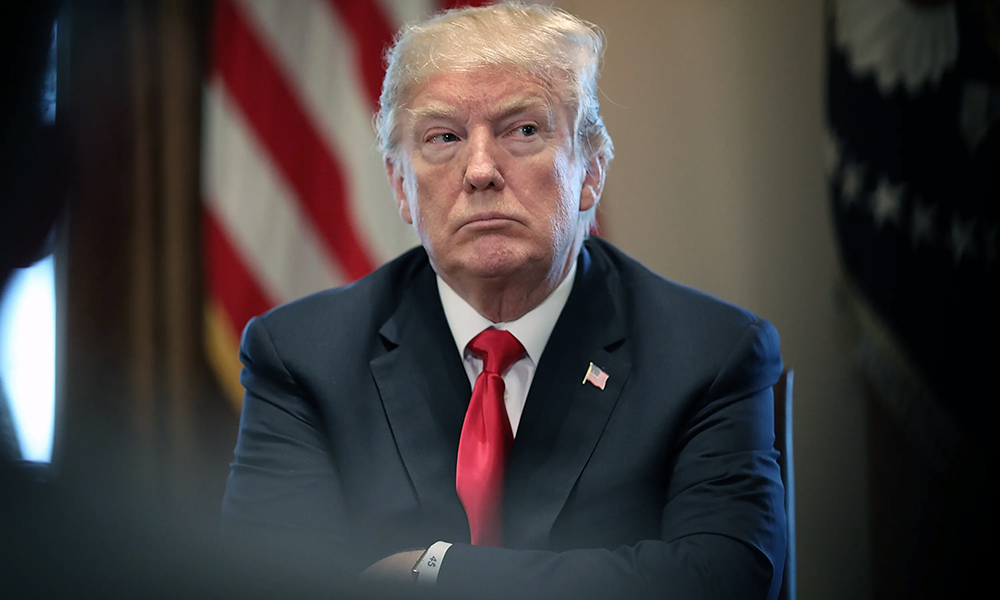
President Donald Trump backed down on targeting Iran’s power network on Monday, saying the U.S. and Iran have held constructive talks and that he would postpone any strikes on power plants and energy infrastructure, Reuters reported.
Trump’s statement came after Iran threatened to attack Israel’s power plants and those supplying U.S. bases across the Gulf region if the U.S. targets Iran’s power network.
The dollar plunged and stocks surged following Trump’s post.
The United States and Iran “have had, over the last two days, very good and productive conversations regarding a complete and total resolution of our hostilities in the Middle East,” Trump wrote in a post on Truth Social.
“I have instructed the Department of War to postpone any and all military strikes against Iranian power plants and energy infrastructure for a five-day period, subject to the success of the ongoing meetings and discussions.”
On Saturday, Trump warned that Iranian power plants would be destroyed if Tehran failed to “fully open” the Strait of Hormuz to all shipping within 48 hours. Trump set a deadline of around 7:44 p.m. EDT (2344 GMT) on Monday.
Iranian attacks have effectively closed the Strait, which carries a fifth of global oil and liquefied natural gas, read the report.
More than 2,000 people have been killed in the war the U.S. and Israel launched on February 28, which has upended markets, driven up fuel costs, fuelled global inflation fears and convulsed the postwar Western alliance.
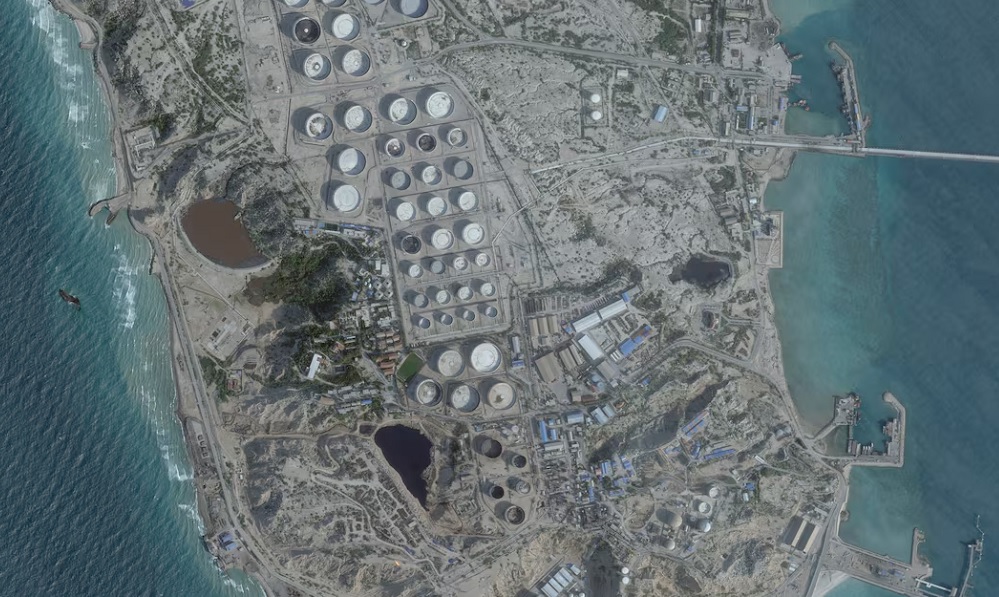
An attack on Iran’s southern coast and islands will lead to Gulf routes being cut with the laying of sea mines, the country’s Defence Council said on Monday according to state media, Reuters reported.
The U.S. is considering plans to occupy, opens new tab or blockade Iran’s Kharg Island, the country’s main oil export hub, to pressure Tehran to reopen the Strait of Hormuz to all shipping, according to Axios.
“Any attempt to attack Iran’s coasts or islands will cause all access routes in the Gulf (…) to be mined with various types of sea mines, including floating mines that can be released from the coast,” the statement read.
“In this case, the entire Gulf will practically be in a situation similar to the Strait of Hormuz for a long time (…) One should not forget the failure of more than 100 minesweepers in the 1980s in removing a few sea mines.”
The Defence Council recalled that non-belligerent states can only pass through the Strait of Hormuz by coordinating passage with Iran.
Regional
Iran says Hormuz open to all but ‘enemy-linked’ ships
The threat of Iranian attacks during the U.S.-Israeli war on Iran has kept most ships from getting through the narrow strait, the conduit for around a fifth of global oil and liquefied natural gas supplies, threatening a global energy shock.
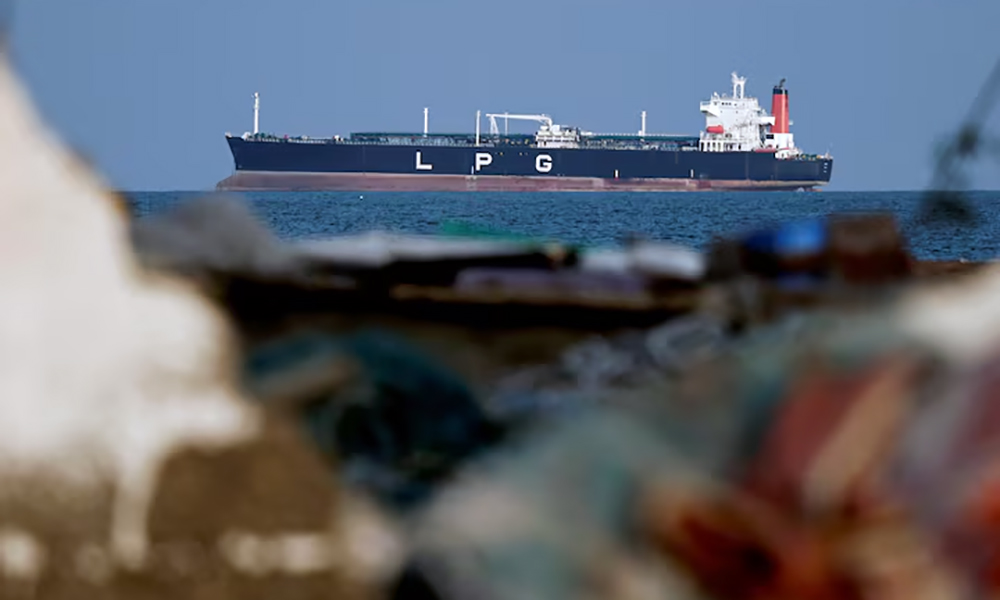
The Strait of Hormuz remains open to all shipping except vessels linked to “Iran’s enemies”, Iranian media reports published on Sunday quoted Iran’s representative to the U.N. maritime agency as saying.
Ali Mousavi’s comments came from an interview published on Friday by Chinese news agency Xinhua, before U.S. President Donald Trump’s threat to target Iranian power plants if the strait was not “fully open” within 48 hours.
The threat of Iranian attacks during the U.S.-Israeli war on Iran has kept most ships from getting through the narrow strait, the conduit for around a fifth of global oil and liquefied natural gas supplies, threatening a global energy shock.
Mousavi, who is also Iran’s ambassador to the UK, was also quoted as saying that Tehran would continue to cooperate with the International Maritime Organisation (IMO) to improve maritime safety and protect seafarers in the Gulf, adding that ships not belonging to “Iran’s enemies” could pass the strait by coordinating security and safety arrangements with Tehran.
“Diplomacy remains Iran’s priority. However, a complete cessation of aggression as well as mutual trust and confidence are more important,” Mousavi said, adding that Israeli and U.S. attacks against Iran were at the “root of the current situation in the Strait of Hormuz”.


Afghanistan squad hit by withdrawals ahead of AFC Asian Cup Qualifiers

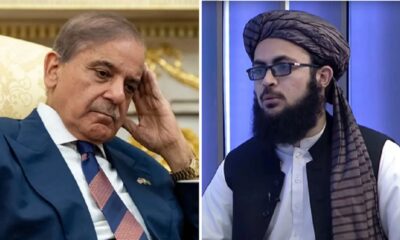
Afghan official slams Shehbaz Sharif’s ‘shameful’ claims on Islamic unity

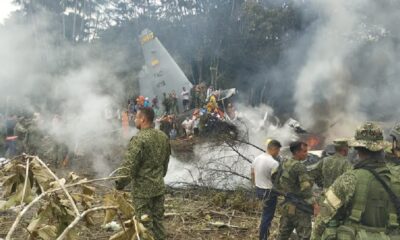
Colombia military plane crash kills 66, four still missing

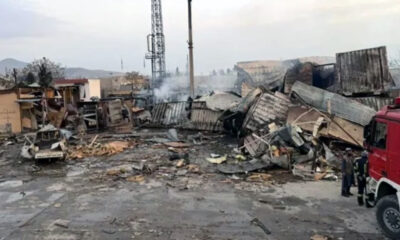
Airstrike on Kabul drug rehabilitation centre sparks legal concerns

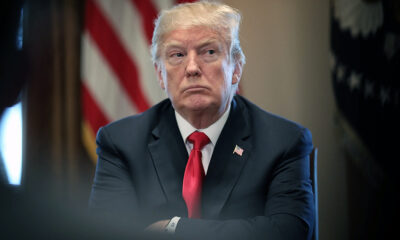
Trump backs down on strikes on Iran’s power network, says US and Tehran holding talks

Pakistani military jet downed in Afghanistan’s Jalalabad, pilot captured alive

Afghan Air Force conducts airstrikes in Islamabad, other cities

Prominent Muslim scholar issues fatwa calling for Afghanistan-Pakistan ceasefire

Afghan air force strikes key Pakistani military installations in retaliatory operation

IEA: Special circle in Pakistan has launched mission to destabilize region

Tahawol: Possibility of US ground forces entering Iran war discussed

Saar: Using US prisoners as political pressure

Tahawol: Pakistan’s efforts to destabilise Afghanistan

Saar: Decline in international assistance to Afghanistan

Tawsia: Assessment of Afghanistan’s economic activities in 1404
-
 Latest News5 days ago
Pakistani shelling hits Kunar districts despite ‘pause in hostility’ over Eid
-
 Sport4 days ago
Afghanistan national buzkashi falls short in Kokpar World Championship semifinals
-
 Regional5 days ago
Pakistan among top nuclear threats to America, US intelligence chief tells senate
-

 Sport3 days ago
Ireland to host Afghanistan for ODI series in August
-
 Latest News5 days ago
Security Sources: Pakistani military shelling in Kunar and Nuristan leaves female doctor dead
-
 Latest News3 days ago
Mojtaba Khamenei calls for improved Afghanistan–Pakistan relations, offers help
-

 Sport4 days ago
FIFA sanctions Israeli Football Association over discrimination violations
-
 Latest News3 days ago
Malaysian PM welcomes temporary Afghanistan–Pakistan truce, urges lasting peace