
Climate Change
Maui wildfires deadliest in a century after death toll hits 89

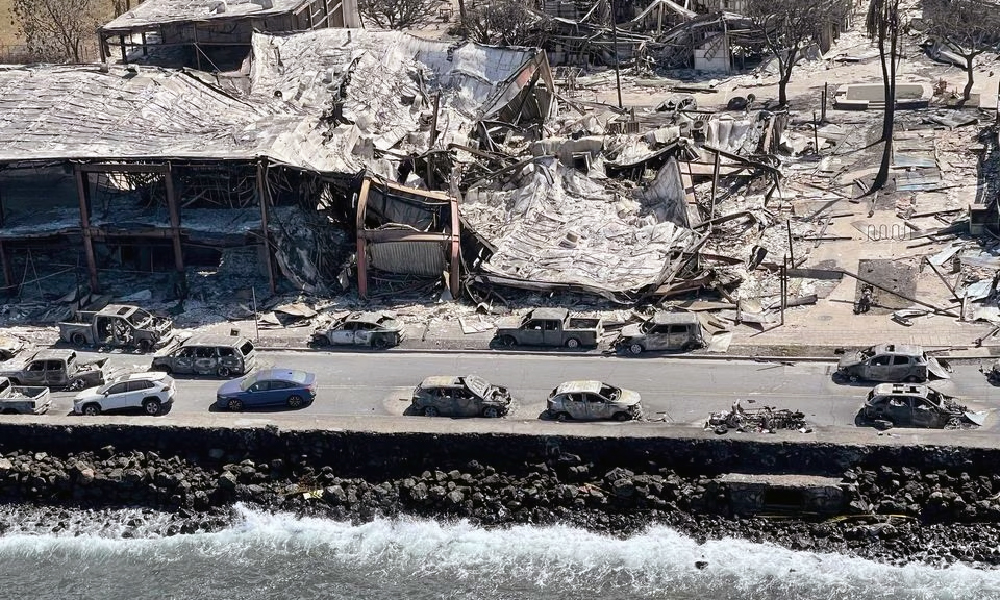
The death toll from the Maui wildfires is now at 89, officials said on Saturday, making it the deadliest U.S. wildfire in more than a century, Reuters reported.
The scale of the damage came into sharper focus on Saturday, as search teams with cadaver dogs sifted through the ruins of Lahaina, four days after a fast-moving blaze leveled the historic resort town, obliterating buildings and melting cars.
The cost to rebuild Lahaina was estimated at $5.5 billion, according to the Federal Emergency Management Agency (FEMA), with more than 2,200 structures damaged or destroyed and more than 2,100 acres (850 hectares) burned.
Governor Josh Green warned at a news conference on Saturday afternoon that the death toll would continue to rise as more bodies were discovered, read the report.
Officials vowed to examine the state’s emergency notification systems after some residents questioned whether more could have been done to warn people before the fire overtook their homes. Some were forced to wade into the Pacific Ocean to escape.
Sirens stationed around the island – intended to warn of impending natural disasters – never sounded, and widespread power and cellular outages hampered other forms of alerts.
The state’s attorney general, Anne Lopez, said she was launching a review of the decision-making both before and during the fire, while Green told CNN he had authorized a review of the emergency response.
Local officials have described a nightmarish confluence of factors, including communications network failures, powerful wind gusts from an offshore hurricane and a separate wildfire dozens of miles away, that made it nearly impossible to coordinate in real time with the emergency management agencies that would typically issue warnings and evacuation orders.
According to Reuters the death toll made the inferno, which erupted on Tuesday, Hawaii’s worst natural disaster in history, surpassing a tsunami that killed 61 people in 1960, a year after Hawaii became a U.S. state.
The latest death toll exceeded the 85 people who perished in a 2018 fire in the town of Paradise, California, and was the highest toll from a wildfire since 1918, when the Cloquet fire in Minnesota and Wisconsin claimed 453 lives.
Touring Lahaina earlier on Saturday, Green said state and federal agencies were working to aid those who had survived.
“Our focus now is to reunite people where we can, and to get them housing and get them health care, and then turn to rebuilding,” he said.
Authorities began allowing residents back into west Maui on Friday, although the fire zone in Lahaina remained barricaded. Officials warned there could be toxic fumes from smoldering areas and said search operations were continuing.
“It’s going to be sad to get down there,” said Za Dacruz, 33, as he waited on Friday in a traffic jam to try to return to Lahaina. “We’re just looking for everyone to be alive, to be safe – that’s all we’re trying to do. And the rest? We’ll go from there.”
Hundreds of people were still missing, though a precise count was not clear, Reuters reported.
At a family assistance center in Kahului, June Lacuesta said he was trying to locate nine relatives who had not been heard from since Tuesday.
“When I see Lahaina town itself, I cannot describe the feelings I get,” said Lacuesta, who was headed to a church shelter next to continue his search.
The disaster began just after midnight on Tuesday when a brush fire was reported in the town of Kula, roughly 35 miles (56 km) from Lahaina.
About five hours later, power was knocked out in Lahaina. In updates posted on Facebook that morning, Maui County said a three-acre (1.2-hectare) brush fire cropped up in Lahaina around 6:30 a.m. but had been contained by 10 a.m.
Subsequent updates were focused on the Kula fire, which had burned hundreds of acres and forced some local evacuations. But at around 3:30 p.m., according to the county’s updates, the Lahaina fire flared up.
Some residents began evacuating while people, including hotel guests, on the town’s west side were instructed to shelter in place. In the ensuing hours, the county posted a series of evacuation orders on Facebook, though it was not clear whether residents were receiving them as people frantically fled the fast-advancing flames.
Some witnesses said they had little warning, describing their terror as the blaze destroyed the town around them in what seemed to be a matter of minutes.







Japan and the UN Office for Project Services (UNOPS) have signed a $9.4 million grant agreement aimed at strengthening climate adaptation and disaster preparedness in Afghanistan.
The agreement, valued at 1.474 billion Japanese yen ($9.4 million) was signed by UNOPS Afghanistan Country Director Katy Ann Webley and Japan International Cooperation Agency (JICA) Afghanistan Chief Representative Sota Tosaka.
The project will be implemented in Kabul province and focuses on improving the capacity of local communities to cope with climate-related disasters.
Using a community-led approach, the programme will support the construction of infrastructure designed to reduce the impact of floods, droughts and other climate risks, alongside training to improve emergency preparedness and response.
Over the next 24 months, UNOPS will carry out activities aimed at enhancing climate risk awareness, strengthening local resilience and protecting livelihoods vulnerable to the effects of climate change.
Climate Change
Winter storm disrupts US travel, triggers thousands of flight cancellations
The disruptions followed a chaotic Sunday, when about 11,000 flights were scrapped—the highest daily total since the COVID-19 pandemic
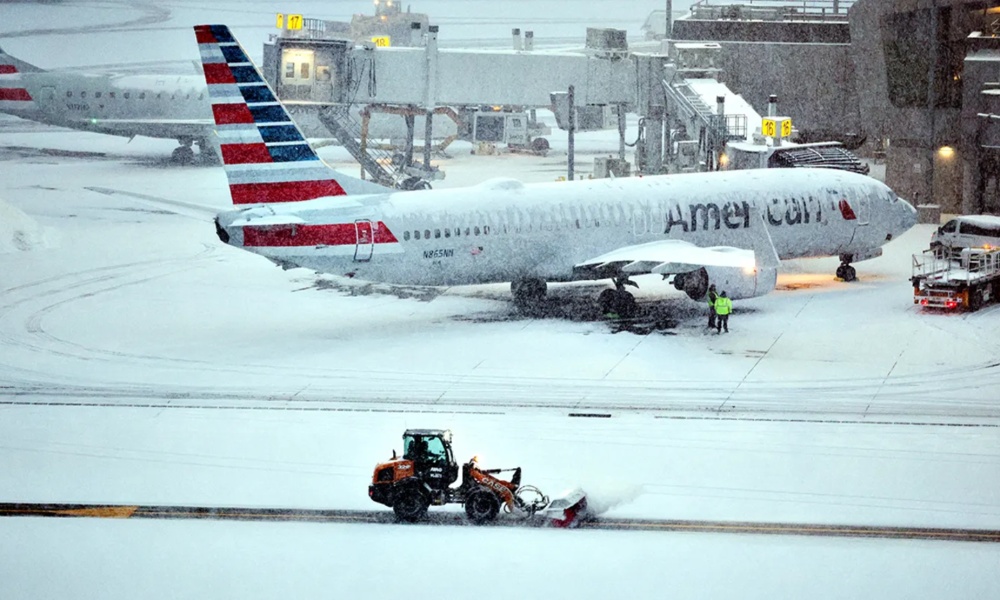
A powerful winter storm sweeping across the United States brought air travel to a near standstill on Monday, forcing airlines to cancel and delay thousands of flights as freezing rain and heavy snowfall battered large parts of the country.
By late afternoon, nearly 19% of scheduled flights had been canceled, according to aviation analytics firm Cirium. Separate data from FlightAware showed around 5,220 U.S. flights were canceled and more than 6,500 delayed by early evening.
The disruptions followed a chaotic Sunday, when about 11,000 flights were scrapped—the highest daily total since the COVID-19 pandemic, Cirium said.
The massive storm dumped up to a foot of snow from New Mexico to New England, paralyzing much of the eastern United States and contributing to at least 18 deaths. Extreme cold is expected to linger in some areas through the week.
American Airlines accounted for the largest share of disruptions on Monday, canceling nearly 1,180 flights and delaying about 1,130, followed by Republic Airways, JetBlue Airways, and Delta Air Lines.
In an advisory, the Federal Aviation Administration (FAA) warned that snow, freezing rain, and low visibility were affecting major hubs, including Boston and the New York metropolitan area. Boston Logan International Airport recorded the highest cancellation rate at 71%, according to Cirium.
American Airlines said the storm disrupted operations at five of its nine hub airports, including its largest base at Dallas–Fort Worth, where freezing temperatures and ice grounded flights.
The carrier requested FAA-approved ground stops for all its flights at Dallas–Fort Worth and Ronald Reagan Washington National Airport to manage gate capacity constraints.
The airline said teams were working around the clock to restore operations, as frustrated passengers flooded social media with requests for updates and assistance.
United Airlines said it had begun restoring flights, with cancellations dropping sharply from 1,019 on Sunday to 320 by Monday evening, FlightAware data showed.
The storm is on track to become the costliest severe weather event since the Los Angeles-area wildfires in early 2025, with preliminary damage and economic losses estimated between $105 billion and $115 billion, according to AccuWeather.
Airline operations remain vulnerable due to the interconnected nature of flight schedules, where cancellations can leave aircraft and crews out of position, slowing recovery efforts. Already, about 285 flights scheduled for Tuesday have been canceled, FlightAware data showed.
Climate Change
FAO warns of dry winter, low snowfall and rising food insecurity risks in Afghanistan
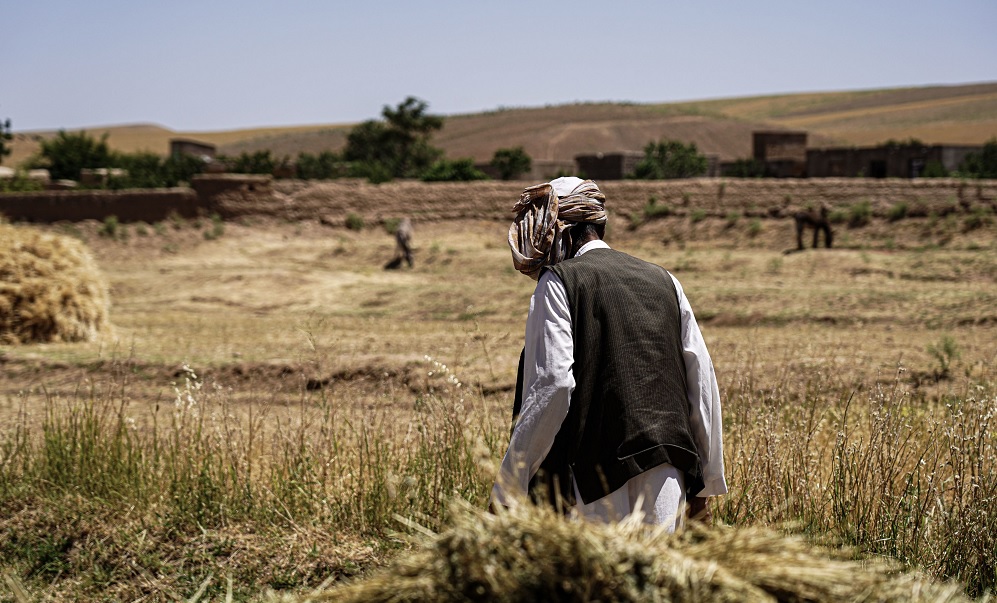
The Food and Agriculture Organization of the United Nations (FAO) has warned that Afghanistan is likely to face a drier and warmer-than-average winter, raising serious concerns about water availability, agricultural production and food security.
In its Seasonal Climate Outlook for December 2025 to February 2026, FAO said a weak La Niña pattern is driving below-average precipitation and above-average temperatures across most parts of the country. The report notes that the 2025/26 wet season has already begun drier and warmer than normal, with widespread soil moisture deficits persisting for another consecutive year
According to FAO, snow accumulation remains exceptionally low, with snow-water-equivalent levels at their lowest point in the past 25 years. This poses a critical hydrological risk, particularly for irrigated wheat-growing areas that depend on snowmelt-fed river systems. Even if precipitation improves later in winter, early deficits are unlikely to be fully offset, the report said
The outlook projects that December, January and February will all carry an elevated risk of below-normal rainfall, especially in northern, northeastern, western and central highland regions. Warmer daytime temperatures combined with cold nights are also expected to increase stress on crops, livestock and vulnerable communities
FAO warned that continued dryness could delay planting and weaken crop establishment for rain-fed winter wheat and barley, potentially reducing yields for the 2026 harvest. In irrigated areas, low snowpack threatens spring water supplies, increasing competition for water and reliance on already stressed groundwater resources.
Rangeland and pasture conditions are also expected to deteriorate, with delayed green-up likely to force herders to depend longer on stored fodder. This could lead to declining livestock health, reduced milk production and increased risk of animal losses toward late winter and early spring, the report said.
FAO and partner assessments caution that consecutive seasons of insufficient rainfall and high temperatures have already weakened agricultural systems and could leave millions of people facing acute food insecurity between late 2025 and early 2026
The UN agency emphasized the need for close monitoring of precipitation, snowpack and crop conditions, calling for timely agricultural support, improved water management and early anticipatory action to mitigate the impacts of the unfolding climate risks.


Around 15,000 cases of vulnerable Afghan children addressed over past year

Severe rainfall and natural disasters cause heavy casualties across Afghanistan

Kazakhstan eyes rare metals mining projects in Afghanistan and Rwanda

Afghan citizens reported among casualties in US, Israeli attacks, Iran says

Save the Children: Nearly one Afghan child killed or injured daily by explosive remnants

Prominent Muslim scholar issues fatwa calling for Afghanistan-Pakistan ceasefire

IEA Supreme Leader issues Eid-ul-Fitr message urging unity and support for Islamic system

14 Pakistani soldiers killed after military post falls along Durand line: MoD

Afghanistan steps in to replace Iran in supplying fruits and vegetables to Russia

Afghan airstrikes target Pakistani military sites in retaliation for air attacks

Tawsia: This week’s key economic developments in Afghanistan discussed

Tahawol: Start of talks between Kabul-Islamabad in China discussed

Saar: Ongoing US and Israeli attacks on Iran discussed

Tahawol: Ongoing US–Israeli war with Iran discussed

Saar: Afghanistan-Pakistan talks in China discussed
-

 Latest News5 days ago
TAPI gas pipeline advances 25 km in Afghanistan
-

 Latest News3 days ago
Baradar approves 17 projects worth over one billion AFN
-

 Business4 days ago
Russia backs Uzbekistan–Afghanistan trade hub, praises regional economic cooperation
-

 Sport4 days ago
ATN secures broadcast rights for inaugural Afghanistan Wrestling Premier League
-

 Sport3 days ago
ATN to broadcast second season of Ariana Snooker Championship
-
 Regional4 days ago
Gas pipeline blown up in southern Pakistan, says official
-

 Sport4 days ago
Rajasthan Royals outclass Chennai Super Kings as IPL action continues
-
 Latest News4 days ago
Islamic Relief Worldwide urges Afghanistan–Pakistan de-escalation, calls for aid to displaced