
Latest News
MP tells parliament security forces ambushed him

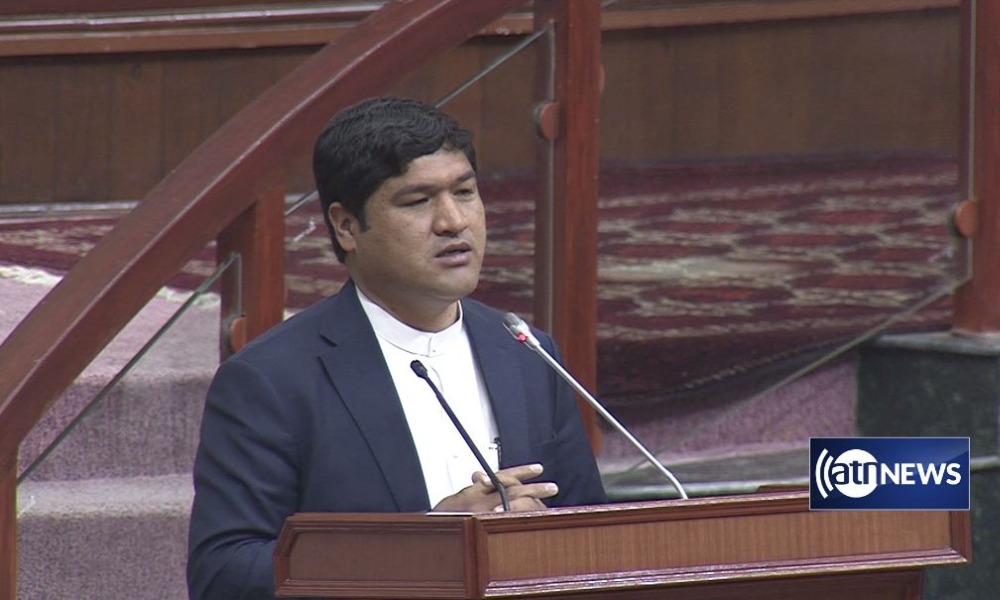
MP Mahdi Rasikh claimed Wednesday that he survived an attack by the Afghan security forces in the Bihsud district of Maidan Wardak province.
Addressing the Wolesi Jirga, Rasikh stated that security forces attacked his vehicles while he was returning to Kabul.
He said one of his bodyguards was wounded in the attack.
Rasikh claimed that the Chief of Army Staff General Yasin Zia had reportedly given orders to assassinate him.
“Yesterday, while we entered a valley on our way, the security forces began shooting at us. They shut down our mobile antenna using jammers. They shot and wounded my bodyguard and tried to kill me as well,” Rasikh told the MPs.
He added that the security forces wanted him to get out of his armored vehicle but “I refused to get out of my car and then they opened fired on the vehicle and punctured the tires.”
“I asked the security forces why they are shooting us, they told me they got orders from Chief of Army Staff,” Rasikh said.
A number of MPs condemned the shooting and said the actions had been illegal.
“We are the true defenders of the Republic, not the four-member Republic of Arg, they want to silence the voice of the representatives, and that is why they targeted Mahdi Rasikh,” MP Nilofar Ibrahimi said.
Mir Rahman Rahmani, the Speaker of the Lower House of the Parliament called on the Afghan forces to be committed to their duties.
“The security forces are obliged to ensure the security of the people. But some people are intolerable (security forces) and should not treat MPs this way,” Rahmani said.
“The security forces’ treatment of Mahdi Rasikh is disturbing and the Immunity Commission shall investigate this issue,” he added.
The Ministry of Defense, however, stated that Rasikh was transporting illegal weapons and that the security forces seized 10 weapons belonging to him.
“MP Mahdi Rasikh is a close figure to Commander Alipour. He was also involved in addressing recent dispute in Bisud district,” Rosullah Ahmadzia, a spokesman for the MoD told Ariana News.

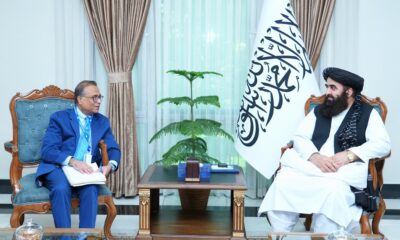




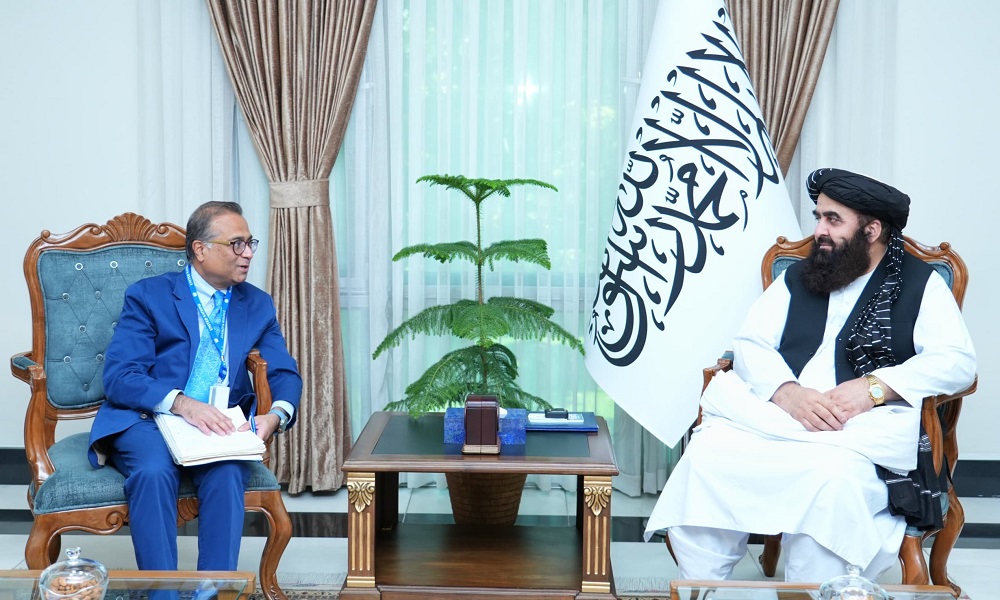
Afghanistan’s Foreign Minister Amir Khan Muttaqi met on Tuesday with Turhan Saleh, the newly appointed representative of the United Nations Development Programme (UNDP) in Afghanistan.
The Ministry of Foreign Affairs said the two sides discussed UNDP’s development activities in Afghanistan, the reintegration of returning migrants, cooperation in the health and agriculture sectors, alternative livelihoods for combating narcotics, environmental protection, climate change, and responses to natural disasters.
Muttaqi stressed the importance of implementing development and infrastructure projects alongside humanitarian assistance, saying the Islamic Emirate would continue cooperation with the United Nations in these areas.
The ministry added that Saleh assured the coordination of UNDP programs with Afghanistan’s priorities and said the organization would continue supporting development projects and capacity-building efforts based on the needs of the Afghan people.
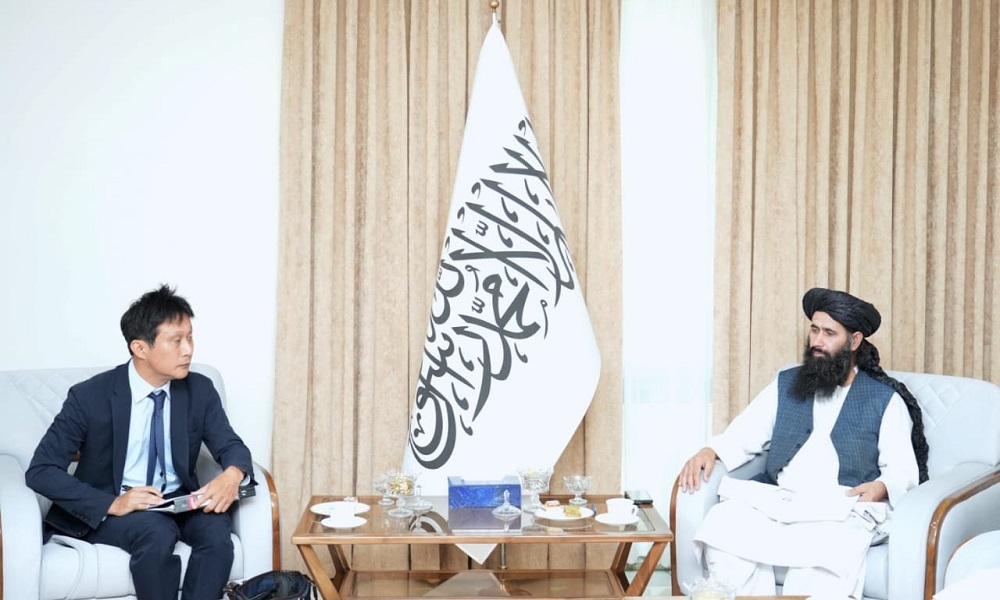
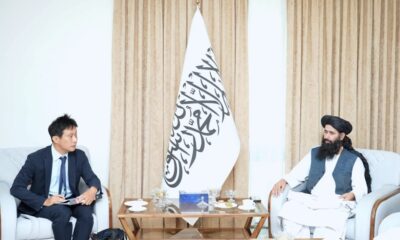
Mohammad Naeem, Deputy Minister of Foreign Affairs for Finance and Administration of the Islamic Emirate, met on Tuesday with Japanese Ambassador to Kabul, Kenichi Matsumoto.
According to the Ministry of Foreign Affairs, the two sides discussed Afghanistan-Japan bilateral relations, areas of mutual interest, and ways to strengthen continued cooperation between Kabul and Tokyo.
The Japanese ambassador expressed hope for further strengthening ties between the two countries. He also praised the Islamic Emirate’s efforts to combat narcotics, the improved security situation, and other developments in Afghanistan. He additionally welcomed the Brussels meeting between the Islamic Emirate and the European Union.
Naeem thanked Japan for what he described as its positive approach and continued cooperation with the Afghan people, stressing the importance of expanding bilateral relations and enhancing mutual engagement.
The two sides concluded the meeting by emphasizing the importance of holding regular consultations to strengthen coordination and bilateral cooperation.
Latest News
Mujahid: Afghanistan’s borders secure, territory will not be used against other countries
Mujahid said the country’s border forces are fully responsible for safeguarding Afghanistan’s territorial integrity and national interests.
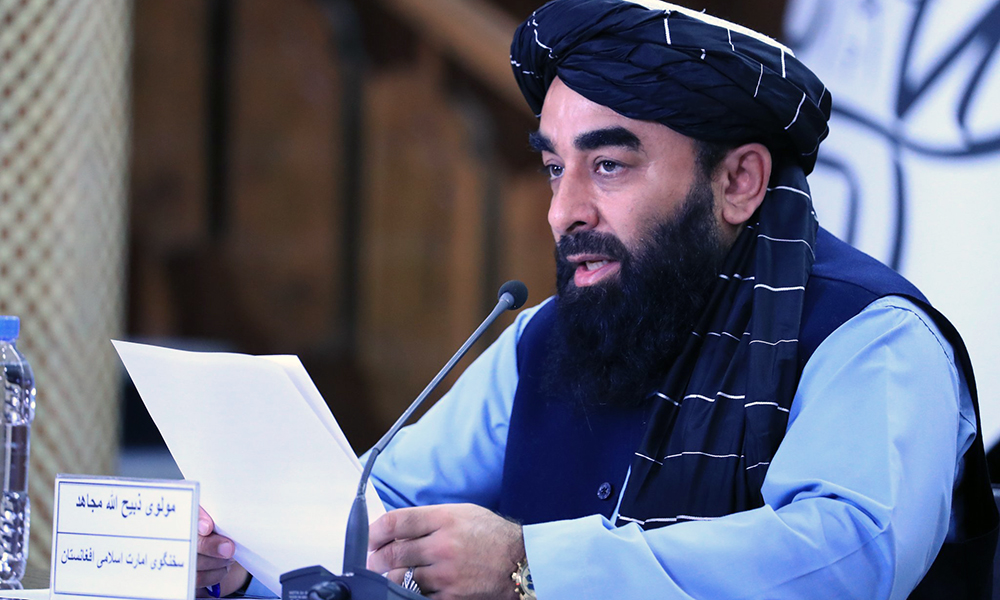
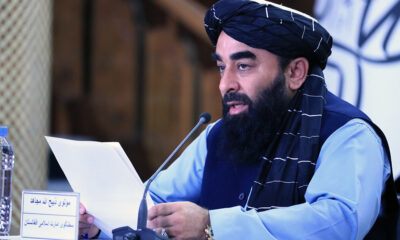
Islamic Emirate spokesman Zabihullah Mujahid says Afghanistan’s border security remains under control, stressing that attempts by smugglers and what he described as “criminal elements” to create instability are swiftly neutralized by border forces.
Speaking at the “Government Program Through the Lens of the Media” briefing on Tuesday, Mujahid said the country’s border forces are fully responsible for safeguarding Afghanistan’s territorial integrity and national interests, adding that the security situation along the borders is stable and reliable.
He said smugglers and “criminal elements” occasionally attempt to create security challenges in border areas, but maintained that such incidents are brought under control within minutes by Islamic Emirate forces.
Mujahid also highlighted the performance of the Ministry of Borders, Ethnicities and Tribes, saying it has made significant progress in strengthening national unity and resolving disputes over the past year.
According to him, the ministry settled 432 disputes during the past year and organized 33 major tribal and public gatherings across the country’s provinces aimed at promoting reconciliation and social cohesion.
Reiterating the Islamic Emirate’s foreign policy, Mujahid said the government follows an economy-oriented and connectivity-based approach and seeks positive relations with all countries in the region and beyond.
He also reaffirmed that Afghan territory will not be used against any other country, describing the policy as a key principle of the Islamic Emirate’s engagement with the international community.


Tahawol: Iran–US relations amid recent developments

Saar: Attack in Pakistan-controlled Chitral

Qosh Tepa and Akhawat to face off in AWPL final

Muttaqi discusses development projects with new UNDP envoy in Afghanistan

Naeem, Japanese ambassador discuss continued Kabul-Tokyo cooperation

India offers 1,000 online scholarships for Afghan students for 2026-27 academic year

Cricket world pays tribute to Afghanistan fast bowler Shapoor Zadran

Turkey spent over $120 million to prepare airport for Qatar-donated U.S. presidential aircraft

Thousands pay final respects as Afghan cricketer Shapoor Zadran buried in Kabul

Afghanistan U-15 team qualifies for FIFA U-15 World Cup
Tahawol: Iran–US relations amid recent developments
Saar: Attack in Pakistan-controlled Chitral

Tahawol: Afghanistan–Uzbekistan Economic Cooperation Enters New Phase

Saar: Growing Criticism in Pakistan Over Islamabad’s Afghanistan Policy

Tahawol: Trump halting major Iran escalation
-
 Latest News3 days ago
Badakhshan Governor, Army Chief reaffirm commitment to Afghanistan’s security
-
 Latest News4 days ago
Five armed men killed while attempting to cross Durand Line into Badakhshan
-
 Latest News4 days ago
U.S. government plan to interview Afghan refugees raises deportation concerns
-
 Latest News5 days ago
Iran reiterates call for inclusive government in Afghanistan
-
 Latest News3 days ago
Afghanistan, Turkey discuss expanding agricultural cooperation
-
 Business5 days ago
Over 205,000 Afghans visit Uzbekistan for trade and business in six months
-

 Regional3 days ago
US pauses strikes on Iran as diplomatic efforts gather pace amid regional tensions
-
 Latest News3 days ago
Uzbekistan delegation arrives in Kabul to attend trade forum