
Latest News
OIC urges Afghanistan to root out terrorists, cautions against ‘spoilers’

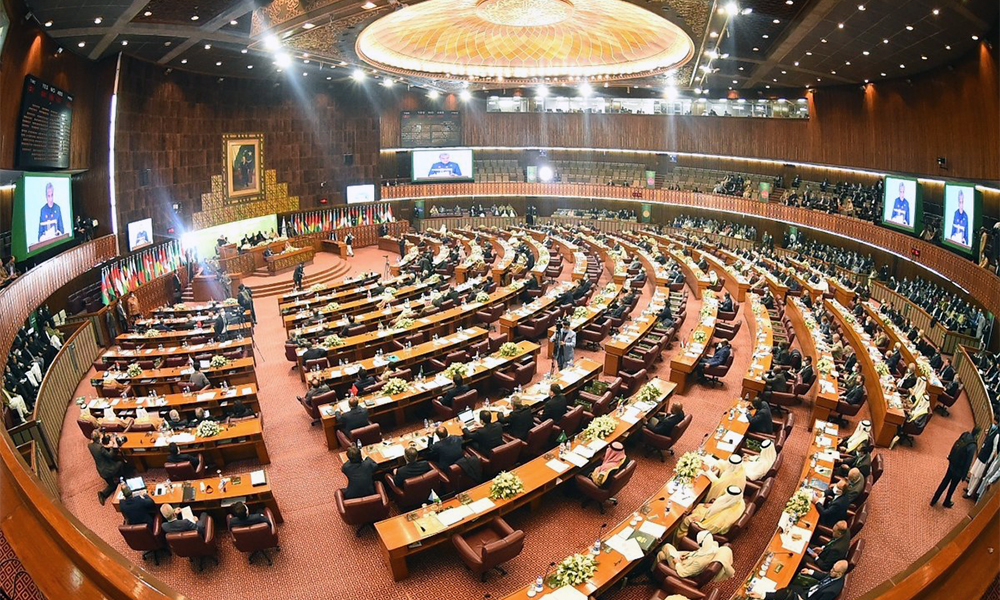
The Organization of Islamic Cooperation (OIC) this weekend put forward a wide range of recommendations during its Extraordinary Session of the Council of Foreign Ministers in Islamabad in a bid to tackle the Afghanistan crisis, noting that a key component was security as well as dealing with the unfolding humanitarian crisis.
In its draft resolution document, drawn up ahead of the summit and of which Ariana News has a copy, the OIC called on Afghanistan to take concrete steps against all terrorist organizations in particular Al-Qaeda, Daesh and its affiliates, ETIM, and TTP.
The OIC also urged “the international community to remain cautious against the possibility of incitement and the role of spoilers, both inside and outside the country, to derail efforts aimed at peace and stability in Afghanistan”.
In addition, the council expressed “deep alarm at the deteriorating humanitarian crisis in Afghanistan,” and noted the need for the continuation of economic cooperation to improve the humanitarian situation in the country.
The OIC also expressed concern at the worsening economic situation in the country, which is “further compounded by the continued freeze of overseas Afghan assets as well as other international assistance, exacerbating the urgent cash-flow problems, including payment of remuneration to public officials, and hindering the provision of essential public and social services to the people of Afghanistan.”
The OIC warned that an economic meltdown in Afghanistan would lead to a mass exodus of refugees, promote extremism, terrorism, and instability, which in turn would have dire consequences for regional and international peace and stability.
The OIC noted 31 points in its draft resolution, which are as follows:
1. Affirms solidarity of the OIC Member States with the Afghan people in their quest for a peaceful, united, stable, sovereign and prosperous Afghanistan.
2. Urges Afghanistan to abide by the principles and purposes enshrined in the UN Charter and the Charter of the OIC and respect its commitments under international agreements and conventions, including its obligations under international human rights covenants, especially with regards to the rights of women, children, youth, elderly and people with special needs as well as the preservation of family values, as enshrined in Islamic teachings and principles.
3. Takes note of the UN system-wide reports that the humanitarian crisis in Afghanistan is unfolding at a pace and scale hitherto unknown in the recent memory.
4. Encourages the United Nations system in particular UN High Commissioner for Refugees (UNHCR), UN Office for Coordination of Humanitarian Affairs (OCHA), World Food Programme (WFP), United Nations International Children’s Emergency Fund (UNICEF), United Nations Development Programme (UNDP), to pursue joint operation with the OIC for the delivery of urgent humanitarian aid.
5. Welcomes the initiative of Uzbekistan to create under the auspices of the United Nations a regional Logistic Hub in Termez City to provide urgent humanitarian assistance to the people of Afghanistan.
6. Calls upon the international community to provide urgent, and sustained humanitarian assistance to Afghanistan as well as to the major Afghan refugee-hosting countries.
7. Urges the international community in general, and the UN Security Council in particular, to ensure that existing targeted sanctions do not impede the provision of humanitarian aid or economic resources to preserve the institutions, schools and hospitals in Afghanistan and to allow multilateral development institutions, United Nations Agencies, Funds and Programmes and other humanitarian organizations to channel existing assistance and assets towards humanitarian assistance.
8. Affirms the importance of sustained engagement of the international community with Afghanistan, especially in supporting humanitarian and development needs of the Afghan people.
9. Decides that the OIC will play a leading role in the delivery of humanitarian and development aid to the people of Afghanistan.
10. Requests the General Secretariat to take immediate steps to reinforce the OIC Mission in Kabul with human, financial and logistical resources, enabling it to forge global partnerships and streamline aid operations on the ground.
11. Acknowledges that Afghanistan is facing serious liquidity challenges, and resolves to continue focusing on measures to ease access to legitimate banking services.
12. Underscores that Afghanistan’s access to its financial resources would be pivotal in preventing a collapse and in reviving the economic activity and in this regard, recognizes the importance of taking related actions such as unlocking the channels of financial and in-kind flow of assistance and resources to the people of Afghanistan, and exploring realistic pathways towards unfreezing Afghanistan’s financial assets.
13. Decides to establish a Humanitarian Trust Fund, under the aegis of the Islamic Development Bank, to serve as a vehicle to channel humanitarian assistance to Afghanistan including in partnership with other international actors.
14. Decides that the OIC General Secretariat, together with the Islamic Development Bank and Humanitarian Trust Fund, shall commence discussions with the UN system organizations to device a road map for mobilizing actions in relevant fora to unlock the financial and banking channels to resume liquidity and flow of financial and humanitarian assistance, and to devise a mechanism for the disbursement of urgent and sustained humanitarian assistance to the people of Afghanistan.
15. Requests the Islamic Development Bank to expeditiously operationalize the Humanitarian Trust Fund by the first quarter of 2022.
16. Calls on the OIC Member States, the Islamic Financial Institutions, donors and other international partners to announce pledges to the Humanitarian Trust Fund for Afghanistan as well as to provide humanitarian assistance to Afghanistan.
17. Decides that OIC General Secretariat shall engage with the World Health Organization and other relevant stakeholders for securing vaccines as well as other medical supplies, technical and related assistance for the people of Afghanistan in context of Covid-19 pandemic and other persistent and emerging health concerns.
18. Decides to launch an Afghanistan Food Security Programme, and requests the Islamic Organization for Food Security (IOFS) to undertake necessary work in this regard using the capacity of the Organization’s Food Security Reserves, when necessary.
19. Encourages OIC Member States, international donors, the UN Funds and Programmes and other international actors to generously contribute to the Afghanistan Food Security Programme.
20. Reiterates its call on the OIC Secretary-General to engage with donor financial institutions to provide necessary humanitarian and economic assistance to Afghanistan as well as Afghan refugees in neighbouring countries.
21. Urgently appeals to OIC member States, international community including the UN system, international organizations, and international financial institutions to continue to provide all possible and necessary recovery, reconstruction, development, financial, educational, technical and material assistance for Afghanistan as policy tools to promote realization and enjoyment of fundamental rights and freedoms by all Afghan citizens.
22. Reaffirms the importance of combating terrorism in Afghanistan and ensuring that the territory of Afghanistan is not used as a platform or safe haven by any terrorist group or organization.
23. Calls upon Afghanistan to take concrete steps against all terrorist organizations in particular Al-Qaeda, Deash and its affiliates, ETIM, and TTP.
24. Reaffirms that peace, security and stability in Afghanistan would also contribute to the safe and dignified return of all Afghan refugees, and internally displaced persons and to play their constructive role in the development of Afghanistan.
25. Urges the international community to remain cautious against the possibility of incitement and the role of spoilers, both inside and outside the country, to derail efforts aimed at peace and stability in Afghanistan.
26. Calls upon the Afghan authorities to continue to work towards greater inclusiveness and including by developing a roadmap to strengthen participation of all Afghans including women and girls to participate in all aspects of the Afghan society.
27. Underscores the need for concerted efforts to rebuild the necessary capacity of the relevant state institutions of Afghanistan to address challenges posed by terrorism, narcotics, smuggling, money laundering, organized crime, and irregular migration.
28. Decides to appoint Ambassador Tarig Ali Bakheet, Assistant Secretary General for Humanitarian, Cultural and Family Affairs at the OIC General Secretariat, as Special Envoy of the Secretary General of the Organization of Islamic Cooperation (OIC) for Afghanistan, supported by a secretariat and the OIC Office in Afghanistan to coordinate aid and assistance efforts, and mandated to pursue economic and political engagement with Afghanistan, and to submit periodic reports.
29. Requests the OIC Secretary General to arrange for a delegation of prominent religious scholars and Ulama led by the International Islamic Fiqh Academy and other relevant religious institutions, to engage with Afghanistan on issues of vital concern, such as, but not limited to, tolerance and moderation in Islam, equal access to education and women’s rights in Islam.
30. Requests the OIC Secretary General to present a report in coordination with the Islamic Development Bank and the Special Envoy of the Secretary General of the Organization Islamic Cooperation for Afghanistan to the 48th session of the Council of Foreign Ministers regarding measures taken to implement this resolution, and the steps taken and resources required to strengthen OIC Mission in Afghanistan.
31. Also requests the OIC Secretary General to present a report to the 48th session which identifies measures to address the humanitarian and economic situation in Afghanistan as well as to highlight any practical difficulties being faced in the provision of humanitarian aid or related funds, financial assets, or economic resources to Afghanistan by the OIC Member States, OIC financial and humanitarian institutions and organizations.


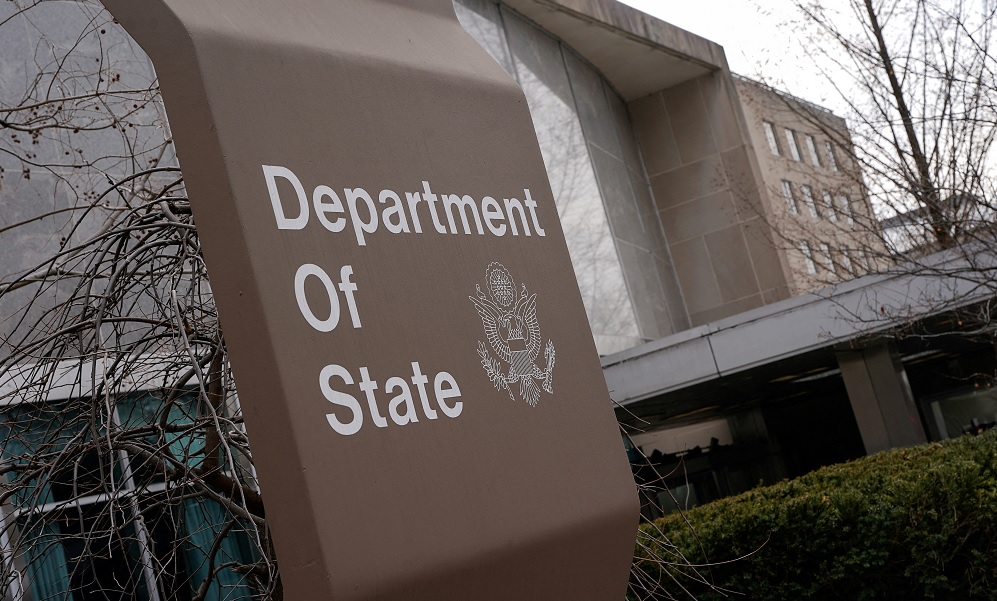
The U.S. State Department has rejected a $25 million funding request from the American University of Afghanistan for the next two years, The New York Times reported on Thursday.
The university has about 980 students, around three-quarters of them women, with about 90 percent based in Afghanistan. All students currently study online.
David Edwards, the university’s interim president, said the funding decision threatens one of the few remaining opportunities for Afghan women to pursue higher education from inside Afghanistan.
“We are the only venue for education for a whole generation of Afghans,” Edwards said.
The State Department said it would stop funding the university at the end of this year, citing what it described as a history of “repeated lack of accountability for millions of American taxpayer dollars.”
The university has been told that, as a condition for remaining open, it must partner with the American University of Central Asia in Kyrgyzstan. Edwards said he would work with the university, although its Kyrgyzstan campus does not offer remote instruction.
The State Department said the U.S. government remained committed to supporting education for Afghan women and girls through remote-learning programs and was working to identify organizations that could administer those programs.
The university faced allegations of financial mismanagement in 2019. Edwards said those issues had been addressed and that its audits have been clean since 2021.
Established in Kabul in 2006, the American University of Afghanistan received more than $225 million from the U.S. Agency for International Development since its founding.
Following the Islamic Emirate takeover in 2021, the university evacuated its foreign staff, while some students left Afghanistan and others remained in the country. Its Kabul campus is now used by the Afghan International Islamic University, according to the report.
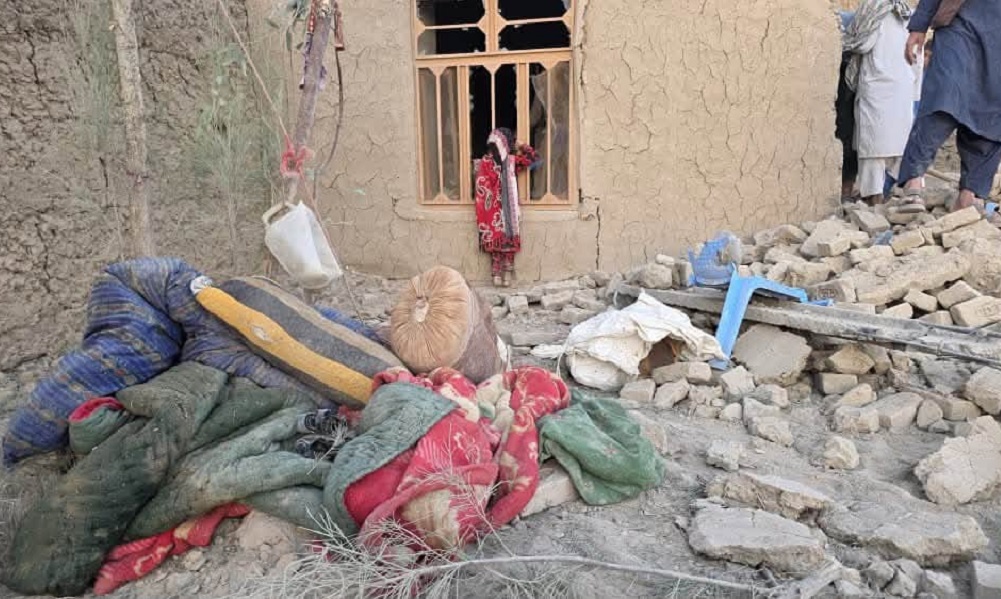
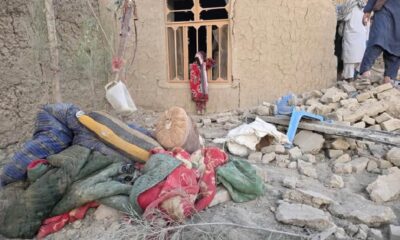
The European Union has condemns civilian deaths following Pakistani airstrikes in Afghanistan’s Kunar and Helmand provinces, calling on both sides to exercise restraint and engage in dialogue.
In a statement issued on Friday, the EU spokesperson said the UN Assistance Mission in Afghanistan (UNAMA) had confirmed that at least 10 civilians were killed, most of them children, while nine others were injured.
The EU urged both sides to show restraint and resolve their differences through dialogue.
The statement also called on the Islamic Emirate to take action against militant groups. The IEA has previously denied the presence of militant groups in Afghanistan.
The EU stressed that all parties must respect international law, including international humanitarian law, protect civilians and civilian infrastructure, and take all feasible measures to prevent civilian casualties.
Latest News
Russia expects to ease Afghanistan-Pakistan tensions at Moscow Format meeting
Kabulov added that Russia is ready to mediate between Kabul and Islamabad if both sides request its assistance, noting that Russian Foreign Minister Sergei Lavrov has previously expressed Moscow’s readiness to help resolve the dispute.
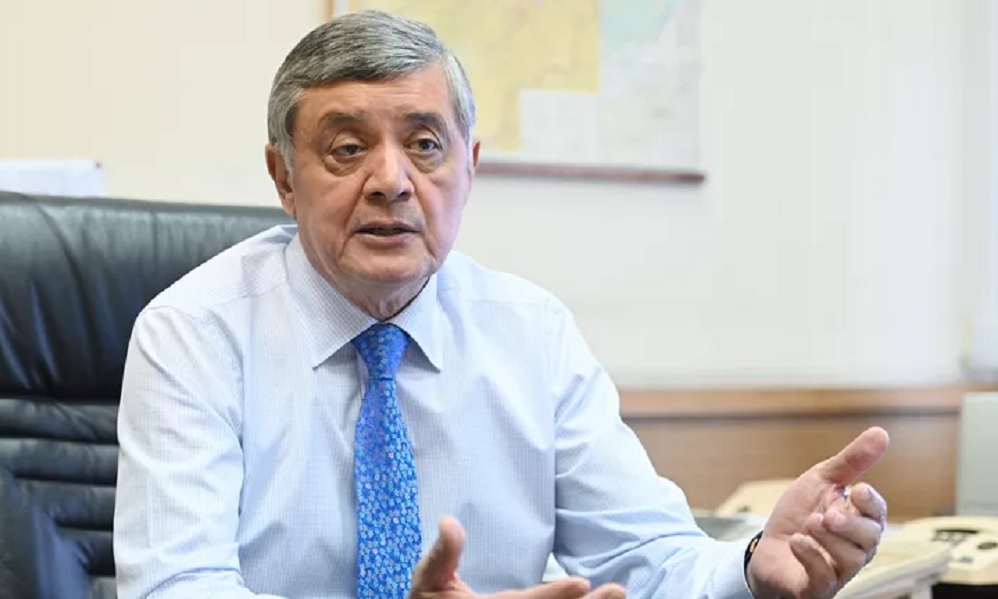
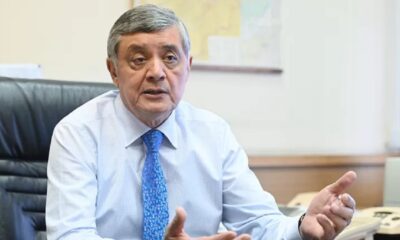
The latest escalation between Afghanistan and Pakistan will be urgently discussed at the upcoming meeting of the Moscow Format Consultations on Afghanistan, scheduled for October 5, Zamir Kabulov, Russia’s special presidential representative for Afghanistan, told Izvestia.
Kabulov said Russia is prepared to use the Moscow Format as a platform to help the two sides reach a compromise.
“Of course, this issue will certainly be raised, and we will be happy to use the Moscow platform to bring both conflicting parties to some reasonable compromises,” he said.
He added that Russia is ready to mediate between Kabul and Islamabad if both sides request its assistance, noting that Russian Foreign Minister Sergei Lavrov has previously expressed Moscow’s readiness to help resolve the dispute.
High-ranking officials from both countries are expected to attend the October 5 meeting. Afghanistan’s Foreign Minister Amir Khan Muttaqi will participate, while Pakistan will send its special representative for Afghanistan, along with its ambassador to Kabul and other senior foreign-policy officials, Kabulov said.
The Moscow Format, established in 2016, brings together regional countries to discuss Afghanistan’s security and political situation. Its participating countries include Russia, Afghanistan, China, Pakistan, India, Iran, Kazakhstan, Kyrgyzstan, Tajikistan, Turkmenistan and Uzbekistan. Belarus and Egypt have also been invited as guests to the upcoming meeting.
The latest tensions come amid continued disagreements between Kabul and Islamabad over security and cross-Durand Line militancy. Pakistan has repeatedly accused the Afghan authorities of allowing Tehrik-e-Taliban Pakistan (TTP), which Islamabad blames for attacks inside Pakistan, to operate from Afghan territory.
The Afghan authorities have denied supporting the TTP and have maintained that Pakistan’s internal security problems should not be blamed on Afghanistan.
Kabulov said the dispute remains difficult to resolve because both sides continue to maintain their positions.
The Moscow Format meeting comes after Pakistan carried out fresh airstrikes in Afghanistan on October 1. Afghan authorities said the strikes in Kunar and Helmand provinces killed nine civilians, including women and children, and wounded 11 others.
Afghanistan condemned the strikes as an act of aggression.


ACB announces Afghanistan squads for Bangladesh, Zimbabwe series

US rejects American University of Afghanistan’s funding request

Cargo stacks up as Pakistan seizes containers to block capital routes

EU deplores civilian deaths following Helmand, Kunar airstrikes

Russia expects to ease Afghanistan-Pakistan tensions at Moscow Format meeting

Saudi energy group signs major Afghanistan deals covering gas exploration and pipeline plans

Khalilzad: Afghanistan ready to attract major investment

El Niño likely to intensify, may become strongest ever recorded, WMO says

Khyber Chamber demands reopening of Torkham crossing

Messi returns to Inter Miami after Argentina retirement

Tahawol: Pakistan’s airstrikes on civilians in Afghanistan discussed

Tahawol: Improvement in Afghanistan-China relations discussed

Saar: Expanding ties with regional and global countries discussed

Tahawol: Absence of Afghanistan’s envoy at UNGA discussed

Saar: Assessment of war between Afghanistan and US discussed
-
 Sport4 days ago
Afghanistan vs India Asian Games quarter-final abandoned without a toss
-
 Regional4 days ago
Floods, landslides kill 56 in India and 14 in Nepal
-

 World4 days ago
Trump says men arrested at UK air base used by US planned ‘big damage’
-
 Regional3 days ago
US, Iran separately talk with mediators in latest bid to end war
-
 World4 days ago
Serbia’s President Vucic resigns ahead of October parliamentary elections
-
 Business4 days ago
Afghanistan raises import tariffs on several goods to support domestic industry
-
 Latest News4 days ago
Khalilzad calls for end to Pakistan’s ‘double game’, urges new chapter with Afghanistan
-
 Latest News5 days ago
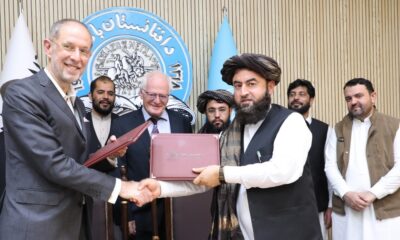
Afghanistan central bank and ACGF sign cooperation agreement