
Latest News
Pakistan’s move to expel Afghan refugees may trigger ‘humanitarian crisis’, warns rights group

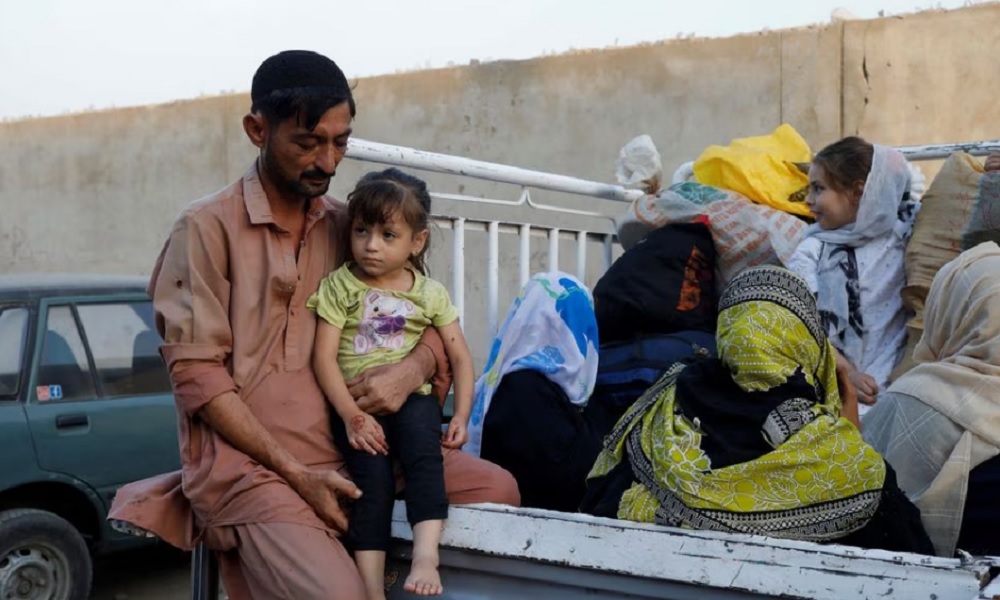
Pakistan’s leading rights group on Tuesday warned of a “humanitarian crisis” as it expressed concern over the government’s decision to expel undocumented foreigners, most of whom comprise Afghan nationals.
“The decision amounts to forced repatriation, which is not recognised under international customary law, and will invariably affect vulnerable refugees and asylum seekers, which include women, children, the elderly, persons living with disabilities, persons from low-income groups, and Afghans at risk because of their professions,” the Human Rights Commission of Pakistan said in a letter to UN High Commissioner for Refugees Filippo Grandi.
The U.N. refugee agency UNHCR and the International Organization for Migration (IOM) said Pakistan’s plans create “serious protection risks” for some forced to leave.
The chargé d’affaires of the Afghanistan’s permanent mission to the UN said: “We are deeply concerned about Pakistan’s recent decision to deport unregistered Afghan refugees and said that we urge Pakistan to reconsider this action given the gravity of the situation in Afghanistan.”
UN Special Rapporteur Richard Bennett also urged Pakistan to “uphold the absolute and non-derogable principle of non-refoulement and prevent collective expulsion and forced return” & cancel plans to deport 1.4 million Afghan nationals.”
Pakistan is home to over 4 million Afghan migrants and refugees, about 1.7 million of whom are undocumented, according to Islamabad.





Latest News
Afghan diaspora protests in London and Oslo over Pakistan strikes
At the same time, members of the Afghan community in Oslo gathered outside the Norwegian Parliament, where they denounced the attacks and called for accountability.
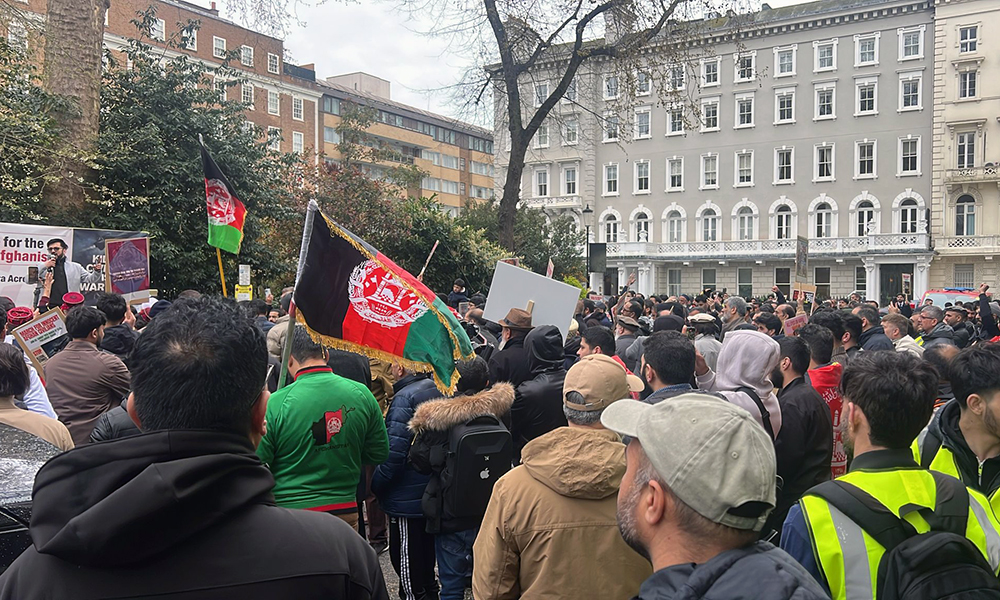
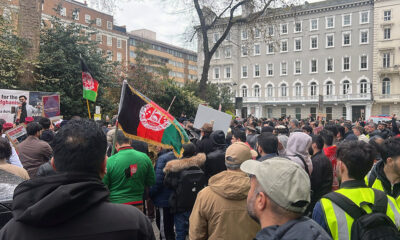
Hundreds of Afghans living abroad staged protests in the cities of London and Oslo over the weekend, condemning what they described as continued military attacks by Pakistan that have led to rising civilian casualties in eastern Afghanistan.
In London, demonstrators marched through central streets, chanting slogans against the strikes and urging global powers to take urgent action.
Protesters highlighted the deteriorating security situation along the disputed Durand Line, warning that repeated shelling risks further destabilizing already fragile communities. Many called for independent investigations and greater international pressure to prevent escalation.
At the same time, members of the Afghan community in Oslo gathered outside the Norwegian Parliament, where they denounced the attacks and called for accountability.
Protest organizers said a formal resolution was submitted to Norwegian authorities, as well as to the United Nations and the International Criminal Court, urging immediate steps to halt the violence and ensure the protection of civilians.
The demonstrations come amid renewed tensions between Afghanistan and Pakistan, where clashes and artillery exchanges have periodically flared along the Durand Line.
Disputes over the legitimacy of the frontier, militant activity, and cross Durand Line security operations have long strained relations between the two neighbors.
According to Afghan officials, the latest incident occurred in Asadabad, the capital of Kunar Province, where Pakistani forces allegedly fired mortars and heavy weapons into residential areas on Sunday evening.
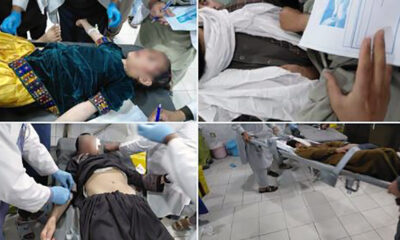
Hamdullah Fitrat, deputy spokesman for the Islamic Emirate, said Pakistan targeted rural communities on the outskirts of the city at around 5 pm local time. Preliminary reports indicate that at least 16 civilians—mostly women and children—were injured, while one person was killed.
Fitrat condemned the incident as a continuation of attacks against Afghan civilians, while local residents described panic and damage to homes caused by the shelling.
There has been no immediate detailed response from Pakistani authorities regarding the latest allegations. However, Islamabad has previously maintained that its military actions along the Durand Line are aimed at countering militant threats and securing its frontier regions.
The protests in Europe reflect growing concern within the Afghan diaspora over the humanitarian impact of the ongoing tensions, with calls mounting for diplomatic engagement to prevent further civilian harm and escalation along the Durand Line.
International Sports
Amnesty International raises alarm over deportations, protests ahead of FIFA World Cup
The rights watchdog said the situation is most acute in the US under President Donald Trump, where it says a “human rights emergency” is unfolding due to aggressive immigration enforcement policies.
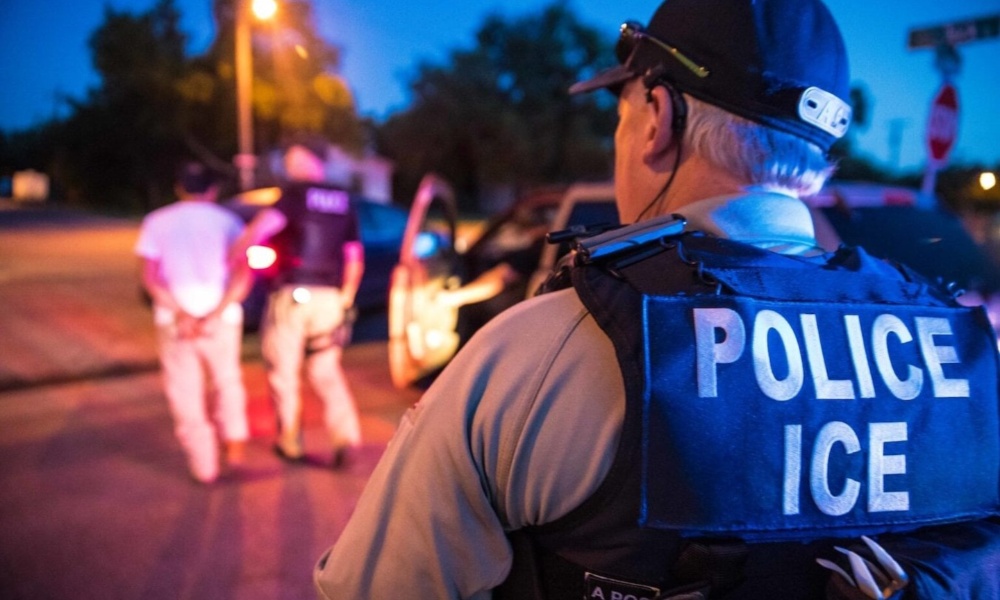
A new report released on Monday, 30 March, by Amnesty International has warned that the 2026 FIFA World Cup could expose millions of fans to serious human rights risks, particularly in the United States, where the majority of matches will be held.
The report, titled Humanity Must Win: Defending rights, tackling repression at the 2026 FIFA World Cup, highlights concerns across all three host nations—United States, Canada and Mexico—including threats to freedom of expression, peaceful protest, and the safety of local communities.
According to Amnesty International, the situation is most acute in the United States under President Donald Trump, where it says a “human rights emergency” is unfolding due to aggressive immigration enforcement policies.
The organization cited mass detentions, arbitrary arrests, and widespread deportations carried out by agencies such as US Immigration and Customs Enforcement (ICE) and US Customs and Border Protection.
Amnesty International’s Head of Economic and Social Justice, Steve Cockburn, said more than 500,000 people were deported from the United States in 2025 alone, warning that the erosion of due process has created “a climate of fear” that could affect both residents and visiting fans during the tournament.
The report also raises concerns about the impact of these policies on World Cup host cities, noting that local authorities in cities such as Dallas, Houston and Miami have entered agreements with federal immigration agencies, increasing the risk of racial profiling and undermining trust in law enforcement.
In addition, Amnesty International highlighted previous federal deployments of thousands of National Guard troops to Los Angeles in response to protests against immigration raids, warning that similar measures during the World Cup could threaten civil liberties.
Beyond the United States, the report points to risks in the other host countries. In Mexico, the deployment of around 100,000 security personnel—including military forces—has raised fears that protests could be suppressed, particularly by activists planning demonstrations linked to disappearances and social justice issues in Mexico City.
In Canada, Amnesty International warned that preparations for the tournament could worsen an already deepening housing crisis, citing concerns that people experiencing homelessness may be displaced, echoing the legacy of the 2010 Winter Olympics in Vancouver.
The organization also flagged travel restrictions that could prevent fans from several countries, including Côte d’Ivoire, Haiti, Iran and Senegal, from entering the United States, alongside proposals for intrusive screening measures such as social media vetting.
Amnesty International further warned that restrictions on freedom of expression and peaceful assembly across all three host nations could undermine the inclusive spirit of the tournament. It noted that protests—often a feature of global sporting events—risk being repressed, with recent examples including crackdowns on demonstrations in North America.
With just weeks to go before the tournament begins, Amnesty International urged FIFA and host governments to take immediate action to safeguard human rights.
“This World Cup is no longer the ‘medium risk’ tournament that FIFA once judged it to be,” said Cockburn.
“Urgent steps are needed to ensure fans, players, workers and communities are protected, and that the tournament lives up to its promise of being safe, inclusive and respectful of human rights,” he said.
Amnesty International added that while FIFA stands to generate record revenues from the competition, the rights and safety of those involved must remain at the centre of the event.
International Sports
Mumbai Indians outclass KKR in high-scoring IPL thriller
Mumbai chased down a daunting target with six wickets to spare, thanks to outstanding batting performances from Ryan Rickelton and Rohit Sharma, who dominated the chase and thrilled the home crowd.

The 2026 Indian Premier League (IPL) produced a thrilling contest on Sunday, March 29, as Mumbai Indians (MI) defeated Kolkata Knight Riders (KKR) in a high-scoring encounter at Mumbai’s Wankhede Stadium.
Mumbai chased down a daunting target with six wickets to spare, thanks to outstanding batting performances from Ryan Rickelton and Rohit Sharma, who dominated the chase and thrilled the home crowd.
Despite KKR posting a massive total, Mumbai’s batting lineup showed composure and attacking intent to seal one of the most entertaining matches of the early IPL season.
The tournament continues today, March 30, with another exciting fixture as Rajasthan Royals (RR) take on Chennai Super Kings (CSK).
The match is expected to draw huge attention, with both teams featuring star-studded lineups and looking to build early momentum in the competition.
Fans in Afghanistan can watch every match of the tournament live as Ariana Radio and Television Network (ATN) holds exclusive broadcast rights for the IPL in the country.
Cricket lovers can follow Ariana Television and Ariana News social media pages for live coverage, highlights, and the latest updates throughout the tournament.


Tiny Persian Gulf oil hub at centre of high-stakes military calculations

Afghanistan opens doors to agribusiness investments amid rising opportunities

Afghan diaspora protests in London and Oslo over Pakistan strikes

Amnesty International raises alarm over deportations, protests ahead of FIFA World Cup

Mumbai Indians outclass KKR in high-scoring IPL thriller

Prominent Muslim scholar issues fatwa calling for Afghanistan-Pakistan ceasefire

Afghan air force strikes key Pakistani military installations in retaliatory operation

IEA Supreme Leader issues Eid-ul-Fitr message urging unity and support for Islamic system

14 Pakistani soldiers killed after military post falls along Durand line: MoD

Ronaldo’s private jet flies out of Saudi Arabia following US Embassy drone strike in Riyadh

Tahawol: Efforts for Kabul-Islamabad de-escalation

Saar: Restrictions on girls’ education in Afghanistan discussed

Tahawol: Concerns over spread of Middle East crisis discussed

Saar: Weakening relations between Kabul and Washington discussed

Exclusive interview with Indrika Ratwatte, Deputy UN Special Representative for Afghanistan
-
 Latest News4 days ago
Tajikistan shifts stance on Afghanistan amid rising border tensions
-

 Latest News3 days ago
Russia deems US military presence in Afghanistan unacceptable
-
 Latest News3 days ago
IEA says Iranian drivers no longer need visas to enter Afghanistan
-
 Latest News2 days ago
Afghan defense forces stand ready to protect national sovereignty: MoD
-

 Sport4 days ago
Myanmar trump Afghanistan 2-1 in Asian Cup Qualifier
-

 Sport4 days ago
Afghanistan to face Myanmar in crucial AFC clash
-
 Latest News4 days ago
Torkham crossing reopens for returning Afghan migrants
-
 Latest News5 days ago
UN experts call for lasting ceasefire as Afghan–Pakistan violence escalates