
Latest News
President’s Visit of China Creates a Long-Term Strategic Conundrum

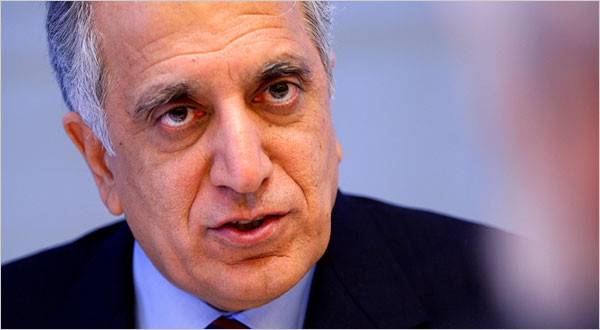

Last week, Afghanistan’s new President, Ashraf Ghani, traveled to China for his first state visit abroad. Mr. Ghani’s calculation — that Beijing could offset the decline in American and Western support — creates a long-term strategic conundrum: Can Afghanistan attract Chinese investment and security assistance while avoiding the perils of excessive dependency on Beijing?
Mr. Ghani’s outreach to China is driven by a combination of short-term realities and long-term goals. The Western drawdown comes at a time when the Afghan government is neither fiscally self-sufficient nor capable of defeating the Pakistan-backed Taliban insurgency. In the short term, there is little alternative to international assistance to keep the Afghan state afloat.
In the longer term, however, Afghanistan hopes to leverage two of the country’s assets to achieve genuine stability and self-reliance: its natural resources and its strategic location, wedged as it is between Iran, Pakistan, China and the Central Asian states. The development of Afghan infrastructure could turn the country into a regional land bridge. Afghanistan would enjoy unimpeded access to regional and global markets while collecting transit fees from the region’s commercial activity.
Washington’s long-standing support hasn’t been enough to bring the land bridge concept to fruition. Although the United States has spent $4 billion constructing roads, the project requires far more money and political stability. The Asian Development Bank estimates that an additional $2 billion of investments in roads and transmission lines is required — and even more for pipelines, railways and upgrading regional infrastructure. Yet continuing security challenges are diverting attention and resources from the initiative.
China is perhaps the only power with the incentives, resources and national will to make Afghanistan’s ambitious vision a reality. Beijing has already made sizable investments in Afghan copper and oil — including a $3 billion agreement to develop the Aynak copper mine. China is eyeing Afghan natural gas. Western companies, lacking sufficient state backing from their governments, have proven unwilling or unable to make comparable investments. If Beijing were to invest in the country’s infrastructure, new transit corridors would facilitate Chinese trade westward to Iran and the Middle East, and south to the Gwadar port in Pakistan.
Despite the fact that an Afghan land bridge would give Pakistan access to Central Asian markets and products, American pressure alone has not persuaded Islamabad to abandon its support for militants. Pakistan’s civilian leaders are increasingly open to a settlement between the Afghan government and the Taliban. But the overall lack of progress on reconciliation is saddling the United States with the disproportionately large cost of supporting Afghanistan’s security forces.
Pakistani intransigence has strengthened Afghanistan’s case for engagement with China. Since 2001, China has largely stayed on the sidelines as the United States has assumed the heavy lifting on the counterterrorism front. China has pursued its economic interests in Afghanistan while benefiting from the security provided by the American military presence. At the same time, China has maintained friendly relations with Pakistan and has refused to lean on the Pakistani military to change its ways.
Continue reading the main storyContinue reading the main storyContinue reading the main story
Recently, however, there have been signs that Chinese policy is changing. Beijing has indicated that it opposes the Taliban’s return to power and believes that the Taliban’s participation in the political system should be contingent on its renunciation of violence. China has even offered to mediate discussions between Kabul and the Taliban, a sign that it no longer sees its relations with Afghanistan simply as an extension of its ties to Pakistan. Beijing is also promoting the idea of a regional forum for Afghan reconciliation and favors establishing trilateral meetings between China, Afghanistan and the United States.
The Afghan government has so far welcomed Chinese efforts to promote reconciliation. The Taliban’s reaction, which will be influenced by the outcome of talks between Beijing and Islamabad, remains uncertain. Given that China, unlike America, has earned the Pakistani military’s trust over many decades, Beijing is better positioned to bring about a shift in Pakistani policy.
Security interests have been the most important factor in China’s reassessment. Beijing is belatedly coming to terms with the threat Islamic extremists pose to China’s territorial integrity. Terrorists in China’s restive Xinjiang province are training in Pakistani camps and honing military skills through their experience in Afghanistan. China fears that with the American withdrawal, Afghanistan will become a bigger sanctuary for anti-Chinese extremists. The fact that Chinese separatism is becoming a global Islamist cause has not escaped Beijing’s notice; the Islamic State has already vowed to “liberate” Xinjiang.
Economic and security aid from China is not without risks. Afghan institutions may not be strong enough to ensure that Chinese investors meet their contractual obligation to put Afghans to work, meet international environmental and health standards, and protect heritage sites.
And if America’s relations with China deteriorate, Afghanistan might be forced to make a choice. The threat of becoming dependent on China would be particularly acute if the United States were to disengage from Afghanistan. Indeed, during the early years of the Cold War, Afghanistan benefited from the simultaneous infusion of American and Soviet foreign assistance until Washington made a fateful decision to cede the country to Soviet influence.
These concerns are not an argument against expanding ties with China. But they underscore the geopolitical factors at play. Afghanistan must ensure that closer ties to China don’t come at the expense of its partnership with the West.
Washington will have to play its part by participating in the proposed trilateral forum. But it must avoid the temptation to abandon Afghanistan once again and thereby cede wider regional influence to China.
Zalmay Khalilzad was the United States ambassador to Afghanistan, Iraq and the United Nations.

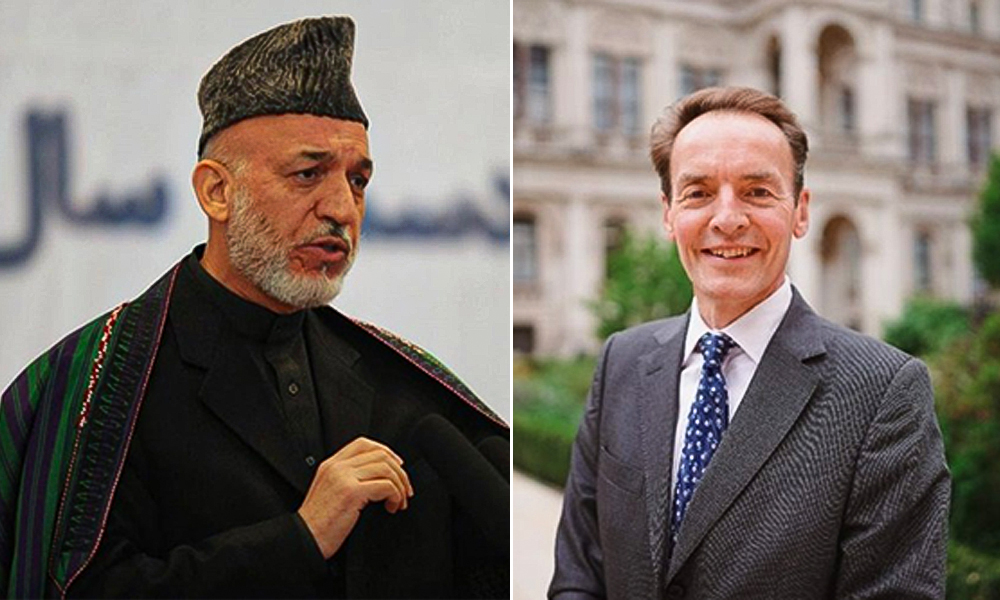
Former Afghan President Hamid Karzai has expressed concern over the dispersal of a protest in the Jebrail area of Herat province by security forces, saying the incident involved violence.
Karzai said: “Our society needs peace and a life full of happiness and friendship.” He added that “the dignity and respect of all Afghan people, especially women, must be fully observed, and conditions for a dignified life must be ensured in their homeland.”
Security forces on Tuesday dispersed a gathering in the Jebrail area of Herat, which, according to Sayed Masoud Hosseini, spokesperson for Herat police, had caused tension and disrupted public order.
Hosseini said the individuals had gathered under the pretext of protesting the issue of hijab and were attempting to disturb public order, adding that the situation was brought under control following the timely intervention of security forces.
Meanwhile, the UK Special Representative for Afghanistan, Richard Lindsay, also reacted to the incident, calling for de-escalation and respect for freedom of expression.
In a post on X on Tuesday evening, Lindsay said: “Deeply concerned by reports of force being used on the streets of Herat. I call for de-escalation, respect for freedom of expression, and accountability for any unlawful harm.”
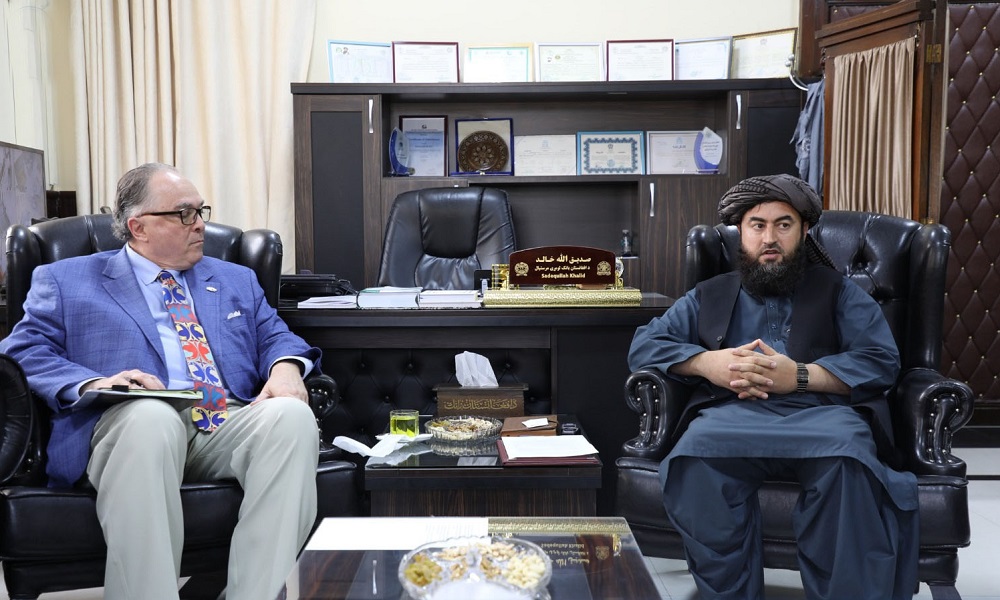
Sediqullah Khalid, First Deputy Governor of Da Afghanistan Bank, met on Tuesday with Jeff Grieco, President and CEO of the Afghan-American Chamber of Commerce (AACC), to discuss expanding banking relations among Afghanistan’s commercial banks, strengthening trade, increasing investment opportunities, and enhancing stability in the banking sector.
According to a statement issued by Da Afghanistan Bank, Khalid said that alongside establishing a stable and robust banking system, the central bank remains committed to supporting the private sector and promoting trade, while working to expand constructive cooperation and relations with domestic and international institutions.
He added: “We believe that strengthening the banking sector and fostering private sector growth are among the key foundations of the country’s economic development and sustainable prosperity.”
Meanwhile, Grieco emphasized the importance of expanding joint cooperation to strengthen banking and trade relations, promote economic growth, facilitate business activities, and support the private sector.
The two also discussed a number of issues, including addressing traders’ banking challenges, electronic banking, international money transfers, improving financial services, and strengthening Afghanistan’s economic activities, according to the statement.


Iran targets US bases in Jordan and the Gulf after Trump orders strikes near Hormuz

ACCI chairman holds talks with U.S. and Russian representatives to boost trade and investment

Pakistani airstrikes on civilian areas in three Afghan provinces kill 13

Tahawol: Calls for Afghanistan’s integration discussed

Karzai, UK envoy react after protest dispersed in Herat

Afghanistan signs $46 million deal to develop standard laboratory complexes

Large blast near Beit Shemesh part of pre-planned test: Israeli defense firm

Trump returns from China with stability but little progress

Afghanistan announce squad for India series

Afghanistan, Russia sign military cooperation agreement
Tahawol: Calls for Afghanistan’s integration discussed

Saar: Alleviating impact of pressure on Afghanistan discussed

Tahawol: The Shadow of War Returns to the Middle East

Saar: New report on US troop withdrawal from Afghanistan

SAAR: UN Security Council Holds Quarterly Meeting on Afghanistan
-

 Sport5 days ago
Gaikwad set to replace injured Kohli for Afghanistan ODI Series
-

 International Sports1 day ago
Norway’s Viking-inspired World Cup team photo goes viral
-

 International Sports5 days ago
Eight Goalkeepers Set to Shine at the 2026 FIFA World Cup
-
 Latest News4 days ago
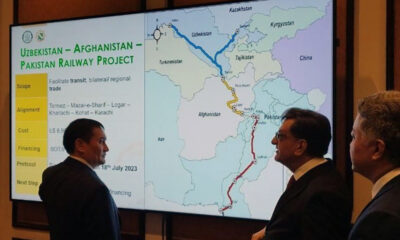
Uzbekistan advances feasibility study for Trans-Afghan Railway Project
-

 International Sports4 days ago
From AI to Robot Dogs: What’s new at FIFA World Cup 2026
-

 Latest News3 days ago
UNAMA voices concern over reported detention of women in Herat
-

 Latest News4 days ago
Karzai welcomes graduation of 74 Afghan girls from US universities
-
 World5 days ago
EU faces risk of 1.3 million job losses amid energy price surge linked to Iran conflict