
Latest News
Relations Between Taliban, Russia Worry Afghans: US Officials

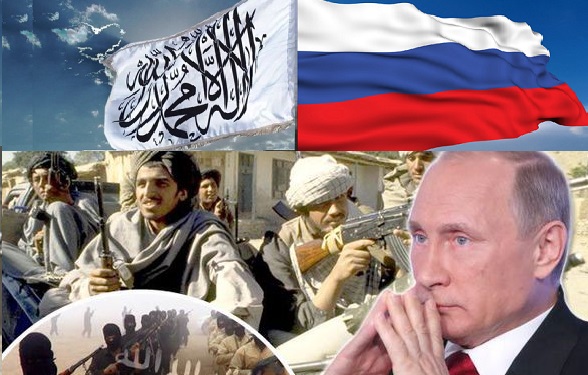
 Afghan and American officials are increasingly worried that any deepening of ties between Russia and Taliban militants fighting to topple the government in Kabul could complicate an already precarious security situation.
Russian officials have denied they provide aid to the insurgents, who are contesting large swathes of territory and inflicting heavy casualties, and say their limited contacts are aimed at bringing the Taliban to the negotiating table.
Leaders in Kabul say Russian support for the Afghan Taliban appears to be mostly political so far.
But a series of recent meetings they say has taken place in Moscow and Tajikistan has made Afghan intelligence and defense officials nervous about more direct support including weapons or funding.
A senior Afghan security official called Russian support for the Taliban a “dangerous new trend”, an analysis echoed by the top U.S. commander in Afghanistan, General John Nicholson.
He told reporters at a briefing in Washington last week that Russia had joined Iran and Pakistan as countries with a “malign influence” in Afghanistan, and said Moscow was lending legitimacy to the Taliban.
Russian Foreign Ministry spokeswoman Maria Zakharova pushed back at Nicholson’s comments in a briefing in Moscow on Wednesday, calling them naive and inaccurate.
“We have repeatedly said that Russia is not carrying out any secret talks with the Taliban and is not providing it with any kind of support,” she said.
Zakharova said Russia favors a negotiated peace in Afghanistan, which can only happen by cultivating contacts with all players, including the Taliban.
The Russian embassy in Kabul has scheduled a press conference for Thursday to discuss Afghan-Russian relations, amid reports that the Afghan parliament plans to investigate Russia’s ties with the Taliban.
ANOTHER “GREAT GAME”?
Afghanistan has long been the scene of international intrigue and intervention, with the British and Russians jockeying for power during the 19th Century “Great Game,” and the United States helping Pakistan provide weapons and funding to Afghan rebels fighting Soviet forces in the 1980s.
Taliban officials told Reuters that the group has had significant contacts with Moscow since at least 2007, adding that Russian involvement did not extend beyond “moral and political support”.
“We had a common enemy,” said one senior Taliban official. “We needed support to get rid of the United States and its allies in Afghanistan and Russia wanted all foreign troops to leave Afghanistan as quickly as possible.”
Moscow has been critical of the United States and NATO over their handling of the war in Afghanistan, but Russia initially helped provide helicopters for the Afghan military and agreed to a supply route for coalition materials through Russia.
Most of that cooperation has fallen apart as relations between Russia and the West deteriorated in recent years over the conflicts in Ukraine and Syria.
Incoming U.S. president Donald Trump, who takes office in January, has signaled a desire to improve relations with Russia, meaning future U.S. and Russian policies could change.
FOREIGN MEETINGS
In recent months, Taliban representatives have held several meetings with Russian officials, according to both Taliban and Afghan government sources.
Those meetings included a visit to Tajikistan by the Taliban shadow governor of Kunduz province, Mullah Abdul Salam, said Kunduz police chief Qasim Jangalbagh.
Another recent meeting occurred in Moscow itself, according to an official at the presidential palace in Kabul.
Afghan officials did not produce evidence of direct Russian aid, but recent cross-border flights by unidentified helicopters and seizures of brand new “Russian-made” guns had raised concerns that regional actors may be playing a larger role, Jangalbagh said.
“If the Taliban get their hands on anti-aircraft guns provided, for example, by Russia, then it is a game-changer, and forget about peace,” said another senior Afghan security official.
ISLAMIC STATE OR UNITED STATES?
According to Afghan and U.S. officials, Russian representatives have maintained that government security forces, backed by U.S. special forces and air strikes, have not done enough to stem the growth of Islamic State in Afghanistan.
Militants loyal to the radical Middle East-based network have carved out territory along the border with Pakistan, and have found themselves fighting not only Afghan and foreign troops, but also the Taliban, who compete for land, influence, and fighters.
Taliban officials dismissed the idea that their ties to Russia had anything to do with fighting Islamic State.
“In early 2008, when Russia began supporting us, ISIS(Islamic State) didn’t exist anywhere in the world,” the senior Taliban official said. “Their sole purpose was to strengthen us against the U.S. and its allies.”
That was echoed by Taliban spokesman Zabihullah Mujahid, who said “ISIS is not an issue”.
Nicholson said the talk of Islamic State is a smokescreen designed to justify Russian policies.
“Their (Russia’s) narrative goes something like this: that the Taliban are the ones fighting Islamic State, not the Afghan government,” Nicholson said.
“So this public legitimacy that Russia lends to the Taliban is not based on fact, but is used as a way to essentially undermine the Afghan government and the NATO efforts and bolster the belligerents.”
Written by Reuters

The Directorate of Child Protection at the Ministry of Labor and Social Affairs announced on Saturday that in the solar year 1404, through the implementation of extensive support programs and the handling of thousands of protective cases, it has achieved significant accomplishments in securing rights, raising awareness, and improving the situation of children across Afghanistan.
According to the directorate, the registered cases have been organized into 23 different categories, allowing for targeted and specialized handling of each type of case. In the area of awareness-raising, extensive programs have also been implemented to improve the general knowledge of children and their families, resulting in 404,207 children and family members being informed about child rights, explosive hazards, environmental protection, and other important topics.
To strengthen local structures and accelerate case management, the Directorate of Child Protection, within the framework of its 1404 work plan, established 20 new committees at the district level in provincial centers. These committees play a key role in coordinating between government offices, rapidly identifying cases, and providing support services. Currently, child protection committees are active in 204 districts and regularly review and resolve children’s issues.
Latest News
Severe rainfall and natural disasters cause heavy casualties across Afghanistan
At least 61 people have been confirmed dead, with 116 others injured. Four individuals remain unaccounted for as search and rescue operations are underway.
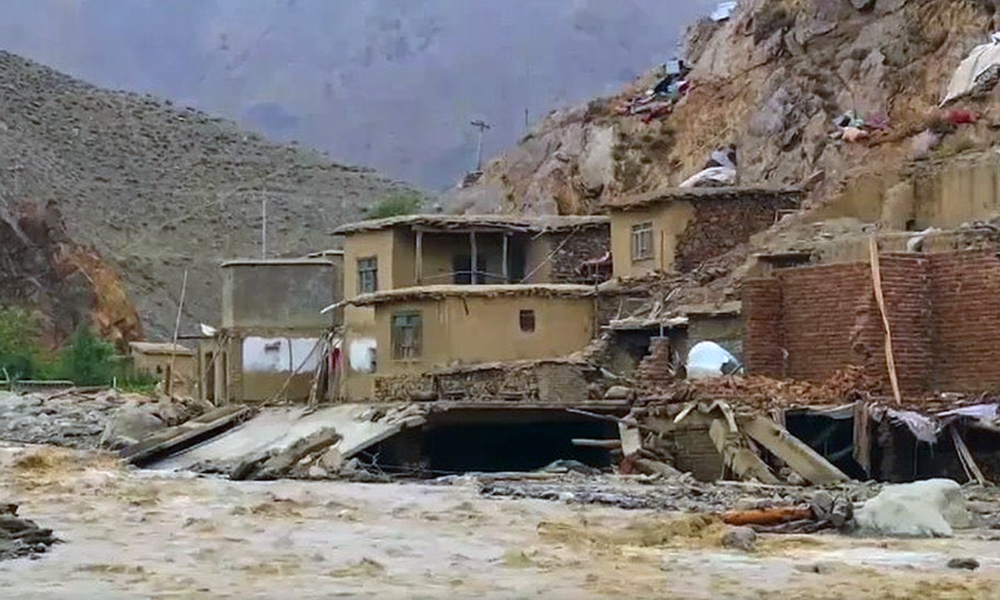
The Spokesperson for the Islamic Emirate of Afghanistan, Zabihullah Mujahid, has confirmed widespread devastation across the country following a series of natural disasters and heavy rainfall. The toll continues to rise as authorities assess the damage.
At least 61 people have been confirmed dead, with 116 others injured. Four individuals remain unaccounted for as search and rescue operations are underway. The disaster has also led to the destruction of 2,448 homes, leaving thousands displaced, while 26,841 acres of agricultural land have been severely damaged. In addition, the storm claimed the lives of 1,045 livestock animals, further exacerbating the already dire situation for rural communities.
In a statement, Mujahid emphasized the ongoing relief efforts. The Islamic Emirate is mobilizing all available resources to assist the hardest-hit regions and ensure the swift recovery of affected communities. The focus remains on providing immediate aid, including shelter, medical supplies, and food, while also beginning the long-term process of reconstruction and recovery.
Authorities have urged citizens in vulnerable areas to remain vigilant as more rain is forecast, adding to the urgency of the ongoing relief operations.
Latest News
Afghan citizens reported among casualties in US, Israeli attacks, Iran says
As of now, authorities of the Islamic Emirate of Afghanistan have not issued an official response to the claims.
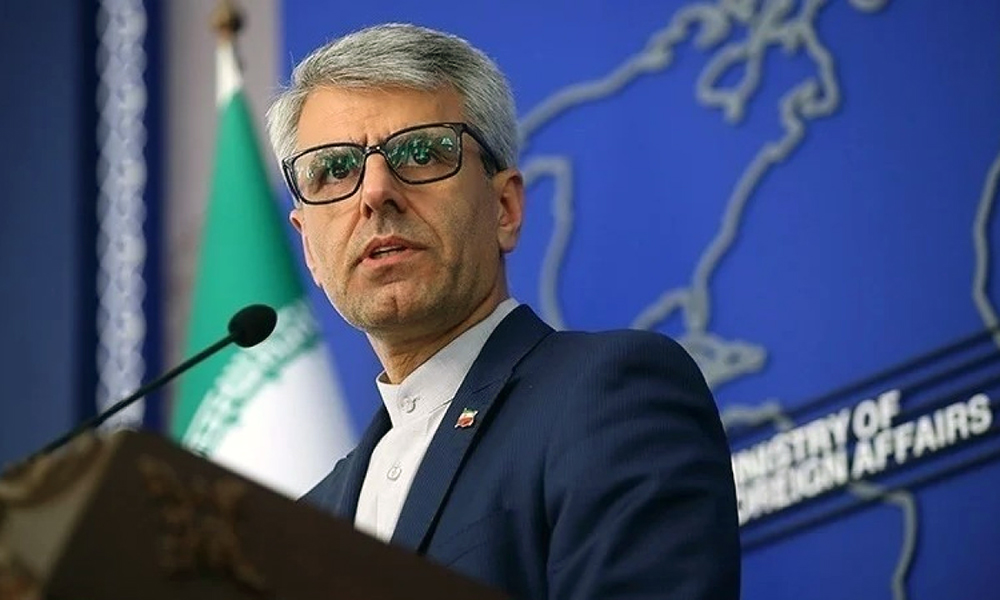
Iran’s Embassy in Kabul, citing Foreign Ministry spokesperson Esmaeil Baghaei, has stated that a number of Afghan citizens were killed or injured during what Tehran described as a 35-day military campaign carried out by the United States and Israel.
According to the statement, the Afghan nationals were living in Iran at the time of the attacks. Baghaei referred to them as “honored guests” of the country, adding that some lost their lives while others sustained injuries during the reported strikes.
He did not provide specific figures regarding the number of Afghan casualties or further details about the incidents.
As of now, authorities of the Islamic Emirate of Afghanistan have not issued an official response to the claims.


Around 15,000 cases of vulnerable Afghan children addressed over past year

Severe rainfall and natural disasters cause heavy casualties across Afghanistan

Kazakhstan eyes rare metals mining projects in Afghanistan and Rwanda

Afghan citizens reported among casualties in US, Israeli attacks, Iran says

Save the Children: Nearly one Afghan child killed or injured daily by explosive remnants

Prominent Muslim scholar issues fatwa calling for Afghanistan-Pakistan ceasefire

IEA Supreme Leader issues Eid-ul-Fitr message urging unity and support for Islamic system

14 Pakistani soldiers killed after military post falls along Durand line: MoD

Afghanistan steps in to replace Iran in supplying fruits and vegetables to Russia

Afghan airstrikes target Pakistani military sites in retaliation for air attacks

Tawsia: This week’s key economic developments in Afghanistan discussed

Tahawol: Start of talks between Kabul-Islamabad in China discussed

Saar: Ongoing US and Israeli attacks on Iran discussed

Tahawol: Ongoing US–Israeli war with Iran discussed

Saar: Afghanistan-Pakistan talks in China discussed
-
 Latest News5 days ago
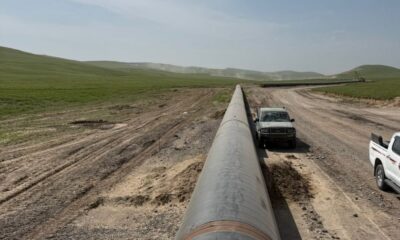
TAPI gas pipeline advances 25 km in Afghanistan
-
 Latest News3 days ago
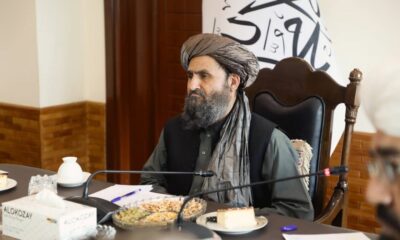
Baradar approves 17 projects worth over one billion AFN
-
 Business4 days ago
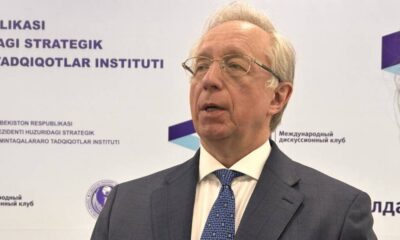
Russia backs Uzbekistan–Afghanistan trade hub, praises regional economic cooperation
-
 Sport4 days ago
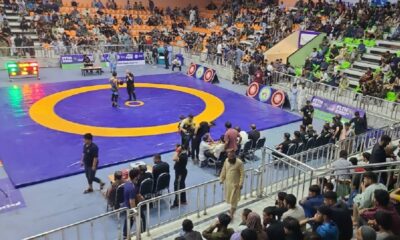
ATN secures broadcast rights for inaugural Afghanistan Wrestling Premier League
-

 Sport3 days ago
ATN to broadcast second season of Ariana Snooker Championship
-
 Regional4 days ago
Gas pipeline blown up in southern Pakistan, says official
-

 Sport4 days ago
Rajasthan Royals outclass Chennai Super Kings as IPL action continues
-
 Latest News4 days ago
Islamic Relief Worldwide urges Afghanistan–Pakistan de-escalation, calls for aid to displaced