
Latest News
Terrorist attacks in Pakistan originate from Afghanistan: Khawaja Asif

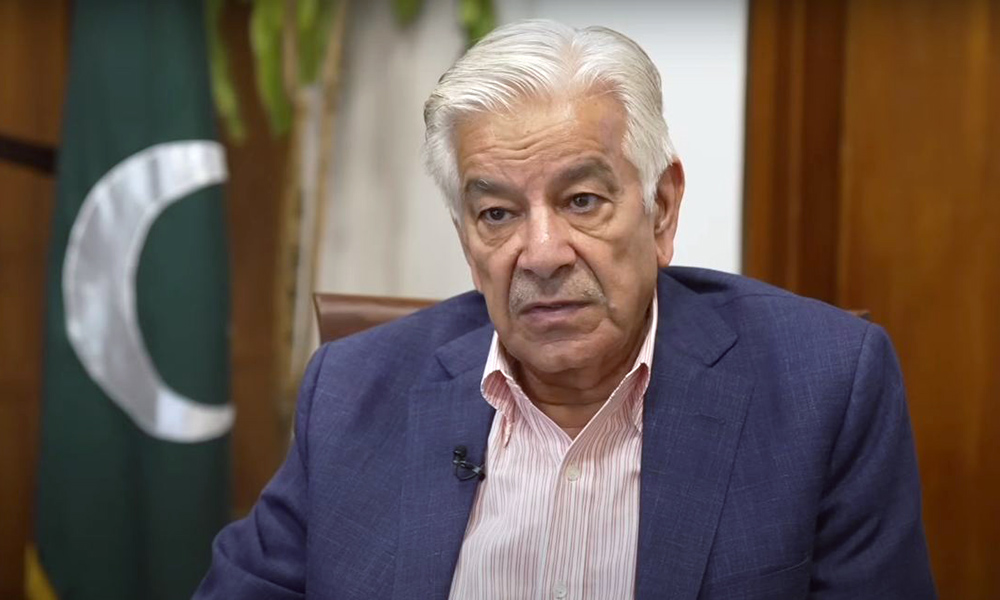
Pakistan’s Defense Minister Khawaja Asif has claimed that terrorism is being exported from Afghanistan into Pakistan. In a meeting held in response to recent Indian accusations regarding Islamabad’s role in a deadly attack in Kashmir, he stated that many terrorist attacks on Pakistani soil originate from Afghanistan and are accompanied by “clear Indian footprints.”
“Terrorism is being exported to Pakistan, and everything that originates from Afghanistan or happens in Balochistan clearly bears India’s fingerprints,” said Asif.
He emphasized that Pakistan is prepared to defend itself against any external threat, including terrorism.
He also claimed that Pakistan has been on the front lines of the fight against terrorism for years.
However, following this meeting, Asif admitted in an interview with a British media outlet that successive Pakistani governments have supported terrorist groups over the past three decades.
Following a deadly attack on tourists in the Pahalgam region of Indian-administered Kashmir, 26 tourists were killed and 17 others injured.
Meanwhile, experts believe that Afghanistan’s interests should be kept away from regional conflicts, and that the Islamic Emirate should not allow Afghanistan to become a battleground for a proxy war between India and Pakistan.
So far, the Islamic Emirate has not commented on Khawaja Asif’s remarks, but it had previously linked insecurity in Pakistan to internal issues within that country.
IEA has repeatedly emphasized that it will not allow Afghanistan’s soil to be used against any other country.





Latest News
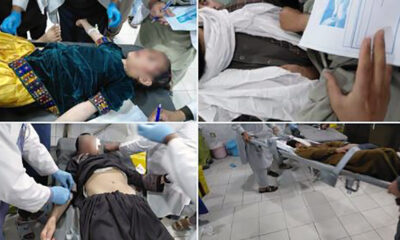
Pakistan shelling in Afghanistan’s Kunar leaves civilian casualties, says IEA
Earlier this month, Afghanistan said that a Pakistani airstrike had hit a drug treatment hospital in Kabul, killing more than 400 people.
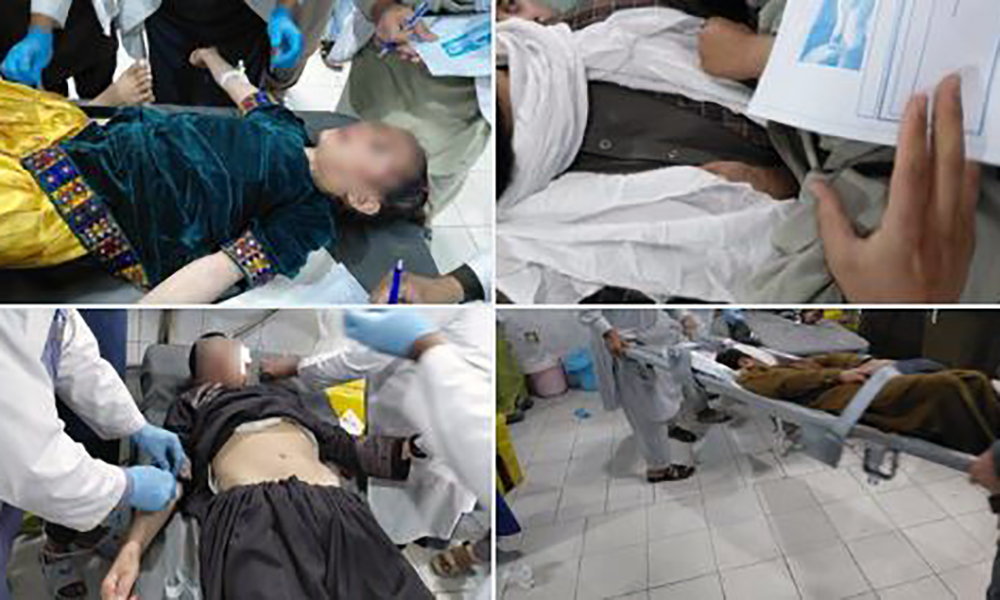
The Deputy Spokesman of the Islamic Emirate of Afghanistan, Hamdullah Fitrat, says Pakistani forces carried out heavy shelling on civilian areas in eastern Afghanistan, leaving several residents injured and one person dead.
In a statement issued on Sunday, Fitrat said that members of the Pakistani military regime fired mortars and other heavy weapons at around 5 pm on rural areas and residential neighborhoods on the outskirts of Asadabad, the provincial capital of Kunar Province.
According to him, the attacks targeted villages and civilian homes, resulting in casualties among local residents. Preliminary reports indicate that at least 16 people were injured—most of them women and children—while one person was killed in the incident.
“Once again, the militias of the Pakistani military regime conducted shelling on rural areas and civilian residences located on the outskirts of Asadabad using mortars and other heavy weaponry,” Fitrat stated.
Local sources say the shelling created panic among residents in surrounding communities, forcing some families to leave their homes due to fears of further attacks. Authorities say investigations are ongoing to determine the full extent of the damage and casualties.
Earlier this month, Afghanistan said that a Pakistani airstrike had hit a drug treatment hospital in Kabul, killing more than 400 people.
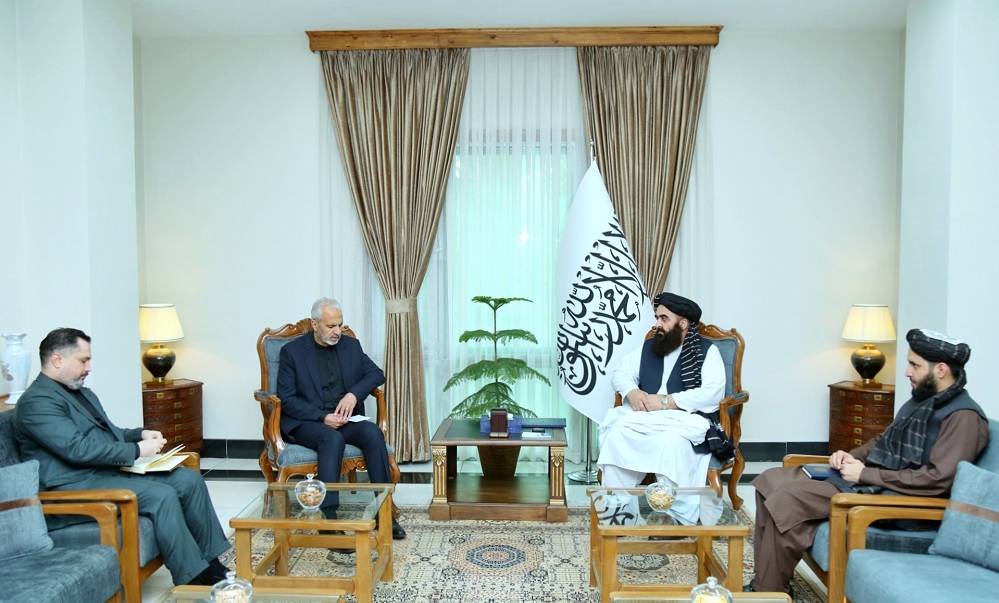
Amir Khan Muttaqi, Foreign Minister of the Islamic Emirate of Afghanistan, met with Ali-Reza Beikdeli, Iran’s acting ambassador in Kabul, to discuss bilateral relations and regional developments.
According to a statement from the Afghan Ministry of Foreign Affairs, Muttaqi criticized what he called the “aggression” of the United States and Israel against Iran, warning that the expansion of conflict to other countries affects the entire region.
He also highlighted the growing trade relations between Afghanistan and Iran, describing them as a positive sign of cooperation. In addition, Muttaqi praised the “constructive stance” of Iranian officials regarding recent tensions between Afghanistan and Pakistan, emphasizing that the resolution of legitimate concerns from both sides is only possible through genuine dialogue.
Beikdeli reaffirmed Iran’s position on U.S. and Israeli actions and described bilateral cooperation with Afghanistan—particularly in trade—as positive. He added that Iran’s leadership is closely monitoring the situation between Afghanistan and Pakistan and supports a peaceful resolution.
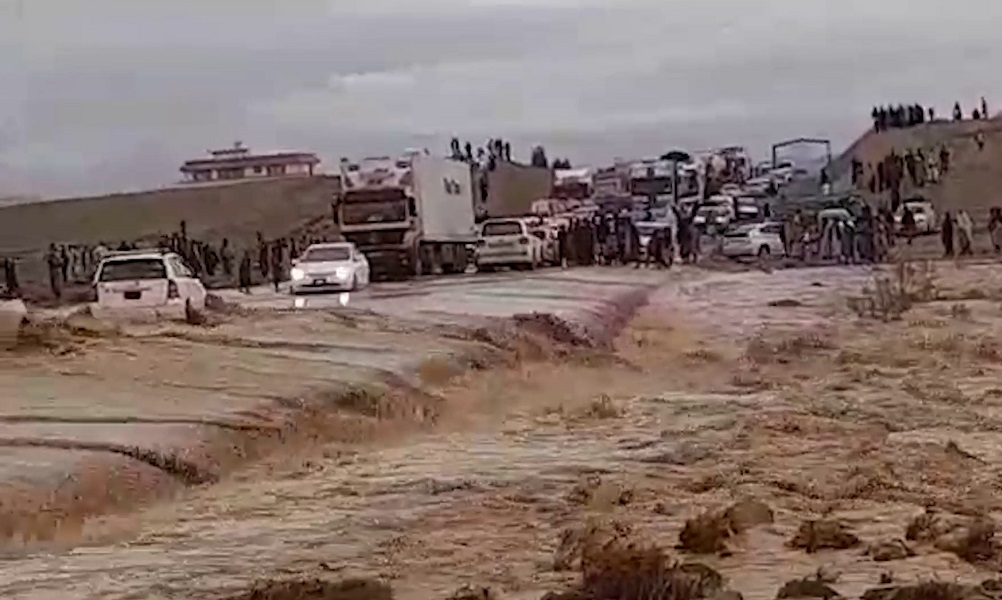
At least 17 people have lost their lives and 26 others have been injured as floods, landslides, and lightning strikes hit multiple provinces across Afghanistan, authorities said on Sunday.
Yousuf Hammad, spokesperson for the National Disaster Management Authority, said that in the past 24 hours, the provinces of Parwan, Daikundi, Maidan Wardak, Logar, Herat, Farah, Ghor, Badghis, Samangan, Sar-e Pol, Jowzjan, Faryab, and Laghman were all affected by natural disasters.
The disasters have also caused significant property damage. Thirty-seven homes were completely destroyed, while 110 others suffered partial damage. Around 80 kilometers of roads and 582 jeribs of agricultural land were damaged or destroyed.
Authorities emphasized that emergency response efforts are ongoing to provide relief and assistance to the affected communities.


Pakistan shelling in Afghanistan’s Kunar leaves civilian casualties, says IEA

Pakistan hosts regional powers for Iran talks, with focus on Hormuz proposals

Tahawol: Efforts for Kabul-Islamabad de-escalation

Saar: Restrictions on girls’ education in Afghanistan discussed

Bamyan hosts ski competition sponsored by AWCC

Prominent Muslim scholar issues fatwa calling for Afghanistan-Pakistan ceasefire

Afghan air force strikes key Pakistani military installations in retaliatory operation

IEA Supreme Leader issues Eid-ul-Fitr message urging unity and support for Islamic system

14 Pakistani soldiers killed after military post falls along Durand line: MoD

Ronaldo’s private jet flies out of Saudi Arabia following US Embassy drone strike in Riyadh
Tahawol: Efforts for Kabul-Islamabad de-escalation
Saar: Restrictions on girls’ education in Afghanistan discussed

Tahawol: Concerns over spread of Middle East crisis discussed

Saar: Weakening relations between Kabul and Washington discussed

Exclusive interview with Indrika Ratwatte, Deputy UN Special Representative for Afghanistan
-
 Latest News4 days ago
Tajikistan shifts stance on Afghanistan amid rising border tensions
-
 Latest News3 days ago
Russia deems US military presence in Afghanistan unacceptable
-
 Latest News3 days ago
IEA says Iranian drivers no longer need visas to enter Afghanistan
-
 Latest News5 days ago
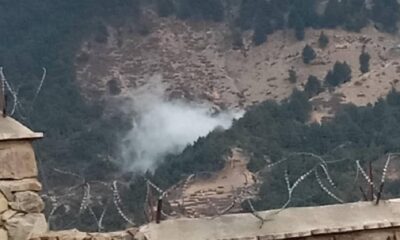
Two civilians killed, eight injured in fresh shelling by Pakistan in Kunar
-

 Sport5 days ago
IPL 2026: RCB sold for $1.78 billion in landmark deal
-

 Sport4 days ago
Myanmar trump Afghanistan 2-1 in Asian Cup Qualifier
-
 Latest News2 days ago
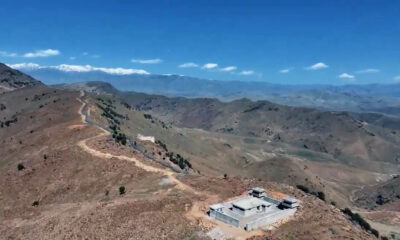
Afghan defense forces stand ready to protect national sovereignty: MoD
-

 Sport4 days ago
Afghanistan to face Myanmar in crucial AFC clash