
Business
Torkham Border Crossing to Remain Operational Round-the-Clock

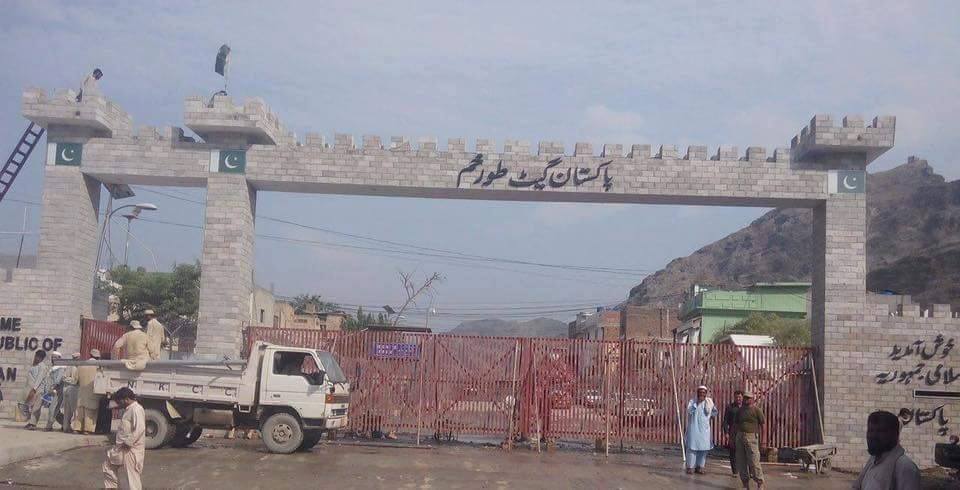 The Torkham border crossing between Afghanistan and Pakistan will remain operational round-the-clock on a trial basis from Monday, Pakistani officials announced on Sunday.
Torkham is one of the busiest ports of entry between Kabul and Islamabad and serves as a major transportation and shipping site.
According to Pakistani officials, the border crossing will be operational 24/7 for two to three weeks before Pakistan Prime Minister Imran Khan formally inaugurate it.
Afghan officials welcomed the move by Pakistan, saying Afghanistan want to have close business relations with all of its neighboring countries.
“Pakistan is an important business partner for Afghanistan. We want to have better relations in order to pave facilities for our traders,” Sameer Rasa, Spokesman for the Afghan Ministry of Commerce and Industries told Ariana News.
“We hope the Afghan government pressure Pakistan to facilitate the exporting of Afghan goods to Pakistan or to other countries through Pakistan,” said Sakhi Ahmad Payman, Deputy of Afghanistan Chamber of Industries and Mines.
“I welcome the move by Pakistan because the 24/7 operation will be in the benefit of Afghanistan and Pakistan and it will increase the level of import and export between the two countries,” said Jan Aqa Nawid, a Spokesman for Afghanistan Chamber of Commerce and Investment.
This comes after bilateral trade volume between Afghanistan and Pakistan reached its lowest level due to trade barriers at Torkham border crossing.
Meanwhile, Afghanistan launched its National Air Corridor Program to several countries including India, Turkey, Saudi Arabia, European Union, Kazakhstan, China, and UAE in order to grow its economy, create employment opportunities, and decrease its independence to its neighboring countries.






Business
Uzbekistan reports strong surge in trade with global partners led by China
China accounts for 23.6% of total foreign trade turnover, followed by Russia with 17.2%, Kazakhstan with 6.9%, Turkey with 3.5%, and Afghanistan with 2.8%.
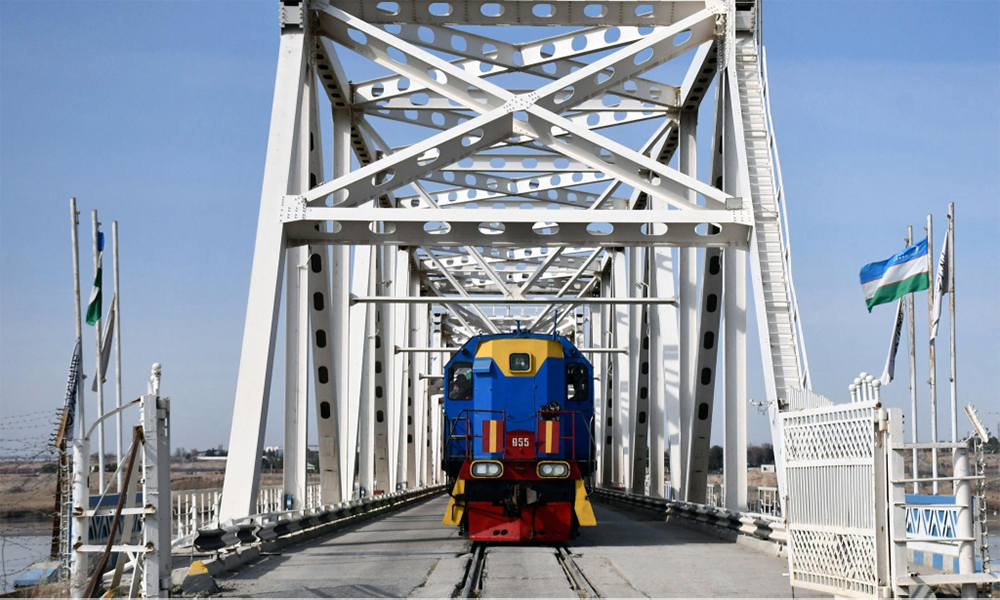
Uzbekistan has recorded a significant increase in foreign trade during January–April 2026, driven by expanding economic ties with China and steady growth across Central Asia, the Middle East, and Europe, according to official statistics.
Data from the National Statistics Committee show that China remained Uzbekistan’s largest trading partner, with bilateral trade reaching $6.23 billion, up sharply from $4.17 billion in the same period last year. Russia followed with $4.52 billion, while Kazakhstan ranked third at $1.81 billion.
Other key partners included Turkey, Afghanistan, South Korea, the United Arab Emirates, and France, with additional growth recorded in trade with Germany, India, Belarus, Kyrgyzstan, and several other countries.
The fastest-growing trade relationships were seen with the United Arab Emirates, Ireland, Afghanistan, and Vietnam, highlighting Uzbekistan’s continued efforts to diversify its external economic partnerships.
Overall, Uzbekistan now maintains trade relations with more than 175 countries. China accounts for 23.6% of total foreign trade turnover, followed by Russia with 17.2%, Kazakhstan with 6.9%, Turkey with 3.5%, and Afghanistan with 2.8%.
Exports remain largely dominated by goods, making up 65.3% of outbound trade, including industrial products, chemicals, manufactured goods, and food products, according to official data.
Business
Tashkent Deputy Governor set to visit Kabul with Uzbek trade delegation
The Deputy Governor accepted the invitation and said he plans to travel to Kabul in the coming months at the head of a trade delegation.
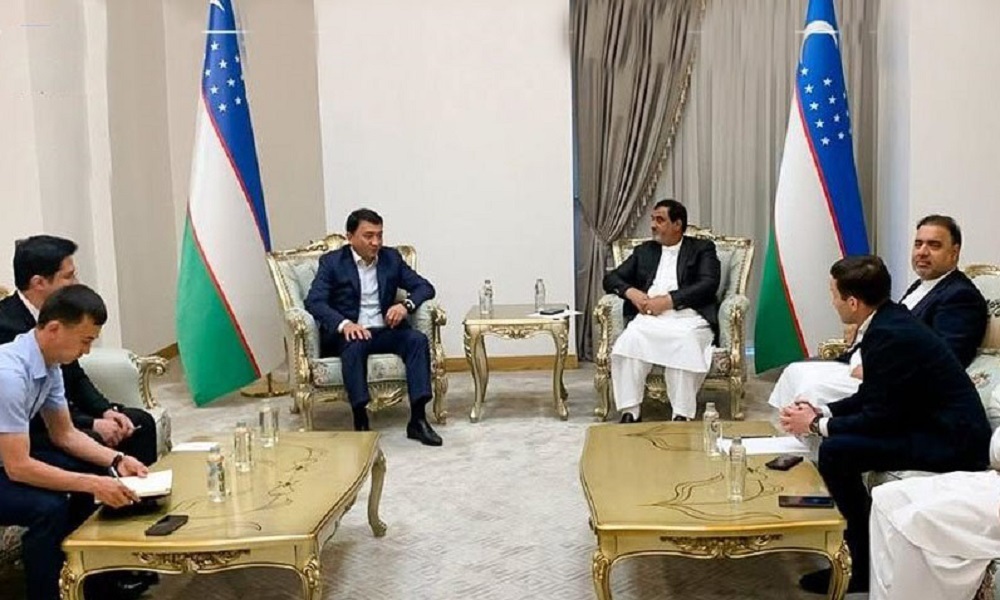
Sayed Karim Hashemi, Director General of the Afghanistan Chamber of Commerce and Investment (ACCI), has met with the Deputy Governor of Tashkent to discuss expanding trade and economic cooperation between Afghanistan and Uzbekistan.
During the meeting, Hashemi highlighted the growing economic ties between Kabul and Tashkent, noting that the ACCI has hosted several Uzbek governors and trade delegations in recent years. He also expressed satisfaction with the increase in bilateral trade between the two countries and invited the Tashkent Deputy Governor to visit Kabul.
The Deputy Governor accepted the invitation and said he plans to travel to Kabul in the coming months at the head of a trade delegation.
He welcomed the expansion of cooperation between the chambers of commerce of Afghanistan and Uzbekistan and described the establishment of Uzbek trade houses in Kabul, Balkh, Herat, and Nangarhar provinces as a significant step toward strengthening trade relations.
The Tashkent official also emphasized the importance of sustaining economic and commercial cooperation and pledged continued support for Afghanistan’s private sector through all available means.
Business
Afghanistan highlights strategic connectivity role at Termez Dialogue
Azizi stressed that shared economic interests can play a crucial role in fostering lasting peace, mutual trust, and regional stability.
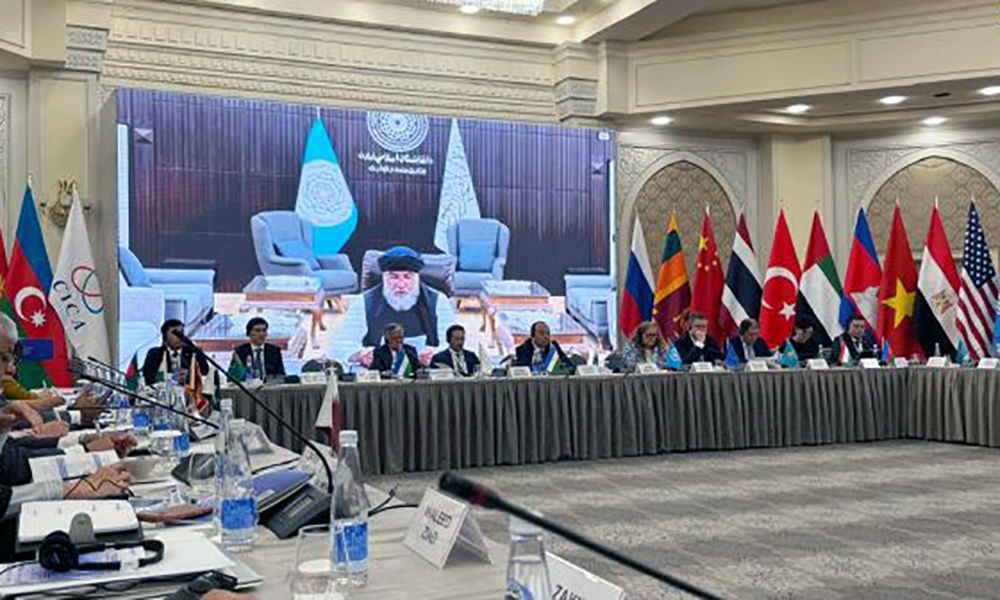
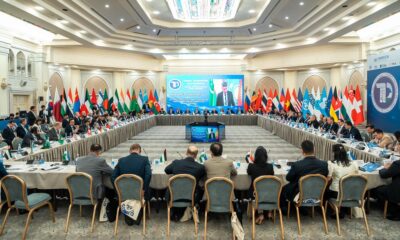
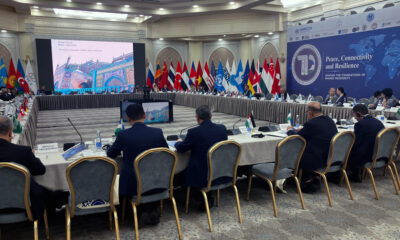
Afghanistan has reaffirmed its commitment to regional economic integration, highlighting its strategic position as a vital link between Central and South Asia during the second Termez Dialogue on Connectivity.
Afghanistan’s Minister of Industry and Commerce, Nooruddin Azizi, participated in the forum, which brought together senior government officials, representatives of the United Nations, the European Union, and regional organizations under the theme, “Peace, Connectivity and Prosperity: Building the Foundations of Shared Development.”
Addressing the high-level session virtually, Azizi emphasized Afghanistan’s vision of expanding regional trade, strengthening economic cooperation, and maximizing the country’s transit potential.
According to the Ministry of Industry and Commerce, Azizi noted that Afghanistan’s geographic location uniquely positions it to serve as a bridge between Central and South Asia, facilitating the movement of goods, investment, and people across the region.
He also highlighted the Trans-Afghan Railway Project as a key regional connectivity initiative, saying it would help link rail networks, boost trade and transit, and deepen economic cooperation among participating countries.
Azizi stressed that shared economic interests can play a crucial role in fostering lasting peace, mutual trust, and regional stability.
Representatives from Uzbekistan, Kazakhstan, Kyrgyzstan, Tajikistan, Turkmenistan, Azerbaijan, India, and Bangladesh also attended the dialogue, underscoring the importance of expanding economic partnerships and developing new trade corridors.
Afghanistan’s participation reflects its growing role in regional transit and infrastructure initiatives aimed at strengthening connectivity and economic growth across Central and South Asia.


EU appoints Nicola Bellomo as new chargé d’affaires for Afghanistan

US eyes Iranian assets for Gulf allies’ reconstruction, source says

Tahawol: Impact of Middle East crisis on aid transfers to Afghanistan

Saar: Calls to strengthen economic and trade cooperation discussed

Afghan ambassador in Moscow, Russian deputy PM discuss economic ties

New Afghanistan-China transport corridor launched via Turkmenistan

Afghanistan signs $46 million deal to develop standard laboratory complexes

Large blast near Beit Shemesh part of pre-planned test: Israeli defense firm

Trump returns from China with stability but little progress

Afghanistan announce squad for India series
Tahawol: Impact of Middle East crisis on aid transfers to Afghanistan
Saar: Calls to strengthen economic and trade cooperation discussed

Tawsia: Signing of $20 million Herat salt mining deal discussed

Tahawol: Discussion on fear of internal disputes in Iran

Tahawol: Welcoming Qatar’s cooperation with Afghanistan discussed
-
 Business4 days ago
Afghanistan’s trade with Central Asia records sharp growth
-
 Latest News5 days ago
Russian business official proposes visa-free travel between Russia and Afghanistan
-

 Sport2 days ago
Gaikwad set to replace injured Kohli for Afghanistan ODI Series
-

 Sport5 days ago
Six Afghan cricketers selected for 2026 Lanka Premier League
-

 Latest News4 days ago
Three Afghans among four farmworkers burned alive in Italy; two Pakistanis arrested
-

 Sport3 days ago
Afghanistan name squad for A-team tri-series in Sri Lanka
-
 Latest News5 days ago
Karzai blames Pakistan’s policies for its security challenges, urges EU to consider regional realities
-

 Sport5 days ago
Afghanistan to host India for historic T20I series in Delhi: reports