
World
Israel, Lebanon agree to implement ceasefire, boosting hopes for Iran deal
Trump said that parties were working to separate the issue of reopening the strait from the conflict in Lebanon.

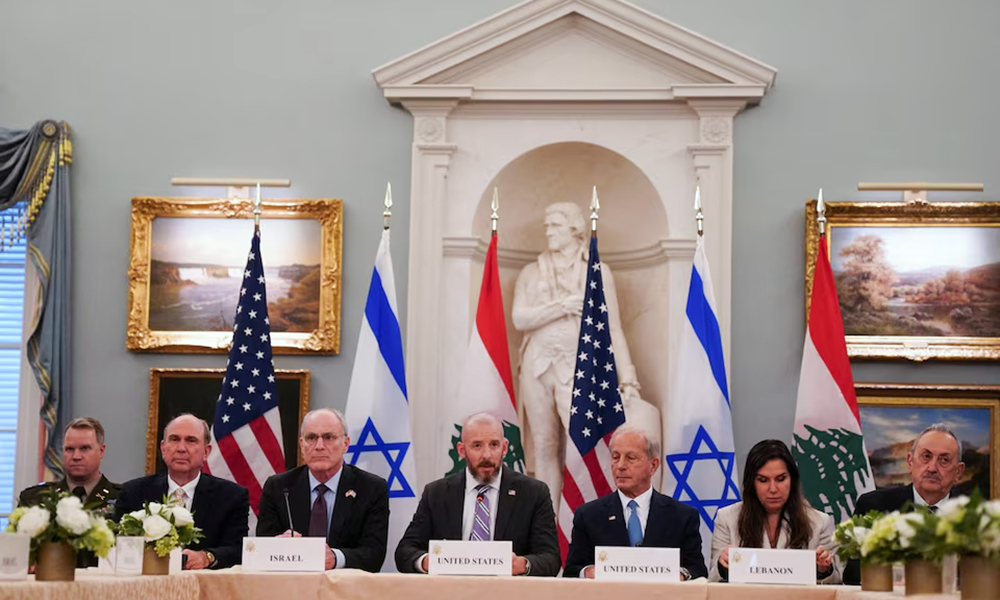
Israel and Lebanon agreed to implement a ceasefire to end hostilities, the Trump administration said on Wednesday, in a boost to hopes for a broader deal to end the U.S.-Israeli war on Iran, Reuters reported.
Tehran, which had conditioned any deal with the U.S. in part on an end to fighting between Israel and Lebanon, earlier struck Kuwait, damaging its airport and injuring dozens while the U.S. military carried out strikes near the Strait of Hormuz.The Israel-Lebanon ceasefire is contingent on a complete cessation of fire from the Iran-aligned Hezbollah militia and the evacuation of all its operatives from the South Litani Sector, a joint statement released by the U.S. State Department said following negotiations in Washington.
The two sides had agreed last month to a ceasefire but hostilities had continued. Israel invaded Lebanon in March in pursuit of Lebanese militant group Hezbollah, which fired across the border in support of Tehran.
The attacks on Kuwait and in the strait are the latest to test a shaky ceasefire between the U.S., Israel and Iran, sending oil prices up nearly 2%, as the strait remains largely closed more than three months after the U.S. and Israel launched strikes on Iran.
Flights at Kuwait International Airport were suspended after an Iranian drone and missile attack damaged airport facilities and diplomatic missions, killing one person and injuring more than 60 others, Kuwaiti authorities and state media said.
Kuwait Airways and Jazeera Airways later resumed flights after taking safety measures, the civil aviation authority said.
Iran’s elite Revolutionary Guards said they did not fire at Kuwait’s airport and blamed the destruction on U.S. interceptor missiles that failed to hit their targets, according to Iranian state media.
The U.S. military said that was not accurate, and that Iranian drones targeted the airport deliberately.
Earlier, Iranian media reported the Revolutionary Guards had attacked the headquarters of the U.S. Fifth Fleet in Bahrain and a U.S. airbase, as well as a vessel identified as Panaya. U.S. Central Command denied its bases had been hit and said Iranian ballistic missiles failed to strike their targets in the region.
CENTCOM said it had carried out a new round of “defensive strikes” in southern Iran, targeted missile launch sites and Iranian boats seeking to lay mines, and conducted strikes on Qeshm Island near the Strait of Hormuz after attempted Iranian attacks, read the report.
Since the U.S. and Israeli strikes on Iran began on February 28, Tehran has repeatedly attacked targets in the Gulf region, home to U.S. military bases.
Hostilities have periodically flared up in recent weeks despite a ceasefire agreed in early April, as the U.S. has pushed to reopen the Strait of Hormuz, which handled roughly a fifth of global oil and liquefied natural gas shipments before the war.
Last week, Iran and the U.S. signalled progress towards a tentative initial agreement to halt the war and reopen the strait, but the two sides have yet to sign off on the deal, which would leave more complex negotiations for later.
Iran’s Foreign Minister Abbas Araqchi told Lebanese broadcaster Al Mayadeen on Wednesday that talks had not been cut off but no progress had been made.
In addition to Tehran conditioning a deal on an end to fighting in Lebanon, it also wants access to billions of dollars in oil revenue, waivers on sanctions on crude exports, a lifting of a U.S. blockade on its ports and continued leverage over the strait.
U.S. President Donald Trump, who is under pressure to bring down fuel prices, has said his top priority is to stop Iran from acquiring nuclear weapons. Iran says its atomic program is for peaceful purposes. In a podcast interview released on Wednesday, Trump said Iran had agreed to not have a nuclear weapon and that Khamenei was involved in negotiations, Reuters reported.
Later on Wednesday Trump suggested there could be progress in negotiations with Iran as soon as this weekend.
“If it happens, it could happen over the weekend,” Trump told reporters in the White House’s Oval Office, without elaborating on what he expected to happen within that timeframe.
Trump said that parties were working to separate the issue of reopening the strait from the conflict in Lebanon.
The war has killed thousands, mainly in Iran and Lebanon, while causing global economic pain by severely disrupting energy supplies and other shipping.
It also sparked the latest round of conflict between Israel and Hezbollah.
On Wednesday, Israeli drone strikes killed at least six people in southern Lebanon and targeted a car just south of Beirut, Lebanese security sources said, while Israel said it intercepted a hostile aircraft likely fired by Hezbollah.
Araqchi said Iran would respond decisively if Israel attacks Beirut.
In his podcast comments, Trump acknowledged having called Israel’s Prime Minister Benjamin Netanyahu “crazy” during a reportedly expletive-filled phone exchange over the fighting in Lebanon as he sought a deal over the wider war.
“At some point I said, Bibi, we got to stop this. We got to stop it,” Trump said, referring to Netanyahu by his nickname.
Netanyahu told CNBC in an interview that he and Trump sometimes had “tactical disagreements” but that they agreed on the main issues concerning Iran.





World
Violent protests spread across Europe as Albanian PM blames ‘foreign hand’
Hundreds of thousands of people took to the streets in separate demonstrations over the weekend, with some rallies escalating into looting, arson and confrontations with security forces.
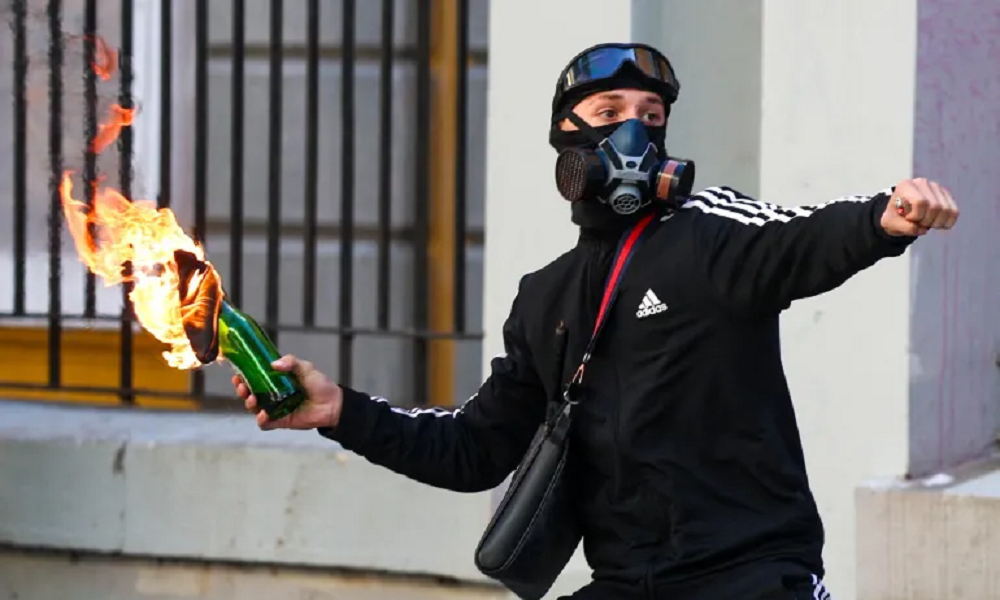
Demonstrations over living costs, housing, education and alleged corruption have triggered clashes with police in several countries across Europe, putting governments under mounting pressure.
Protests and violent clashes have spread this month, with demonstrations in France, Belgium, Italy, Portugal and Albania exposing growing public frustration over economic pressures, education and government accountability.
Hundreds of thousands of people took to the streets in separate demonstrations over the weekend, with some rallies escalating into looting, arson and confrontations with security forces.
In Albania, Prime Minister Edi Rama accused unnamed foreign forces of fuelling the unrest, describing the violence as the work of an “outside hand” seeking to destabilise the country and undermine its ambitions to join the European Union.
The accusation comes as thousands of demonstrators in the capital, Tirana, demand Rama’s resignation, while protests have also spread to other Albanian cities.
Albania protests escalate
Albania has experienced several days of increasingly violent anti-government demonstrations, with students joining a broader movement against Rama’s government.
Protesters have raised concerns about alleged corruption, university conditions, education costs and unemployment. Opposition to a controversial luxury tourism development along Albania’s southern coastline has also contributed to the wider discontent. The project has been linked to Jared Kushner, the son-in-law of US President Donald Trump.
Clashes in Tirana have seen demonstrators throw stones, fireworks and petrol bombs at police, while government buildings and other property have been damaged by fires and vandalism.
Police have responded with tear gas, water cannons and rubber bullets. Authorities have also reported numerous detentions and injuries among protesters and officers.
Rama has rejected calls to resign, arguing that the violence threatens Albania’s European integration ambitions. He has said the government is prepared to address legitimate student concerns but will not yield to demands made through violence.
His claims of foreign interference have not however been independently established.
France sees widespread unrest
France experienced some of the largest demonstrations, with more than 550,000 people taking part in rallies over the weekend.
What began as demonstrations involving students broadened into protests over the cost of living and wider social grievances. Violence erupted in several cities on Saturday, with masked groups targeting shops, supermarkets and public buildings.
French Prime Minister Sébastien Lecornu said more than 1,200 people had been arrested and 150 police officers injured. In Limoges, a fire largely destroyed the historic town hall, while other municipal buildings and businesses were vandalised or looted.
President Emmanuel Macron vowed that those responsible for the violence would face prosecution.
Clashes in Belgium and Italy
In Brussels, Belgian police used tear gas and water cannons to disperse demonstrators after accusing some protesters of throwing objects at officers and starting fires. Similar tactics were used in Liège.
The unrest followed weeks of student protests over university registration fees and reflected wider concerns about the affordability of education and everyday expenses.
In Milan, Italy, a march against war and rising living costs descended into clashes as masked protesters threw stones and paving blocks at riot police, looted shops and set fire to barricades.
Police used tear gas and water cannons to clear crowds from the city centre. At least two officers were injured and about 50 demonstrators were detained, according to Italian news agency LaPresse.
Prime Minister Giorgia Meloni condemned the violence, while Milan Mayor Giuseppe Sala said protesters’ concerns were understandable but that attacks on police and damage to public property were unacceptable.
Clashes were also reported in Bologna.
Housing and wages drive protests in Portugal
In Lisbon, tens of thousands of people marched on Saturday against rising living costs, low wages and the difficulty of finding affordable housing.
House prices in Portugal have more than doubled since 2017, while rents for new leases have risen sharply, intensifying pressure on households in major cities.
Demonstrators called for higher wages and pensions and action to address housing and fuel costs. Some erected tents in central Lisbon to highlight the housing crisis.
The Portuguese government has faced criticism from protesters who accuse political leaders of being disconnected from the financial pressures experienced by ordinary citizens.
Spain housing protests turn violent
Spain also faced its own protests earlier this month when violence erupted during housing protests in Spain on October 3, with clashes reported in Valencia and Barcelona.
Demonstrators protested soaring rents, evictions and the growing difficulty of accessing affordable housing.
Police made arrests as unrest escalated, with officers injured during confrontations. The demonstrations reflect mounting public anger over Spain’s housing crisis and growing pressure on Prime Minister Pedro Sánchez’s government to introduce lasting solutions.
Wider warning for European governments
Although the demonstrations are believed to not be part of a single coordinated movement, analysts say they reflect overlapping concerns about living standards, education, housing and the prospects facing younger generations.
Alberto Alemanno, a professor of European Union law and policy at HEC Paris Business School, told Al Jazeera however that France appeared to be at the centre of a wider wave of unrest, with signs of mobilisation emerging elsewhere in Europe.
He suggested that further demonstrations could take place in the coming weeks, including in Germany, Greece and Austria.
Reinout Van Zandycke, a communications expert in Belgium, warned last week that foreign interference could be involved in TikTok calls encouraging people to protest in France and Belgium on October 17. His concern focused on the online mobilisation and the possibility of manipulation, rather than proof that the protests were centrally organised.
The unrest presents a challenge for governments already facing public pressure over economic conditions and political accountability. In Albania, the dispute has also become entangled with the country’s ambition to join the European Union.
Whether the demonstrations lead to policy changes or further confrontation remains uncertain. However, the spread of unrest underlines the pressure facing European governments as protesters demand action on living costs, education, housing and corruption.
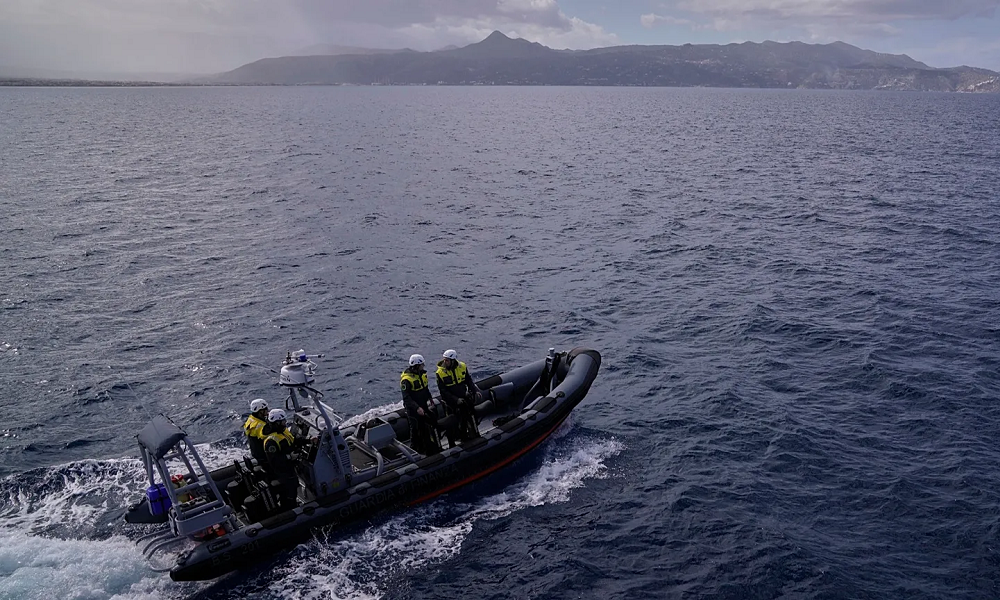
Twelve migrants died Monday attempting to cross the Aegean Sea, including six people whose bodies were found after their boat collided with a police vessel, authorities said.
A baby and four women were among six people who died off the island of Lesbos on Monday following the collision, a coast guard official told AFP.
The other six dead – five men and a woman – were on a small boat that capsized off the island of Samos, the coast guard added. Another 14 people from the boat, one of them a presumed Iranian organiser, were rescued.
The coast guard official said that in the incident off Lesbos, “a speed boat carrying migrants collided with the port side of a police patrol vessel”. The official said eight people were rescued.
The nationalities of the deceased have not yet been released.
The Aegean is a much-used route for migrants crossing from Turkey and hoping to reach Europe. There have been many deaths.
One person died and 25 remained missing after a boat filled with migrants sank off the island of Gavdos, near Crete in September. – AFP (edited)
World
Trump endorses Netanyahu in close Israeli election
Polls have suggested no candidate has a clear path to power. Israel’s prime minister is chosen through coalition-building in parliament rather than by direct popular vote.
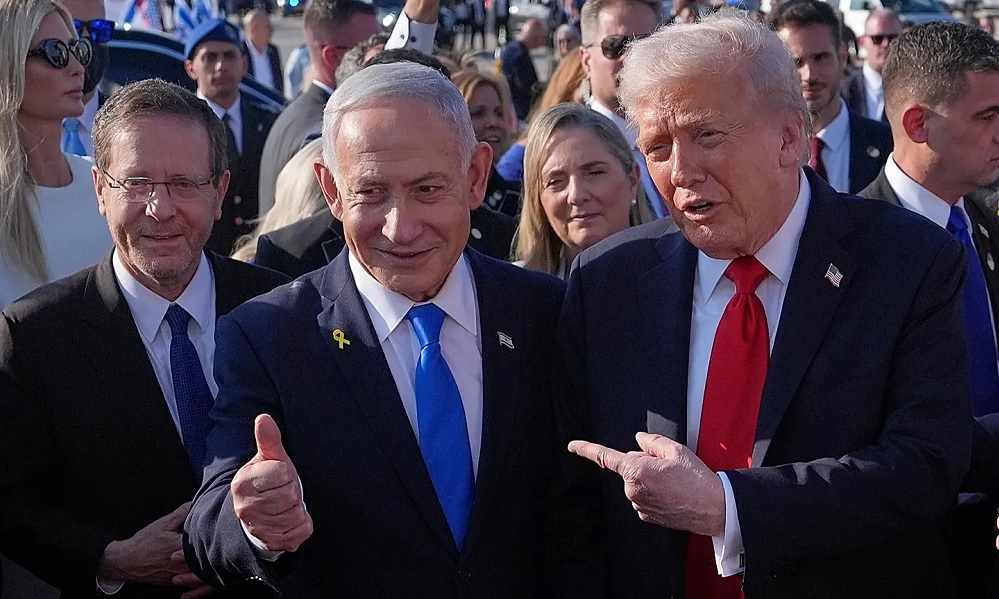
US President Donald Trump on Sunday endorsed his ally Benjamin Netanyahu as the longtime Israeli prime minister struggles for an edge in next week’s parliamentary election.
Trump praised Netanyahu as a “great warrior prime minister” and peace partner, crediting him with joining the United States in launching strikes on Iran in February. The conflict, in its seventh month, has disrupted energy markets globally and wreaked havoc across the Middle East, damaging critical infrastructure and destabilizing regional economies, Reuters reported.
“Bibi Netanyahu has been Strong, Brave, and Brilliant in the face of tremendous opposition, including that coming from even Israel, itself,” Trump wrote in a post on Truth Social.
“Despite all of that, he has endured and, in fact, he has thrived! I have watched Bibi under the most trying of times. Normal men or women in such situations would have wilted under the pressure — But Bibi did not wilt, he actually got stronger, and maintains that same Strength today.”
In his message, addressed to “the Great People of Israel,” Trump added, “Please let this Letter serve to represent my Complete and Total Endorsement of Bibi Netanyahu in his upcoming Race for Re-Election as Prime Minister of Israel.”
The Trump endorsement is not certain to give Netanyahu and his right-wing Likud party a boost in the October 27 national election, as Israeli public support for Trump has diminished amid Israeli-US disagreements over Iran.
Polls have suggested no candidate has a clear path to power. Israel’s prime minister is chosen through coalition-building in parliament rather than by direct popular vote.
It will be Israel’s first vote since the Hamas attack on October 7, 2023, that shook the country and plunged the Middle East into turmoil, as Israel went to war in Gaza, Lebanon and Iran.
The election could determine whether Netanyahu remains in power after one of the most consequential periods in Israel’s history, or is defeated by centrist rivals promising to usher in a new era.
Netanyahu promptly expressed his thanks to his “dear friend Donald” on X, saying, “Together we will complete the mission!”
Most Israelis, even those who are critical of Netanyahu and his government, were largely in favor of the Iran war.
In an election this close, “it couldn’t hurt him, and it might help,” said analyst Aaron David Miller of the Carnegie Endowment for International Peace in Washington.
Netanyahu’s religious-nationalist coalition is projected to lose its governing majority, although the opposition may also struggle to form a government, opinion polls show. That could lead to Netanyahu serving as a caretaker prime minister while another election is held.
The US president passed up earlier opportunities to endorse Netanyahu, perhaps because he wanted to see what leverage he could exercise on issues like Gaza or Lebanon, said Miller. In the end, he said, Trump sided with a leader he sees as strong and unfairly persecuted.
“However angry Trump may be at Netanyahu for pushing this Iran war, this in the end was a Trump decision,” Miller added.
A Trump decision not to endorse Netanyahu would have raised “legitimate questions about whether or not the whole Iran venture was in fact something Trump should have done,” he said.


Trump blames migrants for violence in France as US midterms loom

UK criticises Hegseth for downplaying NATO allies’ role in Afghanistan war

Iran, Russia agree on reducing tension between Afghanistan and Pakistan: Araqchi

Atal’s century and Rashid’s four wickets seal Afghanistan’s 158-run win over Zimbabwe

EU condemns restrictions on women and girls in Afghanistan

Cricket Bonanza: Afghanistan set for packed international schedule

Afghanistan says 28 killed, 32 captured in Nuristan operation

Silk Road highway in Wakhan corridor now reaches the China border

CNN, MS NOW and Politico sue Trump, challenging White House ban

Afghanistan on climate front line as Kabul faces groundwater warning
Trump blames migrants for violence in France as US midterms loom

Tahawol: US–Iran tensions escalate with mutual threats

Saar: IEA–UNAMA relations: five years under review

Iran calls for extending Herat railway to Uzbekistan border

Violent protests spread across Europe as Albanian PM blames ‘foreign hand’
-

 Sport2 days ago
Afghanistan reach Brazil futsal tournament final after beating Cape Verde 4-2
-
 Latest News4 days ago
Nearly 19.2 million Afghans face winter hunger as child malnutrition set to surge, UN agencies warn
-
 Business4 days ago
Regional partners seek progress on Trans-Afghan corridor and CASA railway
-
 World4 days ago
Trump says he is talking to Russia and China about denuclearization
-
 Latest News3 days ago
Afghanistan’s hunger crisis deepens as 16 million face food insecurity ahead of winter
-
 Regional3 days ago
Trump says US may strike Iran’s ‘Pickaxe Mountain’ nuclear facility
-

 Sport4 days ago
Afghanistan Champions League: Abu Muslim Farah beat Sarsabz Yashlar 3-1
-
 Latest News4 days ago
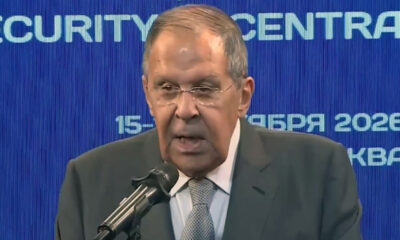
Lavrov warns of western-backed ‘color revolutions,’ raises concerns over Afghanistan’s regional security