
World
Trump says second Venezuela strike possible if government does not cooperate
Trump also said U.S. oil companies need “total access” to the country’s vast reserves and suggested that an influx of Venezuelan emigrating to the United States also factored into the decision to capture Maduro.

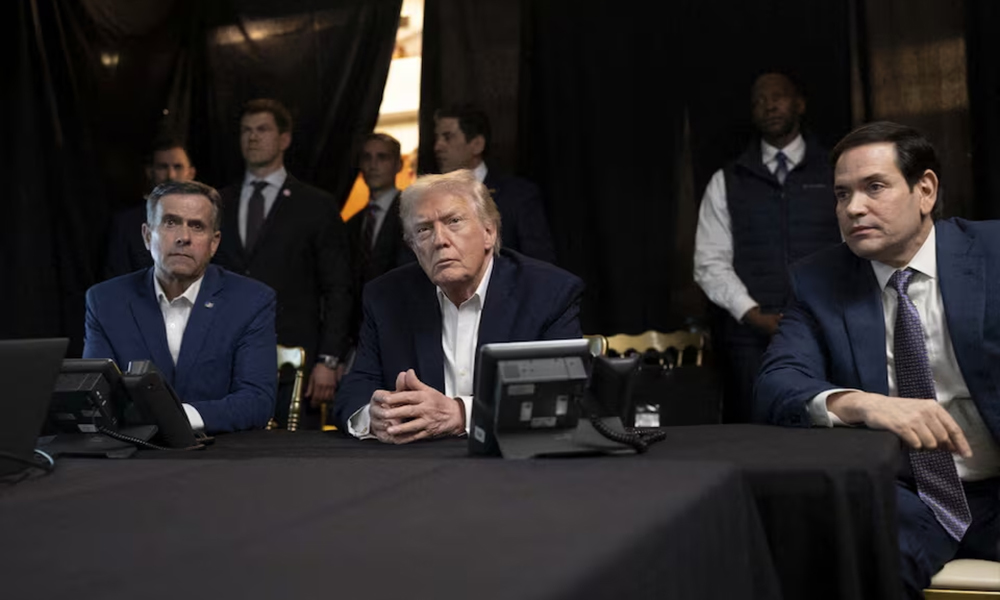
U.S. President Donald Trump said on Sunday that the United States might launch a second military strike on Venezuela following the capture of President Nicolas Maduro if remaining members of the administration do not cooperate with his efforts to get the country “fixed.”
Trump’s comments to reporters aboard Air Force One raised the possibility of further U.S. military interventions in Latin America, and suggested Colombia and Mexico could also face military action if they do not reduce the flow of illicit drugs to the United States, Reuters reported.
“Operation Colombia sounds good to me,” Trump said. He also said that Cuba, a close ally of Venezuela, “looks like it’s ready to fall” on its own without U.S. military action.
Maduro is in a New York detention center awaiting a Monday court appearance on drug charges. His capture by the United States has sparked deep uncertainty about what is next for the oil-rich South American nation.
Trump said his administration will work with remaining members of the Maduro regime to clamp down on drug trafficking and overhaul its oil industry, rather than push for immediate elections to install a new government.
Top officials in Maduro’s government are still in charge and have called the detentions of Maduro and his wife Cilia Flores a kidnapping.
“Here there is only one president, whose name is Nicolas Maduro Moros. Let no one fall for the enemy’s provocations,” Interior Minister Diosdado Cabello said in an audio recording released by the ruling PSUV socialist party.
Images of the 63-year-old Maduro, blindfolded and handcuffed stunned Venezuelans. The operation was Washington’s most controversial intervention in Latin America, since the invasion of Panama 37 years ago.
Defense Minister General Vladimir Padrino said on state television the U.S. attack killed soldiers, civilians and a “large part” of Maduro’s security detail “in cold blood.” Venezuela’s armed forces have been activated to guarantee sovereignty, he said.
The Cuban government said 32 of its citizens were killed during the raid.
Vice President Delcy Rodriguez — who also serves as oil minister — has taken over as interim leader with the blessing of Venezuela’s top court and has said Maduro remains president.
Rodriguez has long been considered the most pragmatic member of Maduro’s inner circle. But she has publicly contradicted Trump’s claim she is willing to work with the United States.
Trump said Rodriguez may pay a bigger price than Maduro “if she doesn’t do what’s right,” according to an interview with The Atlantic magazine on Sunday.
The Venezuelan communications ministry did not immediately respond to a request for comment on that remark.
Trump’s administration has described Maduro’s capture as a law-enforcement mission to force him to face U.S. criminal charges filed in 2020, including narco-terrorism conspiracy. Maduro has denied criminal involvement.
But Trump also said U.S. oil companies need “total access” to the country’s vast reserves and suggested that an influx of Venezuelan emigrating to the United States also factored into the decision to capture Maduro.
“What really played (into the decision to capture Maduro) is the fact that he sent millions of people into our country from prisons and from mental institutions, drug dealers, every drug addict in his country was sent into our country,” Trump said.
The Venezuelan government has said for months Trump was seeking to take the country’s natural resources, especially its oil, and officials made much of a previous Trump comment that major U.S. oil companies would move in.
“We are outraged because in the end everything was revealed — it was revealed that they only want our oil,” Cabello said.
Once one of the most prosperous nations in Latin America, Venezuela’s economy tanked in the 2000s under President Hugo Chavez and nosedived further under Maduro, sending about one in five Venezuelans abroad in one of the world’s biggest exoduses.
U.S. Secretary of State Marco Rubio said Venezuela’s next leader should keep Venezuela’s oil industry out of the hands of U.S. adversaries and stop drug trafficking and cited an ongoing U.S. blockade on tankers.
“That means their economy will not be able to move forward until the conditions that are in the national interest of the United States and the interest of the Venezuelan people are met,” he said on ABC’s “This Week.”
Some Maduro supporters gathered at a government-sponsored protest march on Sunday afternoon in Caracas.
Once ruled by Spain, Venezuela’s “people must not surrender, nor should we ever become a colony of anyone again,” said demonstrator Reinaldo Mijares. “This country is not a country of the defeated.”
Maduro opponents in Venezuela have been wary of celebrating his seizure, and the presence of security forces seemed, if anything, lighter than usual on Sunday.
Despite a nervous mood, some bakeries and coffee shops were open and joggers and cyclists were out as usual. Some citizens were stocking up on essentials.
“Yesterday I was very afraid to go out, but today I had to. This situation caught me without food and I need to figure things out. After all, Venezuelans are used to enduring fear,” said a single mother in oil city Maracaibo who bought rice, vegetables and tuna.
To the disappointment of Venezuela’s opposition, Trump has given short shrift to the idea of 58-year-old opposition leader and Nobel Peace Prize winner Maria Corina Machado taking over, saying she lacked support.
Machado was banned from standing in the 2024 election but has said her ally Edmundo Gonzalez, 76, who the opposition and some international observers say overwhelmingly won that vote, has a democratic mandate to take the presidency.
U.S. Senate Democratic leader Chuck Schumer said the White House has failed to say how long the U.S. intends to be in Venezuela and how many American troops might be required.
“The American people are worried that this is creating an endless war — the very thing that Donald Trump campaigned against,” Schumer said on ABC’s “This Week.” He said lawmakers would weigh a measure to constrain further Trump administration action in Venezuela, though its prospects could be uncertain given that Congress is controlled by Trump’s Republicans, read the report.
While many Western nations oppose Maduro, there were many calls for the U.S. to respect international law and questions arose over the legality of seizing a foreign head of state.
The U.N. Security Council planned to meet on Monday to discuss the attack. Russia and China, both major backers of Venezuela, have criticized the U.S.





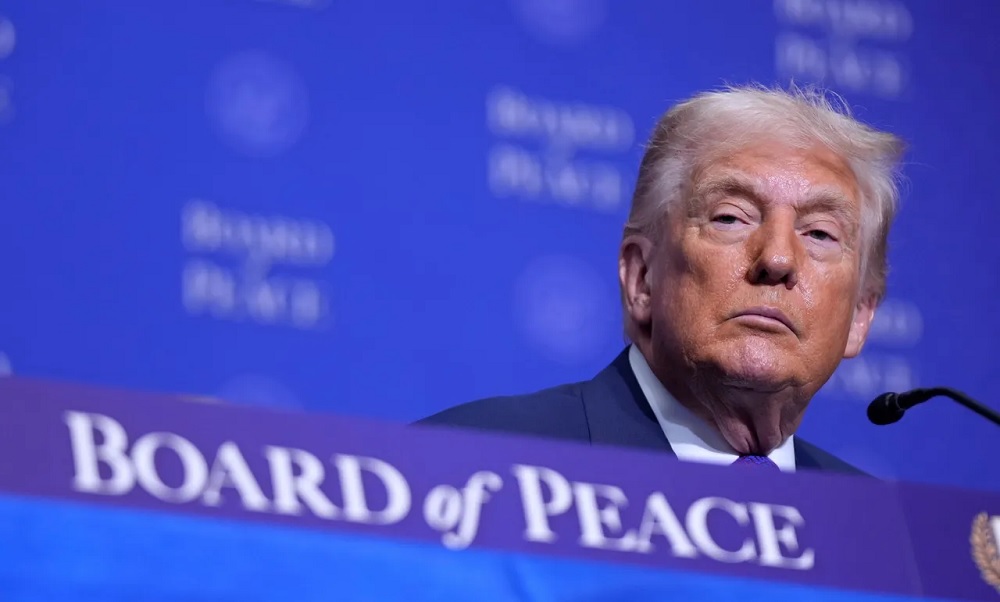
President Donald Trump warned Iran on Thursday it must make a deal over its nuclear program or “really bad things” will happen, and set a deadline of 10 to 15 days, drawing a threat from Tehran to retaliate against U.S. bases in the region if attacked.
Amid a massive U.S. military buildup in the Middle East that has fueled fears of a wider war, Trump said negotiations with Iran to end the tense standoff were going well but demanded that Tehran reach a “meaningful” agreement, Reuters reported.
“Otherwise bad things happen,” Trump, who has repeatedly threatened to attack Iran, told the first meeting of his Board of Peace in Washington.
Trump spoke of the U.S. airstrikes carried out in June, saying Iran’s nuclear potential had been “decimated,” adding “we may have to take it a step further or we may not.”
“You’ll be finding out over the next probably 10 days,” he said. Asked later to elaborate, he told reporters aboard Air Force One: “I would think that would be enough time, 10, 15 days, pretty much maximum.”
But he declined to be specific, except to warn again of “really bad things” and insist that Iran would have to make a deal one way or another.
In a letter to U.N. Secretary-General Antonio Guterres, Tehran said it would not start any war but that “in the event that it is subjected to military aggression, Iran will respond decisively and proportionately” in its exercise of the right of self-defense.
“All bases, facilities, and assets of the hostile force in the region would constitute legitimate targets,” the letter said. “The United States would bear full and direct responsibility for any unpredictable and uncontrolled consequences.”
‘GOOD TALKS’: TRUMP
Trump’s threats to bomb Iran, with the two sides far apart in talks on Tehran’s nuclear program, have pushed up oil prices, and a Russian corvette warship on Thursday joined planned Iranian naval drills in the Gulf of Oman, a vital sea route for global energy.
Iranian and U.S. negotiators met on Tuesday and Iranian Foreign Minister Abbas Araqchi said they had agreed on “guiding principles.” White House press secretary Karoline Leavitt said on Wednesday, however, that the two sides remained apart on some issues.
Trump said “good talks are being had,” and a senior U.S. official said Iran would make a written proposal on how to address U.S. concerns.
Trump called on Tehran to join the U.S. on the “path to peace.”
“They can’t have a nuclear weapon, it’s very simple,” he said. “You can’t have peace in the Middle East if they have a nuclear weapon.”
Iran has resisted making major concessions on its nuclear program, though insisting it is for peaceful purposes. The U.S. and Israel in the past have accused Tehran of trying to develop a nuclear bomb.
Trump’s latest saber-rattling came as he talked himself up as a man of peace in a long, meandering speech while hosting world leaders at the launch of his Board of Peace. He proposed the body in September when he announced his plan to end Israel’s war against Hamas in Gaza. He later expanded the board’s remit to tackle conflicts worldwide, prompting many key Western allies to stay away.
Earlier on Thursday, Russia warned against an “unprecedented escalation of tension” around Iran on Thursday and urged restraint amid the U.S. military buildup in the region, which a senior American official said should be complete by mid-March.
THREAT OF WAR
Trump has sent aircraft carriers, warships and jets to the region, raising the prospect of another attack on the Islamic Republic.
The United States and Israel bombed Iran’s nuclear facilities and some military sites last June. U.S. Secretary of State Marco Rubio will meet Israeli Prime Minister Benjamin Netanyahu to discuss Iran on February 28, the senior U.S. official said.
Washington wants Iran to entirely give up uranium enrichment, a process used to create fuel for atomic power plants but that can also provide material for a warhead.
The U.S. and ally Israel also want Iran to give up long-range ballistic missiles, stop supporting groups around the Middle East and stop using force to quell internal protests.
Iran says it refuses to discuss issues beyond the atomic file, calling efforts to limit its missile arsenal a red line.
Satellite pictures have tracked both Iranian work to repair and fortify sites since last summer, showing work at both nuclear and missile sites, as well as preparations at U.S. bases across the Middle East over the past month.
Iran’s joint exercise with Russia came days into an extended series of Iranian naval drills in the Gulf of Oman, with Iranian state television showing special forces units deployed on helicopters and ships.
In a sign of growing concern over the increased tensions, Poland on Thursday became the latest European country to urge its citizens to leave Iran, with Prime Minister Donald Tusk saying Poles may only have hours to evacuate.
Trump began threatening strikes on Iran again in January as Iranian authorities crushed widespread protests with deadly violence that left thousands dead across the country.
World
Allegations in Epstein files may amount to ‘crimes against humanity,’ UN experts say
A law, approved by Congress with broad bipartisan support in November, requires all Epstein-related files to be made public.
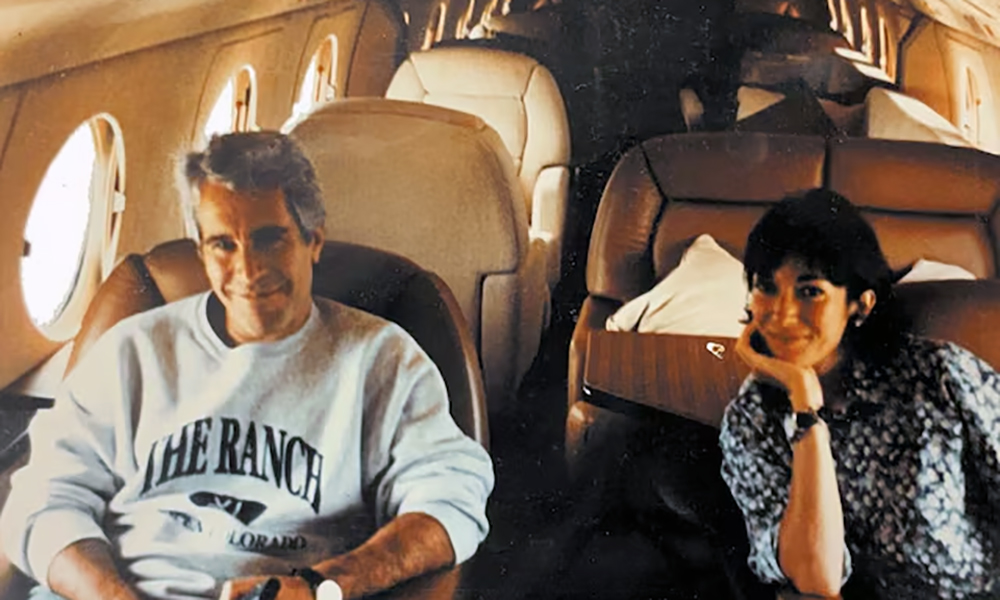
Millions of files related to the late sex offender Jeffrey Epstein suggest the existence of a “global criminal enterprise” that carried out acts meeting the legal threshold of crimes against humanity, according to a panel of independent experts appointed by the United Nations Human Rights Council.
The experts said crimes outlined in documents released by the U.S. Justice Department were committed against a backdrop of supremacist beliefs, racism, corruption and extreme misogyny.
The crimes, they said, showed a commodification and dehumanization of women and girls.
“So grave is the scale, nature, systematic character, and transnational reach of these atrocities against women and girls, that a number of them may reasonably meet the legal threshold of crimes against humanity,” the experts said in a statement.
The experts said the allegations contained in the files require an independent, thorough and impartial investigation, and said inquiries should also be launched into how it was possible for such crimes to be committed for so long.
The U.S. Justice Department did not immediately respond to a request for comment.
A law, approved by Congress with broad bipartisan support in November, requires all Epstein-related files to be made public.
The U.N. experts raised concerns about “serious compliance failures and botched redactions” that exposed sensitive victim information. More than 1,200 victims were identified in the documents that have been released so far.
“The reluctance to fully disclose information or broaden investigations, has left many survivors feeling retraumatized and subjected to what they describe as ‘institutional gaslighting,'” the experts said.
The Justice Department’s release of documents has revealed Epstein’s ties to many prominent people in politics, finance, academia and business – both before and after he pleaded guilty in 2008 to prostitution charges, including soliciting an underage girl.
He was found hanged in his jail cell in 2019 after being arrested again on federal charges of sex trafficking of minors. His death was ruled a suicide.
World
Netanyahu says US deal with Iran must dismantle nuclear infrastructure
Netanyahu said he is sceptical of a deal but it must include enriched material leaving Iran.
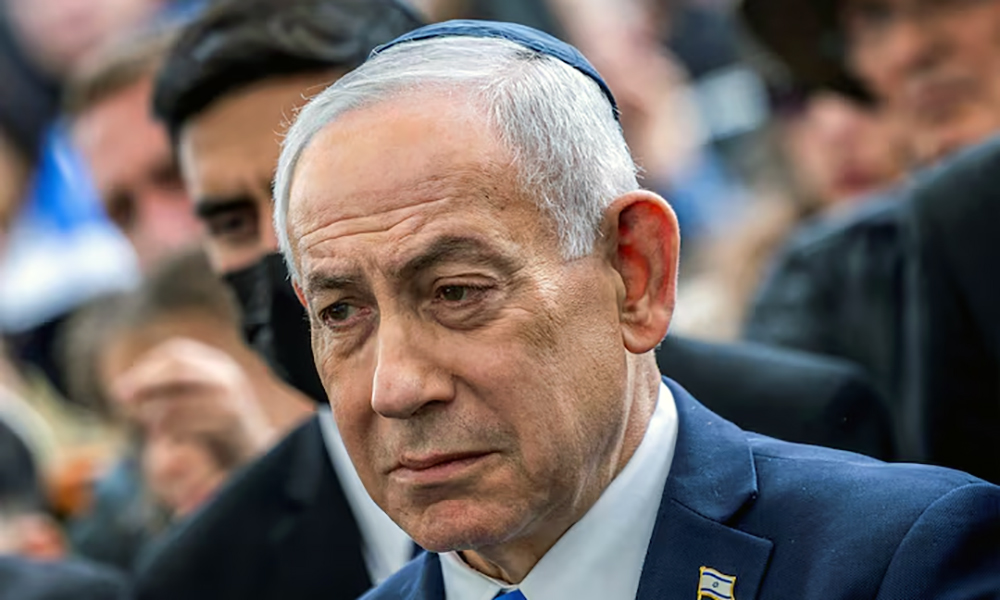
Israeli Prime Minister Benjamin Netanyahu said on Sunday he told U.S. President Donald Trump last week that any U.S. deal with Iran must include the dismantling of Iran’s nuclear infrastructure, not just stopping the enrichment process, Reuters reported.
Speaking at the annual Conference of Presidents of Major American Jewish Organizations, Netanyahu also said Israel still needs to “complete the job” of destroying all tunnels in Gaza. Israel, he said, has already dismantled 150 km (93 miles) of an estimated 500 km.
A second round of talks between the U.S. and Iran are slated for this week. Iran is pursuing a nuclear agreement with the U.S. that delivers economic benefits for both sides, an Iranian diplomat was reported as saying on Sunday.
Netanyahu said he is sceptical of a deal but it must include enriched material leaving Iran. “There shall be no enrichment capability – not stopping the enrichment process, but dismantling the equipment and the infrastructure that allows you to enrich in the first place,” he said.
Iran and the U.S. renewed negotiations earlier this month to tackle their decades-long dispute over Tehran’s nuclear programme and avert a new military confrontation. The U.S. has dispatched a second aircraft carrier to the region and is preparing for the possibility of a sustained military campaign if the talks do not succeed, U.S. officials have told Reuters.
Netanyahu also said that he aimed to end U.S. military aid to Israel within the next 10 years, after the current 10-year deal of receiving $3.8 billion a year – which is largely spent in the United States on equipment – ends in 2028.
Due to a thriving economy, “we can afford to phase out the financial component of the military aid that we’re receiving, and I propose a 10-year draw down to zero. Now, in the three years that remain in the present memorandum of understanding and another seven years draw it down to zero,” Netanyahu said.
“We want to move with the United States from aid to partnership,” he said.


Tawsia: Calls for implementing development and infrastructure projects

Magnitude 5.8 earthquake shakes northeastern Afghanistan

Afghanistan facing hunger crisis, says WFP chief Aylieff

Afghan futsal player Reza Hosseinpoor joins UAE’s Shabab Al Ahli

Indian customs seize Chinese walnuts falsely declared as Afghan

Afghan traders sign deal to import pharmaceuticals from Bangladesh

AFC Futsal Asian Cup 2026: Day One Review

IEA releases three Pakistani soldiers to mark Ramadan

AFC Futsal Asian Cup: Afghanistan to face Iran in crucial Group D clash

Afghanistan shine on Day Two of AFC Futsal Asian Cup Indonesia 2026
Tawsia: Calls for implementing development and infrastructure projects

Tahawol: Possibility of US military conflict with Iran reviewed

Saar: Pakistan’s ongoing threats against Afghanistan discussed

Tahawol: Release of three Pakistani prisoners by IEA discussed

Saar: Moves toward unified policy on Afghanistan
-
 Latest News3 days ago
IEA releases three Pakistani soldiers to mark Ramadan
-
 Latest News3 days ago
Afghanistan’s Chief of Armed Forces underscores readiness and equipment for national defense
-
 Latest News3 days ago
Grateful to Afghans and Ulama for obeying the Islamic Emirate, says Hibatullah Akhundzada
-
 Latest News2 days ago
Afghanistan welcomes investment and technology partnerships with India
-
 Latest News5 days ago
Afghanistan’s defense ministry unveils new military uniforms for armed forces
-
 Business5 days ago
With Torkham closed, trade losses mount
-

 Sport2 days ago
Afghan Peaks founder climbs Aconcagua to promote Afghanistan’s mountain potential
-

 Sport5 days ago
Afghanistan stay alive in T20 World Cup with crucial win over UAE