
Latest News
UN chief tells donor community that one million Afghan children are on verge of death

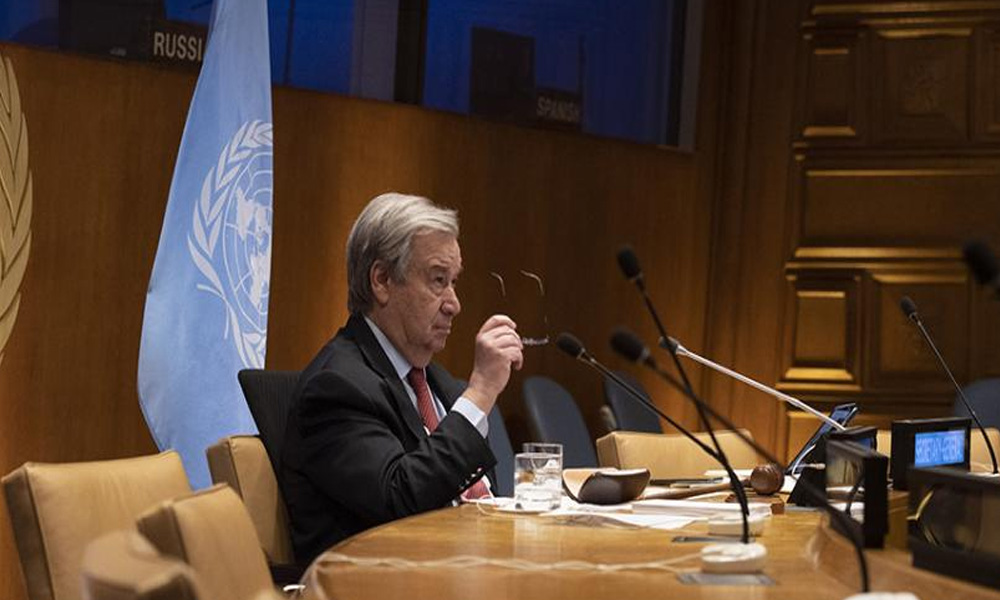
UN Secretary-General Antonio Guterres warned Thursday that nine million people in Afghanistan are at risk of famine and that about 95 percent of people in the country do not have enough food to eat.
Addressing delegates attending the UN’s high-level Pledging Event on Afghanistan, Guterres said the massive humanitarian response in Afghanistan since August 2021 “undoubtedly saved many lives over the winter”.
He thanked donor nations for their contributions but added that despite collective efforts, the already dire humanitarian situation in Afghanistan has deteriorated alarmingly over the past few months.
He warned that UNICEF estimates that without immediate action, a million severely malnourished children are on the verge of death.
He also stated that as global food prices skyrocket, as a result of the war in Ukraine, “this spells catastrophe for both Afghans struggling to feed their families”, and for UN aid operations.
Without immediate action, we face a starvation and malnutrition crisis in Afghanistan, he said adding that people are already selling their children and their body parts, in order to feed their families.
Guterres noted that “Afghanistan’s economy has effectively collapsed” and that “there is very little cash”.
He went on to state that more than 80 percent of the population is in debt and that key workers in vital services, including schools and hospitals, have not been paid for months.
Listing the hardships faced by Afghans he went on to state that businesses cannot operate; international aid agencies can barely function; and local partners face even greater hurdles.
In addition, livelihoods have evaporated and farmers cannot buy seeds or fertilizers, he said.
“The UN Development Programme has warned that unless we take action, 97 percent of Afghans could be living below the poverty line by the middle of this year. Humanitarian needs have tripled since last June. Yes, tripled.
And they are growing, day by day and month by month,” he warned.
Guterres stated that the international community must find ways to spare the Afghan people from the impact of the decision to halt development support to Afghanistan, and to freeze nearly $9 billion in Afghan assets overseas.
He said the international community “must make cash available, so the Afghan economy can breathe, and the Afghan people can eat.
“Wealthy, powerful countries cannot ignore the consequences of their decisions on the most vulnerable.
“The first step in any meaningful humanitarian response must be to halt the death spiral of the Afghan economy.
“Without that, even the best-funded and most effective aid operation will not save the people of Afghanistan from an unimaginable future,” he warned.
“We stayed, we delivered, and we are determined to keep delivering. Humanitarian aid is providing a fragile lifeline for millions of Afghans,” he said.
Last year, UN humanitarian partners reached nearly 20 million people across the country with life-saving assistance including food, clean water, health care, protection, shelter, education and winterization.
So far this year, the World Food Programme has reached more than 14 million people with food, nutrition and resilience support.
In February alone, UNICEF reached close to four million people across the country with health services. UNICEF personnel screened nearly one million children for malnutrition in February alone and UNHCR, working in areas prioritized for the return of refugees and internally displaced people, has provided support to more than half a million people so far this year.
Guterres stated that UNFPA reached more than a quarter of a million people between August and December last year with reproductive health and protection services, while OCHA’s funding mechanisms, including the Central Emergency Response Fund and the Afghanistan Humanitarian Fund, were integral to getting funds quickly to where they were most needed.
“Our funding appeal for Afghanistan this year is $4.4 billon – the world’s largest appeal for a single country.
“Together with our partners, we aim to reach 22 million people with food, water, health care, protection, shelter, education and other forms of life-saving aid.
“So far, the appeal is currently less than 13 percent funded,” he said.
In line with this, Guterres appealed to the donor community to “provide unconditional and flexible funding as soon as possible”.
He also voiced his disappointment that high school girls have been barred from going to school.
“I deeply regret that girls’ education above sixth grade remains suspended – a violation of the equal rights of girls that damages the entire country and leaves girls more exposed to violence, poverty and exploitation.
“There is simply no justification for such discrimination.
“Educated girls become educated women who lift their families and communities into a better future.
“I call on those with influence to use it to pressure the de facto authorities to fulfil their promise to reopen schools for all students, without discrimination or further delay,” he stated.
However, he said that while waiting for girls to return to school, the world cannot use this issue as a bargaining tool. He said there is no rationale for withholding humanitarian aid based on this decision by the de facto authorities. “The Afghan people cannot be doubly punished,” he said.
In conclusion, he said: “In the weeks and months ahead, I count on coordinated action to find creative solutions to set the Afghan economy back on its feet.”






The Ministry of Foreign Affairs of the Islamic Emirate of Afghanistan announced on Tuesday the release of American citizen Dennis Coyle from prison.
According to the ministry, Coyle’s mother had written to the leader of the Islamic Emirate demanding amnesty and the release of her son on the occasion of Eid. The Supreme Court considered time served sufficient and decided to release him.
The Ministry of Foreign Affairs stated that this action was carried out on the basis of humanitarianism and good faith, and it believes that such measures can strengthen trust between countries. The ministry also expressed hope that both countries, in the future, can find solutions to remaining issues through mutual understanding and constructive dialogue.
The Islamic Emirate also expressed appreciation for the cooperation of the United Arab Emirates in this matter.
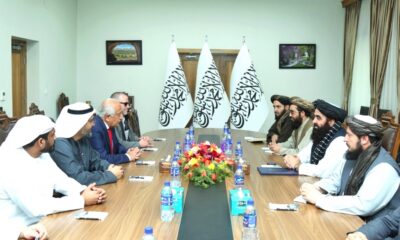
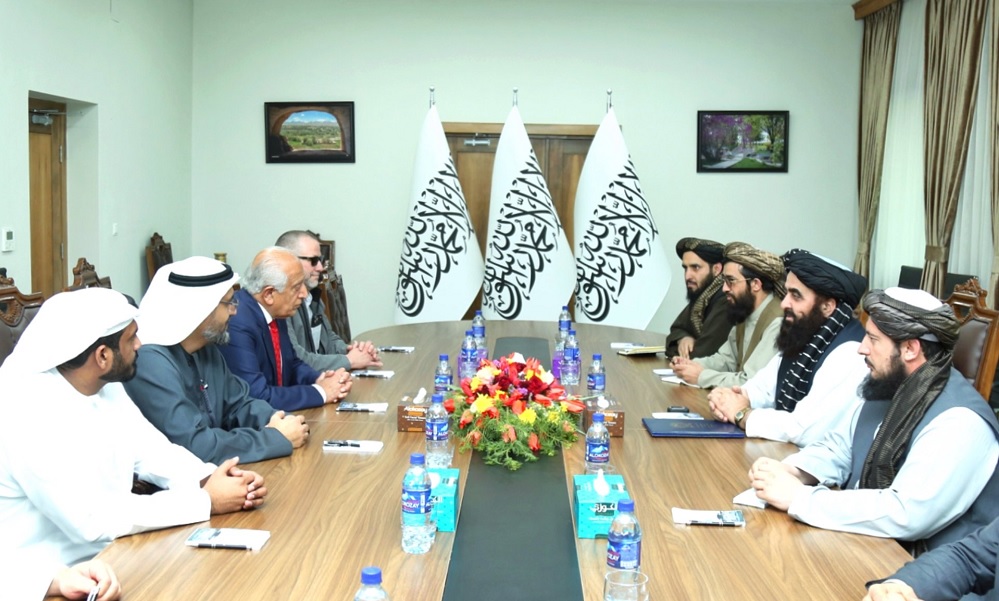
Separately, for Coyle’s release, an American delegation, including Zalmay Khalilzad, former U.S. Special Representative for Afghanistan, met on Tuesday with Amir Khan Muttaqi, the Foreign Minister of the Islamic Emirate.
The meeting was also attended by Saif Mohammed Al-Ketbi, Ambassador of the UAE in Kabul, and a member of the prisoner’s family.
According to the Ministry of Foreign Affairs, Muttaqi stated that the Islamic Emirate has not detained any citizen of any country to achieve political objectives; rather, detentions were the result of legal violations, and individuals were released after completing judicial procedures.
At the meeting, Khalilzad praised the action of the Islamic Emirate and emphasized the importance of continuing discussions on all issues between the two countries, expressing hope for further progress in the future.
Muttaqi also stressed that Kabul and the UAE should provide standard consular services to their citizens, and that the Afghan government is fully prepared in this regard.
He thanked Sheikh Mohamed bin Zayed Al Nahyan, President of the UAE, for their constructive role in facilitating the release of the prisoner and referred to the UAE as a close friend of Afghanistan.
Earlier, Muttaqi had also praised the role of the State of Qatar in facilitating information exchange between the Islamic Emirate and the prisoner’s family.
Additionally, the UAE ambassador expressed his country’s readiness to play a role in humanitarian institutions and called such developments beneficial for everyone.

The United Kingdom has announced an additional £3 million (AFN 257 million) in humanitarian assistance to Afghanistan, aimed at supporting people affected by natural disasters and other shocks.
Richard Lindsay, in a post on X, said the funding will be used to provide essential nutrition supplies and related support to vulnerable populations.
The new allocation brings the UK’s total bilateral assistance to Afghanistan for the current financial year to £154 million (AFN 13.18 billion).


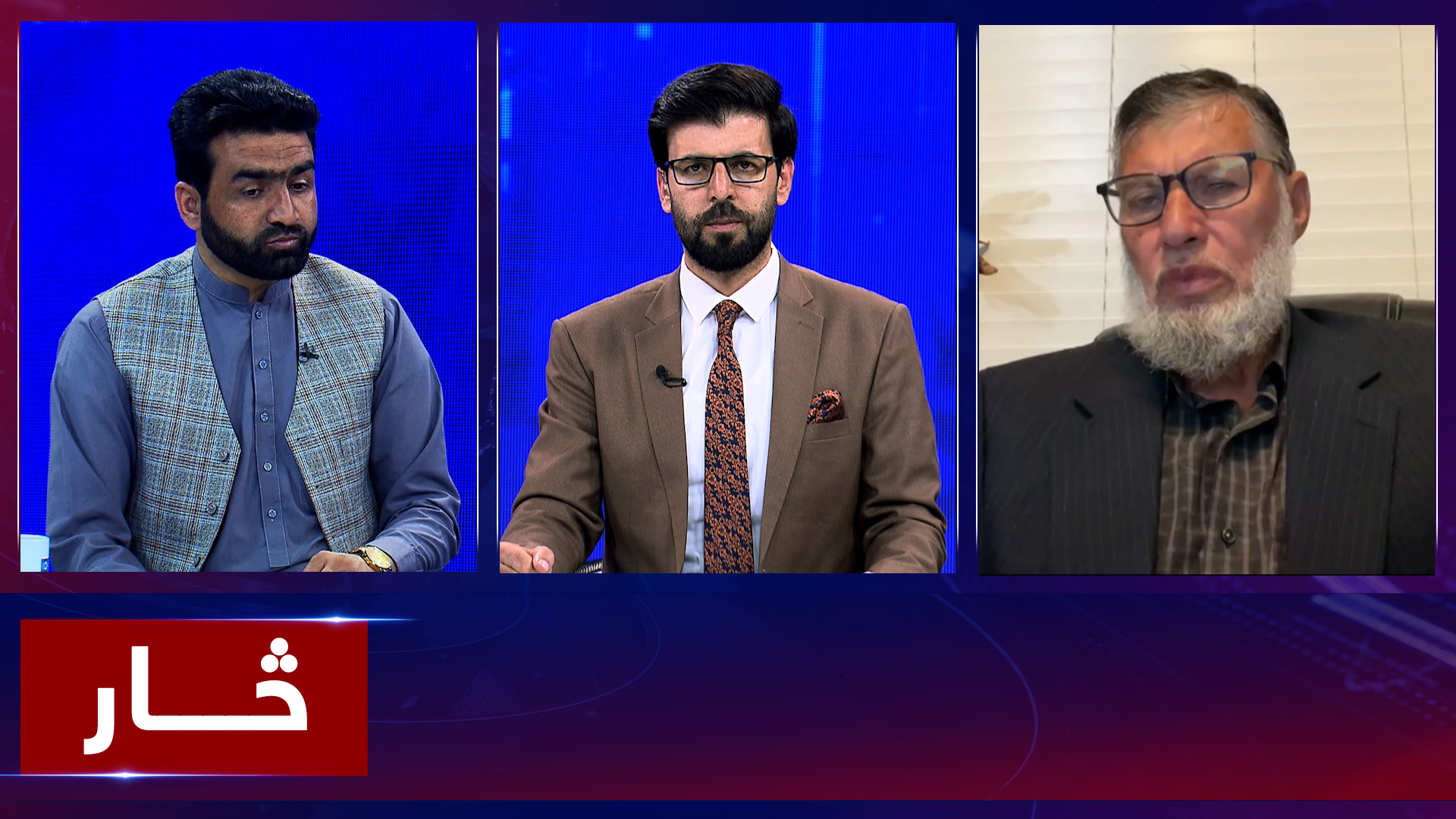
Tahawol: Escalating threats between Iran-US discussed

Saar: Discussion on criticism of Pakistan’s policies

Islamic Emirate releases American prisoner Dennis Coyle

UK announces additional £3 million in aid for vulnerable people in Afghanistan

Around 2.3 million tourists visited Afghanistan’s recreational areas during Eid: Ghufran

Pakistani military jet downed in Afghanistan’s Jalalabad, pilot captured alive

Afghan Air Force conducts airstrikes in Islamabad, other cities

Prominent Muslim scholar issues fatwa calling for Afghanistan-Pakistan ceasefire

Afghan air force strikes key Pakistani military installations in retaliatory operation

IEA: Special circle in Pakistan has launched mission to destabilize region
Tahawol: Escalating threats between Iran-US discussed

Tahawol: Possibility of US ground forces entering Iran war discussed

Saar: Using US prisoners as political pressure

Tahawol: Pakistan’s efforts to destabilise Afghanistan

Saar: Decline in international assistance to Afghanistan
-
 Sport5 days ago
Afghanistan national buzkashi falls short in Kokpar World Championship semifinals
-

 Sport4 days ago
Ireland to host Afghanistan for ODI series in August
-
 Latest News3 days ago
Deadly violence likely without dialogue between Afghanistan and Pakistan: ICG
-

 Latest News4 days ago
Mojtaba Khamenei calls for improved Afghanistan–Pakistan relations, offers help
-

 Sport5 days ago
FIFA sanctions Israeli Football Association over discrimination violations
-

 Latest News4 days ago
Malaysian PM welcomes temporary Afghanistan–Pakistan truce, urges lasting peace
-

 Latest News2 days ago
Pakistan seeks Russian mediation to resolve Afghanistan tensions
-
 Latest News5 days ago
IEA defense ministry accuses Pakistan of ceasefire violations