
Latest News
UN report shows sharp decline in Afghan opium cultivation; warns of synthetic drug threat
the Ministry of Interior has previously announced that activities related to the cultivation, trade and smuggling of drugs in Afghanistan have reached zero.

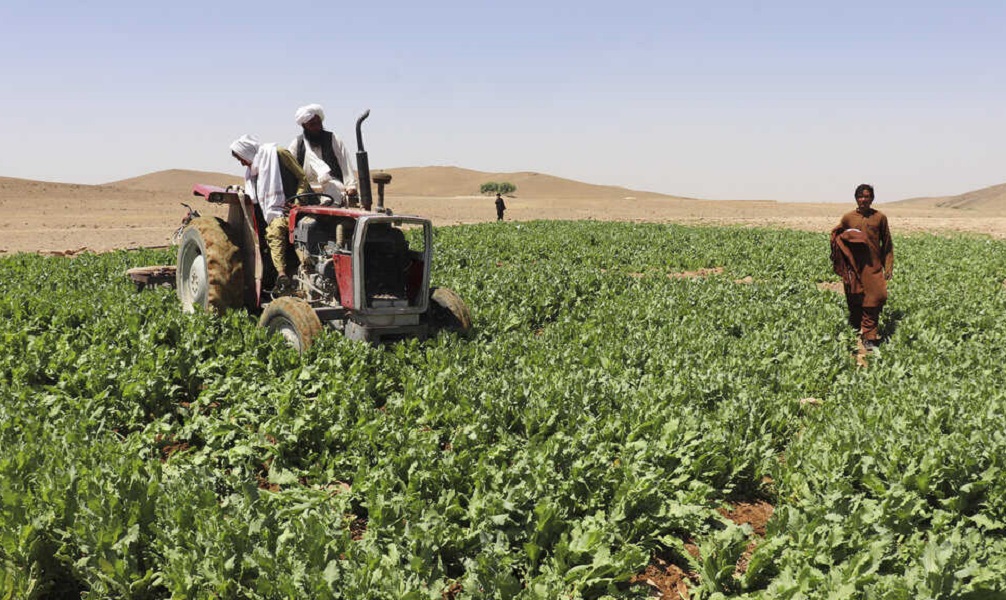
A new United Nations report reveals that opium poppy cultivation and opium production in Afghanistan fell significantly in 2025, continuing the steep contraction of Afghanistan’s traditional opiate economy — but shifts in drug markets and economic pressures pose new challenges for the country and the region.
According to the Afghanistan Opium Survey 2025 by the United Nations Office on Drugs and Crime (UNODC), the total area under opium poppy cultivation this year was estimated at about 10,200 hectares, a 20% decrease compared with 2024 and a dramatic drop from levels recorded before the Islamic Emirate’s nationwide ban on narcotics cultivation in 2022.
The survey also shows that opium production fell even more sharply — by 32% — to an estimated 296 tons in 2025. At these levels, the raw material could yield between 22 and 34 tons of export-quality heroin, substantially lower than in previous years, the report stated.
UNODC analysts point to a combination of factors behind the decline. The strict ban imposed by Afghanistan’s authorities continues to be enforced in many regions, and many farmers have shifted to growing cereals and other lawful crops.
However, worsening drought and low rainfall have left more than 40% of farmland uncultivated, undermining legitimate production and incomes.
The northeastern provinces of Afghanistan remained the centre of opium production in 2025, a pattern that has continued since 2023, while cultivation in southern and southwestern provinces such as Helmand and Kandahar continues to decline.
Economic indicators in the report suggest that farmers’ income from opium sales fell sharply — from about US $260 million in 2024 to around $134 million in 2025, reflecting both lower production and changes in market conditions.
While this contraction marks a notable shift in Afghanistan’s illicit crop landscape, the UNODC warns that the evolving dynamics of drug trafficking present serious concerns.
The agency notes a rise in synthetic drugs, particularly methamphetamine, which are easier to produce, harder to detect and more resilient to climate shocks than traditional opiates.
Organized crime groups may increasingly favour these substances, complicating regional law-enforcement and public health responses, UNODC stated.
Rising threat of synthetic drugs
The UN report warns however, that synthetic drugs are emerging as a growing threat.
According to UNODC, criminal networks are increasingly turning to substances such as methamphetamine, which can be produced year-round and do not rely on agricultural cycles or large areas of farmland. This makes synthetic drugs less vulnerable to crop bans, drought and seasonal disruptions.
Unlike opium poppy cultivation, which is highly visible and geographically concentrated, synthetic drug production can take place in small, concealed laboratories, making detection and enforcement significantly more difficult.
UNODC notes that this shift poses serious challenges for law enforcement agencies in Afghanistan and neighbouring countries.
The report also highlights that synthetic drugs are often cheaper to produce, easier to transport and highly profitable, increasing their appeal to organised crime groups.
Trafficking routes for these substances frequently overlap with existing smuggling networks used for opiates, allowing criminal groups to adapt quickly to changing conditions.
Public health risks are another major concern. Synthetic drugs are associated with higher addiction rates, unpredictable potency and severe health consequences, placing additional strain on already fragile healthcare systems across the region, the agency stated.
UNODC warns that without comprehensive counter-narcotics strategies that address both traditional drugs and emerging synthetic markets, the decline in opium production could be offset by the expansion of more dangerous and harder-to-control substances.
The agency is calling for increased regional cooperation, improved chemical precursor controls, and sustained international support to prevent Afghanistan from becoming a key hub for synthetic drug production and trafficking.
Meanwhile, the Ministry of Interior has previously announced that activities related to the cultivation, trade and smuggling of drugs in Afghanistan have reached zero. According to the ministry, in the past year, about 200,000 kilograms of various types of natural and synthetic drugs have been discovered and seized, all of which have been burned and destroyed.
Qasim Khalid, Deputy Minister of Counter-Narcotics at the Ministry of Interior, says that during the republic era, high-ranking officials were involved in drug trafficking and skillfully smuggled them to foreign countries.
According to Khalid: “In the past year, about 200,000 kilograms of various types of natural and synthetic drugs have been discovered and seized, all of which have been burned and destroyed.”
Khalid added that in the past year, about 750 drug traffickers have been arrested and prosecuted.









Latest News
UN warns of triple crisis in Afghanistan: drought, migrant return and funding shortfalls
Ratwatte emphasized the critical need for continued support for essential programs in health, education, and social protection, calling these initiatives “life-saving” for the Afghan population.
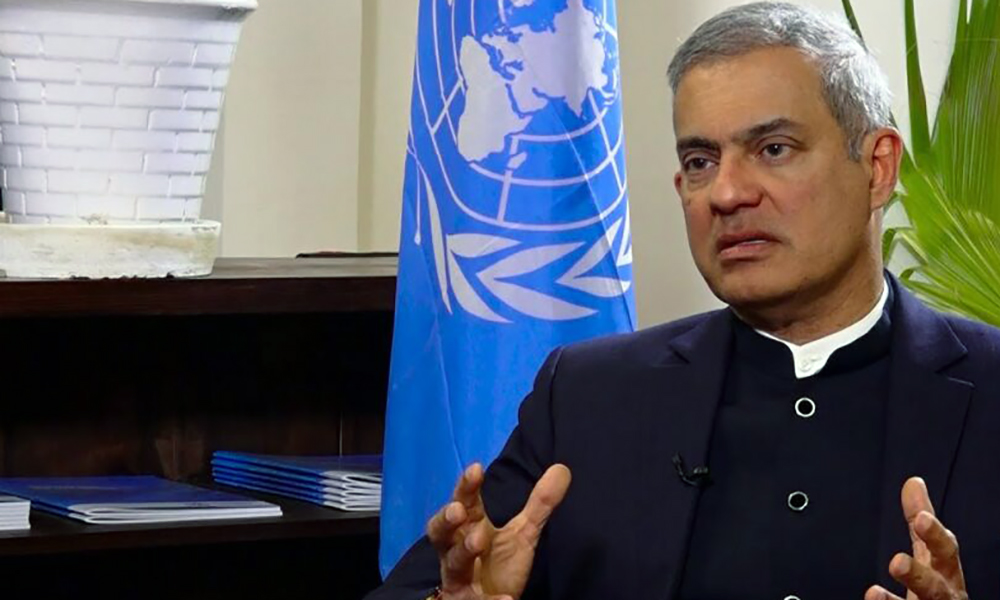
The United Nations has raised an urgent alarm over Afghanistan’s worsening humanitarian crisis, citing three simultaneous challenges that are significantly straining the country’s stability and welfare. The crises include a devastating drought, the mass return of migrants, and a sharp decline in international aid.
Andrika Ratwatte, the UN’s Humanitarian Coordinator in Afghanistan, delivered the warning in a recent video message, highlighting the severe impacts of these interconnected issues. Ratwatte reported that approximately 70 percent of Afghanistan’s population, reliant on agriculture for their livelihoods, has been affected by the ongoing drought, exacerbating widespread food insecurity.
In addition, the return of 2.5 million Afghan migrants from neighboring Iran and Pakistan, combined with a global financial downturn, has significantly hindered humanitarian efforts. The crisis has placed immense pressure on Afghanistan’s already fragile humanitarian infrastructure, which was already facing a shortage of resources and aid.
The UN official also expressed concern about funding shortfalls, noting that only 37 percent of the UN’s humanitarian funding appeal for Afghanistan has been met so far. This has led to the closure of 400 humanitarian health centers across the country, leaving over 3 million people without access to basic healthcare. Similarly, 300 nutrition centers have shut down, impacting more than 80,000 vulnerable individuals, including children and breastfeeding mothers.
Ratwatte emphasized the critical need for continued support for essential programs in health, education, and social protection, calling these initiatives “life-saving” for the Afghan population.
Adding to the urgency, John Aylieff, the World Food Programme (WFP) Director in Afghanistan, described the country’s growing malnutrition crisis as “heartbreaking.” He warned that within the next year, an estimated five million women and children could face severe malnutrition, with nearly four million children requiring immediate treatment.
The International Federation of Red Cross and Red Crescent Societies (IFRC) also expressed concern over the large-scale return of Afghans in 2025, warning that it has further strained Afghanistan’s fragile humanitarian conditions.
The UN has expressed hope for improved conditions in 2026, particularly for women and girls, who represent half of Afghanistan’s population. Efforts to restore healthcare, education, and social programs are seen as vital for the country’s long-term recovery and stability.
Latest News
Afghanistan appoints Charge d’Affaires in India amid growing engagement
Jaiswal also pointed to ongoing cooperation in trade and logistics, highlighting recent ministerial-level visits from Afghanistan to India.

Afghanistan has formally appointed a diplomat as Charge d’Affaires (CDA) in India, with the official assuming duties on January 9, marking a further step in diplomatic engagement between the two countries, Indian officials confirmed.
Speaking at a weekly press briefing on Friday, India’s Ministry of External Affairs spokesperson Randhir Jaiswal said the move follows earlier steps taken by both sides to elevate diplomatic contacts. He noted that India had previously upgraded its technical mission in Kabul to the level of an embassy and designated its head as Charge d’Affaires. “In line with this approach, now the Afghan side has also sent a diplomat who is their CDA, and the CDA has taken charge as of 9th of January,” Jaiswal said.
Jaiswal also pointed to ongoing cooperation in trade and logistics, highlighting recent ministerial-level visits from Afghanistan to India. He said discussions have included proposals for a freight corridor to facilitate trade in pharmaceuticals, fruits, and other essential goods.
According to Afghan officials, Noor Ahmad Noor, a senior official from the Ministry of Foreign Affairs, has arrived in New Delhi to assume responsibilities as Charge d’Affaires at the Afghan mission. The appointment follows an understanding reportedly reached during Afghan Foreign Minister Amir Khan Muttaqi’s visit to New Delhi in October 2025, when he met Indian External Affairs Minister S. Jaishankar.
Officials on both sides have stressed that the appointment does not amount to formal recognition of Afghanistan’s current government, but reflects continued dialogue and practical engagement.
The development is seen as a sign of strengthening diplomatic interaction and potential expansion of bilateral cooperation between India and Afghanistan, particularly in trade and regional connectivity.

Hamdullah Fitrat, deputy spokesman for the Islamic Emirate, has stated that following a special meeting of the High Commission for Addressing the Problems of Migrants, chaired by Sheikh Hibatullah Akhundzada, the Supreme Leader of the Islamic Emirate of Afghanistan, the process of land distribution by the Permanent Committee for Refugee Settlement has been accelerated.
Fitrat said in a statement on Friday that so far, 3,046 plots of land have been distributed by the committee to refugees who were forcibly expelled and have recently returned to the country, across various provinces.
The distribution process continues for others as well, he added.
He stated the process of providing winter assistance to returning refugees in different provinces has also been accelerated. This aid includes food and non-food items as well as cash assistance.


UN report shows sharp decline in Afghan opium cultivation; warns of synthetic drug threat

Iran’s Khamenei accuses Trump of inciting deadly protests

Tahawol: Discussion on fate of Gaza ceasefire

Saar: Review of possible US attack on Iran

Naveen-ul-Haq out of WI T20Is and 2026 World Cup; Zia-ur-Rahman Sharifi in

Afghanistan exports 10 containers of batteries to Saudi Arabia and UAE for first time

Pakistani cleric condemns lifetime immunity for Army Chief as un-Islamic

Turkey withdraws from Afghanistan-Pakistan mediation amid rising tensions

Afghanistan signs 30-year deal for marble mining in Daikundi

Sharp drop in exports to Afghanistan drives Pakistan’s trade deficit surge
Tahawol: Discussion on fate of Gaza ceasefire
Saar: Review of possible US attack on Iran

Tawsia: Progress in Trans-Afghan Railway Project

Saar: Discussion on continuation of protests in Iran

Tahawol: Trip of UN Political Affairs Chief to Kabul discussed
-
 Latest News5 days ago
Pakistan approves re-export of stranded Afghan transit trade cargo
-
 Latest News4 days ago
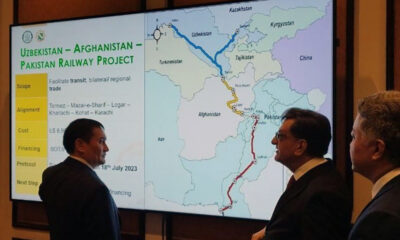
Uzbekistan pushes forward with Trans-Afghan railway project
-
 Latest News5 days ago
India rejects claims of suspending trade with Afghanistan
-
 Latest News4 days ago
Afghanistan and Indonesia call for expanding bilateral cooperation
-
 Latest News3 days ago
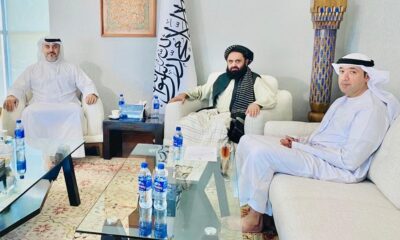
Afghan envoy in UAE holds talks with Etihad Airways on launch of direct flights
-
 Latest News3 days ago
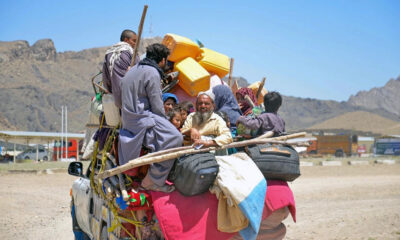
Pakistan repatriates nearly 1 million illegal Afghans through Khyber Pakhtunkhwa
-
 Latest News2 days ago
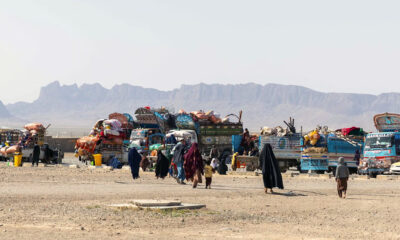
Over 5.2 million Afghans return from Iran, Pakistan in 2025; IFRC warns of growing crisis
-
 Latest News4 days ago
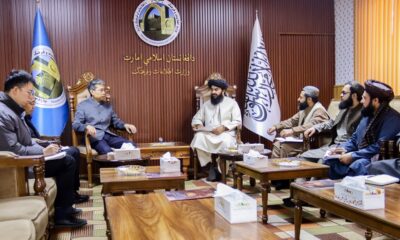
Chinese envoy, Afghan official discuss ways to strengthen tourism cooperation