Connect with us

Latest News

UNHCR calls for more aid for forcibly displaced in Afghanistan

Published

on

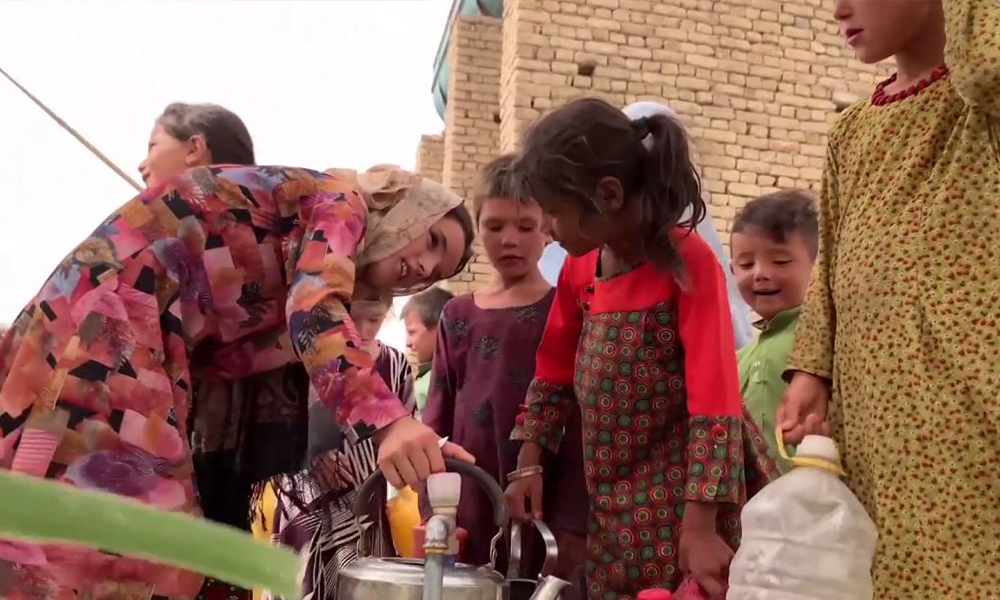
UNHCR, the UN Refugee Agency, has appealed for much more support amid acute and rising humanitarian needs for 3.5 million people displaced by conflict inside Afghanistan – including 700,000 who were displaced in 2021.

In a statement released on Friday, UNHCR said that the forcibly displaced are facing a lack of insulated shelters, warm clothes, insufficient fuel for heating, and inadequate amounts of food and medical supplies as temperatures begin to plunge below freezing.

“The humanitarian crisis is escalating daily in Afghanistan. Hunger in the country has reached truly unprecedented levels. Nearly 23 million people – that’s 55 percent of the population – are facing extreme levels of hunger, and nearly 9 million of them are at risk of famine,” the statement read.

The organization emphasized that providing food supplies is an “immediate priority” to help avoid widespread starvation in the country.

“This year, UNHCR has assisted some 700,000 displaced people across the country the majority since mid-August. The race is on to reach more. Currently, we are able to reach nearly 60,000 people every week.”

“Further resources are urgently needed for the most vulnerable -single mothers with no shelter or food for their children, older persons who have been displaced are left to take care of orphaned grandchildren, and those taking care of loved ones with special needs.”

UNHCR has been bringing in relief supplies by road through Afghanistan’s neighboring countries and through humanitarian airlifts.

The organization noted that five more flights carrying UNHCR winter supplies from its global stockpiles in Amman are scheduled next week.

“UNHCR support will continue throughout the cold season until February 2022 to help forcibly displaced families cope with the extreme conditions. The response includes core relief items, such as thermal blankets and warm winter clothing. Shelters are being repaired and reinforced, while people are also being provided plastic sheeting and insulation materials to help weather-proof their shelters,” the statement said.

The organization added that vulnerable families are also being provided with cash assistance to meet additional needs during the coldest months, such as fuel for heating.

“Further support is urgently needed for UNHCR to continue delivering lifesaving aid this winter as we head into the coldest weeks of the season. UNHCR’s funding needs for the Afghanistan Situation in 2022 – including continued winter response – amount to US$374.9 million,” the statement concluded.


Latest News

Iran invites Afghanistan’s prime minister to attend funeral ceremony of Ali Khamenei

Iran’s Alireza Bikdeli described relations between Afghanistan and Iran as historical and deep, and expressed appreciation for the sympathy shown by the Islamic Emirate and the Afghan people during the recent conflict. He added that political and economic ties between the two countries had continued without interruption despite the war.

Published

on

Iran has officially invited Mullah Mohammad Hassan Akhund, Prime Minister of the Islamic Emirate of Afghanistan (IEA), to attend the funeral and burial ceremony of Iran’s former supreme leader Ali Khamenei.

The invitation was delivered during a meeting in the Arg between Mullah Abdul Wasi, Chief of Staff of the Office of the Prime Minister, and Alireza Bikdeli, Iran’s acting ambassador in Kabul.

According to a statement from the Prime Minister’s Office, Mullah Abdul Wasi welcomed the reported agreement to end the war between Iran and the United States, describing it as a positive step toward regional stability.

Iran’s Alireza Bikdeli described relations between Afghanistan and Iran as historical and deep, and expressed appreciation for the sympathy shown by the Islamic Emirate and the Afghan people during the recent conflict. He added that political and economic ties between the two countries had continued without interruption despite the war.

Mullah Abdul Wasi also described Afghanistan-Iran relations as strong and inseparable between two neighboring Islamic countries, stressing that the continued growth in bilateral trade, even during periods of conflict, reflects the close economic and security ties between Kabul and Tehran.

He further expressed hope that Iran would provide greater facilitation for Afghan migrants during their stay and return, saying such measures would contribute positively to strengthening bilateral relations.

At the end of the meeting, the Iranian ambassador formally handed over the invitation to Mullah Mohammad Hassan Akhund and his accompanying delegation to attend the funeral and burial ceremony of Ali Khamenei.

According to reports, the funeral ceremonies for Ali Khamenei will be held from July 4 to July 9. Khamenei was killed on February 28, 2026, in the opening hours of a joint U.S.-Israeli attack on Iran, along with a number of senior officials and military commanders.

 
Continue Reading

Latest News

Kazakh envoy urges engagement to prevent instability in Afghanistan

Kazakhstan, he said, is pursuing a policy of “pragmatic engagement without recognition,” maintaining transport, energy, and humanitarian cooperation with Afghanistan while withholding formal diplomatic recognition of the current authorities.

Published

on

Kazakhstan’s Special Representative for Afghanistan, Yerkin Tukumov, has called for continued international engagement with Afghanistan, warning that economic, humanitarian, and institutional vacuums could contribute to instability and security threats in the region.

Writing in an opinion article published by EuAlive, Tukumov argued that constructive engagement with Afghanistan is necessary to address common challenges, including terrorism, illegal migration, and drug trafficking.

“The experience of recent decades has demonstrated that any vacuum—whether economic, humanitarian, or institutional—is inevitably filled by destructive processes in Afghanistan,” he said.

Tukumov noted that Afghanistan continues to face significant humanitarian challenges, with nearly 29 million people in need of assistance. He also pointed to the return of millions of Afghan refugees from Iran and Pakistan since 2023, which has placed additional pressure on the country’s economy and public services.

According to the Kazakh envoy, approximately 3.7 million Afghan children are suffering from malnutrition, while issues related to security, governance, and the rights of women and girls remain concerns for the international community.

Despite these challenges, Tukumov said Afghanistan has avoided the economic and political collapse predicted by some observers following the Taliban’s return to power in 2021. He noted that government revenues have grown gradually, while small and medium-sized businesses and industrial parks have emerged in major Afghan cities.

Kazakhstan, he said, is pursuing a policy of “pragmatic engagement without recognition,” maintaining transport, energy, and humanitarian cooperation with Afghanistan while withholding formal diplomatic recognition of the current authorities.

Tukumov emphasized the growing importance of Central Asia in Afghanistan’s external relations, describing the region as a key source of energy, food supplies, and economic cooperation. Trade between Afghanistan and Central Asian countries has increased significantly in recent years, he added.

The envoy also highlighted Kazakhstan’s educational and humanitarian initiatives in Afghanistan, including scholarship programs for Afghan students and assistance in sectors such as healthcare, agriculture, and water management.

He suggested that education and healthcare could become important areas of cooperation between Kazakhstan and the European Union in Afghanistan. Such efforts, he said, could include the construction of medical facilities, the deployment of mobile health units, and expanded professional training programs.

Tukumov argued that humanitarian assistance and economic cooperation should not be viewed as concessions but as practical tools for promoting long-term stability and preventing future crises.

“By investing in healthcare, education, and human capital, the international community can help strengthen resilience and create conditions for sustainable development in Afghanistan,” he wrote.

The comments come amid ongoing regional and international discussions on how to engage with Afghanistan while addressing humanitarian needs and broader security concerns.


Continue Reading

Latest News

Afghanistan intensifies fight against synthetic drugs

Officials described synthetic drugs as one of the country’s most pressing concerns and said targeted programs have been introduced to combat the problem.

Published

on

Afghanistan’s Ministry of Interior Affairs says a nationwide campaign against narcotics, with a particular focus on synthetic drugs, is being intensified as authorities seek to curb the growing threat posed by illicit substances.

Speaking at a seminar in Kabul titled “Causes of Youth Drug Addiction and Prevention Methods,” Abdul Haq Mati, Head of Survey and Analysis at the Counter-Narcotics Deputy Office of the Ministry of Interior, said significant progress has been made in combating traditional narcotics. However, he noted that synthetic drugs remain a major challenge, with many of these substances being smuggled into the country from neighboring states.

Mati said security and law enforcement agencies are tasked with identifying, arresting and referring key figures involved in drug trafficking networks to judicial authorities. He added that efforts to prevent the trafficking and distribution of synthetic drugs are continuing across the country.

The seminar brought together students, officials from the Counter-Narcotics Department and university professors to discuss the causes of youth addiction and strategies for prevention.

Officials described synthetic drugs as one of the country’s most pressing concerns and said targeted programs have been introduced to combat the problem, building on measures previously used against traditional narcotics.

While acknowledging the progress made in anti-narcotics efforts, several university professors stressed that security measures alone would not be sufficient to address the issue. They called for greater investment in employment opportunities, education and social development initiatives aimed at tackling the root causes of addiction.

Participants also highlighted the importance of effectively managing and disrupting the entire narcotics supply chain, from street-level distribution to larger trafficking networks, as a key component in reducing the social and economic impact of drug abuse.

Students attending the seminar said awareness campaigns play an important role in prevention but argued that unemployment and limited access to education remain major factors that leave young people vulnerable to drug use.

The event, organized by a university in cooperation with the Counter-Narcotics Department, concluded with calls for stronger youth-focused programs, continued enforcement of anti-drug laws and greater efforts to address the underlying causes of addiction.

Participants agreed that a combination of prevention, public awareness, employment opportunities and law enforcement remains essential to protecting young people from drug addiction and curbing the spread of narcotics across the country.

Continue Reading

Trending

Copyright © 2025 Ariana News. All rights reserved!