
Latest News
Watchdog reports of growing number of revenge attacks

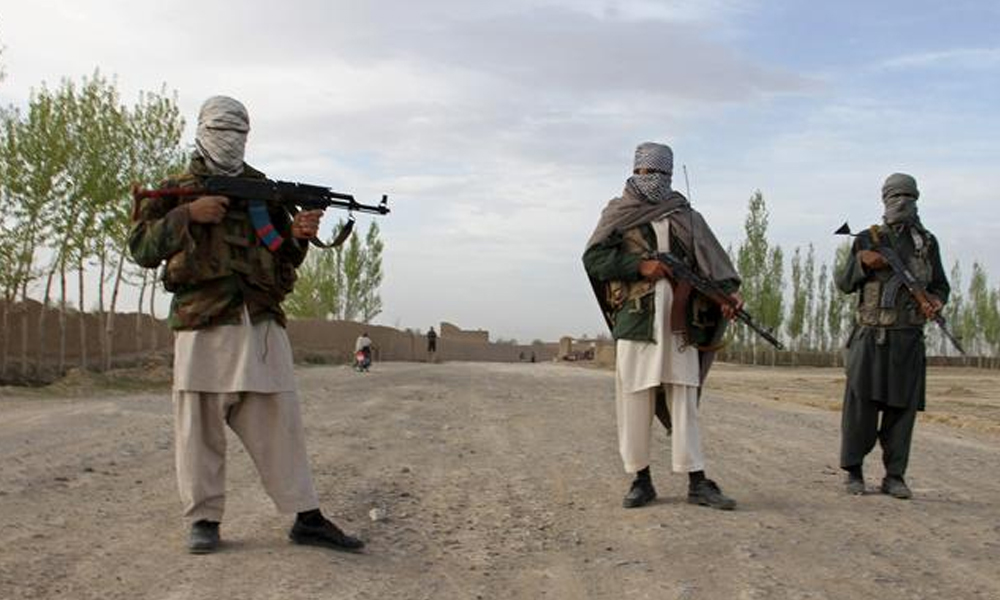
Taliban forces in Afghanistan are targeting known critics despite claiming that they have ordered their fighters to act with restraint, Human Rights Watch said on Saturday.
In Kandahar, the Taliban have detained and executed suspected members of the provincial government and security forces, and in some cases their relatives.
Among recent cases, the Taliban executed a popular Kandahari comedian, Nazar Mohammad, known as Khasha Zwan, who posted routines that included songs and jokes on TikTok. He had reportedly also worked with the local police.
On July 22, Taliban fighters abducted Khasha Zwan from his home in southern Kandahar, beat him, and then shot him multiple times, HRW said in a statement.
After a video of two men slapping and abusing Khasha Zwan appeared on social media, the Taliban admitted that two of their fighters had killed him.
“Taliban forces apparently executed Khasha Zwan because he poked fun at Taliban leaders,” said Patricia Gossman, associate Asia director at Human Rights Watch.
“His murder and other recent abuses demonstrate the willingness of Taliban commanders to violently crush even the tamest criticism or objection,” she said.
Activists in Kandahar said that in villages surrounding the provincial capital, Taliban commanders have detained scores of people associated with the government or police, HRW reported.
In one case, on July 16, Taliban fighters abducted two men whose brothers had worked with NDS 03, a CIA-backed strike force that has been responsible for summary executions and other abuses, from their homes in the Qasam Pol area, Dand district, HRW stated.
Their relatives say that they have not heard from the two men since.
Also in mid-July, a media report said Taliban fighters detained Ahmadullah, a former police officer, in Spin Boldak. His family has not heard from him since.
His uncle said that the Taliban had sent letters saying that anyone who had worked with the government or foreign forces would not be harmed so long as they reported to the Taliban leadership and “admitted their ‘crime.’”
International humanitarian law prohibits summary executions, enforced disappearances, and other mistreatment of anyone in custody, which are war crimes, HRW reported.
It is unlawful to detain civilians unless absolutely necessary for imperative security reasons, the statement read.
Retaliatory attacks are a form of collective punishment and are also prohibited, HRW stated.
The International Criminal Court is currently investigating allegations of war crimes and serious human rights abuses by all parties to the conflict in Afghanistan, including the Taliban.
Taliban commanders who knew or should have known about abuses by forces under their control and took no action to prevent or stop them are culpable as a matter of command responsibility, HRW said.
“Advancing Taliban forces have no blank check to brutally target their critics,” Gossman said. “The Taliban leadership usually denies the abuses, but it’s their fighters carrying out these attacks and their responsibility to stop the killings.”











Kazakhstan’s Foreign Minister Mukhtar Tileuberdi has called for pragmatic and coordinated international engagement with Afghanistan, saying the country’s long-term stability is closely linked to the security and sustainable development of Central Asia.
Speaking during the general debate of the 81st session of the United Nations General Assembly in New York on Friday, Tileuberdi said humanitarian assistance to Afghanistan remains essential but alone cannot break the cycle of poverty, displacement and dependency.
He said Kazakhstan supports a “pragmatic, coordinated and step-by-step” approach to international engagement with Afghanistan, with the United Nations playing a central role.
Tileuberdi also said Kazakhstan is working with the UN to operationalize the United Nations Regional Centre for the Sustainable Development Goals for Central Asia and Afghanistan in Almaty.
He said the success of the centre should be measured by the results and assistance it delivers to the region.


Trump rejects Iranian proposal to open Hormuz and end fighting

Abu Muslim Farah defeat Khurasan Faryab 2-0 in ACL season six

Saar: Concerns over Pakistan’s political crisis discussed

Afghanistan Champions League: Omar Zawak Herat beat Toofan Herat 1-0

Blast in Pakistan’s Dera Ismail Khan kills 11, injures 30

Saudi energy group signs major Afghanistan deals covering gas exploration and pipeline plans

Trump floats idea of renaming Atlantic or Pacific Ocean

US hits Egyptian bank branches with Iran sanctions as war marks six months

Nepal flood rescue mission enters critical phase as thousands remain missing

Iranian clubs to face Gulf opponents at neutral venues in Asian Champions League Elite
Saar: Concerns over Pakistan’s political crisis discussed

Exclusive interview with Abdul Latif Mansoor, Minister of MRRD

Tawsia: Overview of Afghanistan’s iron mines

Tahawol: Discussion on fresh Pakistani airstrikes on Afghanistan

Saar: Calls for international support for Afghanistan discussed
-

 Latest News4 days ago
Ariana Afghan Airlines ranks seventh among 45 Central Asian airlines
-

 Latest News5 days ago
UN reiterates call for respect for international law after Kunar airstrikes
-

 Regional4 days ago
US and Iran hold first talks since June after Trump’s ‘annihilation’ threat
-

 Latest News4 days ago
Silk Road highway in Wakhan corridor now reaches the China border
-

 Regional3 days ago
Iran airlines cancel flights as US sanctions hit
-

 Latest News5 days ago
Afghan Official: Pakistan’s airstrikes will not go unanswered
-
 Regional5 days ago
G7 foreign ministers call on Iran to stop arming Houthis
-

 Sport5 days ago
Afghan boxing referee heads to China for international festival