
World
Why Palestinians can count on American students but not Arab allies to protest

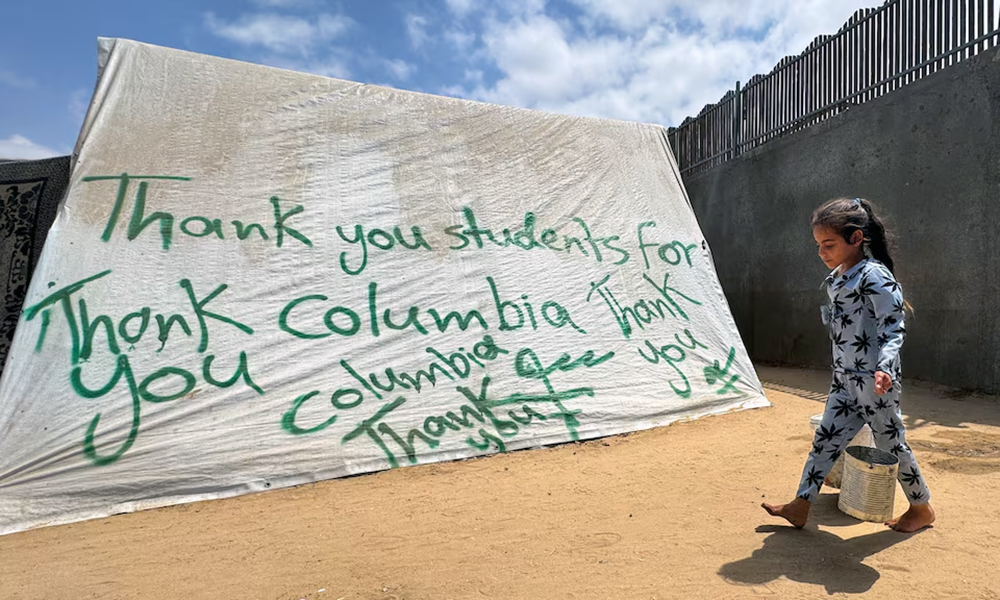
Palestinians may be gratified to see American university campuses erupt in outrage over Israel’s offensive in Gaza, but some in the embattled enclave are also wondering why no similar protests have hit the Arab countries they long viewed as allies, Reuters reported.
Demonstrations have rocked U.S. universities this week, with confrontations between students, counter protesters and police, but while there have been some protests in Arab states, they have not been nearly as large or as vociferous.
“We follow the protests on social media every day with admiration but also with sadness. We are sad that those protests are not happening also in Arab and Muslim countries,” said Ahmed Rezik, 44, a father of five sheltering in Rafah in Gaza’s south.
“Thank you students in solidarity with Gaza. Your message has reached us. Thank you students of Columbia. Thank you students,” was scrawled across a tent in Rafah, where more than a million people are sheltering from Israel’s offensive.
Reasons for the comparative quiet on Arab campuses and streets may range from a fear of angering autocratic governments to political differences with Hamas and its Iranian backers or doubts that any protests could impact state policy, read the report.
American students at elite universities may face arrest or expulsion from their schools, but harsher consequences could await Arab citizens protesting without state authorisation.
And U.S. students may feel more motivation to protest as their own government backs and arms Israel, while even those Arab countries that have full diplomatic relations with it have been strongly critical of its military campaign.
When asked about the conflict, Arabs from Morocco to Iraq have consistently voiced fury at Israel’s actions and solidarity with Gaza’s embattled inhabitants, leading to muted Ramadan celebrations across the region last month.
Some rallies to support Palestinians have erupted, notably in Yemen where the Houthis have joined the conflict with strikes on shipping in the Red Sea.
And Arabs around the region have also shown their horror at the war and support for their fellow Arabs in Gaza on social media, even if they have not taken to the streets.
But whatever the reason for the lack of public protests, some people in Gaza are now drawing unfavourable comparisons between the tumult in the United States and the public reaction they can see in other Arab countries.
“I ask Arab students to do what the Americans have done. They should have done more for us than the Americans,” said Suha al-Kafarna, displaced by the war from home in northern Gaza.
In Egypt, which made peace with Israel in 1979 and where President Abdel Fattah al-Sisi has largely outlawed public protests, the authorities fear that demonstrations against Israel could later turn against the government in Cairo.
At state-sanctioned protests over the war in October, some demonstrators veered off the agreed route and chanted anti-government slogans, prompting arrests.
“One cannot see the lack of large public protests against the war and the muted reaction on the Egyptian street in isolation from a broader context of crackdown on all forms of public protest and assembly,” said Hossam Bahgat, head of the Egyptian Initiative for Personal Rights.
At the American University in Cairo security forces are less likely to intervene on campus and there have been some protests. But a student activist there who requested anonymity said they could still face consequences for demonstrating.
“Being arrested here is nothing like being arrested in the U.S. It’s completely different,” he said, adding that there was “the factor of fear” preventing many from taking to the streets.
In Lebanon, where success in studies has become even more personally important to many young people after years of political and economic crises that have shrunk their shot at future prosperity, that calculation is even tougher.
Several students Reuters approached at campus protests in Beirut declined to be interviewed, saying they feared repercussions from university authorities.
The complex histories of Lebanon and other Arab states such as Jordan that host many Palestinian refugees also play into the question of public protests.
In Lebanon, some people blame Palestinians for triggering the 1975-90 civil war. Others fear any overt displays of support for Palestinians might be hijacked by the Iran-backed Hezbollah, which has been trading fire with Israel since the start of the Gaza conflict, Reuters reported.
“The Arab world is not reacting like Columbia or Brown (U.S. universities) because they don’t have the luxury to do so,” said Makram Rabah, a history professor at the American University of Beirut.
Besides, he added, with public opinion already largely backing the Palestinian cause it was not clear what protests there would achieve.
“The dynamics of power and the way you change public perception are just different in the Arab world compared to the U.S.,” he said.
For Tamara Rasamny, a Lebanese-American arrested and suspended for participating in a sit-in at Columbia a month before getting her degree, that reality has come home hard.
She was meant to deliver a speech at her graduation, and thought about whether it would have been more powerful to send a message there or through her possible arrest.
“And then I thought, my speech is literally about being brave, courageous and speaking up – so I thought if I’m not even listening to my own words, who am I to say anything? That was my logic, and it was worth it,” she told Reuters from New York.
Rasamny said she knew it might not have been possible to express herself this way had she been at home in Lebanon.
“I feel in Lebanon it would be more frustrating to watch what’s unfolding because there hasn’t really been an outlet to do much about it – like take to the streets,” she said.




World
Trump says United States will get uranium from Iran
One of Trump’s central objectives in launching military strikes against Iran was to ensure Tehran does not develop a nuclear weapon.
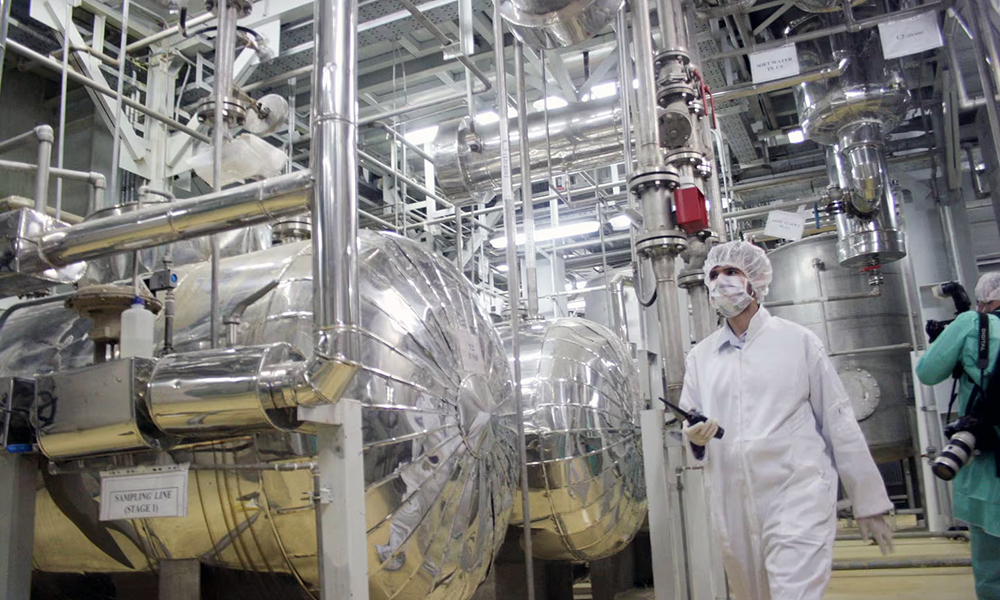
President Donald Trump said on Wednesday the United States would get enriched uranium from Iran, as the two countries struggle to reach an agreement on ending the Gulf war, Reuters reported.
“We’re going to get it,” Trump told a reporter as he left a White House event.
One of Trump’s central objectives in launching military strikes against Iran was to ensure Tehran does not develop a nuclear weapon. Iran has yet to hand over more than 900 pounds (408 kg) of highly enriched uranium.
World
Trump says Iran “should wave the white flag of surrender”
When asked what Iran would need to do to violate the ceasefire, Trump said: “Well, you’ll find out, because I’ll let you know … They know what not to do.”
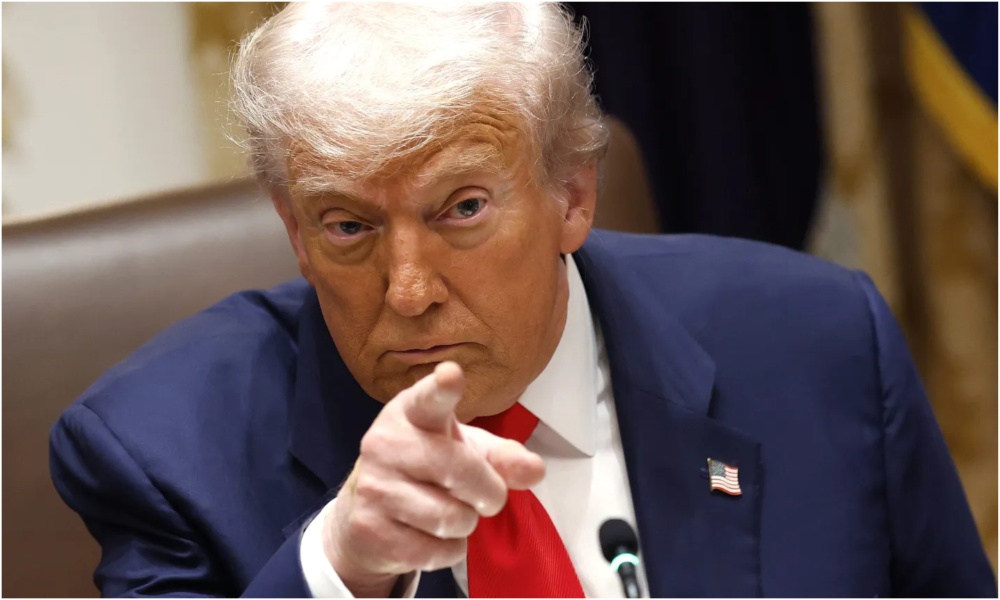
President Donald Trump on Tuesday dismissed Iran’s military capability and said Tehran “should wave the white flag of surrender” but is too proud to do so, Reuters reported.
Trump told reporters in the Oval Office that Iran’s military has been reduced to firing “peashooters” and that Tehran privately wants to make a deal despite its public sabre-rattling.
“They play games, but let me just tell you, they want to make a deal. And who wouldn’t, when your military is totally gone?” he said.
Trump heaped praise on the U.S. blockade of Iranian ports in the region. “It’s like a piece of steel. Nobody’s going to challenge the blockade. And I think it’s working out very well,” he said, read the report.
When asked what Iran would need to do to violate the ceasefire, Trump said: “Well, you’ll find out, because I’ll let you know … They know what not to do.”
Trump said Iran “should save the white flag of surrender.”
“If this were a fight, they’d stop it,” said Trump.
World
Secret Service says it exchanged gunfire with armed suspect near White House
The suspect was not on the White House property, Quinn said.
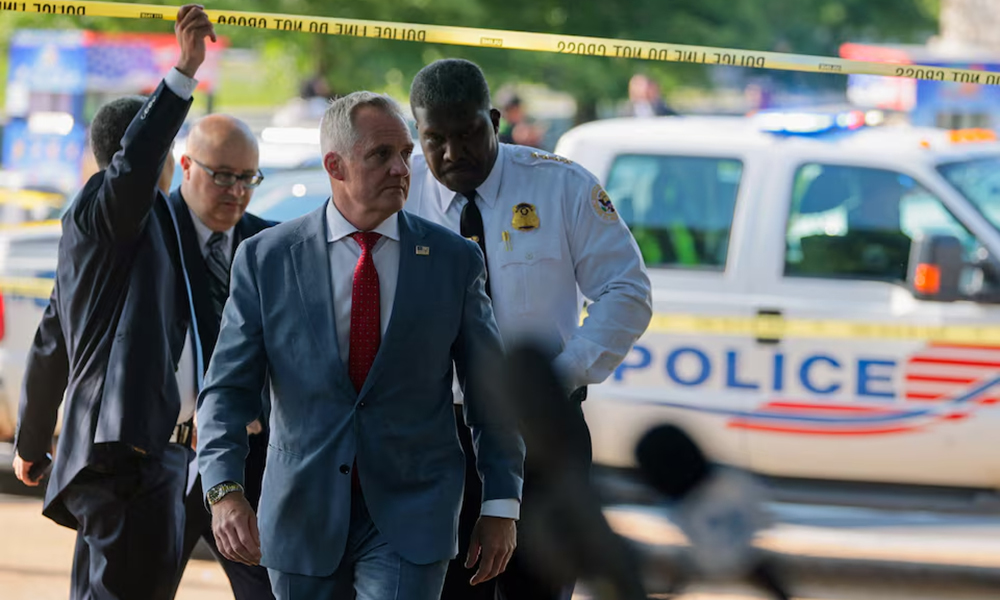
The U.S. Secret Service said on Monday its officers confronted an armed and “suspicious individual” near the White House who later fired at them before fleeing on foot and being shot by law enforcement, Reuters reported.
The incident led to a brief lockdown at the White House.
Agents patrolling the outer perimeter of the White House complex identified a person who Secret Service Deputy Director Matthew Quinn said was a “suspicious individual that appeared to have a firearm.”
He briefly fled on foot after being approached by Secret Service officers and fired in their direction, Quinn said at a press conference.
Secret Service then fired at the suspect who was hit and subsequently hospitalized, Quinn added.
Vice President JD Vance’s motorcade transited through the area “not long before” the incident, Quinn said. There was no indication that the suspect intended to approach Vance’s motorcade, the Secret Service deputy director said.
A juvenile bystander was hit by the suspect but did not receive any life-threatening injuries and was being treated at a hospital, Quinn added.
Agents observed “visual print of a firearm” in considering the individual’s behavior as suspicious when he was spotted, Quinn told reporters.
The suspect was not on the White House property, Quinn said.
Law enforcement have been on alert in recent days in the U.S. capital following a shooting at the White House Correspondents’ Association Dinner late last month over which a man has been arrested, read the report.
Quinn was asked if Monday’s incident was linked to “other recent attempts” on President Donald Trump’s life. Trump was in the White House when this incident unfolded.
“Whether or not it was directed to the president or not, I don’t know but we will find out,” Quinn said.
The Secret Service deputy director confirmed that a weapon was recovered from the suspect but did not elaborate.
The Secret Service said earlier its personnel were on the scene of the officer-involved shooting at 15th Street and Independence Avenue in Washington, D.C.
The DC Police Department was handling the probe.


Saar: Ongoing criticism of Pakistan’s Afghanistan policy discussed

Jalal Jalali discusses health cooperation with head of CDE in Kabul

Pakistan says cross-Durand Line communities seek peace and stability

Afghanistan-Gambia ties discussed during Doha meeting

Ariana Snooker Championship Season 2 set to kick off next week

Bayat Power extends gas supply deal with Afghan Gas

Etihad Airways to expand Kabul–Abu Dhabi flights to daily service amid surging demand

Afghanistan’s new cricket head coach Richard Pybus arrives in Kabul

Afghanistan moves toward self-sufficiency in car battery production

ATN seals Ariana Snooker Championship deal for five seasons
Saar: Ongoing criticism of Pakistan’s Afghanistan policy discussed

Tahawol: Diplomatic turn in Iran–US confrontation discussed

Saar: Expanding interaction between countries and IEA discussed

Tahawol: Deportation of Afghan refugees from Germany discussed

Saar: Criticism over Pakistan’s policies discussed
-
 World5 days ago
Trump says US could restart Iran strikes ‘if they misbehave’
-
 Regional4 days ago
Iran says it has received US response to its latest offer for talks
-
 Business4 days ago
Afghan economic commission approves 12 major development projects across key sectors
-
 Sport3 days ago
Afghanistan set for Maldives four-nation tournament
-
 Latest News4 days ago
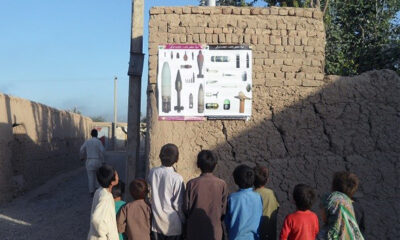
UN warns funding cuts are slowing mine clearance efforts in Afghanistan
-

 Business3 days ago
Kazakhstan grain exports to Afghanistan jump sharply
-
 Latest News4 days ago
Afghan officials say media should align with Islamic and national values
-
 Tahawol4 days ago
Tahawol: Efforts for US-Iran agreement