
Latest News
World ‘must engage’ or risk Afghanistan’s collapse, UN Security Council hears

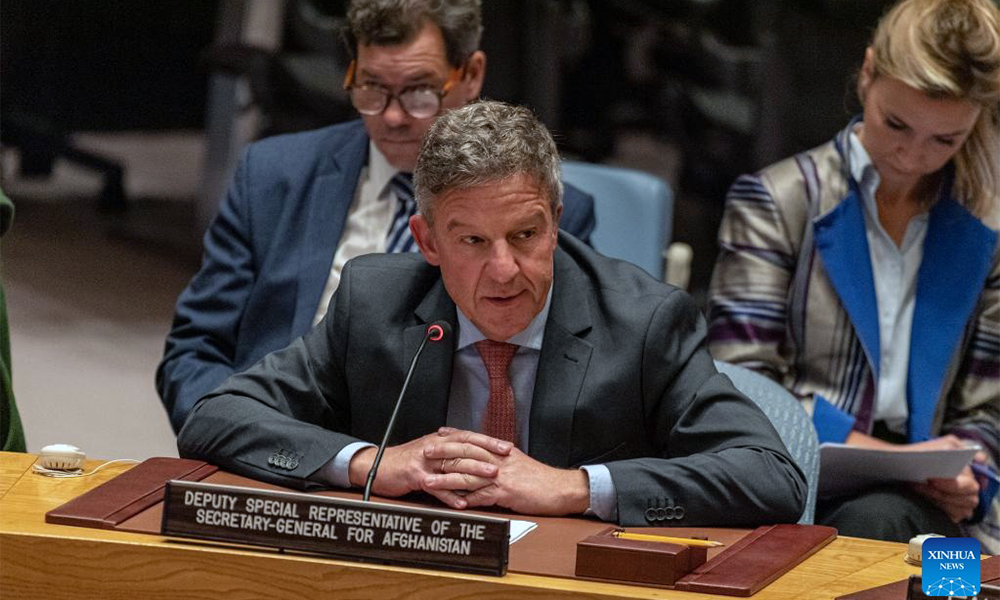
Senior UN envoy for Afghanistan, Markus Potzel, said on Tuesday that despite some positive developments over the past few months , “patience is running out” for many in the international community when it comes to effectively engaging with the Islamic Emirate of Afghanistan (IEA).
Addressing the UN Security Council meeting, he also said while there have been positive developments they have been “too few and too slow and they are outweighed by the negatives”.
Potzel said the ongoing ban on girls’ secondary education and growing restrictions on women’s rights, were “signals that the Taliban (IEA) are indifferent to more than 50 percent of the population” and are willing to risk international isolation.
“The relegation of women and girls to the home not only deprives them of their rights, but Afghanistan as a whole is denied the benefit of the significant contributions that women and girls have to offer,” he said.
He also said the UN Assistance Mission in Afghanistan (UNAMA) has monitored a steady rise in security incidents by terrorist groups and others.
“Our earlier warnings about the capabilities of Islamic State Khorasan Province (Daesh) were dismissed by the Taliban (IEA)”, he told ambassadors.
“But ISKP has demonstrated in the last few months alone that it can carry out assassinations of figures close to the Taliban (IEA), attacks against foreign embassies, as well as fire rockets across Afghanistan’s border to attack its neighbours – all while maintaining its long-standing sectarian campaign against Shia Muslims and ethnic minorities,” said Potzel.
He noted that armed clashes are continuing between IEA security forces and armed opposition groups in the Panjshir, Baghlan, Kapisa, Takhar, and Badakhshan provinces.
As per capita income has collapsed to 2007 levels – erasing 15 years of economic growth – the country’s economic situation “remains tenuous” due in part to Afghanistan’s isolation from the international banking system.
“Liquidity remains heavily dependent on the cash that the UN continues to bring in for humanitarian operations – cash, I must stress, that supports the needs of the Afghan people and does not directly reach the de facto authorities,” said Potzel.
But even the funding is uncertain as the 2022 Humanitarian Response Plan has only received $1.9 billion out of a $4.4 billion requirement.
Humanitarian and economic measures will not meet the Afghan people’s longer-term needs, and the emergency aid cannot replace essential service delivery systems, such as health and water, or hold off an economic collapse, he warned.
While the IEA has not been recognized by any State, the international community also does not want to see the country collapse, Potzel stressed.
“If the Taliban (IEA) do not respond to the needs of all elements of Afghan society and constructively engage within the very limited window of opportunity with the international community, it is unclear what would come next,” he said.
“Further fragmentation, isolation, poverty, and internal conflict are among the likely scenarios, leading to potential mass migration and a domestic environment conducive to terrorist organizations, as well as greater misery for the Afghan population.
“That’s why we have to engage”, he declared, adding that “continued qualified engagement” was the most realistic way of helping the Afghan people.












Kazakhstan’s Foreign Minister Mukhtar Tileuberdi has called for pragmatic and coordinated international engagement with Afghanistan, saying the country’s long-term stability is closely linked to the security and sustainable development of Central Asia.
Speaking during the general debate of the 81st session of the United Nations General Assembly in New York on Friday, Tileuberdi said humanitarian assistance to Afghanistan remains essential but alone cannot break the cycle of poverty, displacement and dependency.
He said Kazakhstan supports a “pragmatic, coordinated and step-by-step” approach to international engagement with Afghanistan, with the United Nations playing a central role.
Tileuberdi also said Kazakhstan is working with the UN to operationalize the United Nations Regional Centre for the Sustainable Development Goals for Central Asia and Afghanistan in Almaty.
He said the success of the centre should be measured by the results and assistance it delivers to the region.


Abu Muslim Farah defeat Khurasan Faryab 2-0 in ACL season six

Saar: Concerns over Pakistan’s political crisis discussed

Afghanistan Champions League: Omar Zawak Herat beat Toofan Herat 1-0

Blast in Pakistan’s Dera Ismail Khan kills 11, injures 30

Ariana Afghan Airlines increases Kabul-Delhi cargo flights

Saudi energy group signs major Afghanistan deals covering gas exploration and pipeline plans

Trump floats idea of renaming Atlantic or Pacific Ocean

US hits Egyptian bank branches with Iran sanctions as war marks six months

Nepal flood rescue mission enters critical phase as thousands remain missing

Iranian clubs to face Gulf opponents at neutral venues in Asian Champions League Elite
Saar: Concerns over Pakistan’s political crisis discussed

Exclusive interview with Abdul Latif Mansoor, Minister of MRRD

Tawsia: Overview of Afghanistan’s iron mines

Tahawol: Discussion on fresh Pakistani airstrikes on Afghanistan

Saar: Calls for international support for Afghanistan discussed
-

 World5 days ago
CNN, MS NOW and Politico sue Trump, challenging White House ban
-

 Latest News4 days ago
Ariana Afghan Airlines ranks seventh among 45 Central Asian airlines
-

 Latest News5 days ago
UN reiterates call for respect for international law after Kunar airstrikes
-

 Regional4 days ago
US and Iran hold first talks since June after Trump’s ‘annihilation’ threat
-

 Latest News4 days ago
Silk Road highway in Wakhan corridor now reaches the China border
-

 Regional3 days ago
Iran airlines cancel flights as US sanctions hit
-

 Latest News5 days ago
Afghan Official: Pakistan’s airstrikes will not go unanswered
-

 Regional5 days ago
G7 foreign ministers call on Iran to stop arming Houthis