
Latest News
Benefits of proper water management of Salma Dam seen across Herat: Officials

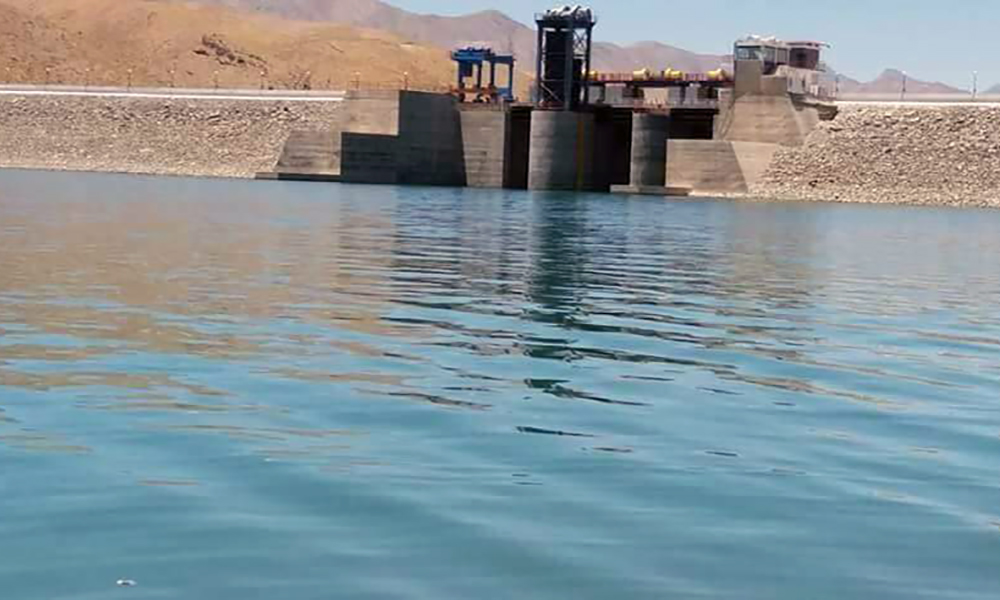
Herat officials said Monday that in the wake of proper water management this year, Salma Dam has successfully stored 180 million cubic meters of water, which was also delivered to eight districts and more than 120 water canals.
The Director General of the Harirod-Murghab River Basin, Abdul Salam Mustawafi Agha, said that about 85 dams will be built across the country in the next five years, and that some economic problems will be eased with proper management of dams.
“If we have money in our development budget, it should be spent on building dams because our country is agricultural. If our water is controlled and is used safely, our many economic problems will be solved,” he said.
In the meantime, Herat officials said local farmers have welcomed the improved water management of Salma Dam as they have been able to irrigate their crops.
“The water management has been very good this year and most of the farmers are happy because they irrigated their crops … they benefited from this water, and are now harvesting,” said Ghulam Farooq, one farmer.
Experts have also said that the country’s river systems need to be better managed so as to strengthen the agriculture sector in the country. They have urged the IEA to invest more in this area.
“There needs to be an agreement between us and the neighboring countries that the dams should be built in the right way to control the water. We don’t say that water should be cut off to the neighboring countries, the Islamic Emirate should have an agreement with the neighboring countries so that when a dam is built, it will not be destroyed by the destructive reaction of neighboring countries,” said Ghulam Habib Hashimi, chief of the Water Users Association in Herat.



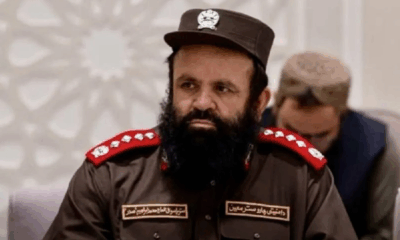




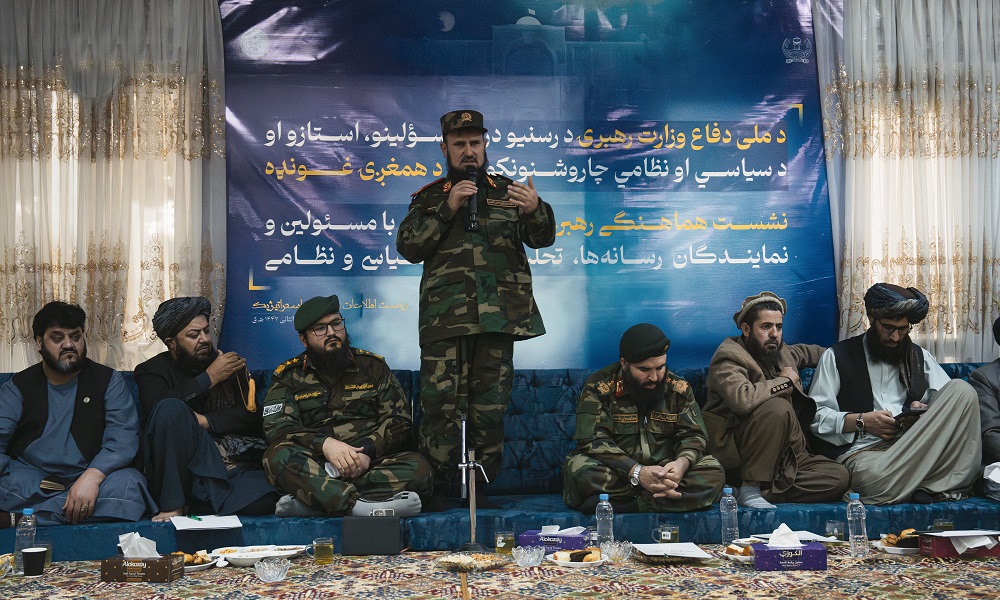
Mohammad Fasihuddin Fitrat, Chief of General Staff of the Armed Forces, says that over the past four years, the army forces of the Islamic Emirate have shown no hesitation in defending and protecting Afghanistan, and that today the country’s army is standing on its own feet.
According to a statement from the Ministry of Defense, Fitrat made these remarks at a meeting with media representatives, political analysts, and a number of government officials aimed at coordination and strengthening cooperation. He added: “Nations that cannot stand on their own feet and rely on others, even if they grow, will not be capable of achieving real progress.”
Fitrat also expressed appreciation for the role of the media in ensuring security and in supporting the country’s defense forces, stating: “We and you, as citizens of this land, must put our hands together and build the country together, take pride in our forces, and strive with all our strength for the country’s development. We have created an army that defends honor, territorial integrity, and the borders of the country, and serves as the guardian of our freedom.”
He emphasized that the Islamic Emirate is working to establish an army equipped with modern weapons so that it can defend the country’s territory under all circumstances.
He stated that the country’s army has proven to the people that anyone who looks at this land with ill intent will face a firm and courageous response, and that it has also been made clear to neighboring countries that any aggression against Afghanistan will be met with a response several times stronger.
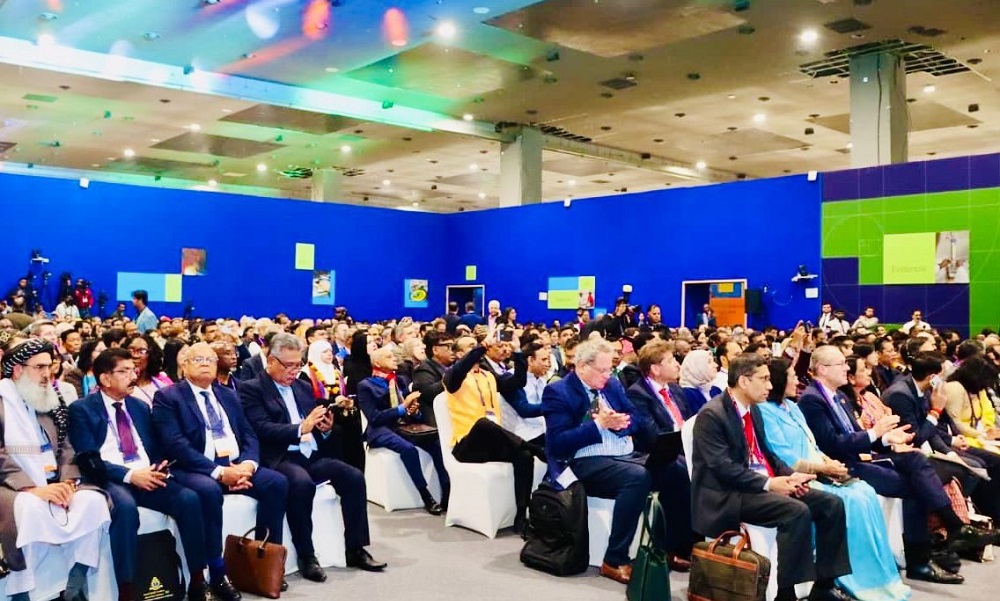
Noor Jalal Jalali, the Minister of Public Health of the Islamic Emirate, participated in the second World Health Organization meeting on traditional medicine during his official visit to India.
In a statement issued on Thursday, the Ministry of Public Health said that the meeting was held in India with the participation of representatives from around 100 countries, health ministers from 23 countries, professional experts from various nations, and officials from different departments of the World Health Organization.
During the meeting, discussions were held on the standardization of traditional medicine, training of individuals active in this field, recognition of traditional medicine as an established reality, and the sharing of countries’ experiences in this area.
The ministry stated that the purpose of participating in the conference was to standardize traditional medicine in Afghanistan, adding that for several decades this sector has been practiced in a non-standard manner and without a defined curriculum or clear principles.
Latest News
Afghanistan and Kyrgyzstan boost trade and digital finance ties
Minister Sydykov, in turn, pledged the continuation of Kyrgyzstan’s humanitarian assistance to Afghanistan and highlighted his country’s interest in working together on e-governance initiatives.
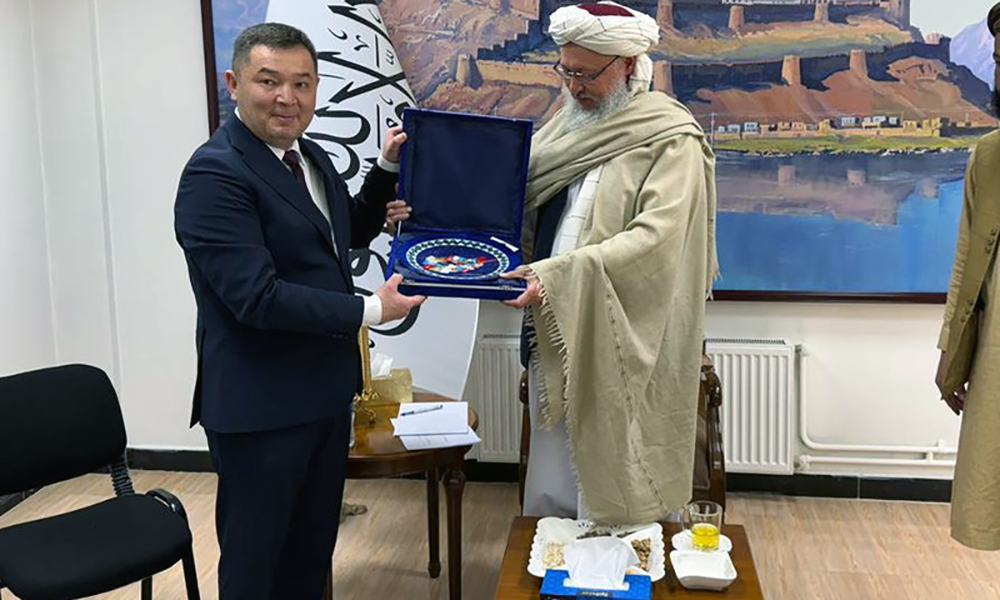
Afghanistan’s Deputy Prime Minister for Administrative Affairs, Abdul Salam Hanafi, has met with a high-level Kyrgyz delegation led by Minister of Economy and Commerce Bakhyt Sydykov to discuss expanding bilateral trade and strengthening cooperation in digital financial services.
During the meeting, Hanafi reaffirmed Afghanistan’s readiness to deepen ties with Kyrgyzstan, stressing the importance of developing electronic administration systems and modern banking channels to facilitate trade and financial transactions between the two countries.
Minister Sydykov, in turn, pledged the continuation of Kyrgyzstan’s humanitarian assistance to Afghanistan and highlighted his country’s interest in working together on e-governance initiatives. He also pointed to potential cooperation in areas such as the printing of securities and the development of electronic payment systems.


Tahawol: Global concerns over migration escalation discussed

Islamic Emirate’s army now self-sufficient, says chief of army staff

Afghan health minister attends second WHO summit in India

Saar: Calls for Afghanistan’s balanced, economy-oriented foreign policy discussed

Afghanistan-Kazakhstan banking ties discussed in Kabul meeting

Afghanistan U19 cricket team defeats India A U19

Afghanistan economy under pressure as Pakistan shocks reshape trade flows

Gaza death toll tops 70,000, health ministry says

India set to establish pharmaceutical factories in Afghanistan: MoIC

Afghanistan offers tax breaks, free land to attract Indian investors
Tahawol: Global concerns over migration escalation discussed
Saar: Calls for Afghanistan’s balanced, economy-oriented foreign policy discussed

Tahawol: Discussion on regional countries’ meetings on Afghanistan

Saar: Regional efforts to address Afghanistan-Pakistan issues discussed

Tahawol: Officials say interactions must be based on realities
-

 Latest News5 days ago
US delivers second batch of Afghan Black Hawk helicopters to Peru
-

 Latest News3 days ago
Germany speeds up admission of Afghans from Pakistan
-

 Sport3 days ago
IPL 2026 Auction set for Abu Dhabi with $28.6 million purse at stake
-
 Business4 days ago
Afghan economy posts second year of growth despite deep structural challenges
-
 Latest News3 days ago
Afghanistan to establish independent oil and gas authority
-

 Sport4 days ago
ATN to broadcast ‘The Best FIFA Football Awards 2025’
-

 Latest News4 days ago
US intelligence chief warns of ‘direct threat’ from suspected terrorists inside the country
-

 International Sports4 days ago
ILT20: Jahangir powers Dubai Capitals to nine-run win over Abu Dhabi Knight Riders