
Latest News
US intelligence chief warns of ‘direct threat’ from suspected terrorists inside the country


The U.S. director of national intelligence has warned of what she described as a “direct threat” from suspected terrorists living inside the country, accusing the Biden administration of failing to properly vet thousands of individuals who entered the United States in recent years.
Speaking to Fox News on Saturday, Tulsi Gabbard claimed that around 18,000 known or suspected terrorists were allowed into the country, alleging serious shortcomings in vetting procedures. “The Biden administration did not take their vetting responsibilities seriously,” she said, adding that authorities may still be unaware of additional cases.
Citing figures from the National Counterterrorism Center, Gabbard said approximately 2,000 of those individuals are Afghan nationals who entered the U.S. following the 2021 withdrawal from Afghanistan.
She said alleged whistleblowers told her that screening processes were rushed during that period. According to her account, officials were instructed to accelerate admissions and forego the thorough vetting normally required.
Gabbard described the situation as “devastating,” arguing that it has created security risks for Americans. She referenced a shooting just before Thanksgiving in which two U.S. National Guard members were shot, one fatally, with the suspect identified as an Afghan national.
However, reports and official reviews have previously pointed to broader circumstances surrounding the evacuation and resettlement effort. Following the chaotic U.S. withdrawal from Afghanistan, a review conducted under then-President Joe Biden concluded that the administration was constrained by a withdrawal agreement negotiated during President Donald Trump’s first term, as well as by inadequate planning for evacuations. The report cited a lack of preparation for removing remaining troops and assisting U.S. allies, despite an approaching deadline.
Media reports have also noted that the Trump administration had several years to expand Special Immigrant Visa programs for Afghan allies but instead slowed processing and weakened systems designed to support refugee admissions. Many Afghans who entered the U.S. after 2021 had worked alongside American forces and feared retaliation if they remained in Afghanistan.
Despite heightened political rhetoric following last month’s shooting, there is no evidence that the vast majority of Afghans resettled in the United States since 2021 pose a security threat, with most described by officials and community leaders as law-abiding.
Separately, authorities in the U.S. state of Rhode Island are investigating a mass shooting near Brown University in Providence that left at least two people dead and several others injured. Officials said the incident occurred shortly after 4 p.m. local time on Saturday, prompting a large-scale emergency response involving local police, state authorities, and federal agencies including the FBI and the Bureau of Alcohol, Tobacco, Firearms and Explosives.
Providence Mayor Brett Smiley said seven victims remain hospitalized in stable condition, one is in critical but stable condition, and another has been released. A suspect linked to the shooting was detained on Sunday, and the investigation remains ongoing.




Latest News
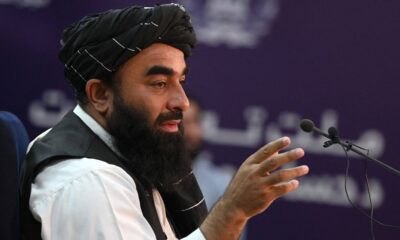
Mujahid states Kabul seeks stronger ties with region and beyond
According to figures from Afghanistan’s Ministry of Foreign Affairs, the Islamic Emirate currently has 40 active diplomatic missions in different countries.
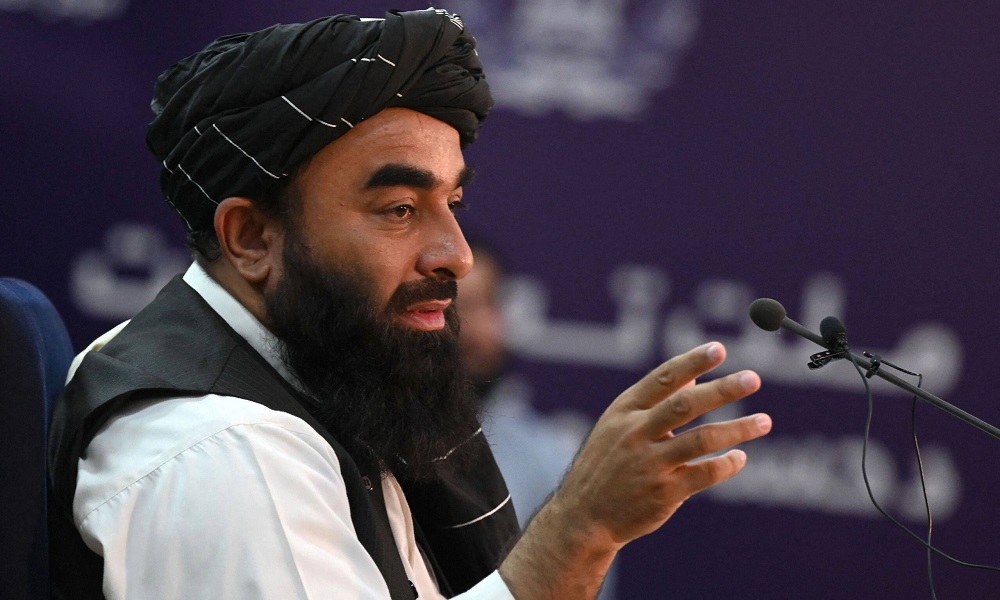
The Islamic Emirate says it is seeking to strengthen and expand Kabul’s relations with countries in the region and beyond, with its foreign policy focused on economic cooperation and regional connectivity.
Zabiullah Mujahid, spokesman for the Islamic Emirate, says Afghanistan’s current government has managed to establish trust-based relations with countries in the region and around the world over the past five years.
Mujahid says visits by senior officials from several countries to Afghanistan, along with expanding trade relations with a number of countries, demonstrate the growing trend of these interactions.
The Islamic Emirate spokesman stresses that Afghanistan needs the cooperation and effective role of neighboring and regional countries to strengthen regional cooperation and achieve its economic and regional connectivity objectives.
He also says the Islamic Emirate is seeking to further expand and consolidate Kabul’s relations with countries in the region.
According to figures from Afghanistan’s Ministry of Foreign Affairs, the Islamic Emirate currently has 40 active diplomatic missions in different countries.
Meanwhile, a number of international relations experts state that expanding Afghanistan’s engagement with the world could help reduce political isolation, strengthen diplomatic ties, attract investment, and ultimately foster the country’s economic growth.
Latest News
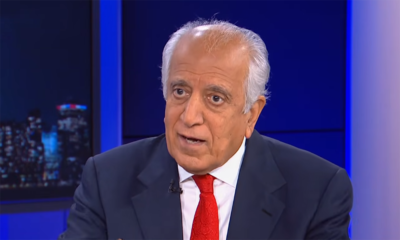
Khalilzad warns US risks losing influence in Afghanistan to China and Russia
Khalilzad also warned that continued restrictions on women’s and girls’ access to education and employment could have serious consequences.
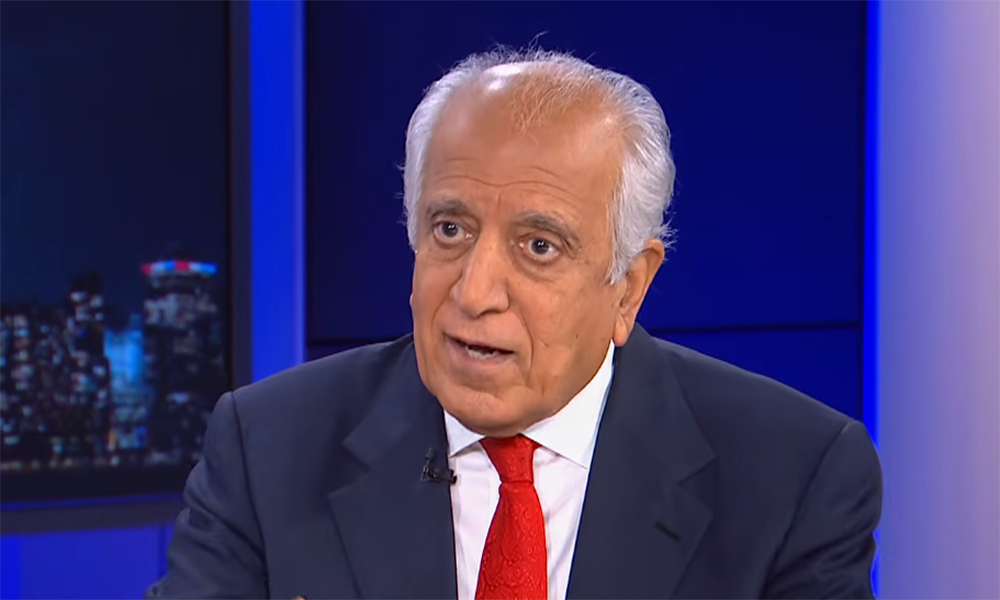
Former US Special Representative for Afghanistan Zalmay Khalilzad has warned that Washington risks creating a vacuum in Afghanistan that could be filled by China and Russia if the United States does not re-engage with the country.
Speaking to Al Jazeera, Khalilzad said maintaining stability in Afghanistan remains in the US interest, warning that a return to collapse and chaos could once again create conditions for terrorist groups to expand and pose threats to the United States.
“If we do not engage and try to advance our interests, then our rivals will fill the vacuum,” Khalilzad said.
He pointed to growing Chinese and Russian engagement with Afghanistan, saying China is seeking access to the country’s natural resources while Russia has also become increasingly active.
Khalilzad said US policy should take Afghanistan’s current circumstances and future direction into account, including what Washington wants the country to look like in the years ahead.
He identified preventing Afghanistan from again becoming a base for anti-US terrorist groups as one of Washington’s key interests.
“Economic progress is important to achieving this goal, and developing Afghanistan’s resources is also important,” he said.
Khalilzad also warned that continued restrictions on women’s and girls’ access to education and employment could have serious consequences.
Meanwhile, Islamic Emirate spokesman Zabiullah Mujahid said Kabul and Washington have held talks through various channels on several occasions.
However, Mujahid said the absence of changes in US policy towards Afghanistan has prevented the discussions from producing meaningful progress in relations between the two sides.
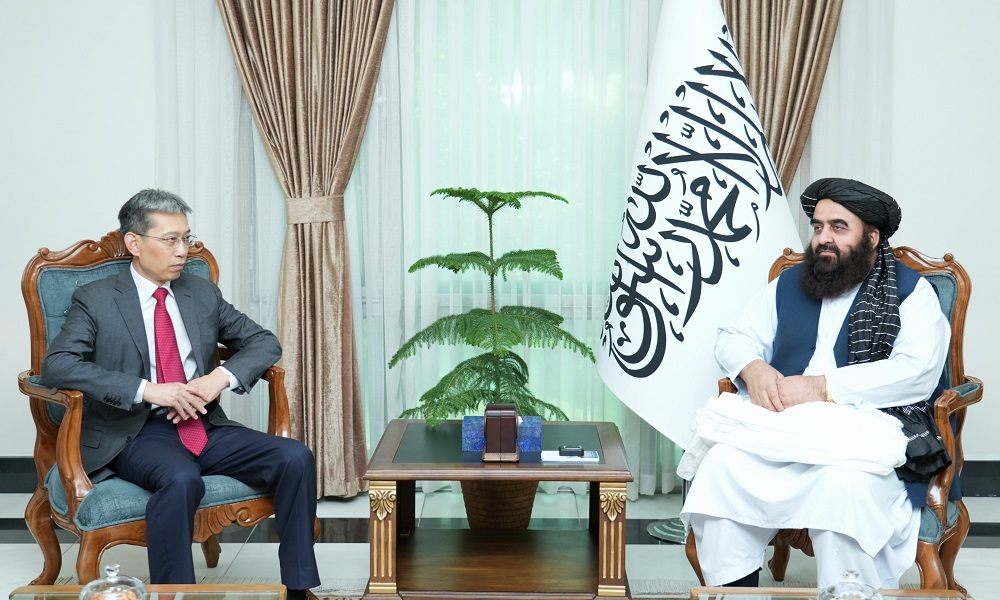
China’s Ambassador to Kabul, Zhao Sheng, has discussed bilateral relations with Afghanistan’s Foreign Minister Amir Khan Muttaqi during a farewell meeting in Kabul on Saturday.
According to the Ministry of Foreign Affairs, Muttaqi described relations between Afghanistan and China as historical and positive, praised Zhao’s tenure and wished him success in his future assignment.
Zhao, meanwhile, described ties between the two countries as friendly and thanked the Foreign Ministry for its cooperation during his tenure. He expressed hope that bilateral relations would further expand across various fields.


Afghanistan faces cancer treatment crisis

Mujahid states Kabul seeks stronger ties with region and beyond

Khalilzad warns US risks losing influence in Afghanistan to China and Russia

Zadran calls on Afghan fans to rally behind team against India

EU and FAO launch €5m programme to strengthen Afghanistan’s agrifood sector

Four mediators struggle to secure lasting Pakistan-Afghanistan ceasefire

Juma Khan Fateh surrenders to IEA forces in Badakhshan

Afghanistan’s trade diversification challenges Pakistan

Syria and Saudi Arabia condemn Kabul bombing, express solidarity with Afghanistan

Afghanistan crowned champions of five-match ODI series against Ireland

Tahawol: Norwegian delegation’s call for engagement with Afghanistan discussed

Saar: Pakistan’s dual policy towards Afghanistan reviewed

Exclusive interview with ACB CEO Naseeb Khan

Saar: UN reaffirming support for Afghanistan discussed

Saar: Pakistan’s decision to expel Afghan medical students discussed
-
 Latest News5 days ago
Amnesty International condemns Pakistan order requiring Afghan medical students to return
-
 Latest News5 days ago
Afghan Embassy in Islamabad calls for halt to expulsion of Afghan students
-
 Latest News4 days ago
Muttaqi and Bangladeshi delegation discuss expansion of bilateral ties
-

 Sport3 days ago
Afghanistan Champions League Season 6 kicks off today: Abu Muslim Farah face Sarsabz Yashlar
-

 Regional4 days ago
Iran attacks US base in Jordan, ships near Hormuz after tankers sunk
-
 World4 days ago
US Treasury ratchets up pressure on Iran with sweeping new aviation sanctions
-

 Business4 days ago
UAE firm eyes investment in Salang’s second tunnel and pharmaceutical factories
-

 Sport4 days ago
Afghanistan to host Bangladesh and Zimbabwe in the UAE in three-format home season